

Aumee Health: A Pioneer in Exercise Prescription-Based Chronic Disease Rehabilitation Management Services
As people spend increasingly prolonged periods sedentary in chairs and on sofas for work and entertainment, "physical inactivity syndrome" has gradually evolved into a global epidemic, ranking alongside hypertension, smoking, and hyperglycemia as the top four risk factors for mortality worldwide. Notably, chronic non-communicable diseases account for 63% of all deaths globally, with the primary risks stemming from unhealthy lifestyles such as insufficient physical activity and poor dietary habits.
Meanwhile, the WHO has stated that 80% of premature chronic diseases, such as heart disease, stroke, and diabetes, can be prevented through lifestyle changes and appropriate physical activity.
Under the guidance of the Healthy China initiative, China is continuously promoting the development of a disease management and health service model characterized by the integration of sports and medicine."How to leverage the advantages of sports medicine by integrating exercise prescriptions with pharmaceutical prescriptions in chronic disease rehabilitation and management services has become a hot research area."Acmeway Health (Acmeway (Beijing) Health Technology Co., Ltd., hereinafter referred to as “Acmeway Health”) has been deeply engaged in the field of sports medicine for eighteen years, accumulating extensive experience for reference.
As early as 2000, Xu Junhua, the founder of Acmeway Health, was introduced to the field of sports medicine. In July 2001, Beijing’s successful bid for the Olympic Games further heightened his awareness of the immense development potential in sports medicine. After engaging in discussions and conducting research with university faculty, he established Acmeway Health in 2002, making it China’s first professional company specializing in exercise prescriptions. To deepen his industry understanding and enhance his professional expertise, he enrolled as a graduate student in Sports Medicine at Beijing Sport University in 2003. Upon graduation in 2005, he collaborated with his supervisor to author textbooks related to exercise prescriptions. His research into the development of sports medicine in developed Western countries, combined with his insights into the domestic landscape, has significantly contributed to the growth of Acmeway Health.
In 2007, Acmeway Health pioneered the “Intelligent Terminal System for Exercise and Health Management,” winning the Innovation Fund from the Ministry of Science and Technology. In 2009, its “Acmeway Health Fitness Management System” received the Certificate of Independent Innovation Product from the Beijing Municipal Government. In 2014, it led the research project on “Health Fitness Assessment and Exercise Management Applications” under the China Health Promotion Foundation, launching exercise prescription programs in China’s healthcare industry. In 2015, as the “first stock in national fitness technology,” Acmeway Health listed on the New Third Board, secured tens of millions in institutional investment, and began exploring commercial scenario-based application services.
In 2017, Acmeway established China’s first “Special Fund for Applied Research and Promotion of Sports-Medicine Integration” and conducted the “Multicenter Study on Exercise Management for Populations with Abnormal Glucose Metabolism” under the China Health Promotion Foundation. In 2018, it launched pilot programs for chronic disease intervention through “Sports-Medicine Integration” in Anhui Province, leveraging multi-sector collaboration to validate the effectiveness of community-based exercise prescriptions for chronic disease management. In 2019, contributing to the “Healthy China” initiative, Acmeway pioneered a comprehensive sports-medicine integration solution that bridges Medical Consortia and Health Alliances. In 2020, it introduced China’s first series of online courses on exercise prescriptions and established the “Chinese Academy of Sports Rehabilitation Education” under the Chinese Medical Association, comprehensively advancing the research and application of standards, training, and public education in exercise rehabilitation for chronic diseases.
Acmeway Health, which has consistently maintained insights into the sports medicine industry both domestically and internationally, has continuously drawn lessons from its development process, thereby fostering its own growth.
Acmeway Health embarked on its exploratory journey at a time when the industry lacked mature business models to draw upon. With an 18-year history of development, Acmeway Health attributes its growth to three key opportunities:
The first opportunity stems from collaboration with the Sports Bureau.As early as 1997, the Sports Administration attempted to establish national physical fitness and health evaluation standards, and launched nationwide national physical fitness monitoring around 2000. Acmeway Health seized the demand for software and hardware equipment from local sports bureaus, and since 2003, it has provided services to the sports bureaus of Zhejiang, Jiangsu, Sichuan, Beijing, Guangdong, and other regions, as well as the General Administration of Sport of China, and participated in national sports medicine research projects. Exercise prescriptions play a crucial role in the prevention of chronic diseases. Through two decades of continuous promotion by sports authorities, the National Fitness Program has made significant progress. Citizens have increasingly valued physical exercise, leading to improved physical fitness and reduced incidence rates of common chronic diseases.
The second opportunity lasted for 7–8 years, during which Acmeway Health entered the medical sector for the first time.In 2007, the Chinese Medical Association established the Health Management Branch, introducing physical fitness into health screening protocols, with Acmeway Health recommended by experts to participate in this initiative. In 2009, the Ministry of Health issued the Interim Provisions on the Administration of Health Check-ups, promoting physical fitness assessments as an optional service. In 2012, Acmeway Health’s exercise prescription system was implemented in clinical departments to serve individuals with prediabetes, earning a strong reputation. In 2014, the China Health Promotion Foundation launched a multi-center research project on health-related physical fitness assessment and exercise management, leading health check-up departments to pay greater attention to this field and adopt related services.
In Xu Junhua's view,2012 can be regarded as the inaugural year of exercise prescription-based health management.Around the same period, Professor Hu Dayi, head of the National Key Discipline in Cardiovascular Medicine, began applying exercise prescriptions to the rehabilitation management of patients with heart disease.
The third opportunity arises from the integration of sports and medicine.In 2016, with the launch of the "Healthy China" initiative, efforts were made to integrate the previously fragmented sports and healthcare sectors, as sports and health authorities jointly promoted exercise-based wellness programs in communities. While physical examination centers traditionally focused primarily on diagnostic screenings, they have since expanded into health management services to attract patients.Acmeway, since 2018, has collaborated with domestic and international experts to establish the International Exercise Health Education Institute (IEI) and the Exercise is Medicine (Beijing) Research Institute (EIM).etc., providing professional training to physicians, nurses, rehabilitation therapists, and health managers in clinical departments of hospitals across China, with a total of 4,000 trainees.
Acmeway Health has found that hospitals utilizing exercise prescriptions can genuinely help patients address their health issues while generating revenue. This has reinforced its conviction in the correctness of the exercise prescription approach. Consequently, Acmeway Health has chosen to further focus on collaborating with hospitals and rehabilitation institutions. Currently, it is prioritizing the fields of oncology, cardiovascular and cerebrovascular diseases, and diabetes. Recently, Acmeway Health has also established collaborations with Jiangsu Cancer Hospital and Sichuan Provincial People’s Hospital in the area of cancer rehabilitation.
For Acmeway Health,With national economic development, the intensifying aging population, the high prevalence of chronic diseases, and mounting pressure on medical insurance payments are all driving new changes in policy and the market. In responding to these changes, Acmeway Health believes it has consistently maintained a first-mover advantage.
With 18 years of accumulated expertise in the field of exercise prescription, it continues to attract expert talent from both China and abroad., including international expert advisor and former ACSM President James S. Skinner, Chairman of the Chinese Society of Sports Medicine Li Guoping, WHO Advisor on Chronic Diseases Li Liming, and Wang Zhengzhen, Professor at Beijing Sport University and Chief Scientist at Acmeway Health。Meanwhile, Acmeway also possesses professional scientific research capabilities.Acmeway has participated in national research projects during the 11th, 12th, and 13th Five-Year Plan periods, contributed to textbooks such as *Exercise Prescription*, holds ACSM+CASM training and certification qualifications, and possesses over 60 software copyrights and more than 10 patents.
Acmeway Health has established a comprehensive exercise prescription system and boasts a cross-industry customer base., including 800+ government physical fitness testing stations, 270+ university health and physical fitness laboratories, 60+ hospital exercise prescription and health management clinics, and 30+ high-end wellness and elderly care projects. Centered on patient health, Acmeway has established an exercise prescription ecosystem—a feat difficult for startups to achieve.
The field of exercise prescription involves the establishment of standards. Acmeway has accumulated a substantial data foundation over the past eighteen years.It has provided physical constitution and fitness assessments for up to 4 million people, established over 50 million valid exercise assessment data records, and built scientific fitness big data platforms in multiple provinces and municipalities. Exclusive advantages of Acmeway Health include proprietary systems such as the Health-Related Physical Fitness Evaluation Indicator System for the Chinese Population.
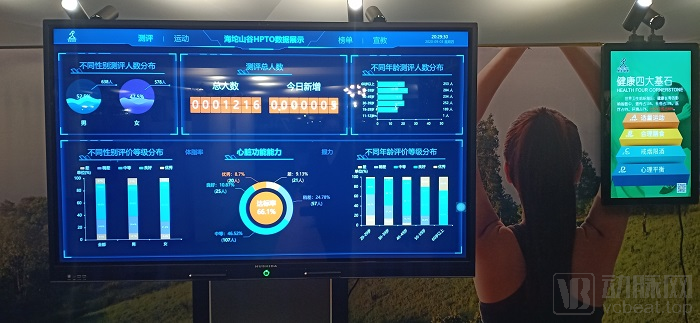
Scientific Fitness Big Data Platform
Driven by market changes, Acmeway’s business model is also evolving. Xu Junhua stated that prior to 2006, there was no demand for exercise prescription service systems.With the development of mobile internet, Acmeway Health has gradually expanded from physical fitness assessments to health management interventions and remote management.Abroad, exercise prescriptions have already been integrated with commercial insurance. Currently, Acmeway is also making attempts and explorations in this direction.
Acmeway’s primary customer base consists of chronic disease rehabilitation service institutions, with “chronic diseases” mainly referring to hypertension, diabetes, fatty liver disease, obesity, and cancer.Acmeway empowers chronic disease rehabilitation service providers by helping them build platforms to better manage patients across four key dimensions:
1. Talent Development.Acmeway itself holds two major training and certification accreditations from ACSM+CASM and the China Sports Rehabilitation Education Institute, enabling it to issue valid certificates to qualified professionals;
2. Provide a screening and assessment system.Acmeway Health integrates medical and technical indicators to help service providers assess patients’ physical fitness before prescribing exercise, thereby delivering safe, effective, and personalized exercise prescriptions.
3. Provide sports rehabilitation training expertise to service institutions.By integrating medical rehabilitation technologies, it helps service institutions provide sports rehabilitation services to patients;
4. Assist service institutions in establishing their own big data management and service platforms for exercise prescriptions and exercise rehabilitation, integrating it with the performance of service institutions to assist them in strategic planning.
By providing services, Acmeway Health can also further acquire big data, upgrade its algorithms and exercise prescription library, and further help build the national exercise prescription library and industry standards, thereby promoting the development of the industry. In this process,Acmeway serves as a SaaS provider, offering service tools to chronic disease rehabilitation institutions.
Meanwhile,Acmeway Health has developed a comprehensive suite of product solutions, including a physical fitness assessment and exercise prescription system, a chronic disease rehabilitation monitoring and management system, an online exercise prescription management tool, data products (such as the National Fitness Big Data Platform), and course-based offerings.
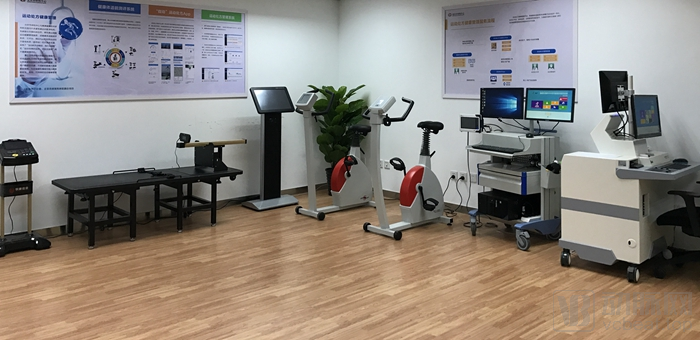
Application Scenarios of Acmeway Health and Fitness Management System
Created by Acmeway HealthMicromotion HELP ProjectFor example, the Health Exercise Lifestyle Programs refer to health and exercise lifestyle management initiatives. In this context, they also leverage the acronym’s alternative meaning: HELP, signifying assistance and life-saving. The term “micro-movement” distinguishes itself from strenuous activities such as marathons; during rehabilitation management, patients can achieve significant health benefits through only mild physical activity.
Centered on micro-movement HELP s, Acmeway Health has developed a series of products including the Micro-Movement Steward, and launched different versions.In addition to the general version, Weidong Steward includes specialized versions tailored for diabetes management, weight loss, and cancer care. The Physical Fitness Assessment and Exercise Prescription System, as well as the Chronic Disease Rehabilitation Monitoring and Management System, are integrated with Weidong Steward. This integration serves as a bridge connecting physicians with patients, facilitating long-term disease tracking and management by healthcare providers. The Weidong HELPz program also enables patients to access high-quality services. Institutions can customize their own Weidong Steward solutions based on their specific needs.
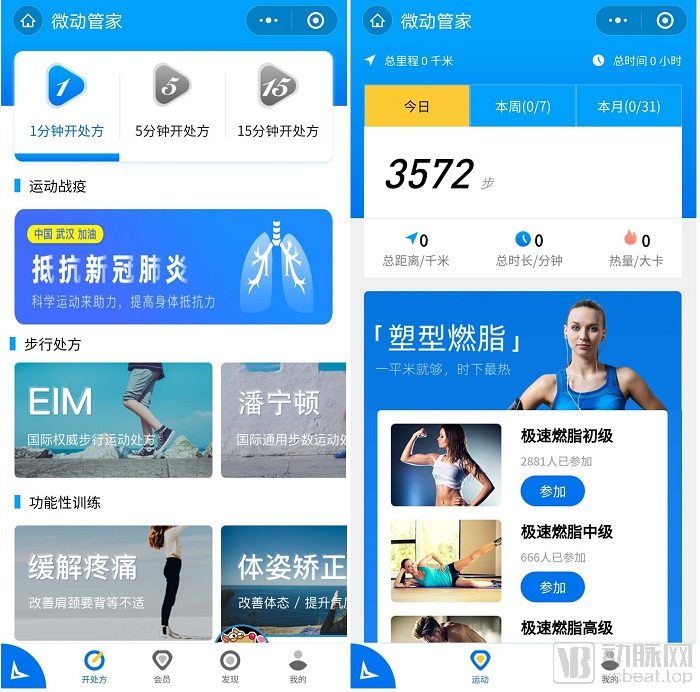 Acmeway Health “Micro-Motion Manager” Product: The left side shows the doctor’s interface, and the right side shows the user’s interface.
In the past, Acmeway expanded its user base through traditional academic closed-door meetings.Currently, it achieves conversion by training students., once trainees acquire knowledge of exercise prescriptions, they will apply it and adopt Acmeway’s exercise prescription service platform.In the future, Acmeway Health plans to expand its potential user base by establishing urban branches and partnering with collaborators.
In 2018, Acmeway Health shifted from its previous direct-sales model to an agency-based distribution model. While streamlining its workforce to just over 40 employees, the company further enhanced personnel efficiency. It stated that medical services, academic institution partnerships, and health real estate projects would be the key revenue drivers this year.
Acmeway Health is currently collaborating with hospitals and rehabilitation institutions across various regions.Multiple hospitals, including Southwest Hospital, Sichuan Provincial People’s Hospital, Jiangsu Province People’s Hospital, Guangzhou Cadres’ Sanatorium, and Aorunda Rehabilitation Hospital, maintain cooperative relationships with Acmeway Health.Acmeway Health is also advancing into the oncology sector, currently collaborating with the oncology departments of Jiangsu Cancer Hospital and multiple hospitals in Sichuan, Chongqing, Hunan, Guangdong, and other regions. Nowadays,Acmeway Health is also exploring new business cooperation models., in addition to charging partner institutions for equipment, it also collects a fixed annual SaaS service fee, delivering an enhanced service experience to customers through this innovative collaboration model.
Acmeway Health aims to further increase the proportion of its healthcare revenue in total revenue, gradually exceeding 50%. Meanwhile, Acmeway Health hopes to achieve a revenue of RMB 50 million in 2021 and launch its IPO plan in 2023.
Acmeway Health Plan secured tens of millions of yuan in financing this year, further accelerating the development of its cancer rehabilitation projects and expanding its base of new commercial clients.It plans to expand its network by 30–50 rehabilitation institutions next year, which will require a certain amount of capital investment.
Xu Junhua stated that the emergence of an increasing number of companies in the field of exercise prescriptions indicates that the market has taken off. However, certain issues persist within the industry at this stage.
First, the industry needs to establish a comprehensive set of standards to help hospitals and rehabilitation institutions avoid unnecessary detours. Second, the industry must build a complete service chain for chronic disease rehabilitation. The integration of medical care, health management, and elderly care will become a trend; the industry needs to form a complete chain of chronic disease management services, including exercise prescriptions, through medical consortia and health alliances. Third, the industry still requires substantial data accumulation to enable artificial intelligence to assist physicians in intelligent diagnosis.
Xu Junhua also pointed out that emerging industries inevitably face numerous challenges. As population aging intensifies and health awareness among those born in the 1970s and 1980s steadily rises, concepts of health consumption will undergo significant transformation. This presents a prime opportunity for enterprises; companies in the field of exercise prescription should seize this moment to build their own ecosystems.
Appendix: The History of Exercise Prescription Development in China and the United States
In the 1970s, the United States experienced a persistently high prevalence of chronic diseases driven by economic development. As neither pharmaceuticals nor surgery could fully address these conditions, research into sports medicine was initiated, leading to the discovery of correlations between exercise and disease management as well as rehabilitation. However, this concept was not initially accepted by clinicians.It was not until the 1990s, after core authoritative journals such as *The Lancet*, *Nature*, *Science*, and *Cell* published groundbreaking findings in sports medicine that garnered widespread attention, that hospitals began to gradually embrace exercise prescriptions and incorporate them into clinical practice.
The United States has progressively established exercise prescription as a systematic academic discipline, forming a comprehensive and standardized framework for training and clinical application services, while integrating commercial insurance to promote its development.
The United States categorizes exercise prescriptions and rehabilitation processes into four stages: the clinical treatment stage, the postoperative rehabilitation stage, the long-term community-based rehabilitation stage, and the remote home-based self-management stage. Exercise prescriptions play a significant role throughout this process, primarily in three aspects: alleviating patient burden and enhancing therapeutic efficacy; helping patients reduce recurrence rates and prevent complications through rehabilitation; and assisting individuals in establishing healthy, regular exercise habits to prevent chronic diseases, mental disorders, neurological conditions, cancer, and other illnesses.
In the 1980s, the first batch of Chinese scholars visited the United States for academic exchanges and introduced exercise prescriptions., such as Chen Junshi from the Chinese Center for Disease Control and Prevention, Hu Dayi from the First Affiliated Hospital of Beijing Medical University, and Yang Jingyi from Beijing Sport University. They referenced American guidelines and literature to compile the first batch of domestic textbooks on exercise prescriptions, translated works related to aerobic exercise and exercise prescriptions, and carried out exploratory work in teaching and clinical practice.
In 2000, around the time when Acmeway Health attempted to enter this field, the application of exercise prescriptions in China was just getting started, mainly used in chronic disease prevention and cardiac rehabilitation. However, both the domestic healthcare system and the general public had limited knowledge about it.In 2020, the development of exercise prescription in China resembled that of the United States in the 1980s and 1990s. Research outcomes, societal acceptance, physicians’ understanding, and hospital implementation were all quite similar, marking the beginning of a phase of rapid promotion and growth.
Currently, some hospitals in China are applying exercise prescriptions for clinical treatment and postoperative rehabilitation. In terms of long-term community-based rehabilitation, certain cities have begun to gradually introduce such programs, though they remain in an exploratory phase. For remote home-based self-management, overall social acceptance remains low.
The Development of Exercise Prescriptions in China Faces Its Own Challenges.Exercise prescriptions were initially promoted by the sports science community. It was not until 2012, when scholars from the China Institute of Sport Science of the General Administration of Sport of China, the Chinese Center for Disease Control and Prevention, and Beijing Sport University submitted proposals to the Two Sessions, that the integration of sports and medicine was facilitated. In 2014, the State Council issued the Several Opinions on Promoting the Development of the Health Service Industry. In 2016, with the introduction of the concept of integrating sports and medicine under the Healthy China initiative, sports medicine experienced significant development; however, the promotion of exercise prescriptions remained primarily led by the sports sector.
When the sports department and the National Health Commission jointly conduct training on exercise prescriptions, the participants arranged by the National Health Commission are often general practitioners, lacking the involvement of renowned specialists from tertiary hospitals to expand the influence of exercise prescriptions. In addition, only a small proportion of the training instructors have a medical background, and most lack an understanding of clinical practice. Nevertheless, promotional efforts led by the sports department continue to advance the popularization and public education of exercise prescriptions.
In July 2019, the State Council concurrently issued the “Opinions on Implementing the Healthy China Initiative,” the “Implementation Organization and Assessment Plan for the Healthy China Initiative,” and the “Healthy China Initiative (2019–2030),” accelerating the development of Healthy China into a fast track for nationwide health actions. All these documents proposed accelerating the integration of sports and medicine and establishing exercise prescription clinics.Beijing took the lead in including exercise prescriptions in the medical insurance reimbursement catalog. In June 2020, Hunan Province included health-related physical fitness and exercise management in its medical insurance reimbursement catalog.
In August 2020, the Chinese Medical Association (CMA) incorporated exercise prescriptions into its framework and approved the establishment of the Chinese Academy of Sports Rehabilitation Education. Li Guoping, former Director of the Institute of Sports Medicine under the General Administration of Sport of China, founding Chairman of the CMA’s Branch of Sports Medicine, and Chairman of the Sports Medicine Branch of the China Sport Science Society, was appointed as the Dean. The Chinese Academy of Sports Rehabilitation Education has pooled physician resources from more than ten clinical departments within the healthcare sector, facilitating dialogue and collaboration on the development of industry standards, professional training, and public science education. These efforts have significantly advanced the integration and development of exercise prescriptions within the broader healthcare and wellness industry.