

AnyHealth Files IPO Prospectus: Building an Integrated Online-Offline Health Management System Powered by AI and Longitudinal体检 Data
“Unlike the disease-centered medical models prevalent in the market, we aim to build a health-centered medical model,” said Liu Yan, Founder and CEO of Wuxi Anhe Health Technology Co., Ltd. (hereinafter referred to as “Anhe Health”).
As the state and government have elevated “national health” to a national strategy and residents’ health awareness continues to rise, the big health industry has experienced rapid development. According to statistical data from the Strategic Planning for China’s Big Health Industry and Corporate Strategy Consulting Report released by Qianzhan Industry Research Institute, the scale of China’s big health industry was projected to exceed RMB 10 trillion by the end of 2020, with an expected reach of RMB 14.09 trillion in 2023.
The vast market size of the health and wellness industry has attracted a large number of healthcare companies to enter the field. How to “survive and thrive” in this highly competitive arena is a critical challenge facing every participant.
Anhe Health was established in 2010, originally under the name “Wuxi Xifeng Information Technology Co., Ltd.” In 2015, it was officially renamed “Wuxi Anhe Health Technology Co., Ltd.” As a digital health management platform company in China with leading concepts and innovative capabilities, Anhe Health advocates for healthcare and prevention prior to disease onset. Over the past decade, the company has provided comprehensive health management solutions to government agencies, central state-owned enterprises, large domestic and multinational corporate groups, and various professional institutions, achieving annual revenues of tens of millions of yuan.

In the fiercely competitive “battlefield” of the broader health sector, how has Anhe Health built its moat? Recently, VCBeat conducted an exclusive interview with Liu Yan, founder of Anhe Health, to provide insights on this topic.
The World Health Organization has disclosed that only 15% of China’s population meets the WHO’s definition of health, while another 15% are in a state of disease, leaving the remaining 70% in a state of suboptimal health. “We believe that the large population with suboptimal health can be intervened through lifestyle changes, thereby achieving disease prevention,” pointed out Liu Yan.
How to Intervene Effectively? Liu Yan noted that the health checkup market serves as a promising entry point. In 2018, the number of health checkups in China reached 575 million, accounting for 42% of the total population. With rising health awareness among residents and policy support, the coverage rate of health checkups is expected to increase further.
Before embarking on her entrepreneurial journey, Liu Yan worked in medical statistics at Yale School of Medicine and a U.S. healthcare company. In 2000, she co-founded China Health Link, an internet healthcare platform, with Accenture, serving as its President. With a keen sensitivity to data, Liu believes that health checkups can offer much more than they currently do.
“China’s health checkup market is vast, but the services currently offered are limited to ‘detecting diseases for treatment.’ This means that only 15% of individuals with diagnosed conditions receive intervention, while 70–80% of those in a sub-health state remain underserved,” said Liu Yan.
In the deep cultivation of the broader health sector, data is core. In her view, health checkup services, especially the data generated from them, deserve further mining and utilization.
Subsequently, Anhe Health collaborated closely with the insurance industry to establish numerous “Health E-Stations” in the Jiangsu region, leveraging the Internet of Things (IoT) for data collection and accumulation. After 2015, the company repositioned itself to conduct in-depth research on health examination data. To address the challenges of non-standardization and unstructured formats inherent in such data, Anhe Health diligently developed standardized protocols for the digitization and structuring of health examination reports, while also employing artificial intelligence (AI) technologies to build AI-driven analytical models.
“Our analytical models constitute our core competitiveness. They underpin our quantitative assessment of sub-health status and enable future health risk predictions based on physical examination data. In addition to these analytical models, we have developed an AI-powered intelligent intervention system. This system generates personalized intervention plans based on physical examination data, including dietary recommendations, exercise regimens, and Traditional Chinese Medicine (TCM) wellness strategies, helping individuals with sub-health conditions return to a state of optimal health,” stated Liu Yan.
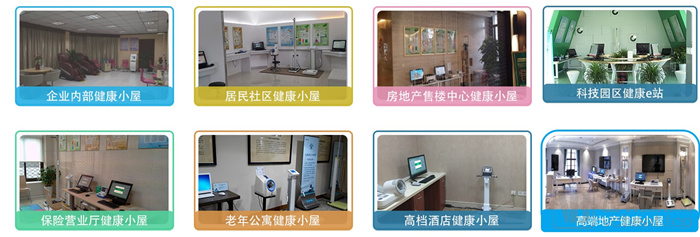
Figure Note: Anhe Health—Applications of the Health E-Station in Various Scenarios
Meanwhile, Anhe Health has partnered with Mediguide, a world-leading overseas medical service provider, to establish collaborations with over 150 top-tier hospitals globally. It has also forged close partnerships with more than 1,500 Grade-A tertiary hospitals in China, over 1,000 health examination centers, more than 4,000 medical experts, 10+ domestic and international health research institutions, and over 50 domestic manufacturers of health monitoring devices.
Through data tracking and multi-party collaboration, Anhe Health has begun to build a comprehensive health management system.
“In the past, people merely collected data through IoT devices without any follow-up health interventions. Today, we leverage big data-based risk prediction models and the SIR-C management framework, using health data as the entry point and IoT devices as tools for health management, thereby constructing a novel health management system,” introduced Liu Yan.
Liu Yan stated that Anhe Health’s product series is built around a closed-loop health management system centered on the SIR-C medical model. The SIR-C model comprises four key components: “health information collection, health status assessment, health behavior intervention, and continuous health care.”
Collection of health information refers to the systematic, continuous, and multi-dimensional acquisition of individual and population health data through various intelligent methods, providing a basis for subsequent assessment and intervention management. Assessment of health status involves qualitative and quantitative analysis of health risk factors and sub-health conditions in individuals and populations using professional health risk assessment systems. Health behavior intervention entails developing personalized health intervention guidance plans for individuals and populations based on the results of health status assessments, and facilitating their implementation through intelligent monitoring. Continuous health care involves tracking dynamic changes in diet, exercise, and other key indicators to obtain precise feedback, regularly evaluating the effectiveness of intervention management, and adjusting intervention plans accordingly.
Liu Yan introduced that, under the SIR-C model, Anhe Health has built three major platforms.
First is the physical examination service platform. Anhe Health’s platform is a comprehensive solution covering pre-examination, intra-examination, and post-examination phases. It includes appointment scheduling, examination services, digitization of medical reports, and quantitative assessment of sub-health status. Without increasing the budget, it establishes lifelong electronic health records for users to monitor and analyze their health trends. Simultaneously, it performs big data analytics for enterprises, conducts population stratification, and provides tailored intervention plans for different demographic groups.
The second is the Health Steward Platform. This platform includes service modules such as Health Steward, Weight Management/Four Highs Management, Lung Care Plus/Heart Care Plus/Sleep Care Plus, and Family Doctor Services. It facilitates user health management by conducting interventions based on quantitative assessments of sub-health status derived from physical examinations, and by connecting users with general practitioners, health managers, and related products. For instance, currently, Anhe Health’s health management platform equips users with metabolic syndrome with blood pressure monitors and multifunctional analyzers, while providing follow-up tracking services through backend family doctors. For users at risk of myocardial infarction, it provides smartwatches with ECG monitoring capabilities to promptly send alerts to both individuals and healthcare professionals. For users with poor sleep quality, it offers smart pillows capable of monitoring sleep data and improving sleep conditions.
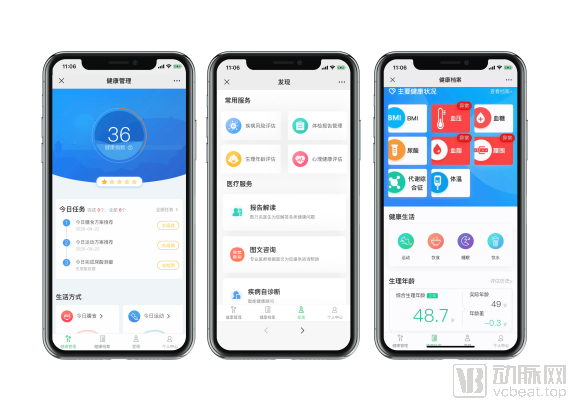
Figure Caption: Anhe Health — Health Steward Platform
“Overall, our service platform is a SaaS digital health platform,” said Liu Yan.
Furthermore, in terms of medical services, Anhe Health offers a range of solutions, including 24/7 telephone physician consultations, green-channel services for critical illnesses, overseas second-opinion services, AI-assisted interpretation of pulmonary nodules, and AI-powered intelligent fundus screening.
As is well known, the most critical pain point in health management is patient compliance. Both physical examination service platforms and health steward platforms are based on online services; however, only through the full integration of online and offline services can comprehensive health management be achieved for users.
For offline health management, Anhe Health has created an immersive health scenario experience, which constitutes its third major platform. By establishing Health E-Stations and launching a series of online lifestyle competitions and training camps—such as weight management camps and immunity-boosting camps—the company provides corresponding health promotion services to enhance users’ health indices.
By establishing the Corporate Health E-Station, data on customers' physiological health and daily lifestyle habits can be collected, providing a robust data foundation for disease prediction and intervention, and encouraging customers to adopt healthier lifestyles.
Leveraging its superior product architecture, Anhe Health has established partnerships with numerous well-known domestic enterprises and institutions, including SF Express, Liby, Accenture, Yum China, China Life Insurance, and Dajia Insurance. Of particular note is its collaboration with the Wuxi Public Security Bureau.
“High intensity, high pressure, and high risk” are the hallmarks of police work. Within the public security system, cases of officers suffering from work-related illnesses and premature death occur from time to time, which is deeply distressing. According to media reports, investigations across various regions have revealed that the physical health status of police officers is far from optimistic.
“In Wuxi, there is a special fund for critical illnesses and extreme hardship within the public security system, designed to assist police officers suffering from serious diseases. However, in practice, this assistance is provided after the fact, when conditions are already irreversible. Although police officers undergo annual health check-ups, cases of critical illness and sudden death still occur. Therefore, we are considering whether it is possible to shift the focus from post-event condolences to preventive measures,” pointed out Liu Yan.
Through research, Anhe Health has found that the proportion of overweight individuals, as well as those with hypertension and hyperglycemia, among public security personnel has been rising year by year, with 70% of them in a state of sub-health.
In 2017, Anhe Health officially established a partnership with the Wuxi Public Security Bureau. From 2017 to the present, Anhe Health has developed the “Police Care Health” App, Smart Health Kiosks, and a comprehensive digital precision management service for the Wuxi public security system. Leveraging a smart health system based on the Internet of Things (IoT), mobile internet, and health big data, this initiative enables scientific and systematic monitoring of police officers’ health status, thereby enhancing health early-warning capabilities and disease prevention and control.
In the initial phase, the platform aggregated over 10,000 medical examination reports from police officers. Through health risk assessments, it identified individuals at high risk for cardiovascular diseases and metabolic syndrome. “We provided smartwatches to police officers at risk of myocardial infarction, enabling backend physicians and health managers to conduct follow-up management through a combination of online and offline approaches,” added Liu Yan.
Eleven smart health kiosks have been established within the Wuxi public security system to conduct routine health screenings. Classified management is implemented for key personnel, with regular grassroots health outreach campaigns and daily health activities carried out across the entire police force. Liu Yan pointed out, “In the past, the E-Station served only a screening function. Now we have endowed it with additional capabilities. It is no longer just a screening point; it also serves as a health education center, a management hub for key populations, a physical therapy center, and a grassroots health management service center. Only in this way can the full potential of the Health E-Station be realized.”
Over the past three years of health management, there has been a significant improvement in the health metrics of public security officers. In particular, notable improvements have been observed in fatty liver disease, hyperlipidemia, and hyperuricemia. Meanwhile, the Smart Health Police Camp Big Data Application and Management System was honored as one of the Top 100 Cases in Wuxi City’s New Smart City Construction initiative.
Liu Yan excitedly informed us that the collaboration model with the Wuxi Public Security Bureau has been established and has become a national benchmark for public security agencies in China. It has now been successfully extended to other municipal-level public security bureaus across Jiangsu Province, with plans to expand nationwide in the future.
Assisting a Grade A Tertiary Hospital in Shanghai to Build a Health Management Center,
Pilot Project on Health Management Services in Collaboration with a District Government in Beijing
Leveraging its profound understanding and advanced concepts of “Internet + Healthcare,” along with years of experience in the research, development, and operation of the “AnyHealth Health Management Cloud Platform,” Anhe Health has collaborated with a Grade 3A hospital’s health management center, big data center, and relevant departments to jointly establish a health management center and service system that is clearly positioned, technologically leading, domestically exemplary, and internationally first-class. By achieving data-driven, digital, knowledge-based, and intelligent transformation of various services within the health management center, Anhe Health adapts to future technological developments and drives innovative leadership at both technical and managerial levels.
In September 2020, the government of a district in Beijing launched a pilot project to promote health management services among the working population. The initial phase covered 10,000 employees from more than 50 entities in the district’s healthcare and education sectors. Anhe Health, an online health management service provider with extensive expertise and a mature platform, was selected to supply the project with a WeChat mini-program-based health management service platform. Just over a month since its launch, Anhe Health is fully committed to contributing to the vision of “Healthy China.”
After operating stealthily in the broader health and wellness sector for a decade, Anhe Health has maintained self-sustaining operations. With its business model now mature, Liu Yan aims to initiate a new round of financing this year, seeking approximately RMB 45 million. The funds will be used to further develop the platform, enhance the intelligence, user-centricity, and precision of its product capabilities, and provide users with more accurate health assessments and more diversified health management solutions.