

2020 China Internet Enterprise Social Responsibility Ranking Released: Alibaba, WeDoctor, and Huawei Top the List
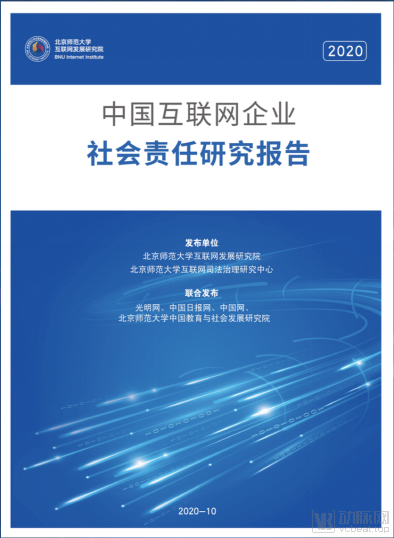
On October 16, the Second China Internet Enterprise Social Responsibility Summit and the launch ceremony of the “2020 China Internet Enterprise Social Responsibility Report” (hereinafter referred to as the “Report”) were held in Beijing. The Report was jointly and authoritatively released by the Institute for Internet Development at Beijing Normal University, the Center for Internet Judicial Governance Research, Guangming Online, China Economic Net, China Daily Online, China.org.cn, and the Chinese Academy of Education and Social Development at Beijing Normal University. It systematically evaluates the current state of social responsibility practices among Chinese internet enterprises, providing a basis for strengthening social responsibility awareness, improving social responsibility management, better promoting the integration of economic and social benefits, and fostering healthy and orderly development of enterprises and the industry.
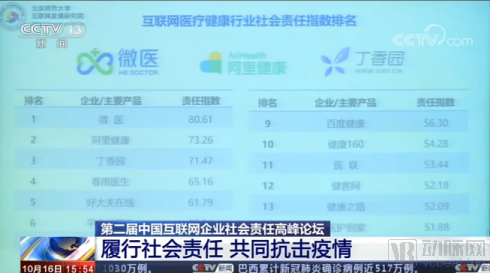
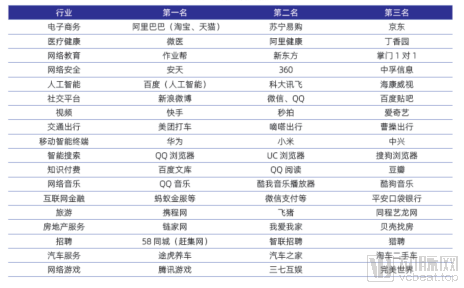
The report indicates that among the 18 internet sectors examined, new business models and formats such as e-commerce, healthcare, and online education have made outstanding contributions to normalizing people’s work, daily life, and learning during the pandemic. In the corporate social responsibility rankings for the internet healthcare sector, WeDoctor, a digital health unicorn, ranked first with a Responsibility Index score of 80.61, and placed second in the overall index rankings, just behind Alibaba (Taobao, Tmall), which scored 80.86. Huawei ranked third with a score of 80.21. It is reported that this marks the second time WeDoctor has topped the internet healthcare industry list since the rankings were first released last year, while its overall index ranking rose from fifth place last year to second place this year.
This report focuses on 18 specific sectors, including e-commerce, healthcare, online education, cybersecurity, artificial intelligence, social platforms, video services, transportation and mobility, and mobile smart terminals. It selects 240 entities for analysis and establishes specific indicators across six dimensions—“social value,” “product/service responsibility,” “entrepreneurial responsibility,” “responsibility management,” “corporate philanthropy,” and “negative impacts”—to evaluate the current state of their corporate social responsibility (CSR) development, with particular emphasis on the CSR performance of internet companies during the pandemic.
2020 marked the year for achieving the goal of building a moderately prosperous society in all respects, the decisive year for winning the battle against poverty, and the final year of the 13th Five-Year Plan. The digital economy, represented by the internet, has increasingly become an important pillar of the national economy, leading and driving new transformations in social production and lifestyles. In the face of the formidable challenges posed by the COVID-19 pandemic, internet companies, especially those in the digital health sector, have fully leveraged their advantages to demonstrate corporate social responsibility and commitment in combating the pandemic, advancing the “Six Guarantees” and “Six Stabilities,” and supporting poverty alleviation efforts.
As an industry-leading digital health platform, WeDoctor launched the “Real-Time Assistance Platform for COVID-19” at the very onset of the outbreak. Leveraging digital technologies, it provided innovative services nationwide, including free online consultations, free psychological counseling, public education on epidemic prevention, and online medication purchasing and delivery. These measures effectively reduced the risk of cross-infection associated with in-person medical visits and facilitated the reporting of suspected cases, thereby opening up an “aerial battlefield” in the fight against the epidemic. As of October 15, the assistance platform had served over 2.23 million individuals, with total visits exceeding 157 million and a single-day peak of more than 11 million visits. In international epidemic response efforts, WeDoctor launched the “Global Anti-Epidemic Platform” to provide free services to overseas users, reaching nearly 3.6 million people across more than 220 countries. The platform received official endorsements from China’s Ministry of Foreign Affairs and 176 Chinese embassies and consulates abroad. Additionally, WeDoctor donated one million medical-grade masks through the Ministry of Foreign Affairs and Chinese consulates abroad to support fellow citizens overseas.
To effectively safeguard people’s daily lives and production activities, WeDoctor has deployed teams to the front lines across various regions, helping 152 counties, cities, and districts in 15 provinces establish digital platforms for epidemic prevention and control. It has also enabled online medical insurance payments for follow-up consultations and medication purchases for patients with chronic diseases in Wuhan (Hubei), Tianjin, Tai’an (Shandong), and other areas, thereby ensuring patients’ access to necessary medications. It is reported that in Wuhan alone, WeDoctor has provided online follow-up consultations, prescription services covered by medical insurance, and home delivery of medications to 400,000 patients with severe chronic conditions. To continuously meet the public’s routine demand for high-quality healthcare services, WeDoctor is progressively advancing the digitization and interoperability of various elements within healthcare services. By implementing the “Digital Health Community,” which centers on people’s health, the company is carrying out infrastructure development for medical digitization, including joint procurement of pharmaceuticals, consumables, and medical devices; smart medical insurance; tiered diagnosis and treatment; internet hospitals; and chronic disease management systems. The “Digital Health Community” integrates multiple stakeholders, such as medical insurance agencies, healthcare institutions, elderly care service providers, commercial insurance companies, pharmaceutical manufacturers, and pharmacies, to build an inclusive, shared, and equitable healthcare service system that spans both online and offline channels. This initiative comprehensively enhances primary healthcare capabilities at the regional level and improves the overall health status of the population. Currently, the “Digital Health Community” is being implemented in Tianjin, Shandong, Hubei, and other regions.

In its practical efforts to support the fight against poverty, WeDoctor has undertaken numerous innovative explorations to address the challenges of difficult access to medical care and poverty caused or exacerbated by illness. By leveraging internet technologies, artificial intelligence, and big data, integrated with smart terminal devices, WeDoctor has established a basic healthcare security network spanning the county, township, and village levels in impoverished areas. This initiative has pioneered a new path of "blood-creating" digital health poverty alleviation, enabling impoverished households to access and afford medical services. To date, it has provided services to over 25 million grassroots residents in regions including Gansu, Tibet, Xinjiang, Qinghai, Henan, Shaanxi, and Hebei.
In September 2019, the 2019 National Awards for Poverty Alleviation, organized and evaluated by the State Council Leading Group Office of Poverty Alleviation and Development, were officially announced. Liao Jieyuan, founder of WeDoctor, received the National Poverty Alleviation Award for Innovation. Liao stated that WeDoctor would continue to explore the digital health sector. On one hand, it would leverage new technologies to facilitate the efficient downward flow of high-quality urban medical resources to impoverished areas. On the other hand, it would increase investment and adopt localized strategies to build “Digital Health Communities,” thereby continuously providing society with higher-quality, more efficient, and accessible healthcare services.