

Zhiyun Health's SaaS Platform 'Zhiyun WenZhen' Covers 100,000 Pharmacies Within One Year, Delivering Prescription Compliance, Digital Transformation, and Enhanced Healthcare Services
In August this year, the National Medical Products Administration (NMPA) website released the 2019 Annual Statistical Report on Drug Supervision. The report stated that by the end of 2019, there were a total of 544,000 enterprises nationwide holding a "Drug Operation Permit," including 14,000 wholesale enterprises, 6,701 retail chain enterprises, 290,000 retail chain outlets, and 234,000 retail pharmacies. Excluding wholesale enterprises, the number of licensed drug retail enterprises in China was approximately 530,000, with a chain store rate of nearly 56%, an increase from the chain store rate in 2018 (nearly 53%).
What does this concept entail? This set of data indicates that in China, there is approximately one pharmacy for every 2,700 people, whereas in developed countries, there is only one pharmacy for every 6,000 people on average. In terms of scale, China surpasses developed nations. Of course, the “saturated” state on the supply side has also enabled the public to transition from the former situation of “limited access to medical care and medicines” to the current state of “accessible medical care and medicines,” and further to a stage of pursuing “high-quality medical care and premium medicines.”
Focusing on the development of retail pharmacies, against the backdrop of the coordinated reforms in healthcare, health insurance, and pharmaceuticals (“Three-Medical” linkage), policies are being continuously intensified, online pharmaceutical e-commerce is exerting significant pressure, offline competition is intensifying, and profit margins are shrinking... A survival-threatening storm is sweeping across the industry. Meanwhile, retail pharmacies find themselves in an increasingly “awkward” operational position, constrained by their lack of qualification to issue prescriptions, a substantial shortage of licensed pharmacists, and increasingly stringent regulatory oversight of prescription drugs. How to break through these challenges has become a pressing dilemma.

Zhiyun Consultation is a SaaS platform specifically designed for pharmacies and stands as one of the core businesses under Zhiyun Health. With the assistance of Zhiyun’s online physicians, pharmacies can rapidly and compliantly issue prescriptions for follow-up patients through the Zhiyun Consultation platform. This facilitates safe, high-quality, and efficient prescription circulation management, establishing a comprehensive service bridge between follow-up patients and pharmacies. Within one year of its launch, Zhiyun Consultation has covered 100,000 pharmacies across China. Notably, Zhiyun Consultation has entered into a strategic partnership with the well-known pharmacy chain brand “Yixintang,” with over 5,000 of its pharmacies currently utilizing the Zhiyun Consultation platform.
“In fact, Zhiyun Consultation not only addresses prescription circulation and customer acquisition challenges for pharmacies, but also supports their digital transformation and helps enhance their health service capabilities,” said Yang Hongjie, Senior Director of the Pharmacy Business Division at Zhiyun Health.
Before analyzing the pain points of pharmacies, it is necessary to clarify the essential nature of pharmacies.
First, as a vital component of basic medical services, the ultimate goal of pharmacies is to help patients return to a state of health. Pharmacies fulfill an essential need and serve as social infrastructure, enjoying strong top-level policy support. Second, pharmaceuticals sold by pharmacies are highly standardized products, which implies that drug prices will decline as industry information transparency and consolidation levels increase. Finally, pharmacies differ significantly from other retail sectors; although the products they sell are standardized, their dispensing requires the intervention of professional health services. This indicates that pharmacies with certain health service capabilities will be able to achieve higher profitability in the future.

Given the unique attributes of pharmacies and their substantial scale of 530,000 outlets, the sector is currently grappling with three major pain points that urgently need to be addressed.
First, intensifying competition between online and offline channels and shrinking profit margins have made it urgent to enhance industry consolidation. Fierce online competition is mainly manifested in price transparency and the impact of price-comparison tools on e-commerce platforms such as Tmall and JD.com. Intense offline competition is evident in the fact that while the top 100 pharmacy chains account for only 6% of stores, they generate 18% of sales; in their pursuit of greater market share, price wars have become commonplace. Furthermore, with the advancement of policies such as volume-based procurement and tiered diagnosis and treatment, primary healthcare institutions—including community health centers and township health centers—have entered the price competition arena with pharmacies, further intensifying industry competition.
Second, the progress of informatization in pharmacies has been slow. Across the industry, large chain pharmacies have achieved relatively mature informatization, while small and medium-sized chains are still in the exploratory phase or remain stagnant. Major chain pharmacies such as Yixintang and Yifeng have invested heavily, employing hundreds of R&D personnel to develop ERP, CRM, and e-commerce systems. In contrast, many independent retail pharmacies in third-, fourth-, and fifth-tier cities still rely on manual bookkeeping practices. Their management of member health records is rudimentary, and the integration of online and offline data remains very low, reflecting a significant lag in informatization construction.
Third, the level of health services is low. Although China has a vast number of pharmacies, the staffing of pharmacists is severely insufficient. Data reveals that as of 2019, there were 509,374 licensed pharmacists nationwide, equating to only 3.7 licensed pharmacists per 10,000 people. With over 500,000 pharmacies currently in operation, the number of licensed pharmacists falls far short of meeting industry demand. A significant proportion of pharmacies lack licensed pharmacists, resulting in very limited health service capabilities when patients seek medication consultations.
Especially in the post-pandemic era, pharmacies should prioritize informatization construction and service quality improvement as key initiatives for survival, development, and revenue enhancement.
How Can Pharmacies Effectively Address These Challenges? Yang Hongjie, Senior Director of the Pharmacy Business Division at Zhiyun Health, Believes That the Zhiyun Consultation SaaS Platform Will Provide Effective Solutions.
The core of the Zhiyun Teleconsultation SaaS Platform is to provide specialized empowerment for pharmacies by establishing connections between pharmacies and patients through remote physicians, thereby driving pharmacy development.
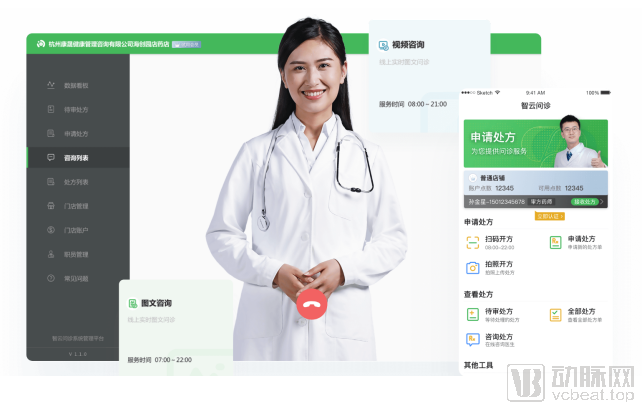
Key Features of the Zhiyun Consultation SaaS Platform: On the patient side, follow-up patients can engage in real-time text-and-image consultations and video visits. By quickly submitting a prescription request through the Zhiyun Consultation mini-program, the system rapidly matches them with a prescribing physician, ensuring timely care without waiting lines.
At the pharmacy end, diverse management scenarios are supported. Prescription data is synchronized in real time to the administrative backend, enabling secure, high-quality, and efficient prescription circulation management with customization options. Pharmacies can perform automated prescription statistics, queries, and printing via the backend.
For pharmacies, leveraging Zhiyun Consultation’s features—such as remote consultations, e-prescriptions, prescription review, and medication guidance—not only alleviates the supply-demand imbalance of licensed pharmacists but also expands prescription sources for prescription drug sales, thereby driving revenue growth. For follow-up patients, it eliminates the cumbersome process of queuing and registering at hospitals, enabling convenient medication purchases.
Yang Hongjie, Senior Director of the Pharmacy Business Division at Zhiyun Health, introduced that Zhiyun’s online consultation services are actually rolled out in three strategic steps.
The first step is to establish connectivity between in-store systems and clinical diagnosis and treatment systems. Zhiyun Wenzhen will provide pharmacies with diagnostic and therapeutic resources from the Zhiyun Internet Hospital, which has over 20,000 physicians available for online consultations. This enables pharmacy customers to access services such as video consultations and issuance of follow-up prescriptions. The second step focuses on information technology infrastructure, helping pharmacies optimize operations across multiple dimensions. This includes providing membership management systems, supporting the establishment of health management records, and assisting pharmacies in managing chronic disease prevention and care for their customers. The third step involves comprehensive online transformation of pharmacies, driven by omni-channel marketing and e-commerce operations facilitated by Zhiyun Wenzhen.
With the intervention of Zhiyun Consultation, pharmacies are no longer merely playing the role of pharmaceutical distribution; they also provide health services to users in the surrounding areas.
Yang Hongjie, Senior Director of the Pharmacy Business Division at Zhiyun Health, stated, “The core of our smart pharmacy solution is to help pharmacies establish ‘Community Health Service Centers,’ transforming them from mere retail outlets into comprehensive health hubs.” He added that this approach distinguishes Zhiyun Health from other similar enterprises in pharmacy empowerment, as it not only addresses fundamental pain points but also delivers greater added value to pharmacies.
“At present, we have served more than 100,000 pharmacies across China. With 20% of the country’s 500,000 pharmacies using our products and services, we provide specialized diagnostic and treatment services to hundreds of thousands of in-store patients every day,” pointed out Yang Hongjie, Senior Director of the Pharmacy Business Department at Zhiyun Health. “Based on a daily outpatient volume of 3,000–4,000 visits per tertiary hospital, this figure is equivalent to the daily service capacity of 100 tertiary hospitals.”
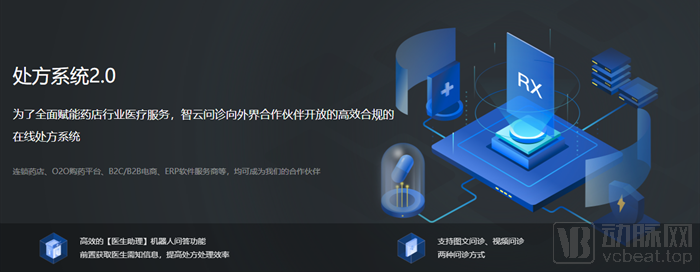
“In fact, the development of Zhiyun Consultation has gone through two stages. The first was the 1.0 stage, where we addressed the pain point of prescribing for follow-up patients at pharmacies by linking them with physician consultation services. The 2.0 stage builds upon these prescription and consultation services to extend the service boundaries of pharmacies, delving deeper into foundational infrastructure transformation,” said Yang Hongjie, Senior Director of the Pharmacy Business Division at Zhiyun Health.
As a leading one-stop chronic disease management and smart healthcare platform in China, Zhiyun Health’s core mission is to provide patients with more professional treatment and services in out-of-hospital settings, helping them better return to a state of health. Internet healthcare has played a crucial role in alleviating the pressure on offline clinical services and preventing medical resource overcrowding. However, integrating online and offline services to achieve seamless end-to-end connectivity across clinical consultations, prescriptions, and medication dispensing remains a significant challenge.
From the hospital-based SaaS platform for chronic disease management and the Zhiyun Internet Hospital Platform to the pharmacy prescription services SaaS platform, Zhiyun Health has established an advanced ecosystem for chronic disease care that integrates in-hospital and out-of-hospital settings as well as online and offline channels. This has enabled the company to build a strong competitive moat in the broader health sector and achieve a significant lead within the industry.
In the future, Zhiyun Consultation will closely align with Zhiyun Health’s digital health strategy to assist more pharmacies in achieving regulatory compliance and upgrading to an “Internet + Offline Pharmacy” model within the pharmacy setting. This includes facilitating community integration, e-commerce adoption, and service-oriented transformation for pharmacies, thereby helping them uncover additional value drivers and enhance the competitiveness of retail pharmacies.