

Walking the Tightrope: Will Medical Representatives Transform or Disappear?
The reputation of pharmaceutical sales representatives has long been less than favorable.
In recent years, with the continuous advancement and deepening of healthcare reforms, discussions about the future development path of pharmaceutical representatives have repeatedly topped trending search lists. On the eve of the National Day holiday,On September 30, the National Medical Products Administration officially released the “Administrative Measures for the Filing of Pharmaceutical Representatives (Trial)”.(hereinafter referred to as the “Administrative Measures”).
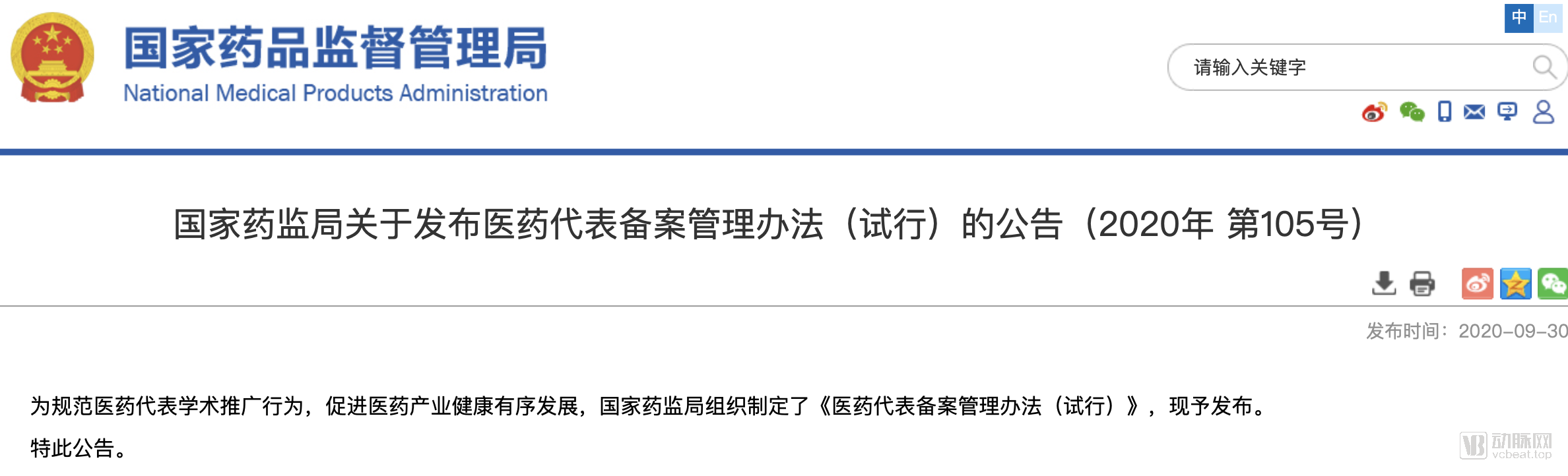
In the Administrative Measures, the state has clearly defined the concept of medical representatives:"Medical Representatives" refer to professionals who, on behalf of the drug marketing authorization holder, engage in the transmission, communication, and feedback of drug-related information within the People's Republic of China.Furthermore, the document explicitly stipulates the primary job responsibilities of medical representatives and imposes regulatory constraints on their conduct.
The Administrative Measures stipulate that pharmaceutical representatives shall not engage in the following conduct:
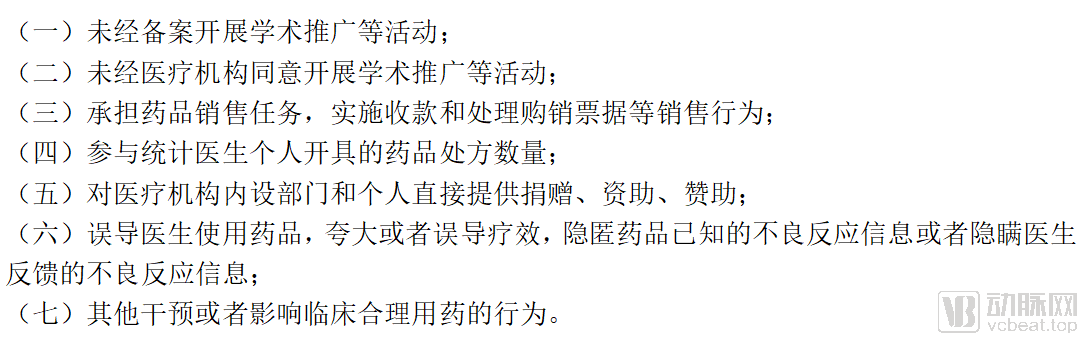
Pharmaceutical companies must not encourage or imply that medical representatives engage in illegal or non-compliant activities, including assigning drug sales targets to medical representatives or requiring them to collect prescription data.
The “Administrative Measures” explicitly stipulate that the primary job responsibilities of pharmaceutical sales representatives include:

The Administrative Measures emphasize that, following the implementation of the registration system for medical representatives, medical institutions shall not permit unregistered personnel to conduct academic promotion and other related activities directed at their medical or pharmaceutical staff; medical institutions may verify the registration information of medical representatives through the registration platform.
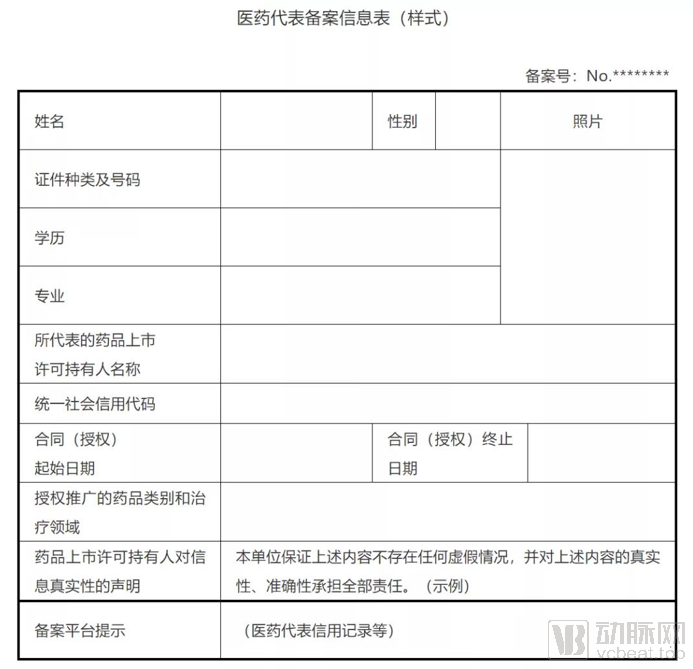
From its initial proposal to the second round of public consultation, the medical representative filing system underwent a process spanning approximately four years.Starting December 1, the four-year pilot of the medical representative registration system will be officially implemented.Renewed Interest in the Future Development Path of Pharmaceutical Sales Representatives
The Impact of Centralized Procurement Policies on Pharmaceutical Sales Representatives Is More Direct
Although the filing system for medical representatives clearly defines their job responsibilities, in terms of direct impact on these professionals, the influence exerted by the National Centralized Drug Procurement with Guaranteed Volume is perhaps more immediate and tangible.
The wave driven by the internet has laid bare the struggles of pharmaceutical sales representatives in recent years.
According to statistics, China had more than 3 million pharmaceutical sales representatives; after undergoing adjustments, transformations, and layoffs, the current number stands at approximately 2 million.Some industry insiders estimate that this figure will drop to 700,000–800,000 in the coming years. Some even suggest that within a decade, pharmaceutical sales representatives will be phased out by “digital pharmaceutical marketing,” leading to the disappearance of this profession.
So, what is the ultimate outcome? Will medical representatives “disappear”? What does the future hold for this special group that has grown in the narrow space between market forces and policy regulations? VCBeat seeks to map out the development trajectory of medical representatives over the next few years by interviewing a diverse range of medical representatives and analyzing current policy and industry trends.
Current Situation: “Unprofessional” Medical Representatives Face a More Dire Outlook Under Volume-Based Procurement
01 “Pharmaceutical Sales Representatives Remain Essential and Will Not Be Phased Out”
“For many pharmaceutical sales representatives, the centralized procurement policy has been a ‘major disaster.’ I was relatively fortunate and not affected by this round of centralized procurement, but many of my colleagues have suffered greatly and faced significant impacts,” a pharmaceutical sales representative at a state-owned enterprise in Jiangsu Province told VCBeat. As the company won bids in the second batch of centralized procurement, the original sales team of 20 for that product line was reduced to just four people, including herself. The remaining 16 colleagues were either laid off with severance packages (three months’ base salary plus additional compensation) or voluntarily left to join other companies, attempting to work on product lines not yet included in the centralized procurement program.
When asked about the reasons for being retained by the company, the pharmaceutical sales representative stated, “Part of the reason may be my relatively long tenure; I have been with this team for over three years and am highly familiar with the company’s operations and relevant product portfolios. Additionally, my sales performance has consistently ranked among the top three in our team. Both my sales techniques and professional expertise are widely recognized. The company still needs me.”
From the perspective of this pharmaceutical sales representative, demand for medical representatives has plummeted as volume-based procurement (VBP) continues. “It’s not just our company; pharmaceutical firms across China are laying off staff.” She expressed understanding of her company’s decision: “The prices at which our company won bids are extremely low, squeezing profit margins. Moreover, after winning bids, there is no longer a need to invest heavily in sales efforts to compete.”
When asked whether the government’s series of policies had influenced his career planning, the pharmaceutical sales representative gave a negative response. “When volume-based procurement (VBP) was first introduced, I certainly felt anxious and had many complaints. Everyone fears losing their livelihood. However, after experiencing VBP, I gradually gained confidence and became more composed. I believe that a major objective of these national policies is to curb ‘kickback-driven sales.’ The recent documents issued by the National Medical Products Administration (NMPA) are, to some extent, ‘cleaning up’ the pharmaceutical sales representative industry. As long as I maintain my professional competence, physicians and pharmaceutical companies will still need our services. This profession will not be eliminated; rather, it must undergo transformation.”
According to the pharmaceutical sales representative, after their company laid off a significant portion of its medical representatives, the remaining staff were each assigned larger hospital territories, raising the bar for required competencies. Their salaries remained unaffected and even saw a slight increase compared to before.
02 “Private hospitals, county-level hospitals, and online and offline pharmacies still have considerable room for growth”
“Although our company didn’t win the bid, times are still tough,” a pharmaceutical sales representative from Shenyang, who was “graciously laid off” by their employer, told VCBeat. Because competing companies secured bids for similar products, several of their company’s product lines lost significant market share. To further minimize losses, the company laid off more than half of the medical representatives associated with these product lines. Fortunately, in recognition of the hardships faced by long-serving employees, the company provided relatively generous severance packages.
When asked if he had considered leaving the industry, the pharmaceutical sales representative stated, “Not at the moment. Although the impact of centralized volume-based procurement has been quite strong, we have been in this industry for many years; it’s not something you can just walk away from. Transitioning is far from easy. Going forward, I plan to try switching to a different product line or moving to another territory.”
According to the pharmaceutical sales representative, certain “opportunities” still exist among private hospitals, county-level hospitals, and online and offline pharmacies in both pilot and non-pilot regions. These constitute his next targets. “I plan to take it one step at a time. If I really can’t continue, I’ll reassess then.”
Through an interview with this medical representative, VCBeat learned that,Since the “4+7” centralized procurement policy only covers most public medical institutions nationwide, its influence remains limited in private hospitals within pilot regions and in non-pilot areas.It is reported that as of the end of June 2020, the number of private hospitals reached 23,000, far exceeding the number of public medical institutions (12,000). Although the patient population covered by private hospitals is much smaller than that of public hospitals, they still hold considerable market influence within this significant segment.
In some county-level hospitals, hospitals and doctors still hold significant leverage.It is precisely because of these market opportunities that some pharmaceutical companies have begun to penetrate lower-tier markets by deploying medical representatives to county-level cities.
03 “Centralized Procurement Policies Are Driving Greater Standardization in the Pharmaceutical Sales Representative Industry”
Amid the national “centralized procurement storm,” foreign pharmaceutical companies have also been significantly impacted. Last year, several reports about Sanofi dissolving the medical team for Plavix, after its drug won the bid in the centralized procurement program, attracted widespread attention.
A pharmaceutical sales representative who has worked at Sanofi for four years told VCBeat that after the company’s product Plavix won the bid in centralized procurement, its profit margins tightened. To further reduce operating costs, the company laid off more than half of the sales representatives assigned to the Plavix product line. “The team of over 1,000 people was ultimately reduced to fewer than 200, with nearly 800 individuals either losing their jobs and receiving ‘N+3’ severance packages, being transferred to other product lines within the company, or voluntarily changing jobs.”
“Probably only a few people will remain in each province, each responsible for a larger region.” When asked how the work of the remaining staff would be adjusted, the pharmaceutical sales representative explained.
This pharmaceutical sales representative holds a relatively optimistic view on centralized procurement. In his opinion, the series of policies implemented by the state for pharmaceutical sales representatives are actually “purifying” this industry.
“Every year, CCTV exposes news about pharmaceutical sales representatives engaging in ‘kickback-driven sales’ or ‘relationship-based sales’ once or twice, which truly leaves those of us in the industry with a bitter taste. The exposure of such scandals has led a significant portion of the public to view the entire pharmaceutical sales profession through colored glasses. Regardless of whether one is a professional pharmaceutical sales representative, many people harbor preconceived biases deep down. However, in recent years, as healthcare reforms have continued to deepen, many pharmaceutical sales representatives who relied solely on kickbacks and personal connections to dominate the market have gradually been phased out. I believe this is a positive development. Of course, I am not implying that all laid-off pharmaceutical sales representatives fall into this category. Professional representatives can quickly pivot to another product line even if they are laid off, whereas unprofessional ones face considerable risk.”
The medical representative stated,A series of national policies are restoring the pharmaceutical sales representative profession to its original nature.“As this industry becomes increasingly mature and standardized, our genuine efforts are met with commensurate rewards, while unfair competition has significantly diminished. This is a positive development for pharmaceutical representatives like us, who are dedicated to mastering professional expertise and engaging in academic pursuits. No one can predict what the industry will look like in ten years; the only thing we can strive for is to excel in our own roles.”
04 “Pharmaceutical Sales Representatives Face Obsolescence Due to ‘Digital Pharmaceutical Marketing’ Within 10 Years”
The Wind of Centralized Procurement Blows Strongly. The number of pharmaceutical sales representatives in China has been reduced from over 3 million to around 2 million within just two years, and this trend is still ongoing.
A pharmaceutical sales representative from Johnson & Johnson stated that he has already considered career transition. He told VCBeat, “Although my primary focus is on innovative drugs, which have been largely unaffected by the ‘4+7’ centralized procurement policy, and my current job performance remains strong, I believe that the profession of pharmaceutical sales representative may become obsolete within the next decade.”
The medical representative stated that with the continuous introduction of national policies such as "volume-based procurement" and the "4+7" pilot program, the traditional labor-intensive sales model of pharmaceutical companies has faced severe challenges, leaving medical representatives with increasingly limited room for survival. "With the widespread application of internet technologies and artificial intelligence, and the advent of the era of digital pharmaceutical enterprises, many companies are now striving to develop 'intelligent internet-based virtual medical representatives.'"
“Intelligent Internet Virtual Pharmaceutical Representatives” are essentially digital pharmaceutical marketing.Digital Pharmaceutical Marketing: This primarily refers to the online marketing of prescription drug products under pharmaceutical companies, utilizing digital methods or based on digital application scenarios.
The pharmaceutical digital marketing services industry is primarily divided into three major categories:
(1) Basic CRM System
The company provides pharmaceutical enterprises with a basic marketing management platform, which may be lightly customized to meet the specific needs of the pharmaceutical industry or may be a general-purpose CRM system widely used across various industries. These products are capable of managing and analyzing data on user activity trails.
(2) Public Cloud SaaS Platform
The company provides pharmaceutical enterprises with a public cloud-based SaaS platform for digital marketing, integrating numerous functions required in the pharmaceutical digital marketing process, such as online visits, academic conferences, and case collection. All users utilize the same digital marketing system and store their information on the same public cloud server.
(3) Private Cloud SaaS Platform
The company provides pharmaceutical enterprises with a private cloud-based digital marketing SaaS platform. Building upon public cloud SaaS platforms, it offers further customization according to the specific needs of pharmaceutical companies and uses private cloud servers to store relevant information.
In recent years, digital marketing strategies have indeed gained significant favor among numerous pharmaceutical companies.
VCBeat industry data shows,The market size of digital pharmaceutical marketing in China has shown a year-on-year growth trend, reaching RMB 1.57 billion in 2019.Due to the outbreak of the COVID-19 pandemic at the end of 2019, physical distancing measures severed the offline connections established between pharmaceutical sales representatives and physicians. As traditional marketing methods were significantly impacted and became nearly inoperable, digital marketing in the pharmaceutical industry further advanced.
Given the optimistic outlook on the future development trends of digital pharmaceutical marketing, numerous players have entered this sector in China.
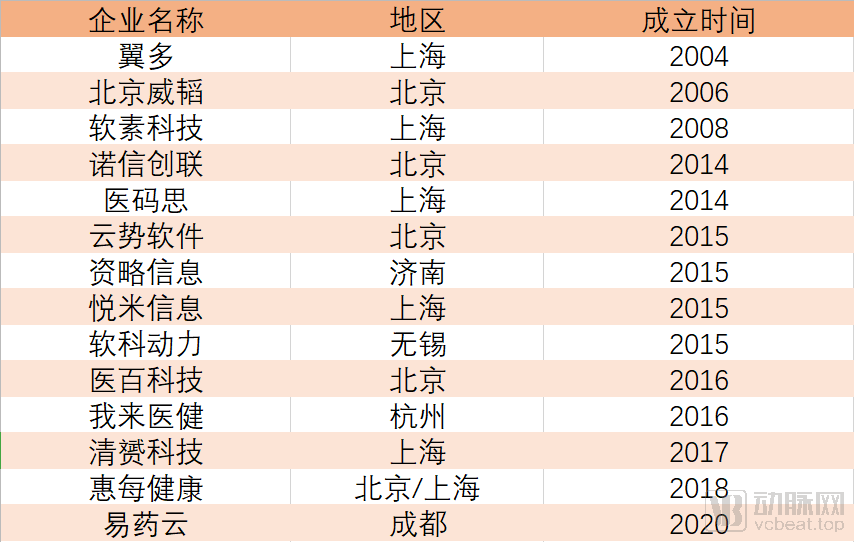
Major Startups in China’s Digital Pharmaceutical Marketing Services Industry
Digital pharmaceutical marketing will not completely replace specialized pharmaceutical representatives.
Overall, China's pharmaceutical digital marketing services industry is still in a relatively early stage of development.As most domestic pharmaceutical companies have yet to complete their digital transformation, the path toward online academic promotion still faces significant obstacles. “Digital marketing in the pharmaceutical industry” requires time to evolve and mature.
As the pandemic situation becomes relatively stable in the post-pandemic era and global order returns to normal after the pandemic,How to Effectively Collaborate with Specialized Pharmaceutical Representatives to Facilitate Efficient Communication and Connectivity Among Doctors, Patients, and Pharmaceutical Companies, Thereby Developing and Refining More Granular and Precise Digital Marketing Services in the Pharmaceutical Industry, which is what these companies need to do next.
As for whether “digital pharmaceutical marketing” will ultimately and completely replace professional pharmaceutical sales representatives, it may not be the right time to discuss this yet. A certain philosopher once said, “What exists is reasonable.” As long as there remains societal demand for a particular profession, that profession will not disappear.
Perhaps we should now return to a fundamental understanding of the pharmaceutical sales representative profession. What exactly are the functions of a pharmaceutical sales representative?
Professional pharmaceutical representatives assist physicians in filtering and processing vast amounts of drug information, effectively conveying knowledge about medications—including their advantages and characteristics—while aligning with the needs of both doctors and patients to cultivate physicians’ prescribing habits and patients’ medication adherence.
Why can’t doctors handle this themselves? For physicians, accessing cutting-edge drug information is not difficult. In today’s information-driven society, with sufficient time and effort, a wealth of such information can be readily obtained.
However, doctors are extremely busy, especially in China.
China is currently facing a shortage of medical resources. For physicians, it is difficult to spare the energy and time, beyond patient care, to acquire comprehensive knowledge of the vast array of pharmaceutical information—including drug development processes, historical background, market trends, pharmacological mechanisms, clinical efficacy, competitive product comparisons, and relevant policies and regulations.The complexity of diseases dictates the complexity of pharmaceuticals. Physicians require professional medical representatives to process information for them.. At present, pharmaceutical sales representatives are still in demand.
The state has introduced a series of policies to crack down on the gray market chains prevalent in the pharmaceutical industry, aiming to foster greater rationality and compliance within the medical representative profession. The government seeks to promote legitimate academic promotion and improve the overall sales models and service approaches of medical representatives, ensuring that they focus on professional responsibilities and effectively safeguard patient interests. Additionally, these measures aim to reduce futile competition among pharmaceutical companies, encouraging them to devote more resources to the research and development of innovative drugs.
As can be seen from the drug categories covered by centralized procurement, the products subject to volume-based procurement are primarily off-patent originator drugs and their generics that have been extensively used in clinical practice over a long period.Well known to doctors and the general public. When competing products have already passed the generic drug consistency evaluation, investing excessive resources in homogeneous competition is a waste of societal resources.
It is foreseeable that in the future, a large number of generic drug manufacturers will face increasing difficulties, making it imperative for them to intensify their research and development of innovative drugs. Only innovative pharmaceuticals truly require medical representatives to convey relevant drug information to healthcare professionals, thereby facilitating the rational use of medications and collecting data on clinical adverse reactions and hospital needs.
The Coming Years Will Mark a Transitional Period for the Overall Transformation of Pharmaceutical Sales Representatives
The series of policies introduced by the state will undoubtedly deal a certain blow to pharmaceutical representatives engaged in kickback-driven sales and those relying on personal connections, but it will not cause them to disappear quickly. The core issue is that as long as the chain of interests between pharmaceutical manufacturers and physicians remains, overt or covert sales practices will persist. The advancement of centralized procurement policies and the implementation of the registration management system for pharmaceutical representatives cannot completely eradicate corruption in drug purchasing and distribution; a series of supporting measures are required to ensure this issue is addressed in stages.
Although healthcare reform continues to advance, the deeper it enters the stage of interest-based gaming, the greater the difficulties become. Within the tripartite linkage reform system encompassing pharmaceuticals, health insurance, and medical services, all participants must be integrated into this framework and adjust their practices in accordance with policy directions and specific requirements.
What is certain is that,In the coming years, the harsh environment for pharmaceutical marketing will gradually improve, and the profession of medical representative will slowly return to rationality.A significant proportion of non-compliant medical representatives will be displaced, either voluntarily or involuntarily, in the coming years. In contrast, those who have already prepared for professionalization will enjoy a more favorable practice environment, ushering in a new era of opportunities.
The pharmaceutical sales representative industry is undergoing consolidation and restructuring, with the value proposition of pharmaceutical sales representatives poised for reshaping and adjustment.The coming years will serve as a transitional period for the overall transformation of pharmaceutical sales representatives. The profession will generally evolve toward a more specialized model, while digital pharmaceutical marketing will develop in parallel—not as a “disruptor,” but as a “collaborator” helping to enhance the overall efficiency of the pharmaceutical sales industry.
Every industry faces obsolescence over time, but as long as demand persists, the market and services will endure.