

Baidu Hosts the 2nd REFUGE Fundus Image Challenge, Driving Industry Advancement with 'Three Core Values'
More than 80% of the information acquired by modern individuals is obtained through vision. The excessive use of smartphones and computers places an undue burden on the eyes, leading to a rising incidence of ocular diseases. Consequently, the demand for ophthalmic medical imaging has grown at a rate far exceeding the increase in the number of radiologists. Ophthalmic imaging specialists are overburdened, and the lack of quantitative standards for manual analysis of medical imaging data makes physicians prone to misdiagnosis and missed diagnoses. Additionally, patients generally have low awareness of eye hygiene, face long waiting times for consultations, and often fail to receive timely diagnosis and treatment, particularly in remote areas with scarce medical resources.
To promote research and development in ophthalmic medical imaging and attract more elite talent to the field, Baidu Smart Healthcare, in collaboration with Zhongshan Ophthalmic Center, recently hosted the second Retinal Fundus Glaucoma Challenge (REFUGE2) at MICCAI, the premier global academic conference on medical image computing. The event drew over 1,300 participants from China and abroad, including many high-caliber research institutions and enterprises, garnering widespread international attention.
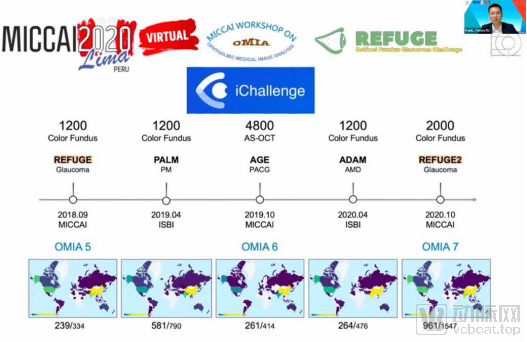
Professor Xu Yanwu, a Scientist at Baidu Smart Healthcare and a Member of the World Health Organization’s Expert Committee on Digital Health, stated that the ophthalmic imaging challenge was organized to continuously advance research capabilities and industrial development in the focused field of ophthalmic medical imaging. The event attracted immense popularity within the ophthalmic imaging research and industry community by featuring authentic, comprehensive, and challenging clinical problems; high-quality data and annotations; international-level thematic workshops; a world-class top-tier medical imaging conference platform; and well-organized competition management built over many years. After months of fierce competition among more than 100 participating teams, the final results fully demonstrated the highest technical standards in this field: participants achieved robust and high-performance outcomes in fundus structure analysis and glaucoma screening across four mainstream types of clinically used fundus cameras. This also fully reflects Baidu’s leadership and support in this field as a frontrunner in smart healthcare.
First, the REFUGE2 Challenge closely addresses industry-specific issues, providing additional reference solutions for the field of glaucoma screening. Glaucoma is a global cause of irreversible blindness, with low awareness and diagnosis rates being prevalent worldwide. The REFUGE2 Challenge primarily validates performance generalization across multiple device models (four mainstream types). Technically, it encompasses the three major problems in computer vision: classification, segmentation, and detection. It comprehensively covers the key technical issues and clinical challenges in the AI industry for color fundus photography, thereby leading the mainstream technological development of the industry.
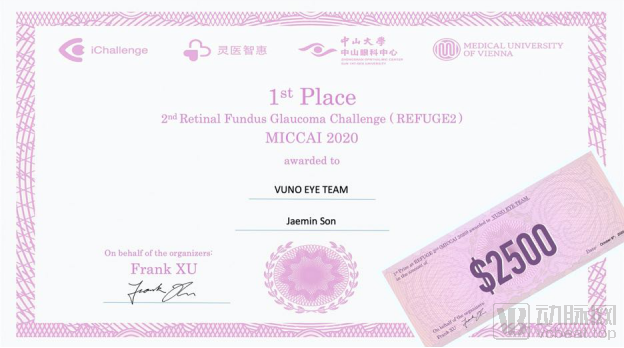
Second, the challenge brought together diverse top-tier international talent and enterprises, facilitating information exchange in the ophthalmic medical imaging industry. As part of the iChallenge series, which has evolved into the largest and most authoritative international competition for ophthalmic medical image analysis, REFUGE2 attracted participation from dozens of renowned universities and institutions worldwide. Over 1,300 international participants competed, with 134 teams submitting more than 3,000 valid preliminary results. Ultimately, 22 teams advanced to the finals, 40% of which were companies from China and abroad, including Tencent, Ping An Technology, VUNO (South Korea), Onward Health (USA), RetinAI Medical AG (Switzerland), Orkis and Median Technologies (France), and ZASTI (India). VUNO from South Korea won the championship, while the joint team from Shenzhen University and Tencent secured second and third place.
Third, the challenge leverages MICCAI, the most influential premier conference platform in global medical imaging research, to provide participating teams with opportunities to publish academic papers in top-tier journals. MICCAI is a comprehensive academic conference spanning the fields of Medical Image Computing (MIC) and Computer-Assisted Intervention (CAI). It is one of the most influential conferences in this domain, recognized for its strong international impact and high academic authority. In addition to professional organization and prize money, this challenge facilitates the publication of high-quality academic papers. Two review articles from previous editions have already been published in *Medical Image Analysis*, the journal with the highest impact factor in the field of medical imaging. Many participating teams in the current competition are closely watching whether their work will be selected for inclusion in a joint review paper. The previous iChallenge, also known as ADAM, has been featured as a classic case study in the new book *PyTorch Computer Vision Cookbook* in the field of computer vision and has been incorporated into the curriculum by professors at the University of Texas at Austin for student training.
Baidu was the exclusive sponsor of the REFUGE2 Challenge and the Ophthalmology Branch’s OMIA7 workshop, as well as a Platinum Sponsor of the main MICCAI conference. The main MICCAI conference received 1,876 submissions, with 1,809 undergoing peer review; 542 papers were accepted, including more than 20 in ophthalmology. OMIA is currently the most widely recognized global workshop and community for AI in ophthalmic imaging. Despite the impact of the pandemic, this year’s OMIA still had over 50 registered (paid) attendees. The 21 accepted papers were compiled into an independent LNCS volume published by Springer.

China faces a severe shortage of ophthalmic medical resources, while the number of patients with eye diseases continues to rise. Many patients are unable to receive timely and effective treatment. Early screening and early diagnosis are key to ensuring that patients with ocular diseases receive effective care.
To address the aforementioned challenges, Baidu Lingyi Zhihui has innovatively launched a Smart Fundus Screening Solution. This solution generates a screening report for each examinee in just 10 seconds, rapidly facilitating the screening of various fundus diseases such as glaucoma, macular degeneration, and diabetic retinopathy. Built upon multi-modal, expert-annotated fundus imaging data, and integrating evidence-based medical algorithms with high-precision deep learning techniques, the solution establishes a highly robust and accurate fundus image analysis system. It enables hundreds of millions of high-risk individuals to detect eye diseases at an early stage and mitigate the risk of blindness. Meeting the needs for comprehensive fundus screening, in-depth single-disease analysis, and multi-scenario applications, this solution achieves diagnostic accuracy comparable to that of top-tier ophthalmologists.
The deep integration of AI with ophthalmology has significantly advanced the screening, diagnosis, and prognosis of eye diseases. The unique advantage of ophthalmic AI lies in its ability to leverage machine learning by utilizing vast amounts of clinical data and multimodal imaging, thereby increasing opportunities for patient screening and diagnosis while reducing healthcare costs. These benefits are particularly pronounced for high-risk populations or underserved communities when combined with telemedicine.
Baidu Lingyi Zhihui’s Fundus Image Analysis System – Screening Edition connects with fundus cameras or PACS systems, using two-dimensional fundus images captured by the camera as input to reconstruct the true three-dimensional morphology of the retina. Leveraging precise deep-learning algorithms, it extracts the four major physiological structures of the fundus and assesses the risk of fundus diseases, ultimately generating screening results. Currently, the system can seamlessly complete the workflow of data acquisition, image analysis, and local image review even in offline environments.
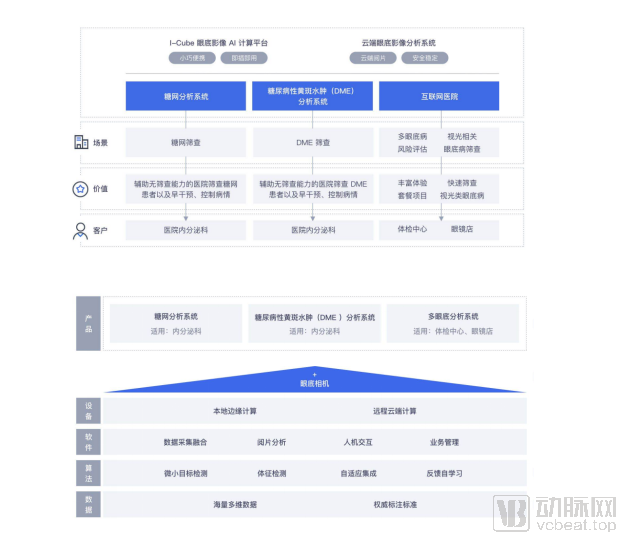
According to Huang Yan, Vice President of Baidu AI Cloud and General Manager of the Smart Healthcare Division, Baidu Smart Healthcare has been committed to serving grassroots-level institutions since its establishment in 2018, leveraging AI technology to develop “grassroots-savvy” AI healthcare solutions. Over the past two years, the product capabilities have undergone four stages of iterative development, achieving instant access to medical knowledge without manual search, precise and timely diagnostic and treatment decision-making, convenient and accessible post-diagnosis management, as well as refined and efficient regional supervision.
Baidu’s deep commitment to artificial intelligence not only prepares enterprises for technological upgrades and enhances their core competitiveness, but more importantly, ensures that the benefits of scientific and technological advancements reach the general public, enabling intelligent, efficient, and convenient life experiences.
Baidu Smart Healthcare is committed to optimizing the medical service experience for both doctors and patients through artificial intelligence technology, promoting universal and equitable access to healthcare services. Statistics show that Baidu Smart Healthcare has been implemented in 27 provinces, municipalities, and autonomous regions across China, covering more than 300 hospitals (including nearly 100 tertiary hospitals) and over 1,500 primary healthcare institutions, benefiting tens of millions of patients and processing hundreds of millions of medical data records.
Baidu is committed to partnering with more enterprises and institutions to continuously promote international exchange and development in the healthcare industry, jointly creating a bright future for smart healthcare.