

2020 CMEF Concludes with Seven Key Trends Shaping the Medical Device Industry
Compared with previous years, the most immediate impression of this year's CMEF is that there were fewer attendees.
Nevertheless, medical device manufacturers, after lying low for a full year, remain enthusiastic about CMEF. Official data shows that 4,000 companies participated, occupying approximately 220,000 square meters of exhibition space, and hosting 60 medical conference events.
Across the imaging section of the conference, products exhibited by major manufacturers lacked the endless stream of groundbreaking “black technologies” seen in previous years. While somewhat conventional, they were more closely aligned with market demands.
As the primary driving force propelling the medical device industry forward in mid-2020, the COVID-19 pandemic spurred rapid development in the CT and ultrasound sectors. At the conference, more than 50% of the exhibitors in the imaging zone showcased products related to these two types of equipment.
Beyond the aforementioned intuitive trends, VCBeat has focused specifically on two sectors—medical imaging and device CROs. After interviewing dozens of domestic and international companies participating in the CMEF and compiling extensive first-hand information, we have ultimately distilled our analysis into seven key trends. Through text, data, and images, we aim to uncover the development trajectories for medical imaging devices in the coming year.
For a long time, numerous domestic imaging companies have focused on the mid-to-low-end CT market, securing a significant share in primary healthcare institutions. Driven by the pandemic, market demand surged in 2020, while policy support increasingly favored domestically produced equipment. Under these combined factors, the market share of Chinese-made CT scanners continued to grow. Amid this trend, more domestic CT manufacturers have begun to invest in the research and development of high-end CT systems, aiming to capture a larger share of the market in tertiary Grade A hospitals.
Mingfeng Medical and Kaiying Medical are typical examples. At the CMEF, Mingfeng Medical unveiled China’s first independently developed ultra-high-end 256-slice CT scanner. Equipped with a true spherical detector and quantum spectral imaging technology, its self-developed Shenguang 256-slice detector features a spherical design that ensures an arc-shaped configuration along the Z-axis. This design allows X-rays to strike each crystal pixel perpendicularly, thereby effectively minimizing cone-beam artifacts.
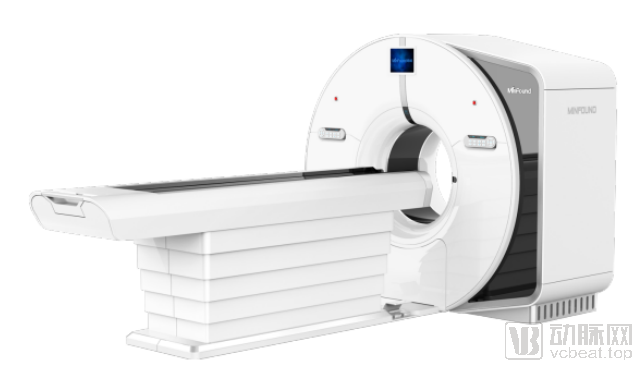
Mingfeng Medical Ultra-High-End 256-Slice CT
The Kaiying Precision 128 high-precision spectral CT is another paradigm of breakthroughs in domestically produced CT scanners. This CT system provides clinicians with an ultra-thin scanning slice thickness of 0.31 mm and comprehensive high-precision spectral imaging. Leveraging its platform, it also enables ultra-low-dose scanning at 60 kV/70 kV, assisting physicians in detecting early-stage interstitial lung diseases such as radiation-induced lung interstitial changes.
Contrary to the aforementioned trends, it is not a new development for high-end medical device manufacturers to target the primary care sector; however, under the broader trend of building China’s new public health defense system, they have also showcased their products designed for primary healthcare institutions.
Taking GE as an example, its exhibited Gilded CT is tailor-made for primary healthcare institutions. This CT system has transferred multiple hardware technologies and intelligent applications from 64-slice and higher-end CT scanners, including liquid metal gilded X-ray tubes, high-definition rapid scanning, and intelligent workflow tools. Among these, the AI-assisted diagnostic function effectively addresses the capability gaps in primary healthcare settings.
Neusoft Medical has taken this a step further by offering its NeuViz ACE 9-Slice Digital CT, suitable for initial diagnoses, to primary care institutions via online sales at the low price of RMB 998,000. “Take home a CT scanner for just RMB 998,000” has nearly become the most talked-about slogan of this CMEF.
Ultrasound equipment was one of the most frequently featured products at the conference, with various companies showcasing devices in diverse forms and for different application scenarios. Numerous specialized ultrasound systems, handheld ultrasound devices, and AI-powered ultrasound solutions were exhibited.
GE Healthcare, which holds the largest market share in ultrasound, continues to deepen its ultrasound product offerings with its comprehensive intelligent service package, “Smart Enjoy PLUS.” On one hand, this product provides EQC ultrasound main system quality detection technology to maintain stable equipment operation, as well as IQC ultrasound image quality control technology to ensure image quality.
On the other hand, hospitals can connect their ultrasound devices to a cloud-based platform, enabling GE to perform real-time quality monitoring, screen transducer conditions and machine health parameters, ensure transducer sensitivity as well as image quality and uniformity, and generate customized inspection reports for the ultrasound equipment.
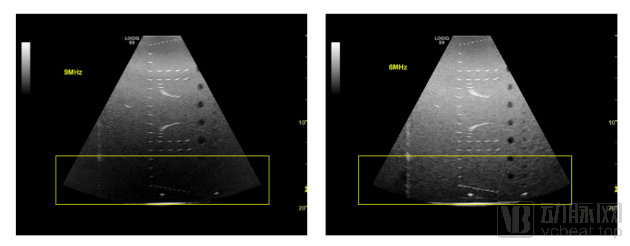
Clinically, greater imaging depth does not necessitate using the highest possible frequency. As shown in the figure, the scanning depth achievable with a 9 MHz frequency is significantly shallower than that with a 6 MHz frequency. This is because higher frequencies result in reduced penetration power, leading to poor visualization of structures in the far field.
However, although GE Healthcare and Philips still hold over 40% of the market share, domestic companies such as Sonoscape Medical and Shantou Institute of Ultrasonic Instruments are gradually rising. While they may not disrupt the overall market landscape, they are able to secure a foothold in niche segments.
Meanwhile, companies such as Pinyuan Medical and Shenbo Medical focus on niche markets, striving to integrate specialized areas like breast volume ultrasound and ultrasound bone densitometry. These scenarios are small yet highly specialized, making them difficult for large enterprises to enter.
Handheld ultrasound is a highly competitive sector. In addition to leading companies such as Sdtek, which have deeply cultivated this field, more enterprises from other medical imaging equipment sectors are also attempting to enter this market.
Anjian Medical, a leading domestic DR manufacturer, is one such example. The distinctive feature of its handheld ultrasound device lies in the separation of the main unit from the probe, along with the provision of a range of interchangeable probes for examining various body parts, thereby effectively expanding the application scenarios of handheld ultrasound.
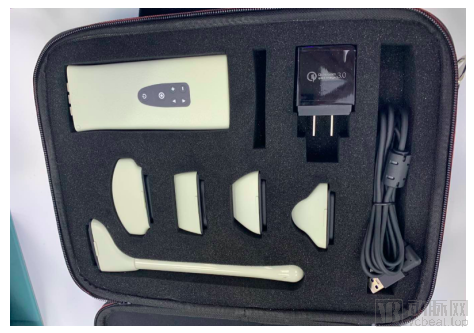
Anjian Technology Handheld Ultrasound Kit
Beyond the aforementioned innovations in application scenarios, Deshang Yunxing, an AI enterprise, is also developing integrated hardware-software solutions to free up physicians’ time. At its exhibition booth, Deshang Yunxing showcased its intelligent ultrasound scanning robot, which mimics clinicians’ scanning techniques to perform multi-angle breast examinations, while leveraging AI to automatically detect lesions and assess their benign or malignant nature. However, based on the on-site demonstration, it remains unclear whether the product supports scanning of anatomical regions other than the breast. Additionally, the robot’s scanning speed is relatively slow, potentially requiring more time to complete a scan for each patient.
At the conference venue, we could see many extra-large buses driving directly into the site. In fact, since the onset of the pandemic, major companies have been attempting to mobilize imaging equipment to meet the needs arising from temporary fever clinics and makeshift hospitals established in the post-pandemic period.
United Imaging Group showcased its mobile vehicle-mounted PET/CT at last year’s RSNA, a solution well-suited for regions with dispersed residential populations such as the United States. For the domestic market, United Imaging has adapted its Tianyan CT into a mobile unit. During the critical period of the epidemic response in Wuhan earlier this year, this mobile CT significantly enhanced the diagnostic capacity of makeshift hospitals.
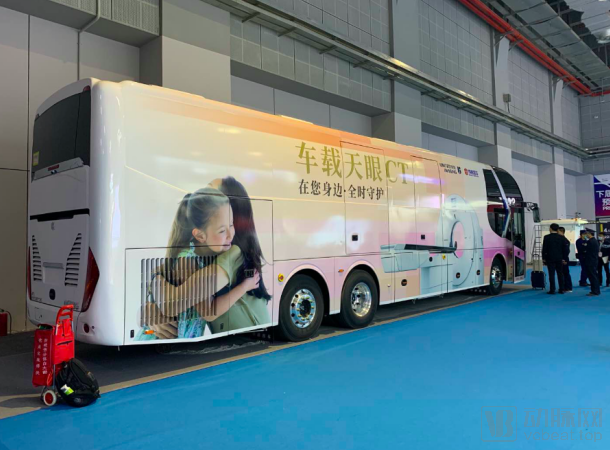
United Imaging Mobile SkyEye CT
In the past, constructing temporary CT rooms in hospitals often took more than a month and imposed stringent environmental requirements. These included not only adequate radiation shielding and load-bearing foundations but also addressing various complex issues such as surrounding signal interference. As temporarily repurposed civilian facilities, makeshift hospitals typically lack ready-made rooms that meet these specifications. In such scenarios, United Imaging’s mobile CT “Emergency Radiology” solution proves invaluable.
“Emergency Radiology” is a comprehensive, end-to-end radiology solution custom-built by United Imaging Healthcare for cabin hospitals. It includes essential facilities such as an independent scanning room, control room, and ultraviolet disinfection units. Its standalone “container-style” design, separate from the main hospital infrastructure, facilitates rapid assembly, disassembly, and transportation, enabling plug-and-play operation. Furthermore, its waterproof, heat-insulating, and all-season temperature-controlled features ensure reliable performance in extreme environments, allowing it to be rapidly deployed to epidemic sites or disaster relief frontlines at any time.
Sinovision, a domestic medical imaging equipment manufacturer, also brought its mobile CT unit to the site. Equipped with an intelligent processing workstation, the SinoCloud platform, and 5G technology, Sinovision’s mobile whole-body CT is ready for immediate use upon arrival. The intelligent mobile CT features a high-power tractor head and a heavy-duty chassis to ensure high mobility and stability, while an integrated self-loading and unloading system guarantees balanced positioning during operation.
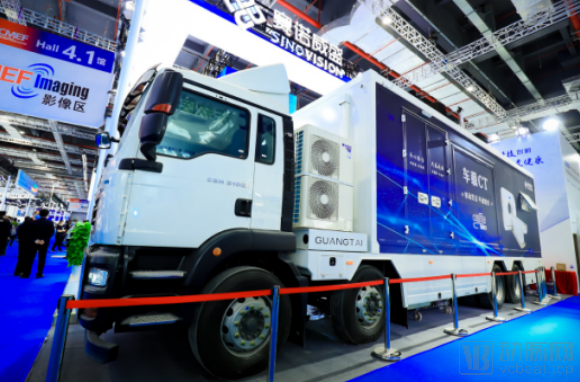
Sinovision Mobile CT
Furthermore, the CT radiation protection shelter is equipped with outdoor air conditioning units and ventilation systems to facilitate heat exchange and fresh air intake, featuring humidification and purification functions. Network communication components are integrated to enable remote communication and data exchange for the CT system, allowing radiologists to conduct remote image interpretation and consultations via 5G networks. The power supply system includes generator sets, inverter energy storage systems, and storage batteries to address the high-power electricity demands of the CT scanner and meet power requirements across various scenarios. To ensure ample operational space and ease of use, the unit features dual-side expandable modules. The shelter roof is fitted with UV lamps, lighting strips, and air conditioning ducts. The cabin incorporates built-in lead shielding, with isolation and shielding between the scanning room and the control room to prevent cross-infection and maximize protection for both patients and medical staff.
There are relatively few mobile CT products on the market, with US-China Health Care and Jinxi Mobile CT being among the most representative manufacturers. The key difference between the two lies in their underlying technologies: US-China Health Care’s product utilizes helical scanning principles, whereas Jinxi Mobile CT employs flat-panel CT technology to achieve high-resolution imaging for both head soft tissue and bone windows.
DAS is also trending toward mobility. Neusoft Medical’s Thunder Mobile DSA is specifically designed to address complex scenarios such as sudden major natural disasters and public health emergencies, facilitating patient triage management, enabling timely and rapid emergency treatment, while minimizing the risk of cross-infection between medical staff and patients, thereby significantly alleviating the pressure caused by shortages of operating rooms and physicians. The system requires no complex site modifications; within a spacious 7m × 6m area, it integrates the high-end floor-mounted angiography system NeuAngio 30F, specialized sterilization equipment, and 5mm-thick lead shielding.
Digital marketing in the pharmaceutical industry is advancing full steam ahead, and medical device manufacturers appear to be equally active.
At the conference, Neusoft Medical launched the slogan “998,000 yuan, take a CT scanner home,” opening an online store to sell CT scanners and attempting to penetrate the grassroots healthcare market through subsidies. Subsequently, GE Healthcare partnered with JD Health to sell products for large enterprises via an e-commerce model. Furthermore, spearheaded by Siemens Healthineers, JD Health also signed a letter of intent with Gaoshang Medical Imaging to facilitate timely imaging examinations for patients undergoing online consultations.
The collaboration between JD Health and Gaoshang Medical Imaging represents an innovation in service models. In the view of Wang Hao, President of Siemens Healthineers Greater China, this model is more accurately described as part of the Siemens Healthineers ecosystem, which bridges the gap between online service entry points (JD.com) and offline services (Gaoshang Medical Imaging), while leveraging its equipment and software to provide empowerment.
Compared to the latter, the initiatives undertaken by Neusoft Medical and GE Healthcare are quite disruptive. Regarding the outcomes of these efforts, Neusoft Medical has candidly acknowledged that the results of this strategy remain unpredictable. Furthermore, digital marketing in the pharmaceutical industry involves not only the digital transformation of sales but also the digital upgrading of organizational structures. Therefore, to create a new model, medical device manufacturers may still need to incur certain trial-and-error costs.
Despite geopolitical disruptions affecting GPS’s market deployment, these three companies still represent the cutting edge of imaging technology at this stage. United Imaging is the only domestic company capable of competing with them in high-end equipment. Overall, each company presented comprehensive software-hardware integrated solutions covering the entire workflow at CMEF, with a particular focus on MR and PET products.
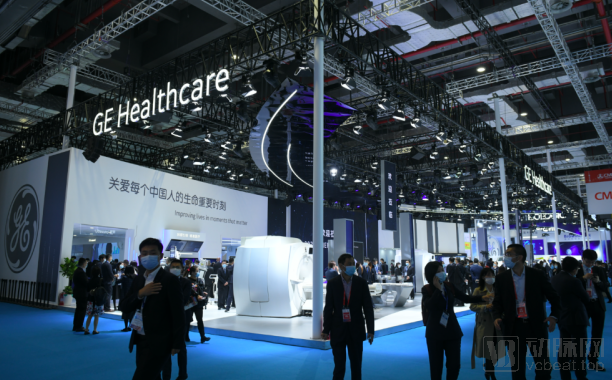
GE Healthcare Booth
In terms of hardware, GE’s latest high-end 3.0T MRI system, the SIGNA Pioneer Elite, leverages the advantages of local manufacturing in Tianjin, China, to achieve innovative advancements in both hardware and clinical applications. Equipped with a second-generation magnet, it delivers leading magnetic field homogeneity even under large-bore conditions, providing superior image clarity and signal-to-noise ratio for MRI diagnosis of complex chronic conditions such as cardiac diseases and tumors. This effectively reduces image artifacts and enhances the precision of clinical diagnosis and treatment.
In the software domain, GE’s intelligent analysis research platform for CT imaging has been iterated to version 3.0. LK 3.0 is a software platform that performs intelligent analysis of COVID-19 CT images by leveraging principles of imaging genomics combined with artificial intelligence and image processing technologies. Since the outbreak of the pandemic, the platform has evolved from LK 1.0, which focused on quantitative analysis of pulmonary nodules, lung inflammation, and lung function impairment, to the COVID-19-specific version, LK 2.0.
The LK 3.0 system showcased at this CMEF can automatically identify and grade minute lesions in patients’ lungs and airways. It quantifies imaging data from pulmonary scans and, from a clinical research perspective, tracks data changes over time, including follow-up prognosis (e.g., pulmonary fibrosis) and assessment of lung injury. The system integrates directly with hospital PACS (Picture Archiving and Communication Systems), enabling collaborative analysis and research on pulmonary lesions and prognosis in COVID-19 patients without imposing additional complex workflows on physicians.
Meanwhile, GE has also built a comprehensive molecular imaging industry spanning from radiopharmaceuticals to pharmaceutical equipment and further to imaging devices. In addition to developing top-tier PET systems, GE’s self-developed radiopharmaceuticals are better matched with its PET products, thereby achieving superior imaging results. The FASTlab2 chemical synthesis system automates certain manual procedures previously performed by physicians; for the preparation of many tracers, it offers mature cassette-based solutions that significantly enhance both the quality and efficiency of tracer production.
Siemens Healthineers has also emphasized the importance of integrating software with hardware. Specifically, Siemens Healthineers closely integrates artificial intelligence into imaging workflows to customize efficient operational methods for physicians. This helps radiologists provide more personalized, precise, and cost-effective diagnostic and treatment recommendations for clinical practice and patients, effectively addressing three major challenges facing medical imaging in China: heavy physician workloads, suboptimal patient experiences, and the need for improved diagnostic accuracy.
Multiple Siemens Healthineers products unveiled at this exhibition are recent launches in the Chinese market and are being displayed domestically for the first time, including the latest PET/CT Biograph Vision, the Artis zee HDR angiography system, the syngo. via View & Go imaging platform, and the MOBILETT Elara Max antimicrobial mobile X-ray unit with a wireless flat-panel detector and ceiling-mounted arm. Among these, the PET/CT Biograph Vision was launched in China this July. Featuring 214-picosecond Time-of-Flight (ToF) technology and wide-area HD technology, the Biograph Vision delivers higher imaging acquisition efficiency and clearer images. With more precise quantification, lower radiation dose, and faster scanning speed, it enables earlier detection of small lesions and expands the applications of PET/CT across a broader range of clinical fields.
The syngo.via View&GO imaging platform delivers precise imaging information to clinicians through intelligent search and measurement capabilities, enabling qualitative, quantitative, longitudinal, and graded image diagnosis. This supports timely adjustments to treatment plans and facilitates cross-modality, multidisciplinary collaboration.
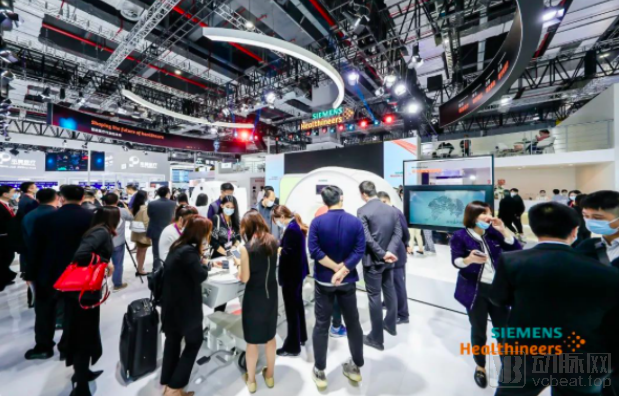
Siemens Healthineers Booth
This year, Philips Healthcare is focusing on digital transformation. Following the launch of its helium-free MRI system, Ingenia Ambition, and the Navify CT solution earlier this year, Philips reaffirmed its commitment to the Intelligent Space for AI (ISAI) platform at CMEF, positioning it as a one-stop, end-to-end artificial intelligence platform for radiology workflows.
By leveraging its hardware, Philips’ business spans the entire spectrum of management, clinical care, research, and education, utilizing AI to assist physicians in diagnosis, optimize imaging workflows, and deliver personalized treatment for patients.
At its booth, United Imaging Healthcare showcased a range of new products, including the world’s first 75-cm ultra-wide-bore 3.0T MRI system, uMR Omega; China’s first ultra-high-end 640-slice CT scanner, Tianhe 640; China’s first ultra-high-field animal MRI system, uMR 9.4T; and the globally pioneering “quasi-3.0T” exploratory MRI system, uMR 660.
United Imaging Intelligence has launched the newly upgraded uAI Portal intelligent diagnosis and treatment platform. Equipped with more than 20 AI applications, the platform covers multiple human systems, including the central nervous, cardiothoracic, breast, musculoskeletal, and lymphatic systems. It offers a range of solutions such as multi-disease chest diagnosis, neuroimaging analysis, and maternal and child health management. The platform also supports cross-modal usage, intelligently optimizing the entire workflow of radiology diagnosis and treatment.
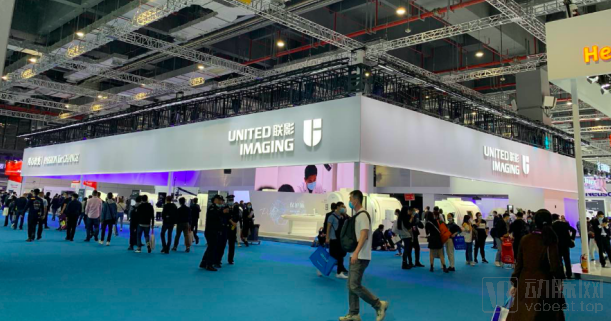
United Imaging Healthcare Booth
At the 2019 CMEF, AI imaging companies occupied nearly one-quarter of the exhibition area, whereas this year they are scattered throughout various sections of the venue. AI imaging firms such as Tencent Miying, SenseTime, Keya Medical, Deepwise, Huiyi Huiying, Bosh Vision, and Yizhun Intelligence brought their latest products to this year’s CMEF.
NMPA approval may have played a role in the commercial implementation of AI companies. With the first Class III AI medical device certificate, Keya Medical has accelerated its commercialization pace. Last year, Keya Medical, which only rented a small booth at CMEF, has stood out among many AI companies and began to lay out a rich product line.
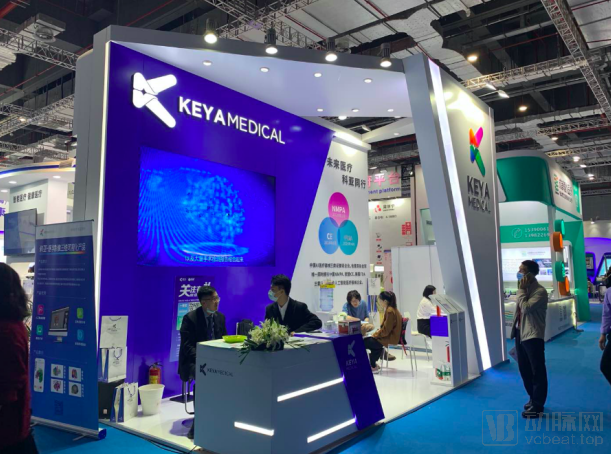
Keya Medical Booth
In addition to its flagship CT-FFR product, Keya Medical has recently acquired Shiwai Technology, a surgical navigation company. Through this integration, Keya Medical has developed a comprehensive suite of 3D medical imaging visualization technology solutions, further enhancing its product portfolio.
Ande Medical Intelligence, which made fewer appearances at exhibitions last year, has also been frequently showcasing its booth after obtaining the Class III medical device registration certificate for MR. At CMEF, Ande Medical Intelligence prominently displayed its approved AI solutions for intracranial tumors and other AI-based offerings, focusing on addressing major diseases prevalent among the Chinese population, such as stroke and heart disease.
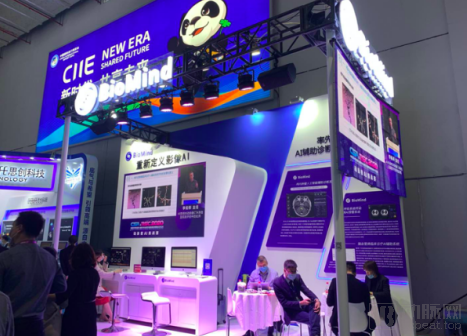
Ande Medical Intelligence Booth
Deepwise Medical’s flagship exhibits at this event comprise its AI-powered medical auxiliary diagnostic product matrix, built around smart healthcare solutions. These products have been continuously optimized through clinical application, presenting a renewed profile that more closely aligns with clinical needs. Among the showcased offerings are “Xiao Rui Medical Assistant” (COVID-19 Edition) and the “Smart Radiology Department” service, two representative smart service products from Deepwise Medical. Spanning from hospital-side to patient-side operations, these solutions enable intelligent triage, pre-consultation, and patient management, covering core medical processes throughout the entire patient journey and delivering efficient, convenient patient services.
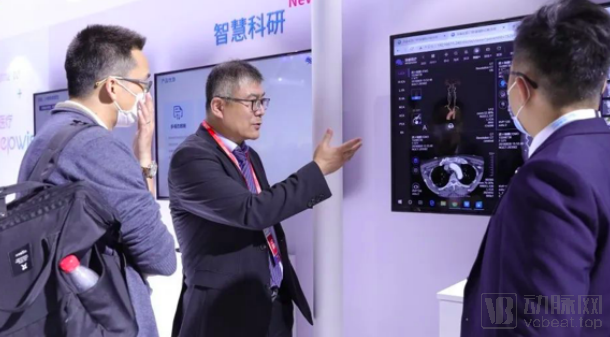
Deepwise Medical Booth
Tencent Miying had been absent from major exhibitions for a considerable period. Its reappearance at this year’s CMEF featured not only the launch of a new Imaging Cloud product, enabling patient-centric imaging archive management, but also the establishment of an Open Lab. This initiative grants research institutions, universities, and tech startups access to Tencent’s reservoir of medical AI capabilities, facilitating the large-scale incubation of medical AI applications across the industry.
Based on the exhibition this year, the booth area occupied by AI companies has shrunk compared to last year, showing a slight decline. Furthermore, an increasing number of medical imaging equipment manufacturers are beginning to develop artificial intelligence algorithms. To survive in the market, AI startups may need to broaden their product portfolios and identify applications that truly assist hospitals.
At the conference, we observed a steady stream of visitors at the booths of CRO and CDMO service providers such as Ozeda, Mediscreation, Dongmai Medical, Zhizhong Technology, Maidi Keke, Aotai Kang, and Xunjia Technology. Numerous medical device professionals engaged in consultations and discussions on the impact of the implementation of the Medical Device Registrant System and its future trends.
Meanwhile, among the 60 conferences held at CMEF, at least 10 sessions discussed the Marketing Authorization Holder (MAH) system for medical devices, with at least 6 of these sessions focusing primarily on this system.
On July 7, 2020, the State Council issued a notice encouraging the nationwide promotion of the outsourced production model for medical device registrants. Since then, the Medical Device Registrant System has become a “buzzword” among industry professionals, exerting an unstoppable influence and transforming the medical device sector.
The Medical Device Registrant System has led to stricter regulation of medical devices, more compliant manufacturing, and simplified innovation. China’s medical device industry is growing at a rate far exceeding the international average, with the domestic device sector expanding significantly faster than the domestic pharmaceutical industry. Despite this rapid growth, the medical device industry still faces challenges such as small scale, weak corporate capabilities, R&D difficulties, and regulatory complexities. At the conference, Dongmai Medical officially unveiled its Medical Device Compliance Research Center, stating: “Through systematic compliance management and compliant product output, the Medical Device Compliance Research Center helps medical device startups reduce time costs, lower capital investment, and mitigate process risks, thereby realizing the social value of accelerating platform development.” Leveraging the Medical Device Registrant System, CRO/CDMO enterprises will promote innovation among medical device companies by reducing costs, supporting R&D, and facilitating industrialization.
The Medical Device Registrant System Drives CRO/CDMO Enterprises Toward Full-Process OutsourcingProfessor Jiang Haihong, a policy and regulatory expert, stated, “The essence of the medical device registrant system is outsourcing.” Here, “outsourcing” is not limited to clinical registration or manufacturing but encompasses the entire process from research and development (R&D) to sales. For instance, Ozda has leveraged the medical device registrant system to build a global 3C industrial platform for medical devices, creating an innovative industrial model that integrates “medical devices + internet + advanced manufacturing + high-end services.” Medisino has broken down traditional boundaries by providing enterprises with full-process services, including regulatory consulting, R&D guidance, manufacturing, supply chain management, risk assessment, and clinical application analysis, thereby achieving seamless integration from prototype to clinical use. Xunjia Technology has established non-sterile and sterile production platforms as well as co-working innovation spaces, building a closed-loop innovation and development model that spans patent incubation, design and R&D, testing and registration outsourcing, production, and channel sales.
The Medical Device Registrant system is gradually being implemented, with some medical device companies beginning to explore contract manufacturing. Since Aozida accepted production entrustments from Guangzhou Haoershen Medical Equipment Co., Ltd. and Shenzhen Kaiyao for portable pressure steam sterilizers and neonatal blue light therapy devices, other enterprises have also shown interest in leveraging the Medical Device Registrant’s contract manufacturing model to reduce facility construction and production costs. For example, based on the Medical Device Registrant system, Dongmai Medical signed contract manufacturing service agreements with Dingshi Medical and Xinduan Electronics at the CMEF, helping these companies accelerate their industrialization processes.
The Medical Device Registrant System Has Comprehensively Enhanced Approval Efficiency. On the afternoon of October 19, the Xiangtan Municipal Government hosted a promotional conference for the Hunan Provincial Medical Device Industrial Park, during which the Hunan Provincial Medical Device Registrant System Forum was also held. It was reported that Hunan Province, leveraging the Medical Device Registrant System, has established a “green channel” for innovative products requiring review and approval of Class II medical devices, as well as an “express lane” for products involved in industrial transfer. The processing time limits for initial registration of Class II medical devices, initial registration of innovative medical device products, and registration changes pertaining to licensing matters have been reduced to 50, 40, and 30 working days, respectively. Du Xiaodong, Chairman of Xunjia Technology, stated, “For medical device companies registering their products in Hunan Province, the required documentation is minimal, the procedural steps are fewest, the timeframe is shortest, and the costs are lowest.” In addition to Hunan Province’s vigorous promotion of the Medical Device Registrant System, other provinces and municipalities are likewise advancing the implementation of this system.