

How 5G and IoT Are Transforming Healthcare: AstraZeneca's Health IoT Industry Salon Successfully Concludes
Recently, the Health IoT Industry Salon, part of the “Smart Epidemic Prevention · Health IoT” Smart Health Development Forum series hosted by AstraZeneca, was successfully held at the AstraZeneca IoT Center in Wuxi.
At this salon event, leaders from the Wuxi Municipal Government and relevant administrative departments, hospital directors, the head of AstraZeneca’s Innovation Business Center, managers from related funds and investment banks, and heads of eleven innovative IoT enterprises were in attendance. The event aimed to foster cross-sector collaboration among government, industry, academia, research, and healthcare sectors, using Wuxi as a demonstration zone to gradually build a health IoT network connecting medical institutions across different regions and at various tiers. This initiative seeks to achieve comprehensive patient journey management—from prevention, screening, diagnosis, and treatment to follow-up—and jointly establish an open, collaborative, and innovative health ecosystem. The salon also featured simultaneous live streaming both domestically and internationally, striving to comprehensively showcase the company’s innovative prowess.
The salon event kicked off with an opening address by Yin Zhenyuan, Deputy District Mayor of the Xinwu District People’s Government in Wuxi. Mr. Yin stated that, as the core hub and pioneer of Wuxi’s IoT industry, Xinwu District has consistently prioritized leveraging next-generation information technologies—led by the Internet of Things (IoT)—to achieve comprehensive coverage and drive growth across other industries. He expressed hope that this event would establish a development platform to further promote the deep integration of emerging technologies such as 5G+IoT with the life and health industry. By bringing together multi-stakeholder resources from government, academia, research institutions, enterprises, healthcare providers, and investors, the platform aims to accelerate the incubation and application of outstanding health IoT projects, thereby supporting the high-quality economic and social development of Xinwu District, Wuxi.
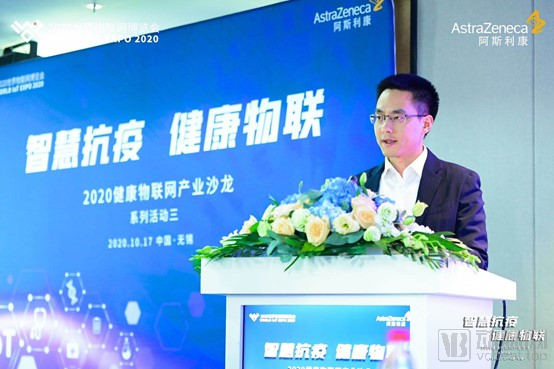
Yin Zhenyuan, Deputy District Mayor of Xinwu District People's Government, Wuxi City
In his address, Zhou Changqing, Deputy Mayor of the Wuxi Municipal People’s Government, stated that Wuxi, a century-old industrial and commercial city brimming with innovative vitality, has steadfastly implemented its core strategy of innovation-driven development and its overarching strategy of strengthening the city through industry. By prioritizing the biopharmaceutical sector as a key focus area and vigorously fostering its growth, Wuxi has achieved remarkable results. With the rollout of a comprehensive package of incentive policies to accelerate the development of the modern biopharmaceutical industry—including the “15 Policy Measures for Wuxi” and the “Three-Year Action Plan for High-Quality Development”—along with the successful approval of Wuxi as a drug import port and the full launch of the Taihu Bay Science and Technology Innovation Belt, Wuxi is steadily advancing toward its goal of becoming a premier global and domestic hub for biopharmaceutical research and development.
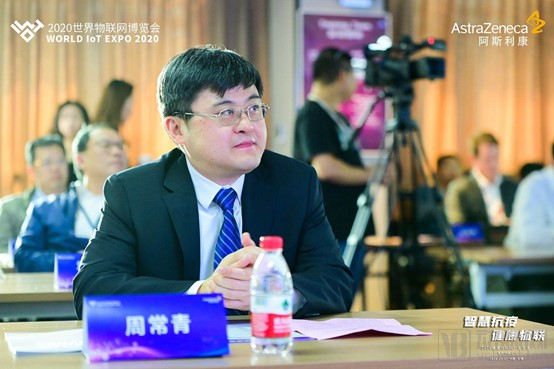
Zhou Changqing, Vice Mayor of the Wuxi Municipal People's Government
Hua Dong, President of the Affiliated Hospital of Jiangnan University, expressed his aspirations for the development of the Internet of Medical Things (IoMT) from the perspective of clinical application. With health having become a crucial aspect of the public’s pursuit of a better life, IoT technology can facilitate the transition of China’s healthcare model from traditional medicine to multidisciplinary collaborative development. The importance of IoT technology was further underscored during the pandemic, effectively compensating for gaps in economic and social health development. Insights drawn from the application of IoT technology across various fields—including oncology, pathology, and blood glucose monitoring—suggest that the future of medical development may evolve from traditional medicine and data science toward the concept of “experience-based medicine.”
Ms. Xu Jing, Vice President of AstraZeneca China and Head of the Digitalization and Commercial Innovation Department, shared her insights on the Internet of Medical Things (IoMT). Ms. Xu noted that when viewing the entire course of medical conditions from a clinical perspective, patient services are increasingly extending beyond intra-consultation treatment to encompass pre-consultation diagnosis and post-consultation rehabilitation. Consequently, how to accurately identify lesions prior to consultation, provide effective treatment during consultation, and deliver comprehensive follow-up and rehabilitation services after consultation has become a pressing practical issue. In this process, IoT technology plays a significant role in integrating care within and outside hospital settings. To address this, AstraZeneca has proposed a whole-disease-management solution and is expanding its focus from traditional medical care to the broader concept of general health. Taking diabetes as an example, AstraZeneca offers a suite of diagnostic services for diabetes and its complications, all completed within a single department.
For China, a country with a high prevalence of diabetes, this innovative solution not only effectively conserves societal resources but also provides patients with an effective long-term health management strategy. Currently, AstraZeneca’s integrated diagnosis and treatment solutions have been truly incorporated into both the healthcare system and home-care settings, with their scope expanded to cover six major areas, including diabetes. In August 2019, the Wuxi International Life Sciences Innovation Park officially opened. After one year of development, I·Campus has achieved phased results and attracted more than 20 tenant companies. Xu Jing summarized that the relationship between the industrial park and enterprises is complementary, fostering cooperation and mutual prosperity. Comprehensive park support services, industrial clusters, talent pipelines, policy assistance, and management training significantly contribute to corporate growth. The economic effects of the industrial park are drawing increasing attention from businesses. By establishing industrial parks, the government creates industrial agglomeration, driving the development of related industries through resource sharing and policy support.
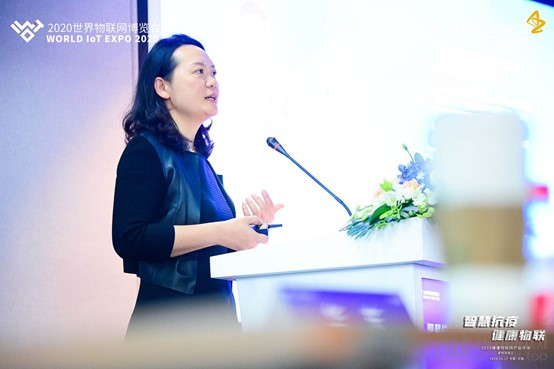
Xu Jing, Vice President of Digitalization and Business Innovation at AstraZeneca China
Based on criteria such as project innovativeness, social value, and market demand, AstraZeneca selected eleven outstanding innovative IoT enterprises from the initial pool of applicants to participate in the industry salon. The eleven shortlisted innovative projects span multiple fields, including oncology, electrocardiography (ECG), chronic disease management, and maternal and child health. Representatives from each company provided detailed presentations on how their projects address key pain points, application scenarios, product design, and collaborative resources.
Oncology
91360:91360 Medical Technology (Nanjing) Co., Ltd. was established in 2012. Aligning with the future development trends of the pathology industry, the company leverages advanced AI and internet technologies as its core to build an information platform that facilitates a streamlined, scientific, and standardized operational system for pathology departments. Centered on user needs, it rapidly responds to market demands, providing timely, comprehensive, professional, and intelligent smart pathology solutions.
91360 Pathology AI Solution provides intelligent, end-to-end management services for pathology departments in hospitals across China, including large tertiary Grade A hospitals in Nanjing, Jiangsu Province, and Zhengzhou, Henan Province.
Shenzhi Technology:Deepwise Technology, established in late 2018, is an artificial intelligence ultrasound technology developer specializing in the intelligentization of ultrasound diagnostics and AI applications in ultrasound. In less than two years, Deepwise Technology has built an imaging database with algorithm models covering more than ten categories and over 30 diseases, and has established a cloud center for ultrasound imaging. Leveraging its in-depth AI research and development, its AI-assisted ultrasound diagnostic capabilities now cover more than twenty conditions, including those of the thyroid, breast, and liver.
Currently, Shenzhi Technology’s hardware products have obtained NMPA and CE certifications, while its software has also received CE certification. The company now serves over 600 medical institutions. In terms of grassroots implementation, Shenzhi Technology maintains a high monthly growth rate in its business operations, achieving commercialization of its products.
Shanmi:Shanmi Limited was established in Hong Kong, China, in 2015, providing genetic testing services and blood-based liquid biopsy technology for lung cancer patients. This enables simpler, faster, and safer cancer diagnosis, allowing physicians to select the most appropriate personalized cancer management plans to improve treatment success rates. Recently, Shanmi has expanded its liquid biopsy services from lung cancer to breast cancer and other malignancies. To further develop the Chinese market, Shanmi (Wuxi) Biotechnology Co., Ltd. was founded in 2019, dedicated to bringing the latest and most advanced genomics technologies to China’s healthcare industry and assisting oncologists in the treatment of cancer patients.
At this stage, Shanmi is collaborating with United Family Healthcare to launch a pilot program involving 50 patients in China. Previously, trials have been conducted across 15 countries, engaging four oncology experts and covering more than 20 cases, including a teleconsultation demonstration with the Affiliated Hospital of Jiangnan University in Wuxi.
Yitu Healthcare:Hangzhou Yitu Healthcare Technology Co., Ltd. is a medical data intelligence company that provides diversified solutions for patients, physicians, pharmaceutical companies, and governments by unlocking the value of full-lifecycle health data. Yitu’s medical data intelligence solutions have moved beyond the era of single-task applications, pioneering an evolution toward department-specific and disease-specific solutions. By extending beyond isolated diagnostic and treatment scenarios and integrating clinical smart hospital informatics with intelligent data center services, Yitu achieves comprehensive patient lifecycle management and end-to-end coverage of the care continuum, thereby injecting technological innovation into early disease screening, medical research, and public health.
As of June, the aforementioned AI system has been deployed in over 200 hospitals, government agencies, and internet healthcare platforms across more than 20 provinces and municipalities in China, and has expanded internationally, with applications in multiple countries across Europe, the Middle East, and Southeast Asia.
ECG Field:
Tricog Health:Tricog Health is a technology-driven cardiac care company founded in Singapore in 2014 by interventional cardiologist Dr. Charit Bhograj, and it is also one of the world’s largest predictive healthcare analytics companies. Prior to its establishment, Dr. Bhograj recognized that faster preliminary diagnosis of cardiac issues through electrocardiography could significantly improve patient outcomes.
Tricog Health’s flagship product, InstaECG, reduces the cardiologist-approved diagnostic turnaround time for electrocardiograms to five minutes or less. Today, Tricog Health’s breakthrough artificial intelligence leverages a repository of over 4 million ECG records, covering more than 200 cardiac conditions, thereby significantly enhancing the detection of rare heart diseases.
Zhengxin Technology:Zhengxin Technology is an intelligent healthcare company founded by Chinese scientists who returned from the United States, with branches in Suzhou, Beijing, Yantai, and Seattle, USA. Zhengxin provides globally leading long-term ECG monitoring solutions. By leveraging powerful medical-grade wearable devices integrated with Internet of Things (IoT), big data, and artificial intelligence technologies, it delivers simple, efficient, and long-term screening and monitoring services for cardiac patients, thereby enhancing the efficiency of clinical diagnosis and health management. Currently, Zhengxin Technology provides smart healthcare solutions to more than 400 clients in China.
Zhengxin CardioGuard Intelligent ECG System combines flexible patch design with big data technology to enable unobtrusive, long-term continuous monitoring (14 days) for the detection of 54 types of arrhythmias across 12 major categories. As a diagnostic-grade medical device, it has obtained Class II medical device certification from the National Medical Products Administration. The system provides hospitals, health examination centers, pharmacies, and elderly care facilities with comprehensive solutions including precise arrhythmia diagnosis, atrial fibrillation screening, long-term monitoring, and chronic disease management.
Chronic Disease Sector
Jianhai Technology:Guided by the philosophy of “making care a potent remedy,” Jianhai Technology is committed to driving the transition from disease treatment to disease management. Centered on its “Jishi AI” core, the company enables closed-loop smart management for patients across the continuum from hospitals to communities and homes. It offers the “AI-Based Full-Course Disease Management Platform” for hospitals and the “AI-Based Tiered Diagnosis and Treatment Platform for Chronic Diseases” for medical consortia and health consortia. Additionally, it has pioneered the industry’s first “Third-Party Full-Course Disease Management Service,” delivering human-centric, holistic health management throughout the entire care journey.
Jianhai Technology’s AI-powered Full-Course Chronic Disease Management Platform · Health IoT Monitoring now provides full-course chronic disease management and home-based IoT monitoring services to nearly 400 clients, including 30 of the top 100 hospitals and 160 Grade III Class A hospitals.
Ai Tang:Beijing Zhongqi Huakang Technology Development Co., Ltd. (AiTang) is a domestic provider of smart blood glucose management system services, positioned as a cloud platform for smart chronic disease telemedicine. It has developed a continuous glucose monitoring SaaS system aimed at filling the gap in blood glucose informatization. Through open and diversified data collection, AiTang integrates the management of diabetic patients scattered across various hospital departments and builds an Artificial Intelligence Real-time Data-Assisted Analysis and Diagnosis System (AGR). By leveraging AI to replace traditional passive management, it achieves personalized precision treatment and enables patients to self-monitor and manage their blood glucose levels.
Building on this foundation, Aitang has established three major closed-loop systems: a closed loop for comprehensive out-of-hospital management extending from in-hospital real-time blood glucose monitoring; a closed loop for medical and nursing care management based on real-time continuous glucose monitoring (CGM); and a closed loop integrating digital monitoring with digital management. Leveraging real-time big data from these monitoring systems, Aitang provides online nutritional assessments and personalized digital nutrition plans.
Zhiyun Health:Zhiyun Health (Hangzhou Kangsheng Health Management Consulting Co., Ltd.), established in December 2014, is a one-stop platform for chronic disease management and smart healthcare. Currently, Zhiyun Health provides services to nearly 2,000 hospitals and tens of thousands of pharmacies across China through its self-developed hospital SaaS system, pharmacy SaaS system, and advanced internet hospital platform, reaching 500 million patients with chronic diseases.
In 2019, Zhiyun Health partnered with CEC Data to establish a National Big Data Center for Chronic Diseases, leveraging technology to drive advancements in smart healthcare and empower the medical health industry. Zhiyun Health’s core product, the Zhiyun Yihui System, has been integrated into nearly 2,000 hospitals across 28 provinces, autonomous regions, and municipalities throughout China, achieving an urban coverage rate of 88.2% and a deployment rate of 30% among mainstream hospitals nationwide.
Orange Family:Chengyi Jiaren Technology (Tianjin) Co., Ltd. was established in 2014 and specializes in chronic disease health management within the field of sleep-disordered breathing. By leveraging “portable medical devices + a cloud-based health platform,” the company drives its services with big health data, integrates online and offline operations, and supports the implementation of industry solution scenarios through portable medical technology, ultimately forming a closed-loop ecosystem for digital healthcare management services.
Currently, Chengyi Jiaren has developed a range of medical-grade portable products, including the Chengyi Pulse Oximeter, Chengyi Dr.Watch 2.0, Smart Spirometer, Sleep Apnea Initial Screening Device, Multi-Parameter Monitor, and Customized Oral Appliances. Committed to promoting the home-based and widespread adoption of chronic disease health management, its products have been deployed in over 2,000 primary healthcare institutions.
Maternal and Child Health Sector
Beisheng Medical:Shanghai Beisheng Medical Technology Co., Ltd. specializes in healthcare informatization under the “Internet Plus” model. As a professional provider of internet-based medical services and Health IoT technologies, the company develops and operates smart specialty information systems for maternal and child health, with a primary focus on disease management and follow-up tracking. Its currently launched portfolio includes both software and hardware products such as the BB-care Intelligent Follow-up System for High-Risk Infants, BB-care Child Healthcare Management System, BB-care Pediatric Hematology Diagnosis and Treatment Support System, BB-care Pediatric Eye Health Management System, and the Yangleduo Home Smart Pulse Oximeter.
BB-care’s products and services have expanded to nearly 100 hospitals across China, covering Shanghai, Jiangsu, Zhejiang, Anhui, Guizhou, Henan, Guangdong, Shaanxi, and other regions.
As the final project roadshow concluded, the AstraZeneca Health IoT Industry Salon successfully came to a close. The salon established a communication platform for government, industry, healthcare, and investment stakeholders in the health Internet of Things (IoT) sector, garnering attention and support from diverse participants. It also highlighted the immense potential of the health IoT field to professionals across various sectors interested in the innovative medical industry.