

AI-Powered Drug Discovery Sector Surpasses $4.58 Billion in Global Funding, with Target Identification and Compound Screening Leading Innovation
PharmaceuticalsIndustryAlways has been aRelativeClosed Industry。Complex pharmaceutical knowledge that is not shared with other industries,A wall has always separated the pharmaceutical industry from the outside world.Nowadays, this wall is being...DigitalizationTechnicalInterventionGradually disintegrating. More and moreAI Companies, began collaborating with drug developers,Applying Artificial Intelligence Technology to Every Stage of New Drug Development to Accelerate the R&D Process。
How Will Artificial Intelligence Transform the New Drug R&D Industry? Who Has Emerged as an Industry Leader, and Who Is Offering Novel Solutions?
VCBeat has recently launched a special series on “AI-Driven New Drug Development,” aiming to clarify the industry landscape and development trajectory of AI in drug discovery, while decoding the future direction of the sector.
Recently, the AI-driven new drug market has seen frequent breakthroughs, with multiple companies securing substantial financing in 2020.
In September 2020, XtalPi, an AI-driven drug discovery company, announced that it had oversubscribed its $318.8 million Series C financing round, setting a new global record for funding in the field of AI-enabled drug discovery. In the same month, Recursion Pharmaceuticals, an AI-focused clinical-stage drug development company, completed a $239 million Series D financing round. One month earlier, in August 2020, another AI-driven drug discovery company, Starpharm, announced the completion of its $10 million Pre-A financing round.
Pharmaceutical R&D is the core of a pharmaceutical company’s value and vitality, yet the field has long been plagued by three major challenges: lengthy development cycles, low success rates, and high R&D costs. Artificial intelligence technologies, represented by deep learning, are accelerating drug discovery and development through their powerful capabilities in pattern recognition and computation, sparking a surge of interest in “AI + new drug development.” This trend has not only given rise to numerous AI-driven drug discovery startups but also spurred traditional pharmaceutical giants to explore AI-enabled approaches in new drug development.
In June 2020, the journal Drug Discovery Today published a short review article titled “The upside of being a digital pharma player,” which analyzed the current status of AI applications in the R&D departments of 21 global pharmaceutical giants from 2014 to 2018. The results indicated that although the field of AI-driven new drug development is still in its early stages, it is maturing. The article examined the revenues and R&D investments of these major pharmaceutical companies, finding that only Sanofi and Gilead Sciences had investments exceeding their returns, whereas AstraZeneca and Novartis were representative cases where returns far surpassed R&D expenditures.
According to public data compiled by VCBeat, as of October 16, 2020, a total of 56 AI-driven drug discovery companies worldwide had secured financing, with cumulative funding amounting to $4.581 billion. Among these, 37 overseas companies raised a total of $3.165 billion, while 19 Chinese companies raised a total of $1.416 billion.
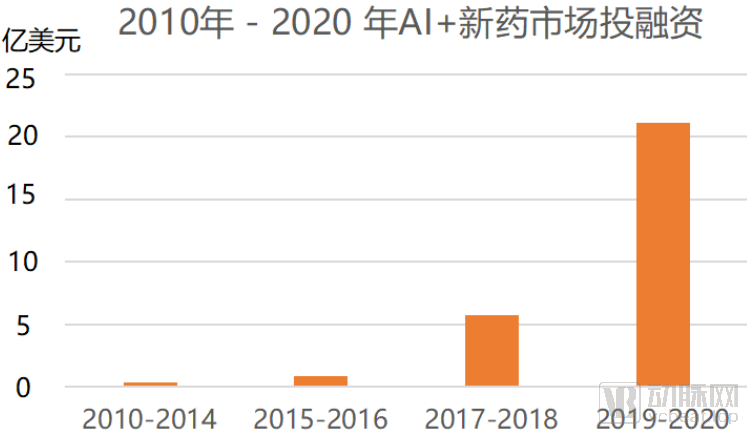
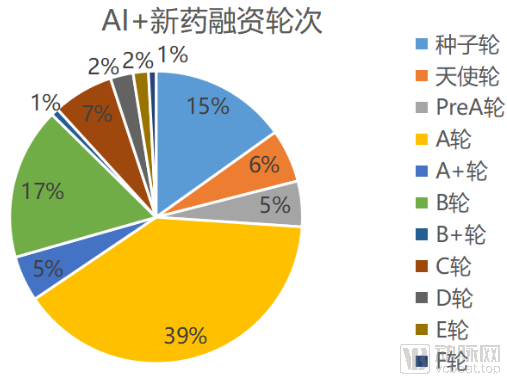
From 2010 to 2020, the AI-driven new drug development market saw a year-on-year increase in financing amounts, with active secondary markets. VCBeat’s analysis of 56 AI-driven new drug development companies revealed that only three firms—BioXcel Therapeutics, IQVIA, and Schrödinger—are currently publicly listed, indicating that the sector is in the early stages of maturity.
What breakthroughs will AI bring to pharmaceutical companies? What is the current state of application scenarios for AI in new drug R&D? Why are leading enterprises favored by capital?
With economic growth and rising living standards worldwide, global healthcare expenditure has continued to increase, significantly boosting the development of the pharmaceutical industry and steadily expanding the market size of the medical sector.
In 2017, global pharmaceutical sales exceeded $1.2 trillion, with total sales projected to reach $1.475 trillion by 2021, representing a compound annual growth rate (CAGR) of 4.9% from 2012 to 2021.
During the same period, sales in China’s pharmaceutical market will grow from $77 billion in 2012 to $178 billion in 2021, representing a compound annual growth rate (CAGR) of 9.8%, which is twice that of the global pharmaceutical market. This indicates that while the global pharmaceutical market is growing steadily, China’s pharmaceutical market is expanding at a faster pace and possesses greater development potential.
China’s pharmaceutical market ranks as the second largest in the world. Driven by robust growth factors, it has expanded at a rate exceeding that of the global pharmaceutical market in recent years. Data show that the market size reached RMB 1.633 trillion in 2019 and is projected to further expand to RMB 1.7147 trillion in 2020. With steady market growth, pharmaceutical companies need to intensify their research and development efforts for new drugs to meet market demand.
New drug development primarily comprises four stages: drug discovery, preclinical research, clinical trials, and regulatory approval and market launch.
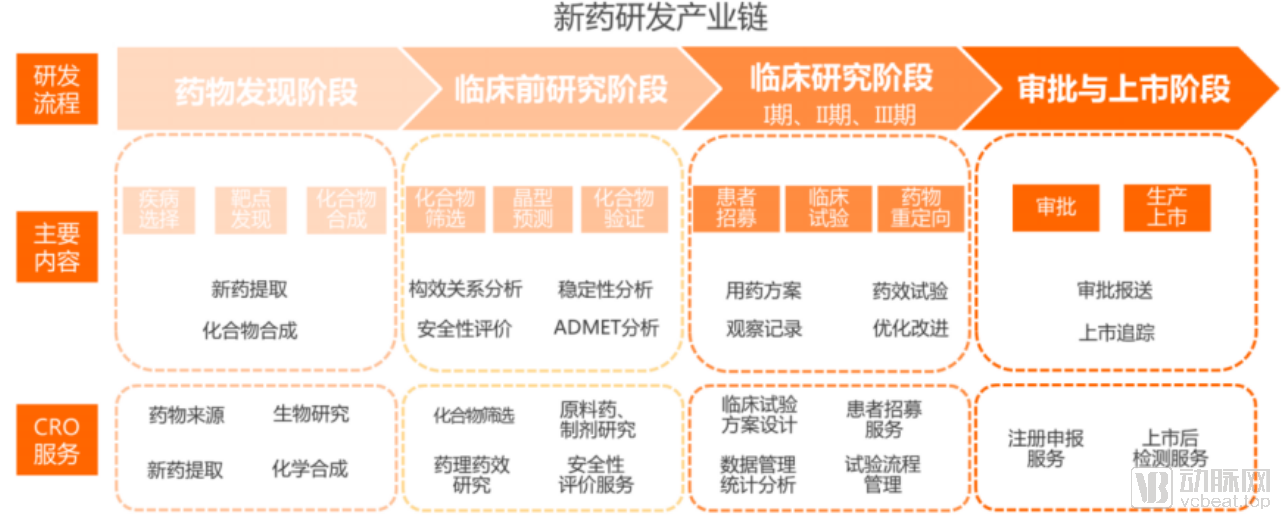
Among these, the drug discovery phase primarily involves disease selection, target identification, and compound synthesis. In contrast, the preclinical research phase focuses on compound screening, crystal form prediction, and compound validation, including structure-activity relationship (SAR) analysis, stability analysis, safety evaluation, and ADMET analysis.
Drug discovery and preclinical research represent two critical challenges that pharmaceutical companies urgently need to address. New drug development faces three major dilemmas: prolonged development cycles, low success rates, and high R&D costs.
Drug development incurs escalating costs in later stages, yet critical properties determining a drug’s success or failure, such as toxicity and solubility, can only be experimentally evaluated at relatively late stages. Consequently, traditional approaches often reveal that a drug candidate is unsuitable for commercialization only after substantial investments of time, labor, and financial resources have been committed to its development, resulting in significant waste of resources and missed opportunities.
Amid the challenges of lengthy R&D cycles, low success rates, and high costs, major traditional pharmaceutical companies are striving to leverage technological innovation to accelerate new drug development, improve success rates, and reduce costs, thereby better meeting the growing demand for medications. This has created opportunities for the application of AI technology in the field of new drug research and development.
AI primarily leverages its powerful capabilities in discovering relationships and computation to facilitate new drug development.
In terms of discovering relationships, AI possesses capabilities in natural language processing, image recognition, machine learning, and deep learning, enabling it to rapidly identify links between drugs, diseases, and genes.
In terms of computation, AI’s powerful cognitive computing capabilities enable virtual screening of candidate compounds, facilitating the more rapid identification of those with high activity and thereby laying the groundwork for subsequent clinical trials.
Machine learning algorithms can be broadly categorized into two types: supervised learning and unsupervised learning. Supervised learning methods are primarily used to build training models, leveraging data regression analysis and classifier techniques to predict outcome categories or continuous variables. In contrast, unsupervised learning is employed to develop models that cluster static data sharing similar characteristics.
Applying these two methods to new drug development, unsupervised learning primarily focuses on classifying vast amounts of preclinical and clinical medical data, such as categorizing cell types and biomarkers from single-cell RNA sequencing data, screening for deeper-level features of biomarkers, and analyzing low-dose CT scan data.
Compared with unsupervised learning, supervised learning offers a wider variety of algorithms and has broader applications.
Classifier methods can mine target-disease-gene relationships from massive volumes of literature and identify tissue-specific biomarkers from gene expression profiles. Regression analysis methods can quantitatively analyze structure-activity relationships (SAR) of molecules, predicting gene expression signatures and drug sensitivity associated with successful clinical trials. In supervised learning approaches, combining regression analysis with classifier methods enables virtual drug target screening experiments, thereby outputting the biological activity and assay results of test compounds.
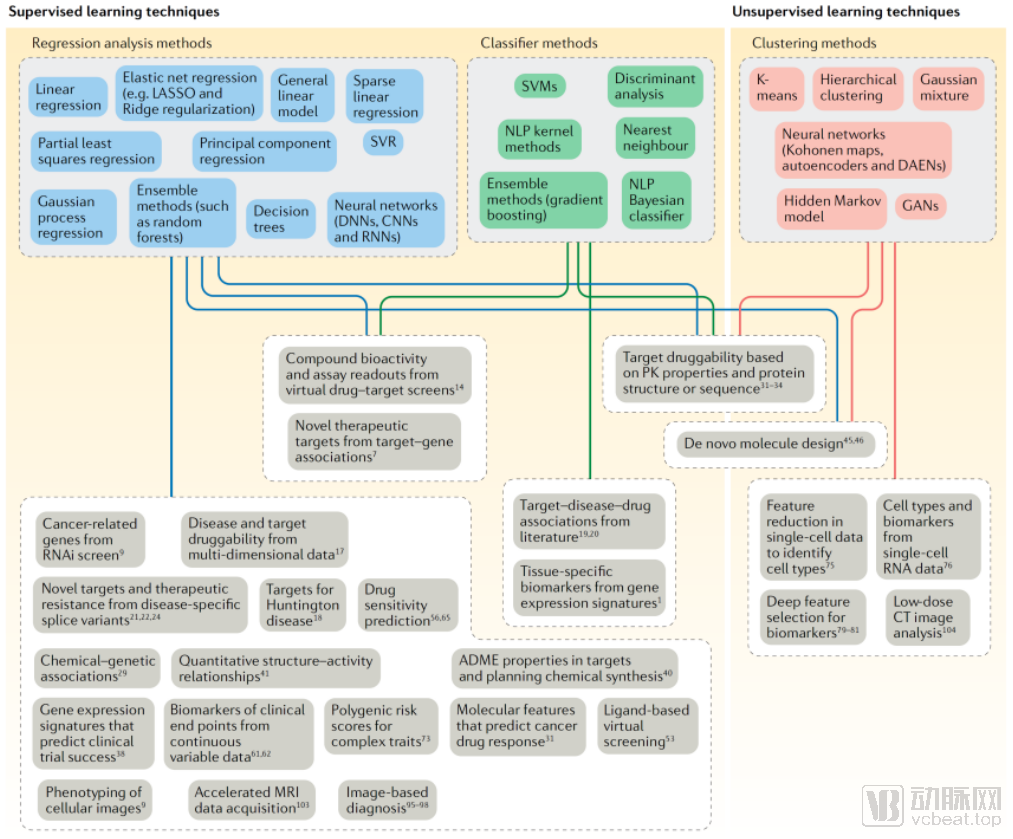
A Summary of Supervised and Unsupervised Learning Algorithms and Their Applications, Source: Nature Reviews Drug Discovery
Previously, VCBeat Institute compiled public data and categorized the main applications of AI in new drug development into the following seven scenarios: target discovery, compound synthesis, compound screening, crystal form prediction, patient recruitment, optimization of clinical trial design, and drug repurposing.
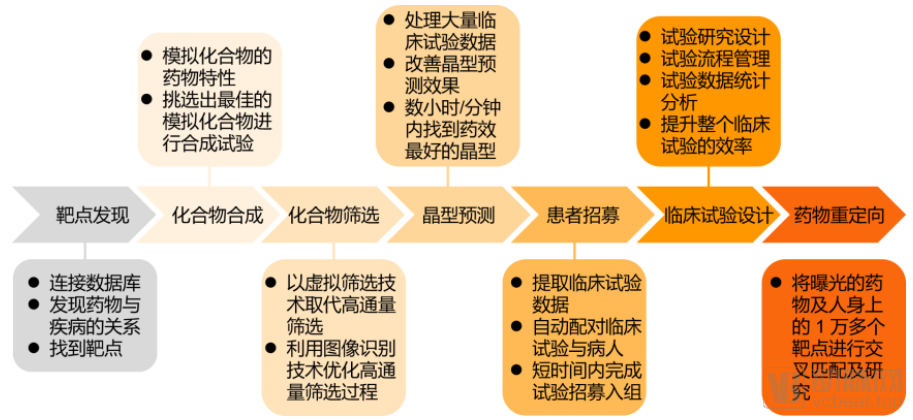
Seven Major Application Scenarios of AI in New Drug Development
Unsupervised learning demonstrates significant advantages in clustering health data, aligning more closely with application scenarios such as patient recruitment and optimization of clinical trial design. However, there are currently only five types of unsupervised learning algorithms, indicating substantial room for improvement compared to supervised learning. Supervised learning covers AI-driven new drug development applications, including target discovery, compound screening, and drug repurposing. This explains why AI applications in new drug development, particularly those focused on target discovery and compound screening, are currently experiencing the most rapid growth, a trend evident in the business operations of multiple leading enterprises.
VCBeat analyzed AI-driven new drug companies’ financing events up to October 9, 2020, and found that the top ten domestic and international firms by total funding each have focal points across seven application scenarios. Compound screening is the priority for many companies, with all seven leading enterprises establishing related R&D pipelines. Target discovery follows closely, with six companies achieving breakthrough progress. Only one of the top ten companies is engaged in clinical trial design.
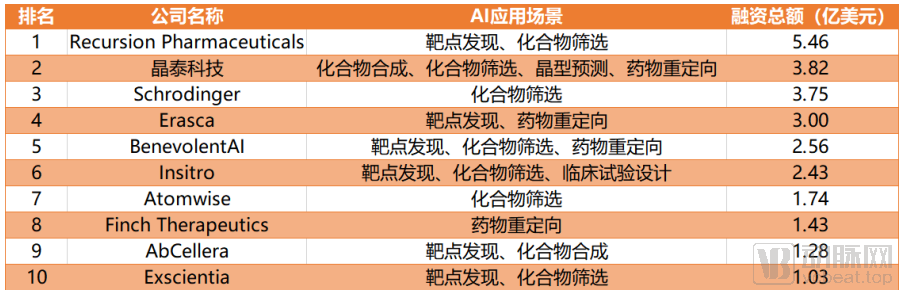
Top 10 AI-Driven New Drug R&D Companies by Total Financing
Target-based pharmacodynamic evaluation in new drug discovery has become a fundamental strategy for new drug research and development both domestically and internationally. Once a drug target is identified, target-based pharmacodynamic evaluation is conducted to facilitate the discovery of new drugs. Traditional target identification relies on pharmaceutical researchers’ interpretation of relevant scientific literature and their accumulated personal knowledge and experience to hypothesize potential targets. This process typically takes an average of 2–3 years and yields a very low success rate in target discovery.
The core of drug target discovery lies in elucidating the causal relationships between targets and diseases from massive databases. Machine learning offers a suite of tools that train computers using large volumes of high-quality biological data and algorithms, enabling them to learn how to perform tasks, conduct discovery, and make decisions for specific problems. This has given rise to the most active application scenario in AI-driven new drug development today.
The continuous enrichment of biological data has created a substantial resource base for target discovery research. Modern biological data encompass human genetic information from large-scale populations, as well as transcriptomic, proteomic, and metabolomic profiles from both healthy individuals and patients with specific diseases, along with extensive clinical imaging data. By recombining these multidimensional, high-quality datasets using appropriate analytical methods, robust statistical models can be generated. Such models lie at the core of target discovery, enabling predictive identification of therapeutic targets and shortening the target discovery cycle.
With the continuous advancement of machine learning algorithms and improvements in data quality and scope, machine learning is now capable of extracting, analyzing, and organizing target information from human health-related images, text, biometric data, as well as other data sources such as wearable devices, clinical trial data, and high-dimensional omics data.
Once the target macromolecule is identified, a large number of potential molecules can be found to interact with this target. The next step in drug development is to effectively evaluate the safety of these potential drug molecules, screen for those with low side effects, and proceed to subsequent clinical studies.
A potential drug molecule may take years to complete the development and clinical trial phases, with most compounds failing before reaching the market. In traditional new drug research and development, researchers use high-throughput screening to identify highly promising compounds from thousands of candidates, a process that consumes significant time and resources. This burden is further exacerbated when candidate molecules have few known therapeutic targets.
To address this issue, many researchers have opted to use Virtual Screening (VS) to assist high-throughput screening. By employing a faster and more cost-effective virtual screening approach, the number of lead compounds entering high-throughput screening is reduced, thereby significantly improving the yield of high-throughput screening.
To more intuitively demonstrate the applications and business operations of leading enterprises in AI-driven new drug development, we provide a concise overview of the ten companies most favored by investors, covering their corporate profiles, key products, and financing status.
Exscientia has built an artificial intelligence platform to guide automated drug discovery and development, with primary application scenarios in target identification and compound screening.
Exscientia leverages combinatorial algorithms to automatically design millions of small-molecule compounds associated with specific targets based on existing drug discovery data, including single-target small-molecule drugs and bispecific small-molecule drugs targeting combinations of targets. These compounds are then evaluated and screened based on efficacy, selectivity, ADME (absorption, distribution, metabolism, and excretion), and other criteria. The selected compounds are synthesized and subjected to experimental testing, with the resulting data fed back into the AI system to refine compound selection in subsequent iterations. The advantages of Exscientia’s combinatorial algorithms can reduce drug development timelines from 4.5 years to just 1 year, while significantly decreasing the number of compounds that need to be considered in the early stages.
Exscientia has partnered with pharmaceutical giants Sanofi and Sumitomo Pharma to develop two bispecific small molecules, respectively, fully validating the feasibility of its CENTAUR BIOLOGIST strategy. To date, Exscientia has raised a total of $103 million in financing.
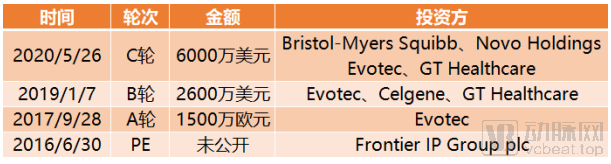
Exscientia Financing
AbCellera is an AI-driven antibody research and development company, with primary application scenarios in target discovery and compound screening.
The company possesses an exclusive drug discovery platform capable of searching and analyzing the innate immune system to identify antibodies for disease prevention and treatment. AbCellera integrates high-throughput microfluidics, computer vision, and artificial intelligence to discover novel antibody-based molecular therapies through parallelized, high-throughput single-cell analysis, thereby accelerating antibody drug development.
AbCellera’s core technology is a high-throughput microfluidics platform that screens for candidate antibody therapeutics by analyzing individual B cells from any species using miniaturized assays. The platform can be customized according to disease type and application objectives, enabling further structural optimization and source optimization of the identified antibody candidates. AbCellera’s platform can screen millions of cells in a single run, yielding hundreds of therapeutic candidates.
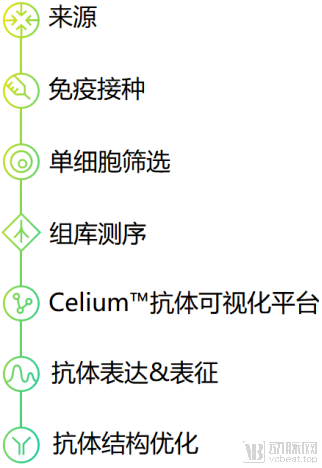
AbCellera Antibody Screening Process, Source: AbCellera Official Website
AbCellera leveraged its artificial intelligence technology platform and the advantages of real-world studies to help the world’s first COVID-19 antibody candidate successfully enter human clinical trials just three months after the initial screening of patient blood samples. AbCellera has established a comprehensive technology stack to search, decode, and analyze the natural immune system, identify the most promising antibody candidates, and develop them into therapeutics.
To date, AbCellera has completed total financing amounting to $128 million.
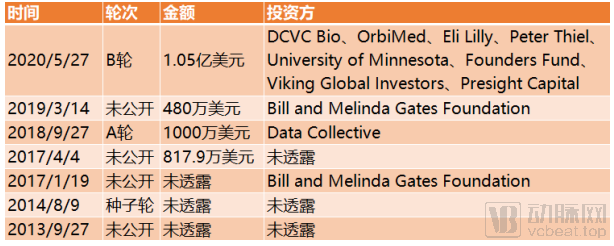
AbCellera's Financing History
Finch Therapeutics, founded in 2004, is an AI-driven microbiome therapeutics R&D company primarily focused on drug repurposing.
The company employs innovative machine learning algorithms to reverse-engineer successful clinical microbiome therapies based on high-throughput microbial molecular data, with these novel treatments grounded in the science of fecal microbiota transplantation. Finch leverages this human-first microbiological approach to identify and develop strains with clinical benefits, administering these microbial communities to patients.
HUMAN-FIRST DISCOVERY® is Finch’s core platform, leveraging clinical research data from human-to-human microbiota transplantation and a machine learning platform to identify microbial consortia successfully applied in the treatment of patient diseases. Finch currently operates two R&D pipelines, Full-Spectrum Microbiota and Rationally-Selected Microbiota, addressing broad-spectrum and targeted microbiota therapies, respectively.
Full-Spectrum Microbiota involves the rigorous screening of healthy donor cohorts according to established criteria to isolate and collect diverse microbial communities. These are then manufactured into pharmaceutical products under Good Manufacturing Practice (GMP) standards, preserving the integrity of the microbial communities and maintaining their diversity and functionality. Rationally-Selected Microbiota employs targeted mechanisms to identify microbial strains capable of growth and proliferation in pure culture media, thereby yielding selected microbial strains.
To date, Finch Therapeutics has raised a total of $143 million in financing.
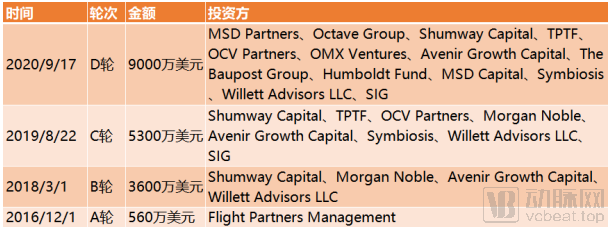
Finch Therapeutics' Funding History
Atomwise is a company that leverages supercomputers for drug discovery and development, with its primary application scenario being compound screening.
The company aims to simulate the drug development process using supercomputers, AI, and complex algorithms to predict the efficacy of new drugs and reduce R&D costs.
AtomNet, a compound screening system developed by Atomwise, is an AI system based on convolutional neural networks. It leverages high-performance computing and sophisticated algorithms to screen potential drug molecules for properties such as polypharmacology, selectivity, and efficacy, while ensuring low off-target effects. AtomNet autonomously learns the features governing molecular binding, thereby avoiding the manual tuning and parameterization of binding characteristics typical in traditional computational methods. By applying local convolutional filters to structural information of protein targets, AtomNet can successfully predict novel active molecules for these targets.
AtomNet reduces the timeline for new drug discovery and optimization from years to weeks, significantly lowering time and resource costs, and creating more development opportunities for pharmaceutical companies, startups, and research institutions. Currently, AtomNet has increased compound discovery efficiency by 10,000-fold, with a screening output rate 100 times higher than that of ultra-high-throughput screening, enabling the screening of over 100 million compound molecules per day.
To date, Atomwise has raised a total of $174 million in financing.
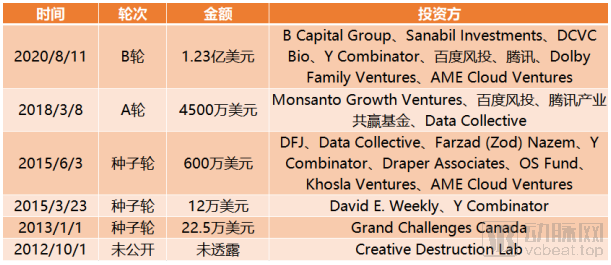
Atomwise’s Financing History, Source: VCBeat
Insitro is a drug discovery company centered on machine learning and high-throughput biology, with primary applications in target identification, compound screening, and clinical trial design.
Insitro does not rely solely on limited “found” data; instead, it leverages modern biological tools to generate high-quality, large-scale datasets optimized for machine learning. By producing high-throughput functional genomics datasets that are consistent with patient data and interpreting these data through novel machine learning approaches, Insitro builds predictive models to accelerate target screening and drive the design of therapeutic regimens.
Insitro leverages machine learning algorithms to enhance the precision of traditional genetic analyses by extracting insights from genetic, phenotypic, and clinical data, thereby aligning more closely with the fundamental architecture and biology of diseases. Its data pipelines and automated infrastructure enable the rapid generation of large volumes of high-quality data. Furthermore, Insitro integrates patient-derived induced pluripotent stem cells (iPSCs), genome editing, high-content cellular phenotyping, and machine learning to construct in vitro disease models. By optimizing genetics, cell types, environmental conditions, and multidimensional data collection, this approach allows for finer-grained differentiation of cellular states and prediction of disease-associated clinical features, ultimately maximizing the predictability of clinical drug outcomes.
Insitro’s disease prediction model integrates in vitro cell systems with computer-simulated machine learning to identify previously unrecognized disease subtypes and discover potential therapies. Through this predictive modeling, Insitro is able to pinpoint breakthrough therapeutic targets, enable feasible drug design, and advance the development of biomarkers and clinical development strategies.
To date, Insitro has raised a total of $243 million in financing.
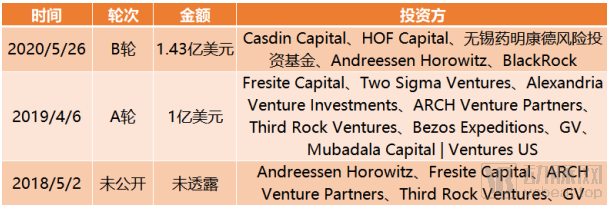
Insitro’s Fundraising History, Source: VCBeat Orange
BenevolentAI is a pharmaceutical company that leverages artificial intelligence to develop novel therapies for complex diseases. It is the first fully integrated AI company with capabilities spanning both drug discovery and clinical development, primarily focusing on target identification, compound screening, and drug repurposing.
BenevolentAI’s core technology platform is JACS (Judgment Augmented Cognition System), a judgment-augmented cognitive system that extracts knowledge capable of driving drug discovery from vast, unstructured datasets, generates novel testable hypotheses, and thereby accelerates the drug development process.
To enhance JACS’s computational capabilities, the company purchased the DGX-1, a supercomputer specifically designed for deep learning, from NVIDIA. This system can simulate recognition and learning patterns occurring in the cerebral cortex, accelerating the establishment of novel relationships across diverse information sources, thereby driving faster and more abundant innovation in new drug development.
The pathogenic mechanisms of a disease vary across different patient populations, yet effective treatment requires targeting each of these distinct mechanisms individually. The company aims to leverage its AI platform to identify drug targets associated with these mechanisms and enable therapeutic agents to act upon them.
BenevolentAI’s JACS system, leveraging its natural language processing and deep learning capabilities, can rapidly process vast amounts of unstructured data—including disease, drug, and clinical trial data—to uncover novel associations, identify new indications for existing drugs, and enable drug repurposing, thereby helping scientists discover more valuable therapeutic applications.
In June 2014, BenevolentAI announced a collaboration with a U.S. pharmaceutical company, selling two new drugs validated for a new indication (Alzheimer’s disease) to this American firm. These two drugs were at the stage of evaluating hit-to-lead candidates, and the deal was worth up to $800 million. In May 2017, BenevolentAI conducted a redirection analysis on a clinical trial-failed drug named bavisant, discovering that it had a relatively good therapeutic effect on daytime excessive sleepiness symptoms in Parkinson’s patients.
To date, BenevolentAI has raised a total of $256 million in financing.
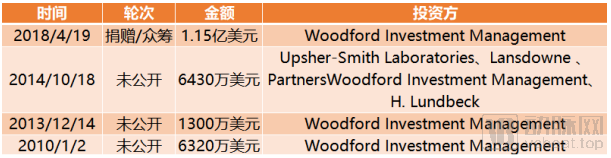
BenevolentAI’s Fundraising Journey
Erasca, founded in 2018, is a biotechnology company dedicated to eliminating cancer, with primary applications in target discovery and drug repurposing.
Erasca has multiple discovery programs underway, targeting undisclosed targets that are biological drivers of cancer.
OPRA (Oncology Pattern Recognition Algorithm) is Erasca’s proprietary artificial intelligence drug discovery platform, which leverages advanced computational tools such as machine learning to develop innovative oncology therapeutic strategies. The platform does not rely on any specific drug or a single approach to cancer treatment; instead, it employs monotherapy and combination therapies to block cancer pathways, thereby accelerating drug discovery. By analyzing large-scale datasets from both domestic and international sources, OPRA enables Erasca scientists to interrogate key oncogenes within vast amounts of cancer biology data.
OPRA’s data-driven medical approach is highly flexible, supporting the parallel deployment of multiple programs. OPRA also leverages Erasca’s drug discovery process to enable scientists and artificial intelligence to accelerate the development of therapies with maximal potency during R&D, thereby advancing its ultimate goal of curing cancer.
To date, Erasca has completed a total of $300 million in financing.
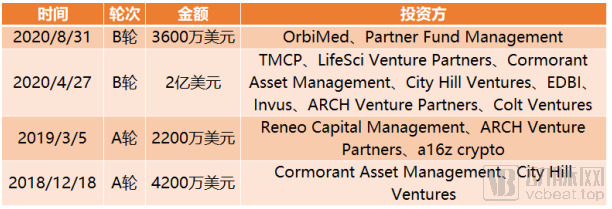
Erasca's Financing History
Schrödinger is a drug discovery and materials design company dedicated to developing and applying advanced computational methods to transform how scientists design therapeutics and materials, with its primary application scenario being compound screening.
FEP is a drug discovery solution launched by Schrödinger, which is based on the "Free Energy Perturbation" method to continuously and accurately evaluate the contribution of physical interactions at all stages to the binding of drug molecules with proteins. Among them, free energy perturbation refers to perturbing or converting an initial molecule into another target molecule, and determining the protein binding affinity of the molecule by evaluating the changes in binding affinity caused by free energy perturbation.
In FEP+, Schrödinger runs a computationally efficient molecular dynamics engine on GPUs, integrating classical molecular mechanics force fields and automated workflows. By employing efficient, enhanced sampling methods, it achieves automatic atom mapping and interaction mapping assignment to ensure the accuracy of free energy perturbation calculations.
Leveraging its computing platform, it can evaluate billions of compound molecules every week. In contrast, using conventional methods, typical pharmaceutical companies can synthesize approximately 1,000 candidate compounds annually in drug discovery projects.
To date, Schrödinger has raised a total of $375 million in financing. It is also the only publicly listed company among the top ten in terms of total funds raised, having secured over $200 million on its listing day, which exceeded its expected fundraising target by 33%.
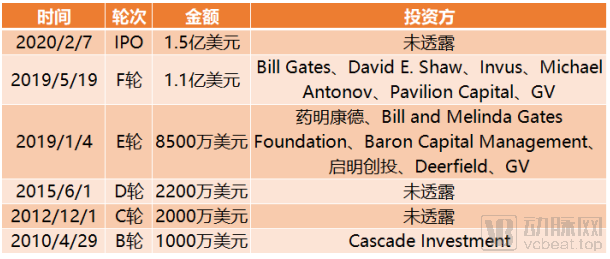
Schrödinger's Financing History
XtalPi was founded on September 11, 2015. It is a computation-driven innovative drug R&D company, with primary application scenarios including compound synthesis, compound screening, crystal form prediction, and drug repurposing.
Driven by computation-led innovation, the company’s ID4 (Intelligent Digital Drug Discovery and Development) platform integrates quantum physics, artificial intelligence, and ultra-large-scale cloud computing technologies to accurately predict multiple critical properties of small-molecule drugs, thereby enhancing the efficiency and success rate of preclinical drug development.
XtalPi has achieved a breakthrough in the rapid and accurate prediction of key properties of small-molecule drugs. Its drug polymorph prediction technology has reached a world-leading level, far surpassing similar methods in terms of system complexity, prediction accuracy, and computational speed. The company possesses multiple industry-leading technologies in areas such as drug design and solid-form screening. Currently, its drug polymorph prediction technology has been adopted by numerous pharmaceutical companies worldwide and has gained widespread recognition from industry experts.
As of now, XtalPi has completed a total of $382 million in financing.
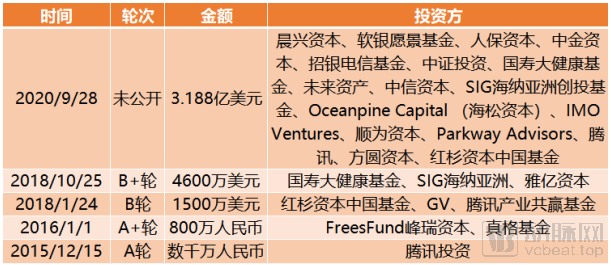
XtalPi's Financing History
Recursion Pharmaceuticals is a clinical-stage biotechnology company that integrates artificial intelligence, experimental biology, and automation, with primary applications in target discovery, compound screening, and clinical trial design.
Recursion integrates experimental biology and automation with artificial intelligence in a large-scale parallel system to efficiently discover potential drug candidates for various indications, including genetic disorders, inflammatory diseases, immunological conditions, and infectious diseases.
Recursion’s robotic platform features a rich, interconnected database containing over 2 petabytes of biological images, enabling the company’s machine learning methods to elucidate the mechanisms of action and potential toxicity of drug candidates, decode biology, and advance novel therapies, thereby fundamentally improving people’s lives.
Although Recursion plans to prioritize the development of its own rare disease therapeutics business, it will continue to establish partnerships with leading pharmaceutical companies across multiple disease areas, including immuno-oncology, oncology, aging, and inflammation.
To date, Recursion Pharmaceuticals has raised a total of $546 million in financing, making it the AI-driven novel drug company with the highest cumulative funding to date.
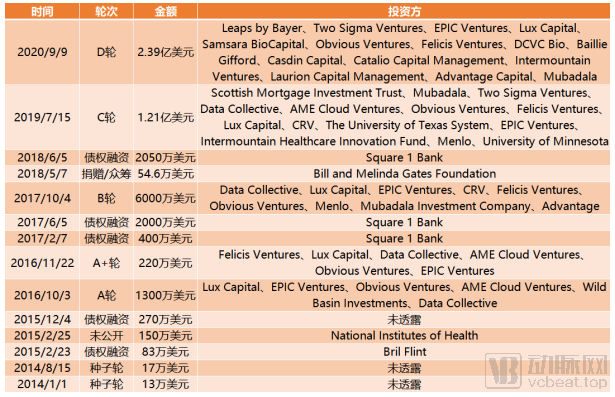
Recursion Pharmaceuticals' Financing History