

Lianxin Mobile Healthcare Completes RMB 300 Million Strategic Financing to Advance Smart Medical Solutions
On October 22, 2020, Shenzhen Lachesis Mhealth Co., Ltd. (hereinafter referred to as “Lachesis”) held the Smart Healthcare Industry Innovation Think Tank and Strategic Financing Signing Ceremony, announcing the completion of its strategic financing.
The financing amount for this round is RMB 300 million, led by existing shareholder Shenzhen Capital Group (SCG), with follow-on investments from GTJA Huirui, Qingdao Guoxin China Merchants Fund of Funds (hereinafter referred to as “China Merchants Zhiyuan Capital”), BOC Guangdong Capital Fund, SoftBank China Capital, Xiamen ITG Haitong Ludao Fund (hereinafter referred to as “Haitong Kaiyuan”), and Yida Xinye.
Since 2020, the investment climate has been far from optimistic. Against this backdrop, it is remarkable that Shenzhen Lachesis Mhealth Co., Ltd. has successfully completed two rounds of financing, each exceeding RMB 100 million, securing a total of nearly RMB 500 million in funding this year.
Additionally, at this Smart Healthcare Industry Innovation Think Tank Conference, leaders from institutions such as Shenzhen Capital Group, GTJA Huirui, BOC Guangdong Capital, China Merchants Zhiyuan Capital, SoftBank China Capital, Haitong Kaiyuan Investment, Yida Xinye, CICC Capital, Zhongke Rongxin, and Hengyou Investment engaged in vibrant discussions and exchanges on topics including smart healthcare.
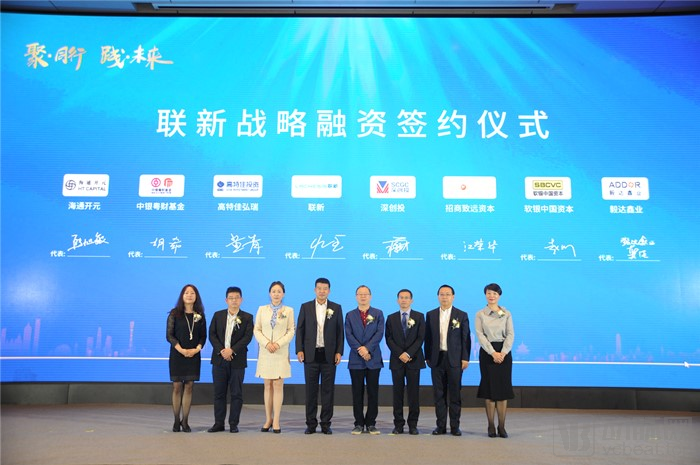
Group Photo of Lachesis’ Signing Shareholders
Founded in 2010, Lachesis is positioned to provide smart ward and chronic disease management solutions for hospitals. Starting from actual clinical needs, it has tailored a series of intelligent products to help hospitals establish a comprehensive hospital-wide information management system covering five dimensions: diagnosis and treatment, clinical nursing, patient services, medication and supplies management, and quality management. This facilitates the transition of hospital operational processes from traditional methods to intelligent approaches, thereby enhancing overall hospital operational management levels.
Lachesis Smart Ward Holistic Solution encompasses two major platforms: the Smart Ward Interaction Platform and the IoT Platform. Across three key hospital scenarios—the nurse station, corridors, and patient rooms—it leverages four product categories: clinical nursing, early risk detection, medication and supply management, and mobile rounds. This enables timely alerts for warning information, real-time risk monitoring, and on-demand data access, thereby transforming post-event response into proactive pre-event detection, effective in-process supervision, and post-event feedback for continuous improvement.
Since its establishment, Lachesis has maintained a steady growth trajectory, evolving into one of the leading enterprises in China’s smart healthcare sector and earning numerous accolades. Public records indicate that Lachesis was consecutively included in the “Top 100 Future Healthcare Companies” list for two years in 2018 and 2019. In March 2020, the “Guangdong Provincial Engineering Technology Research Center for Clinical Applications of Artificial Intelligence and Internet of Things,” established by Lachesis, was officially recognized as a Guangdong Provincial Engineering Technology Research Center. This marked the first technology-focused research center in the smart healthcare field to be directly linked with clinical practice. In September 2020, the “Futian District Medical Consortium 5G+MEC Smart Healthcare Project,” for which Lachesis participated in the application process, won the Second Prize in the National Cross-Industry Finals of the 3rd “Bloom Cup” 5G Application Competition.
Currently, Lachesis’s marketing network covers more than 6,000 hospitals across China, with over 900 institutional clients. These include renowned Grade A tertiary hospitals such as Peking Union Medical College Hospital, Peking University People’s Hospital, and Beijing Hospital of the National Health Commission, thereby establishing a strong demonstrative effect in the field of smart healthcare.
At the Lachesis Smart Healthcare Industry Innovation Thought Leadership Summit, distinguished experts from investment institutions engaged in a dynamic exchange of ideas. They collectively explored the future opportunities and challenges facing the smart healthcare industry, corporate response strategies, value assessments of the sector by investors, and the investment rationale behind backing Lachesis.
How Does Shenzhen Capital Group, Which Has Led Lachesis’s Financing Rounds Twice, View Smart Healthcare? Jiang Yucai, Vice President of Shenzhen Capital Group, Provided the Answer. Jiang Yucai stated that the domestic smart healthcare market is growing at a very rapid pace, expanding from RMB 40 billion to RMB 80 billion in just a few years, making it a niche segment characterized by “vast waters teeming with large fish.” The professionalism demonstrated by the Lachesis team in addressing clinical needs and product development has given Shenzhen Capital Group full confidence in Lachesis’s future growth. Following this round of financing, Shenzhen Capital Group will work alongside other shareholders to provide robust post-investment services, leverage their respective strengths, and help propel Lachesis to become a leading enterprise in the smart healthcare sector.
Liu Senlin, Executive General Manager of CICC Capital, shared his insights on the smart healthcare sector in the context of the pandemic. He noted that the pandemic has, to some extent, exposed inefficiencies within the healthcare system while also generating new medical demands. Therefore, the pandemic has not only created incremental growth in the smart healthcare market but also brought longstanding structural issues to the forefront, thereby driving the development of smart hospitals. In terms of strategic approach to smart hospital construction, Shenzhen Lachesis Mhealth Co., Ltd. (Lachesis) has chosen the right entry point. Over the past few years, Lachesis has consistently adhered to its product philosophy, continuously promoting solutions focused on improving healthcare quality, enhancing hospital management standards, and boosting the work efficiency of medical professionals.
Hu Xi, Deputy General Manager of BOC-Yuecai Fund, stated at the forum that the application of intelligent products in hospital settings has created a large closed-loop system, under which individual ward scenarios form smaller closed loops. Within these smaller loops, Shenzhen Lachesis Mhealth Co., Ltd. has addressed the pain points of medical staff, making its solutions suitable for widespread adoption.
Huang Qing, Chairman of GTJA Hongrui, mentioned at the forum that during the pandemic, GTJA procured Lachesis Smart Ward products and donated them to the Shanghai Public Health Clinical Center, the Chengdu Public Health Clinical Center, and hospitals in Hubei Province and other regions, assisting these facilities in enhancing their prevention and control capabilities through high-tech, intelligent equipment. Following the completion of the equipment donations, the hospitals provided positive feedback. “This is a highly valuable form of aid. The genuine satisfaction of the users has further strengthened our confidence in the future development of Lachesis.”
Jiang Ronghua, General Manager of China Merchants Zhiyuan Capital, interpreted the smart healthcare sector in light of national policies. Policy mandates such as electronic medical record (EMR) grading and hospital performance evaluations have established specific assessment indicators for hospitals’ smart development. Meanwhile, driven by the impact of the pandemic, hospitals’ demand for smart healthcare products has further increased, creating substantial market opportunities for Shenzhen Lachesis Mhealth Co., Ltd.
Xiong Xumin, Deputy General Manager and Investment Director at Haitong Kaiyuan, stated that current advancements in science and technology—such as the Internet of Things (IoT), artificial intelligence (AI), sensors, and chips—have provided ample technical groundwork for further enhancing medical technology standards and healthcare service quality. Leveraging Chairman Zhu Shuangquan’s prior experience in the consumer goods sector, the Lachesis team has creatively integrated intelligence, healthcare, and consumer domains with clinical practice, thereby forging a new field and endowing Lachesis products with innovative value.
Gong Jia, Vice Chairman of Yida Xinye, elaborated on her perspectives on healthcare informatization and smart healthcare. She stated that while healthcare informatization is management-oriented, smart healthcare is more fundamentally rooted in human-centric principles, addressing the clinical needs of nurses and patients. Yida Xinye highly values Shenzhen Lachesis Mhealth Co., Ltd.’s leading position in the smart healthcare sector and will leverage its own strengths to fully support Lachesis’s future development.
Miao Yujia, Business Partner at GTJA Hongrui, elaborated on the rationale behind GTJA’s investment in Lachesis. Since the launch of its first product, Lachesis has established a foundation for comprehensive overall solutions. Furthermore, the product’s aesthetic UI design and “hardcore” high-tech internal components have also been key factors contributing to its significant market recognition.
Zhu Shuangquan, President and CEO of Lachesis Mhealth, stated in his forum address that leveraging technology to promote and transform the development of the healthcare industry is an irreversible megatrend. Looking ahead, Lachesis Mhealth will continue to focus on product R&D. Driven by the Shenzhen Special Economic Zone and the Guangdong-Hong Kong-Macao Greater Bay Area, and in close collaboration with the government, the company aims to pioneer smart healthcare initiatives in Shenzhen.
Hua Ping, Managing Partner at SoftBank China Capital, also extended his congratulations via video message on Lachesis Mhealth’s completion of this financing round. He noted that smart healthcare is poised to drive profound transformation across the medical industry, with the COVID-19 pandemic further accelerating its development this year. As a pioneer in China’s smart healthcare sector, Lachesis Mhealth boasts an outstanding entrepreneurial team and has developed integrated hardware-software solutions through sustained investment in technological innovation. SoftBank China Capital is honored to participate in this round of investment and looks forward to collaborating with other investors present to support Lachesis Mhealth’s future growth.
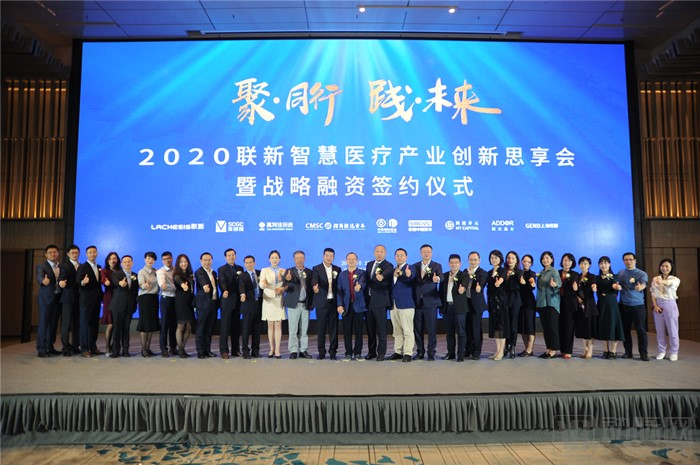
Group Photo of Guests at the Lachesis Think Tank
In recent years, the integration of information technologies such as the internet, the Internet of Things (IoT), and big data with healthcare has ushered hospital informatization into a new phase. Making electronic medical records (EMR) the core driver of informatization in medical institutions has become an essential requirement for hospital development and management. Meanwhile, influenced by advancements in science and technology, hospitals are increasingly focused on improving diagnostic and treatment quality, enhancing the patient-provider experience, boosting managerial efficiency, and fostering innovative business models. Consequently, the demand for the application and integration of clinical informatics tools is becoming more urgent, making the construction of smart hospitals a central trend in modern hospital development.
In May 2020, the National Health Commission issued the "Notice on Further Improving the Appointment Diagnosis and Treatment System and Strengthening the Construction of Smart Hospitals." The notice proposed innovating and improving smart hospital systems by establishing an integrated system encompassing medical care, services, and management. It aimed to further leverage the critical role of information technology in the construction and management of modern hospitals, continuously enhance the modernization level of hospital governance, and provide patients with higher-quality, more efficient, safer, and more patient-centered medical services.
The construction of smart hospitals not only significantly enhances medical quality and efficiency and optimizes the allocation of regional medical resources, but also improves patients’ healthcare experience and alleviates doctor-patient tensions. Under the guidance of national policies, “smart medical care” for medical professionals, “smart services” for patients, and “smart management” for administrators have gradually become official evaluation criteria for smart hospitals. The introduction of these standards has provided hospital administrators with clearer direction for future smart hospital development, while presenting both new challenges and opportunities for enterprises operating in the smart healthcare sector.
The pandemic caused by the COVID-19 outbreak has triggered an unprecedented public health crisis worldwide. Impacted by the epidemic, China has fully launched its “New Infrastructure” initiative, centered on 5G networks, big data centers, artificial intelligence (AI), and the Industrial Internet. Against the backdrop of national efforts to promote this “New Infrastructure,” the intelligent transformation of the healthcare sector has become a crucial component of its development. It is essential to fully leverage the role of AI in facilitating the transition of medical services from “informatization” to “intelligentization” within the framework of the “New Infrastructure.”
In March 2020, the National Development and Reform Commission (NDRC) and the Ministry of Industry and Information Technology (MIIT) jointly issued the "Notice on Organizing and Implementing the 2020 New Infrastructure Construction Projects (in the Fields of Broadband Networks and 5G)." The notice called for accelerating the application and promotion of 5G technology in areas such as epidemic early warning, pre-hospital emergency care, remote real-time consultations, remote surgery, wireless monitoring, and mobile ward rounds, thereby effectively safeguarding the health of medical personnel. During the same period, Guangdong Province issued the "Several Policy Measures to Further Promote Information Services and Consumption in Response to the Impact of the Epidemic." These measures emphasized fostering new consumption models represented by smart healthcare and vigorously developing key information technology industries, including 5G, intelligent terminals, and the Internet of Things (IoT).
Emerging technologies such as 5G, cloud computing, and artificial intelligence, as core representatives of “New Infrastructure,” have spurred a new wave of “New Healthcare Infrastructure” development. This trend is guiding the healthcare industry toward continuous intelligent evolution, unlocking the value of an increasing number of smart healthcare applications, and driving innovation and even restructuring of healthcare service models. With the successful completion of this strategic financing round, Shenzhen Lachesis Mhealth Co., Ltd. will leverage enhanced capital support to continue innovating and developing smart healthcare products by integrating advanced technologies like 5G. Meanwhile, the company will expand its research into future business areas such as medical big data and intelligent diagnosis, and further broaden its market presence.
About Shenzhen Capital Group
Shenzhen Capital Group Co., Ltd. was established in 1999 and has since developed into a comprehensive investment group with venture capital at its core. The company currently has a registered capital of RMB 5.42 billion and manages funds totaling approximately RMB 399.4 billion. As of the end of September 2020, it ranked first in China’s venture capital industry in terms of both the number of portfolio companies and the number of listed portfolio companies: it had invested in 1,157 projects, among which 174 companies have been listed on 16 major capital markets worldwide, and 327 projects have exited (including IPOs). Its professional investment approach and in-depth services have fueled the growth of numerous star enterprises such as Mindray Medical, Chipscreen Biosciences, Pumen Technology, Akeso Biopharma, and Royole Corporation, while also delivering outstanding performance for Shenzhen Capital Group. Thanks to its exceptional achievements in the venture capital sector, Shenzhen Capital Group has consistently ranked among the top in comprehensive rankings of VC firms conducted by authoritative institutions such as the Venture Capital Committee of China, Zero2IPO Group, and China Venture.
About GaoTeJia HongRui
Shenzhen Gaotejia Hongrui Investment Co., Ltd. focuses on investments in the healthcare industry, with strategic equity investment as its core approach. Its investment portfolio spans all stages, including mergers and acquisitions (M&A), private equity (PE), venture capital (VC), and angel investing. The company boasts China’s largest professional healthcare investment team, has built an investment ecosystem platform for the healthcare industry, and is committed to becoming a globally influential healthcare investment institution.
About China Merchants Zhiyuan Capital
China Merchants Zhiyuan Capital Investment Co., Ltd. is a wholly-owned private equity fund subsidiary of China Merchants Securities, which is part of the century-old China Merchants Group. As the only securities firm controlled by a central state-owned enterprise, its shareholder China Merchants Securities supports businesses that primarily include private equity investment fund management, industrial investment fund management, and mezzanine fund management. China Merchants Zhiyuan Capital has actively established a presence in Pre-IPO investments, industrial M&A funds, growth funds, and venture capital funds, boasting a comprehensive fund lineup and extensive industry coverage.
About BOC-GD Fund
BOC Yuecai Equity Investment Fund Management (Guangdong) Co., Ltd. is a Sino-foreign joint venture equity investment management platform approved by the People’s Government of Guangdong Province and established in 2010. The company has initiated and established funds such as the SME Fund, the Eastern, Western and Northern Guangdong Revitalization and Development Equity Fund, and the Wenboxing Fund, with assets under management totaling approximately RMB 40 billion. It was once honored as one of the “Top 10 Venture Capital Firms in Guangdong.”
About SoftBank China Capital
SoftBank China Venture Capital (SBCVC), established in 2000, is a leading venture capital and private equity fund management firm dedicated to investing in high-growth, high-tech enterprises across the Greater China region. It has successfully invested in a portfolio of outstanding companies, including Alibaba, Taobao, Focus Media, GDS Holdings, BGI Genomics, Dian Diagnostics, and Edan Instruments. Currently, SBCVC manages multiple USD and RMB funds, with investment sectors spanning information technology, healthcare, clean technology, consumer retail, and advanced manufacturing, covering investment stages from early-stage to growth-stage and late-stage.
About Haitong Kaiyuan
Haitong Kaiyuan Investment Co., Ltd. is a wholly-owned private equity investment subsidiary established by Haitong Securities Co., Ltd. in 2008. Currently, it operates seven investment management platforms, manages over 40 funds, and has total assets under management of approximately RMB 35 billion. Haitong Kaiyuan possesses extensive experience in equity investment, operational optimization, medium-to-long-term strategic planning, and capital operations, with a primary focus on industries such as TMT, consumer goods, healthcare, aerospace technology, new energy, energy conservation and environmental protection, and modern agriculture. To date, Haitong Kaiyuan and its managed funds have invested in nearly 400 companies across various sectors, with total investment exceeding RMB 25 billion.
About Yida Xinye
Yida Xinye was jointly established by Gaotou Group, Industrial Securities, Huangpu Investment, Jingwen Investment, and Yida Capital. In the future, it will primarily invest in high-quality unlisted enterprises in emerging technology sectors encouraged by national policies, including AI, next-generation information technology, high-end equipment, biopharmaceuticals, cultural and creative industries, modern services, new materials, core components, and other related fields.