

Medical Device Compliance Research Center Launches to Accelerate Industry Growth Through Non-Equity Delegation Model
East-Medical
Integrated Platform for Regulatory Compliance Research in Medical Device CRO/CDMO
The soul of the Medical Device Registrant System is“Entrustment”: The essence of “entrustment” is the full-process entrustment between non-equity-related enterprises.
On October 20, 2020, the “Forum on Compliance Research for the Development of Medical Device Startups,” held concurrently with the China Medical Equipment Fair (CMEF), was successfully convened in Shanghai. The forum was co-organized by the Suzhou Institute of Biomedical Engineering and Technology, Southeast University, and Dongmai Medical Technology (Suzhou) Co., Ltd. At the event, experts including Associate Professor Jiang Haihong from Shanghai University of Medicine & Health Sciences, Executive Vice Dean Wang Feng from the Suzhou Institute of Biomedical Engineering and Technology, Southeast University, and Xing Zhanfeng, CTO of Kuanteng Group, discussed and exchanged views on topics such as corporate compliance under the Medical Device Registrant System and models for the translation of scientific and technological achievements in the medical device field.
At the forum, the Medical Device Compliance Research Center, jointly established by the Suzhou Institute of Biomedical Engineering and Technology, Southeast University, and Dongmai Medical, was officially unveiled. Dongmai Medical signed contract manufacturing agreements with Dingshi Medical and Xinduan Electronics. Notably, Dongmai Medical has no equity ties with Dingshi Medical or Xinduan Electronics. This typical case will set an industry benchmark and accelerate the implementation of the Medical Device Registrant System.
Supported by policies, technology, and other factors, China's medical device industry has experienced rapid growth. According to public data, the growth rate of China's medical device industry far exceeds the international average, with an annual growth rate of approximately 20%, which is higher than the average growth rate of the pharmaceutical industry.
As the medical device industry experiences rapid growth, it inevitably exposes certain challenges. For instance, the competitive landscape in multiple sub-sectors has already solidified, making it difficult for small and micro enterprises to thrive. Limited revenue and high innovation costs hinder product innovation. Meanwhile, innovative companies must invest substantial capital and time in the early stages to translate scientific achievements into commercial products, thereby raising the barrier to entry. Additionally, the risk of product failure dampens entrepreneurs’ enthusiasm for innovation...
Nowadays, supported by the Medical Device Registrant System, medical device CRO/CDMO companies can undertake full-process outsourcing for medical device enterprises, reducing upfront capital investment and lowering the risks associated with product innovation.
Professor Jiang Haihong stated in his speech, “The essence of the Medical Device Registrant System is ‘entrustment.’” This “entrustment” refers not merely to regulatory registration or manufacturing outsourcing, but to entrustment across the entire lifecycle of medical devices, encompassing R&D guidance, risk assessment, clinical trials, pilot-scale production, regulatory submission, quality management, brand marketing, and after-sales service.
Based on the Marketing Authorization Holder (MAH) system for medical devices, the Medical Device Compliance Research Center was jointly unveiled by Mr. Wang Feng, Executive Vice President of Southeast University Suzhou Medical Device Research Institute; Mr. Zhang Yan, Deputy Director of Fengqiao Subdistrict, Suzhou High-Tech Zone; Mr. Chen Tao, General Manager of Dongmai Medical; and Associate Professor Jiang Haihong from Shanghai University of Medicine & Health Sciences.
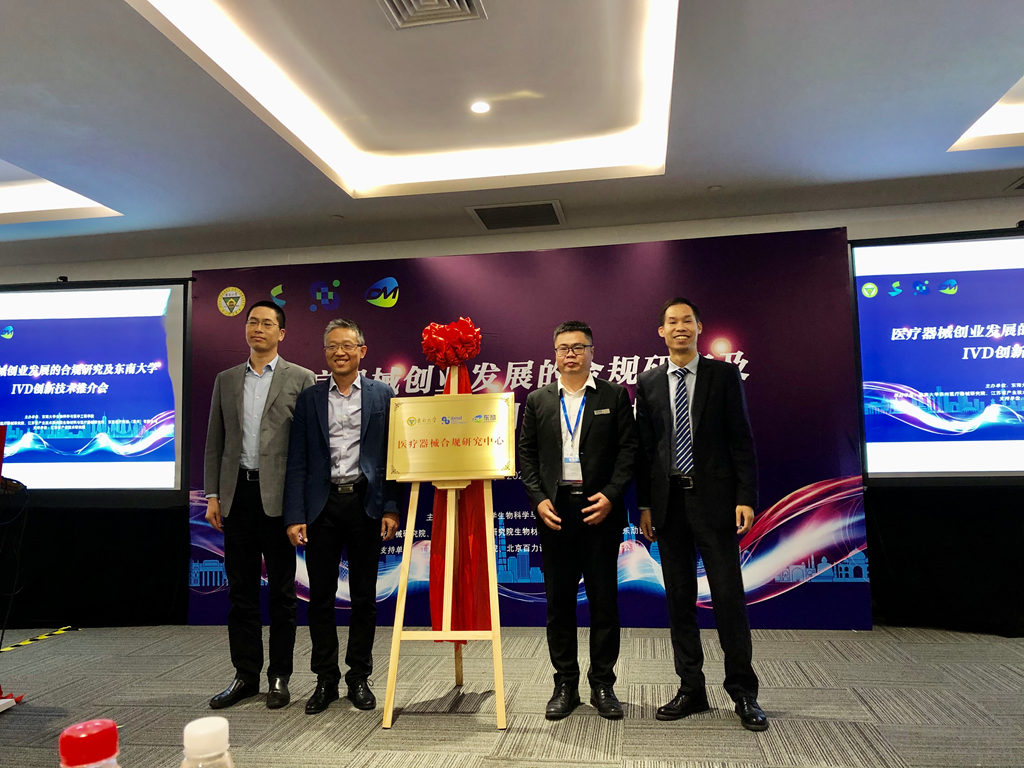
(Unveiling ceremony; photo provided by the company)
According to reports, the key focus areas of the Medical Device Compliance Research Center are active medical devices and sterile medical consumables. Unlike some platforms that use in vitro diagnostics (IVD) as their entry point, the Medical Device Compliance Research Center emphasizes medical device compliance. It aims to reduce risks, development cycles, and costs for entrepreneurs and practitioners through systematic compliance management and compliant product delivery.
Chen Tao, CEO of Dongmai Medical, stated, “The establishment of the Medical Device Compliance Research Center will play a significant role in the medical device sector. By ensuring compliance in system management and product delivery, the Center will help medical device startups reduce time costs, lower capital investment, and mitigate process risks. This will truly realize the social value of our acceleration platform and contribute to entrepreneurship and innovation in the medical device industry.”
Kong Liang, Deputy General Manager of Dongmai Medical, added, “‘Compliance’ is paramount to ensuring the reliability of life-support equipment and represents a non-negotiable red line that must be strictly upheld. Dongmai Medical has always remained at the forefront of the industry, effectively implementing ‘medical compliance’ in practice. Leveraging the Medical Device Compliance Research Center, we will continue to foster a healthy ecosystem for medical device development, ensuring the effective integration of compliance and growth. Our aim extends beyond life-support equipment to enabling more high-quality medical devices to improve our lives.”
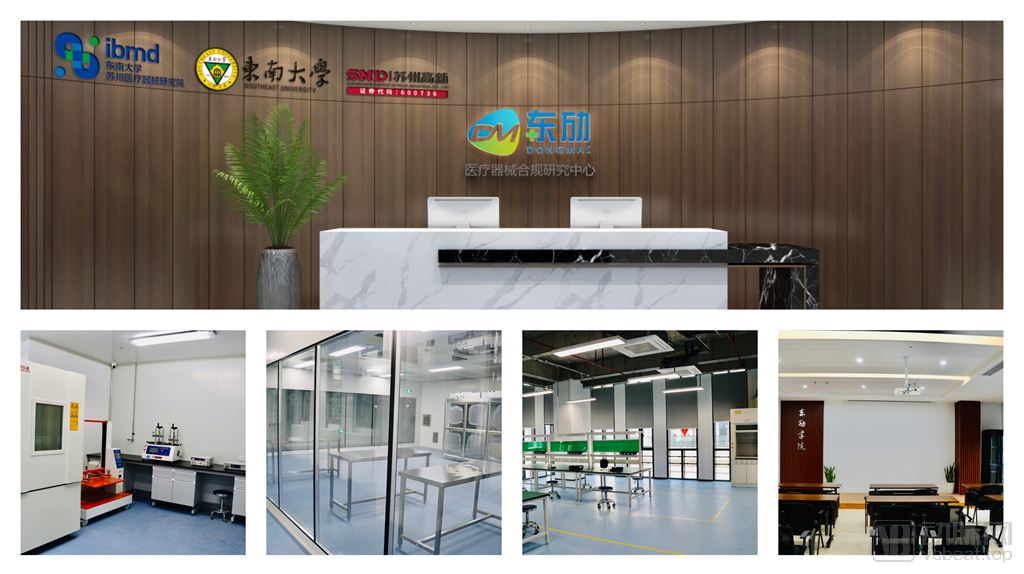
In terms of specific operations, Dongmai Medical relies on an industry-leading team to manage key risk control points related to rectifications and supplementary submissions, thereby controlling risks throughout the registration process, maximizing time efficiency, and accelerating the market launch and sales of innovative products. Meanwhile, leveraging benchmark quality system management and guidance from professional teams, it assists medical device enterprises in establishing quality management systems to mitigate corporate risks. The company has also built its own shared production lines for active and sterile medical devices, helping clients reduce investment costs and shorten the commercialization cycle. In commissioned R&D services, Dongmai Medical safeguards clients’ interests by utilizing Southeast University’s compliant R&D team and implementing a comprehensive confidential information management system.
Dr. Chen Tao told VCBeat, “Addressing the pain points of entrepreneurs, Dongmai Medical focuses on research into medical device regulations, standards, and quality management systems to resolve practical challenges in medical device commercialization. However, our operations are predicated on one fundamental premise: compliance. As a semi-public welfare platform with state-owned capital backing, we have leveraged our accumulated expertise and advantages in regulations, standards, and systems to pioneer medical device compliance research in China. We approach this from two angles: product compliance and quality management system compliance. By leveraging the platform’s hands-on training capabilities to cultivate practical talent, we help medical device entrepreneurs and practitioners achieve low-risk, low-cost, short-cycle, and high-efficiency full lifecycle management.”
Since the pilot implementation of the Medical Device Registrant System, medical device companies have typically outsourced production to their group subsidiaries to safeguard intellectual property and technical security. However, this is not the original intent of the Medical Device Registrant System, and contract manufacturing should not be confined within corporate groups.
Only through large-scale adoption of contract manufacturing in the medical device industry, particularly among non-equity-related enterprises, can the principle of “letting professionals handle professional tasks” be realized, thereby significantly improving resource utilization. Currently, contract manufacturing arrangements between non-equity-related parties suffer from unclear positioning of the relationship between the Marketing Authorization Holder (MAH) and the contracted manufacturer. The two parties cannot be simply categorized as having a supplier or general cooperative relationship; instead, they require robust collaboration and checks and balances at the quality management system level, with clearly defined responsibilities, rights, and interests. Quality assurance and intellectual property protection agreements constitute the fundamental basis for cooperation between the parties. The formulation and implementation of these agreements must be compliant, practical, and operable in real-world scenarios. Therefore, compliance in product release and quality system management will serve as critical safeguards for the effective implementation of the MAH system. Chen Tao stated, “The Medical Device Compliance Research Center will dedicate itself to exploring, researching, and establishing compliant models for contract manufacturing of medical devices to meet the needs of innovative medical device development.”
In advancing the development of the Medical Device Registrant System, Dongmai Medical has consistently taken the lead. At the Compliance Research Forum on the Entrepreneurial Development of Medical Devices, Dongmai Medical signed contract manufacturing service agreements with Mr. Deng Fei, General Manager of Dingshi Medical, and Mr. Zeng Guanghui, General Manager of Xinduan Electronics, to help accelerate their industrialization processes.
It is understood that Dongmai Medical has no equity relationship with Dingshi Medical and Xinduan Electronics; this engagement constitutes a cross-group contractual arrangement. This signing sets a benchmark: medical device companies can entrust third-party service providers with which they have no equity ties to deliver professional services, thereby reducing capital investment, accelerating product industrialization, and minimizing resource waste.
As the first pilot enterprise in Jiangsu Province to be assessed under a non-equity relationship model, Dongmai Medical has been formally included in the province’s pilot assessment program for Marketing Authorization Holders (MAHs). It is foreseeable that following Dongmai Medical, there will be an increase in contractual manufacturing arrangements between enterprises without equity ties, further unleashing the innovation potential of the medical device sector.