

Kantar Report: Shuidi Chou Holds Nearly 70% Market Share in China's Online Critical Illness Fundraising Sector
On October 28, 2020, Kantar Group, a globally renowned market research firm under the WPP Group, released the “Industry Insight Report on Online Critical Illness Fundraising Platforms.” Reportedly the first industry report of its kind in China’s critical illness assistance sector, it reveals that an industry structure characterized by “one superpower and two strong contenders” is beginning to take shape in the critical illness fundraising domain, based on multi-dimensional surveys of comparable platforms within the industry.

According to the 2019 Statistical Bulletin on the Development of National Healthcare Security released by the National Healthcare Security Administration, China has established the world’s largest basic healthcare security network in terms of both population coverage and scale. In 2019, the number of enrollees in China’s basic medical insurance reached 1.35 billion, essentially achieving universal coverage. However, basic medical insurance still faces challenges such as low reimbursement levels and an inability to effectively address the high medical costs associated with serious and critical illnesses.
Meanwhile, although commercial health insurance can to some extent compensate for the limitations in benefit amounts and covered disease categories, it falls significantly short in terms of population coverage. According to the “2018 China Commercial Health Insurance Development Index Report” released by the Insurance Association of China, the penetration rate of commercial health insurance remained below 10% in 2018 due to high premiums.
Furthermore, beyond direct treatment costs, serious illnesses incur additional expenses such as nursing care and nutritional support. For ordinary households, a diagnosis of a critical illness still carries a high probability of triggering a financial crisis. Consequently, personal fundraising for critical illness is regarded as a beneficial supplement to existing health security measures, such as social insurance and commercial insurance, representing “a new opportunity unearthed within existing scenarios.”
2014 was hailed as the “Year One of Crowdfunding,” yet no dedicated “crowdfunding for major illnesses” model existed at that time. In 2016, Shen Peng founded Shuidichou, pioneering online fundraising for major illnesses and providing precise channels for assistance and support to patients facing financial hardship due to serious diseases.Nowadays, online crowdfunding platforms for critical illness have become a beneficial supplement to the “basic medical insurance + critical illness insurance + medical assistance” framework, filling gaps in the healthcare security system by offering greater operational convenience, more flexible formats, and more efficient fundraising.
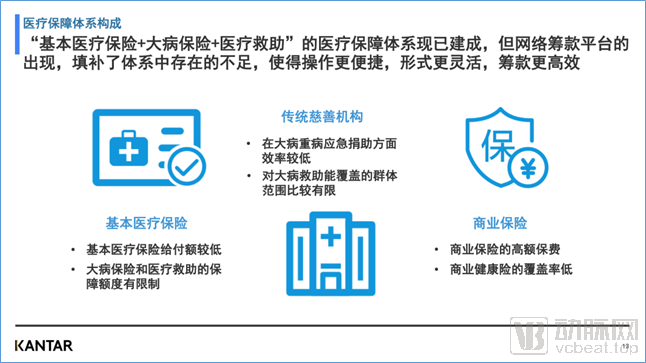
Low entry barriers, viral dissemination through acquaintance-based social networks, and no service fees—over the past four years, the online fundraising industry for critical illnesses has experienced rapid development, playing an increasingly important role in the social medical security system. According to incomplete statistics, more than 5 million families affected by serious illnesses have posted assistance requests on crowdfunding platforms, receiving over 2 billion acts of charitable support.
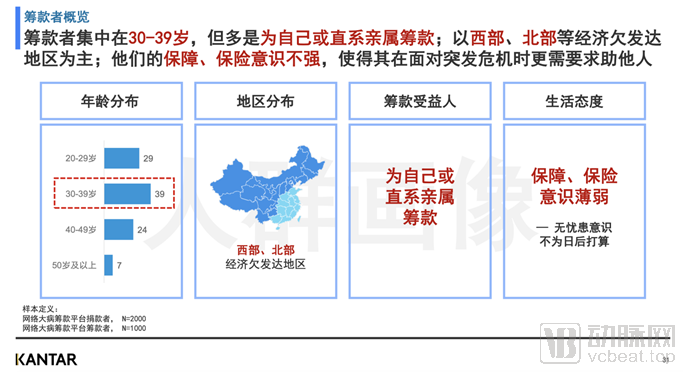
Data show that fundraisers are predominantly aged 30–39 and mostly raise funds for themselves or their immediate family members. They are primarily located in economically underdeveloped regions, such as western and northern China, where many families face severe shortages of both medical funding and healthcare resources.
Typically, they have very weak awareness of insurance coverage and lack a sense of crisis; a serious illness would only exacerbate the hardships faced by these families, leading to even greater fundraising needs.
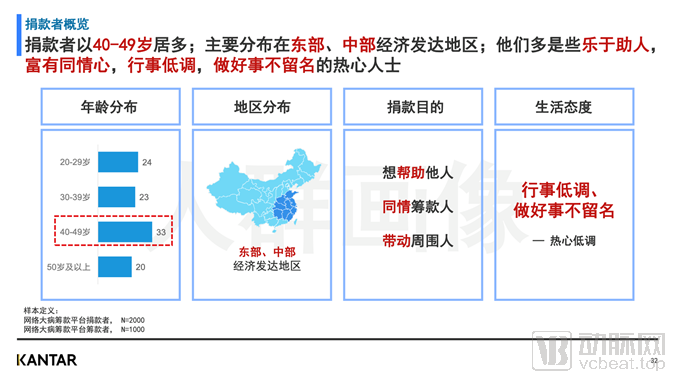
Relatively speaking, donors are predominantly aged 40–49 and are mainly concentrated in the economically developed eastern and central regions. They are mostly compassionate, helpful individuals who act with humility and perform good deeds without seeking recognition.
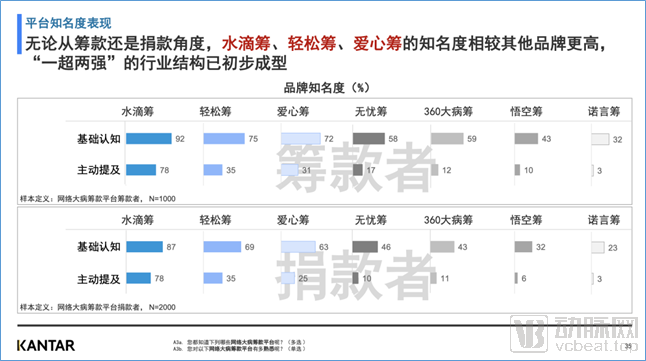
The "Industry Insight Report on Online Critical Illness Fundraising Platforms" shows that after more than four years of development, the critical illness fundraising industry has initially formed an industry pattern of "one super and two strong." Super brands represented by Shuidichou, and strong brands represented by Qingsongchou and Aixinchou, have jointly captured the majority of user mindshare, establishing strong brand recognition.
In terms of industry awareness, user recognition of critical illness fundraising platforms has reached 64%. More than 60% of internet users stated that they are clearly aware they can seek social assistance through critical illness fundraising platforms when unfortunately diagnosed with a serious illness and lacking medical funds, thereby adding an additional channel for self-help.
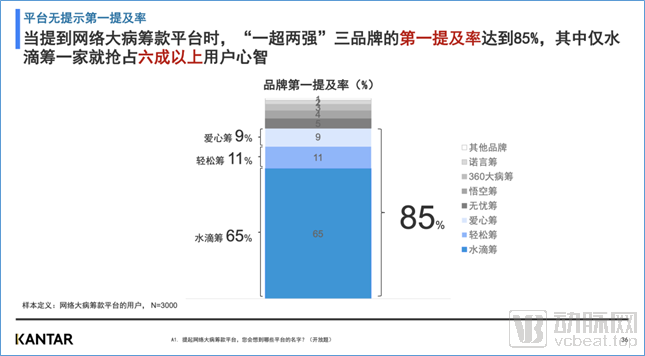
When it comes to online crowdfunding platforms for major illnesses, the top-of-mind awareness rate among users for the three brands “Shuidichou,” “Qingsongchou,” and “Aixinchou” reaches 85%. Among them,Shuidichou alone has captured nearly 70% of user mindshare, meaning that approximately 7 out of every 10 surveyed users cited Shuidichou as the first brand that came to mind.
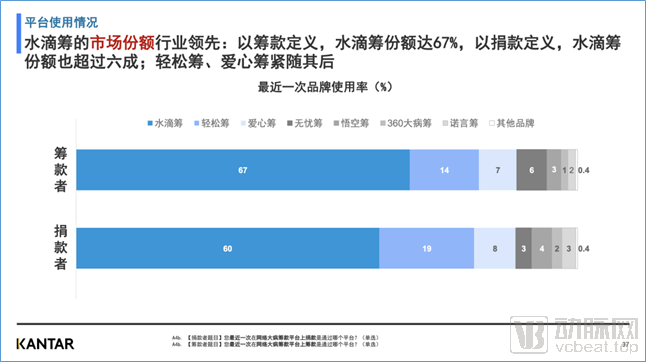
Statistical data from the report indicates that Shuidichou holds a dominant market position in the industry, with a share approaching 70%. On the fundraising side, it commands a 66.5% market share, while its share on the donation side also exceeds 60%, solidifying its status as a true industry super brand. Qingsongchou and Aixinchou follow closely behind.
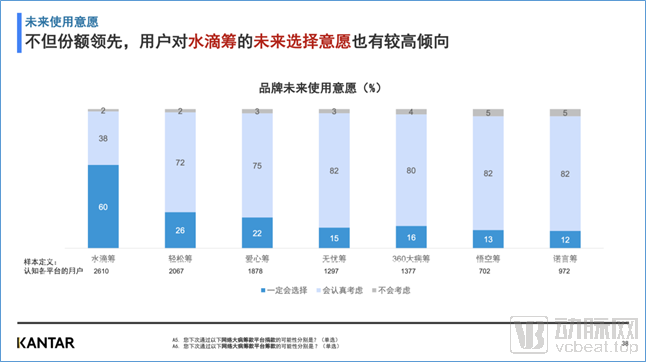
Whether in terms of capturing greater share of mind among users or commanding an absolute market share, a brand’s leading position and future growth are increasingly reflected in users’ willingness to choose it. More than 60% of users stated that they would “definitely choose” Shuidichou when needed, underscoring its clear industry-leading advantage.
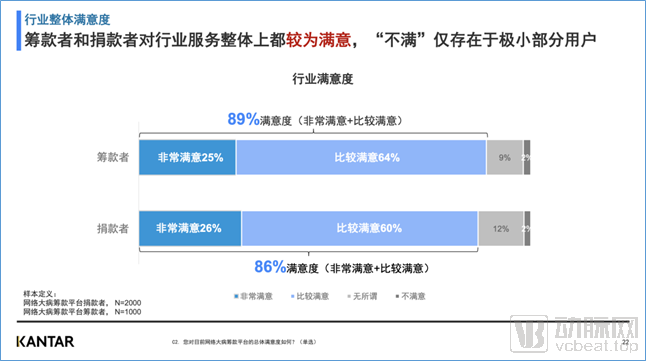
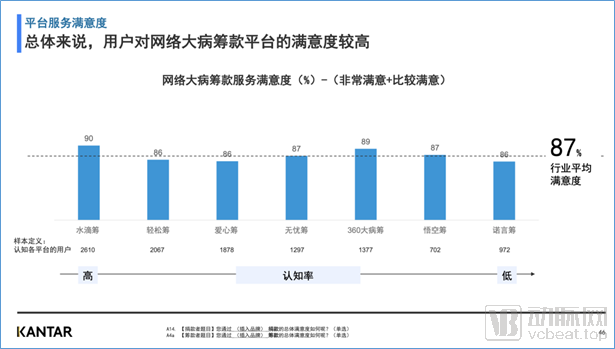
Notably, over 75% of surveyed users hold a predominantly positive perception of the critical illness fundraising industry. Users generally view fundraising platforms in a positive light. Both fundraisers and donors express high levels of satisfaction with these platforms. Specifically, 89% of fundraisers reported being satisfied with the platform, with 25% indicating they were very satisfied; among donors, 86% expressed satisfaction, with 26% stating they were very satisfied.
Among various platforms, Shuidichou’s brand performance has gained substantial user recognition, ranking leading in industry evaluations and being the most favored by users. User satisfaction with Shuidichou stands at 90%, surpassing the industry average of 87%. In terms of user experience, Shuidichou demonstrates characteristics of high fundraising amounts, broad geographic coverage, and rapid service response.
It is reported that Shuidichou leverages big data to enhance the security of its verification processes and build a trust-based system; establishes charitable grants to provide financial assistance beyond personal fundraising for users in extreme hardship; extends its support beyond funding by offering additional services, such as guidance and advocacy, within hospital settings; and utilizes its media resources to connect users in need with public welfare organizations.
Leveraging these advantages, users perceive Shuidichou as demonstrating more pronounced integrity; consequently, fundraisers have higher expectations when initiating appeals through the platform, and donors are willing to accept a higher upper limit on donation amounts when choosing to contribute via Shuidichou.
Scan the QR code to view the full report.