

How the Internet Accelerates the Integration of Traditional Chinese Medicine into the Global Healthcare System in the Post-Pandemic Era
“Promoting the global reach of Traditional Chinese Medicine (TCM) and better serving its mission to ‘inherit the essence, uphold integrity, and foster innovation’ is not only the contemporary mission of all TCM practitioners but also a historical test facing today’s TCM community.” This message was delivered by Zhang Boli, recipient of the national honorary title “People’s Hero,” Vice President of the World Federation of Chinese Medicine Societies, and Academician of the Chinese Academy of Engineering, at the recently held 2nd World Internet Conference on the TCM Industry.
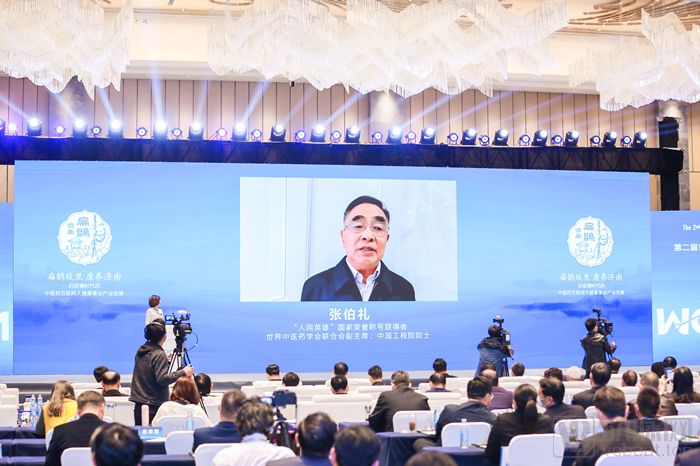
Zhang Boli, Recipient of the National Honorary Title of “People’s Hero,” Vice President of the World Federation of Chinese Medicine Societies, and Academician of the Chinese Academy of Engineering
The achievements of the traditional Chinese medicine (TCM) industry in the fight against the pandemic have propelled it from its former role as a “slow practitioner” focused primarily on conditioning and preventive care to the forefront.Amid the digital wave, initiatives such as “Internet + Traditional Chinese Medicine (TCM)” are being vigorously implemented, and the healthcare industry is undergoing a leap from traditional models to “smart” healthcare. This represents a critical step toward the standardization and industrialization of the TCM sector, as well as a key link in accelerating the integration of the TCM industry into the international pharmaceutical system through the Internet.
At the conference, key topics such as the high-quality integrated development of traditional Chinese medicine (TCM) and the internet industry, global innovation in the TCM sector, new drivers for TCM development, and the industrialization pathway of smart TCM garnered significant industry attention and became the core focus of discussions among attendees.
The conference attracted 240,000 online visitors for interaction. It brought together more than 300 leaders from the traditional Chinese medicine (TCM) industry and experts in the medical and health fields, along with over 200 industry representatives, who participated both online and offline. Together, they explored the high-quality integrated development of TCM and the internet industry, aiming to drive innovation in the global TCM sector and cultivate new momentum for its growth.
The conference was held in Jinan, the hometown of Bian Que. During the event, the establishment of the “Dual Centers”—the World Traditional Chinese Medicine (Materials) Internet Trading Center and the World Traditional Chinese Medicine (Materials) Quality Inspection Center—was announced, and Jinan was designated as the permanent host city for the World Traditional Chinese Medicine Internet Industry Conference.This means that Jinan will become the engine and launching hub for China’s efforts to establish a world standard system for traditional Chinese medicine (TCM) across the entire industry chain, and further signifies that the construction of a modernized global TCM circulation system will be accelerated.The significance and value of the Internet to the development of the traditional Chinese medicine industry gradually became clear during the course of this conference.
The value of Traditional Chinese Medicine (TCM) was unmistakably highlighted during the pandemic this year. The Jiangxia Fangcang Hospital, which adopted TCM as its primary treatment modality, operated from February 14 to March 10. Over this 26-day period, among the 564 patients admitted, 392 were cured through integrated TCM and Western medicine treatment, 172 were transferred for further care, and there were no fatalities.
On June 2, 2020, at a symposium for experts and scholars held in Beijing, participants affirmed the value of traditional Chinese medicine (TCM) development. By outlining key directions for its future growth, they highlighted the traditional advantages and market prospects of the TCM industry within China’s national economic development.
The meeting pointed out:“The integration of traditional Chinese medicine (TCM) with Western medicine, and the concurrent use of Chinese and Western pharmaceuticals, have been a hallmark of this epidemic prevention and control effort, representing a vivid practice of inheriting the essence of TCM while upholding fundamental principles and pursuing innovation. We must strengthen the systematic review and exploration of the essence contained in classical medical texts, establish a number of research support platforms, reform and improve the evaluation and approval mechanisms for traditional Chinese medicines, and promote the research and development of new TCM drugs as well as industrial growth. We must enhance the construction of the TCM service system and improve the emergency response and treatment capabilities of TCM hospitals. We must reinforce the development of specialized TCM talent and build a high-caliber national team for TCM-based prevention and control of epidemics. We must strengthen organizational leadership over TCM work and promote mutual complementarity and coordinated development between traditional Chinese and Western medicine.”
The Reach of Traditional Chinese Medicine (TCM) Is Boundless. During the pandemic, in the absence of specific antiviral drugs, China integrated TCM with Western medicine, developing eight successive national guidelines for the diagnosis and treatment of COVID-19. It identified clinically effective therapeutic regimens combining Chinese and Western medicines, notably the “Three Herbal Formulas and Three Patent Medicines,” which have been adopted and referenced by multiple countries. This has demonstrated the value of TCM in the global context and garnered broader international recognition.
He Jialang, Vice President of the World Federation of Chinese Medicine Societies, further discussed the global value of Traditional Chinese Medicine (TCM) in the fight against the epidemic.“The practical experience of Traditional Chinese Medicine’s participation in the global pandemic prevention and control is writing a new chapter in the medical history of humanity in the 21st century. History will ultimately demonstrate the significant contributions that ancient Traditional Chinese Medicine has made to human health and civilization.”
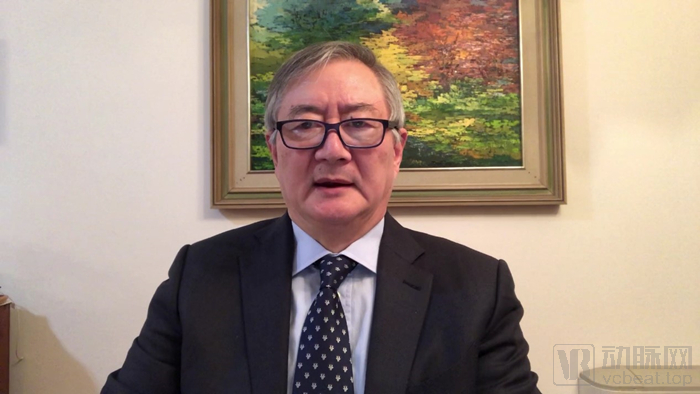
He Jialang, Vice President of the World Federation of Chinese Medicine Societies (WFCMS)
As He Jialang noted, the pandemic not only broke down cultural barriers in the dissemination of traditional Chinese medicine (TCM), but also accelerated its internationalization.
In fact, as early as around 2015, the traditional Chinese medicine (TCM) industry actively served the “Belt and Road” Initiative by adhering to a “going global” strategy, and gained recognition from many countries and regions along the Belt and Road.
In 2019, the State Council issued the “Opinions of the Central Committee of the Communist Party of China and the State Council on Promoting the Inheritance, Innovation, and Development of Traditional Chinese Medicine (TCM),” which proposed incorporating TCM into the building of a community with a shared future for mankind and as a key component of international cooperation under the Belt and Road Initiative. The document called for implementing special projects for international TCM cooperation, promoting the development of international standards for TCM, actively participating in the formulation of international rules related to traditional medicine, and encouraging the establishment of high-quality overseas TCM centers, international cooperation bases, and service export bases. It also advocated studying and steadily advancing international transactions on existing TCM trading platforms. While elevating the development of TCM to a strategic level, the state has outlined specific directions for the growth of the TCM industry.
After years of evolution and development, despite numerous challenges, the regulatory framework for the traditional Chinese medicine (TCM) industry has gradually matured, laying a solid foundation for its current integration into the international system.
The elevation of traditional Chinese medicine (TCM) development to the level of national strategy signifies that the TCM industry has assumed a pivotal position in its global expansion. However, numerous obstacles encountered in this process still need to be addressed by leveraging the power of the internet.
In the trading of traditional Chinese medicinal materials, the traceability chain is long and involves numerous links. During circulation, factors such as natural conditions (e.g., climate) and human technical interventions lead to varying degrees of quality alteration, making it difficult to establish unified standards across the entire TCM distribution industry. Issues such as a fragmented trading market, heavy reliance on offline transaction scenarios, difficulty in price estimation, challenges in tracing distribution sources, and ineffective regulatory oversight may all become stumbling blocks in the industrialization and internationalization of the TCM sector.
500 kilograms, with a total value of 1.1 million yuan. On the opening day of the 2nd World Internet Industry Conference for Traditional Chinese Medicine (TCM), an order for Ejiao (donkey-hide gelatin) was completed within just a few minutes through the World TCM (Herbal Materials) Internet Trading Center, breaking down the barriers inherent in traditional procurement of TCM materials. This demonstrates the role and value of the internet in promoting the internationalization of the TCM industry.
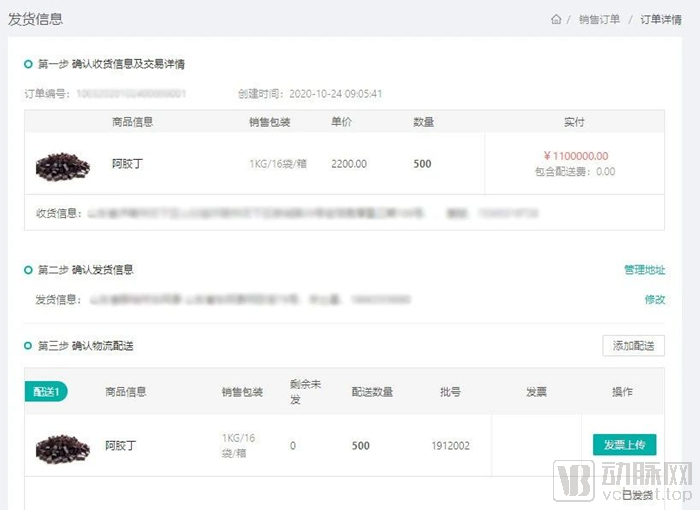
The First Ejiao Order Facilitated by the World Traditional Chinese Medicine (Materials) Internet Trading Center
As a pioneer in building an innovative model for the internet-based traditional Chinese medicine (TCM) industry, how is Shandong leveraging internet technologies to address the aforementioned industry pain points?
The World Center for Quality Inspection of Traditional Chinese Medicines (Materials), jointly established by Shandong Internet Medical Insurance and Big Health Group and Shandong University of Traditional Chinese Medicine, has developed corresponding solutions to address this challenge.
To address the issue of mutual non-recognition across regions caused by differences in medication practices under local standards, the Center will establish quality standards for over 1,000 commonly used Chinese medicinal materials and decoction pieces nationwide, providing enterprise standards that exceed national standards. Building on this foundation, it will further collaborate with Shandong University of Traditional Chinese Medicine to develop tiered standards that meet medication needs at various levels. Meanwhile, both parties plan to set up regional sub-centers in major planting bases or distribution hubs for Chinese medicinal materials within the 14-province alliance. By leveraging blockchain technology, they will integrate a full-process traceability system—covering planting, processing, transportation, and testing—into daily quality monitoring, thereby addressing the standardization challenges of Chinese medicinal materials from multiple dimensions.
Standardization is not only significant for regulating industry management and advancing the modernization of traditional Chinese medicine, but also represents a crucial step toward its internationalization.The enhancement of the quality and international competitiveness of Chinese herbal medicines across the entire industry, as well as the high-quality integrated development of the traditional Chinese medicine (TCM) cause and industry, depend on the establishment of quality standards and a pricing system.
If the establishment of the World Traditional Chinese Medicine (Herbal Materials) Internet Trading Center marks Jinan’s first step toward standardization and internationalization of the traditional Chinese medicine (TCM) industry, then the implementation in Jinan of a series of projects—including the World Digital TCM (Bian Que) Research Institute, the Bian Que Smart TCM Pharmacy, the signing of the Bian Que Cloud TCM Platform, and China’s first Mongolian Medicine Intelligent Syndrome Differentiation and Treatment System—serves as the driving force propelling the TCM industry toward international development, empowered by internet technologies.
Among these initiatives, the Bianque Smart TCM Pharmacy Project has achieved full-chain innovation in pharmaceuticals, logistics, and supply distribution through process and technological breakthroughs, thereby effectively enhancing the efficiency of hospital pharmaceutical services and improving patients’ experience with traditional Chinese medicine (TCM) services. Interconnectivity of information systems across medical institutions at all levels has been realized, further driving dual cost reduction and efficiency gains in both TCM service delivery and health insurance supervision.
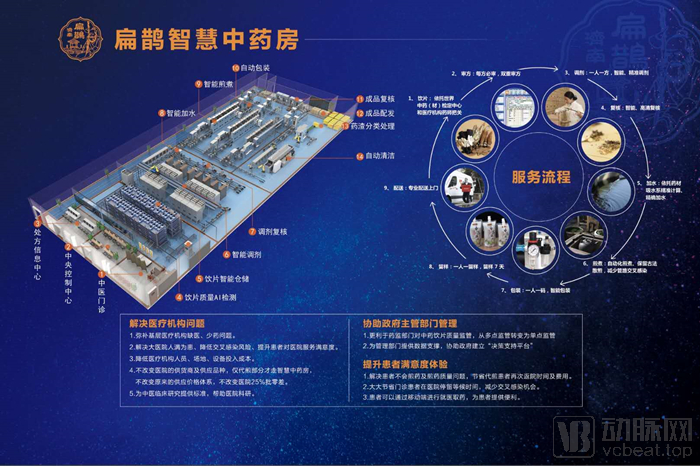
Bianque Smart TCM Pharmacy
Automation and digitalization are the key concepts underpinning the Bianque Smart Traditional Chinese Medicine (TCM) Pharmacy. Its unmanned intelligent decoction system employs unique barcode identification management throughout the entire process, ensuring precise recording and traceability at every stage. Full-process automation and digitalization, comprehensive data coverage, and blind-spot-free regulatory oversight have become a reality in this project. Currently, the Smart TCM Pharmacy project plans to achieve full coverage across all 16 prefecture-level cities in Shandong Province, with a total investment exceeding RMB 5 billion. The total investment for the four cities signing agreements this time—Jinan, Weifang, Tai’an, and Heze—exceeds RMB 2 billion.
Whether it is the World Traditional Chinese Medicine (Herbal Materials) Quality Inspection Center or the Bianque Smart TCM Pharmacy, driven by innovative technologies and the internet, the implementation of these projects will help establish a global standard system for traditional Chinese medicine (TCM) across the entire industry chain. This will enable the TCM industry to achieve transformation and upgrading based on digitalization, intelligence, and standardization. Meanwhile, a modernized global circulation system for TCM will be constructed in this process, comprehensively promoting high-quality, innovative development through the integration of “industry, academia, research, and application.”
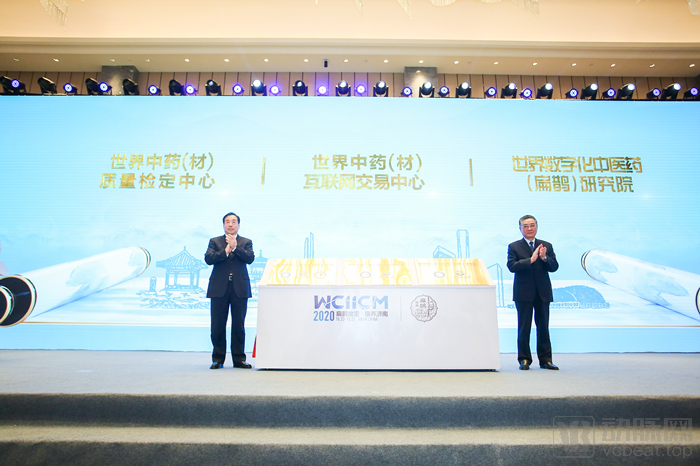
Conference Venue
As the permanent host city of the World Conference on the Internet Industry of Traditional Chinese Medicine, Jinan is a pioneer in the international development of the TCM industry.
Since 2018, the People’s Government of Shandong Province has issued the “Shandong Provincial Plan for the Development of the Medical and Health Industry (2018–2022),” encouraging Shandong to develop traditional Chinese medicine (TCM) into a key industry with distinctive advantages, with the aim of establishing itself as a major national base for TCM-based wellness. The development of TCM has been integrated into urban development planning.
In 2020, as the development of the traditional Chinese medicine (TCM) industry accelerated amid the pandemic, Shandong Province not only convened a meeting of the Leading Group for Promoting TCM Development to provide strategic guidance for industrial growth, but also established the “Shandong Internet Medical Insurance and Health Service Platform.” This initiative built an integrated healthcare security system combining “Internet + medical insurance + medical services + pharmaceuticals,” thereby empowering the development of “Internet + TCM.” Under the guidance of the National Administration of Traditional Chinese Medicine, Shandong Province spearheaded the formation of the country’s first herbal medicine procurement alliance, the “12 Provinces (Autonomous Regions and Municipalities) Herbal Medicine Procurement Alliance.”
Whether driven by policy incentives or the restructuring of the traditional TCM industry chain through “Internet + Traditional Chinese Medicine,” Jinan, as a key city for TCM industry development, has taken its first step toward the industrialization, standardization, and internationalization of Traditional Chinese Medicine.In this process, internet technology will serve as a driving force, propelling the market-oriented reform and informatization of Traditional Chinese Medicine (TCM), thereby gradually integrating the TCM industry into the trajectory of international development. Meanwhile, Jinan may pioneer a new model for the digital development of TCM through its explorations within the industry.
Systems such as the Traditional Chinese Medicine (TCM) Knowledge Base and the TCM Diagnostic Pathway Knowledge Base have been established under the initiative of “Internet + TCM.” No longer confined to traditional TCM classics and other conventional formats, TCM culture is now disseminated through diverse models that better align with contemporary cognitive habits. This has gradually broken down cultural barriers, enabling TCM culture to leverage the internet infrastructure to go global amid the digital wave, thereby exerting a more profound international influence.
Historically, the low level of standardization in Traditional Chinese Medicine (TCM) has compromised efficacy evaluation, creating a bottleneck for the further development of the TCM industry. However, driven by the trend of integrating the internet with TCM, systems for standardized quality control, distribution, and traceability are being progressively established. These advancements are systematically overcoming previous obstacles, thereby accelerating the integration of TCM into the international pharmaceutical system.
In the future, empowered by “Internet Plus,” the entire traditional Chinese medicine (TCM) industry chain will begin to evolve toward specialization, standardization, and industrialization.Shandong will integrate elements of medical insurance, healthcare services, and the pharmaceutical industry to jointly build a bridge for the internationalization of Traditional Chinese Medicine (TCM), promoting leapfrog development of the TCM industry in the internet era. Against the backdrop of vertical deepening and horizontal expansion within the TCM sector, these measures will further facilitate its international development.