

Tencent Accelerates Nationwide Smart Medical Insurance Rollout, Building an Integrated Upgraded 'One-Game' Strategy
Recently, the Guangdong Provincial Healthcare Security Administration’s informatization platform project, jointly undertaken by a consortium led by Tencent, has achieved significant progress. Leveraging its accumulated strengths over many years, Tencent ensured business innovation and smooth delivery of the overall project. The Tencent Cloud platform has been fully integrated with the complete business system, earning recognition and approval from the Guangdong Provincial Healthcare Security Administration’s systems. This marks another successful case for Tencent in advancing the development of China’s healthcare security informatization infrastructure.
During project implementation, Tencent was fully responsible for the deployment and development of the data middle platform, as well as the construction of four major systems: the macro-decision big data application subsystem, the operational monitoring subsystem, and the public service subsystem. In terms of cloud platform construction, 31 products were included, covering IaaS, PaaS, DaaS, security, and more. Tencent’s TStack, at the IaaS layer, managed products from multiple infrastructure hardware vendors, thereby validating the compatibility of the cloud platform. For the construction of the integrated public service application system, an integrated and convergent development model was adopted, spanning from the cloud platform support layer and big data support layer to the front-end application layer.
In addition to the Guangdong Provincial Healthcare Security Administration’s information platform project, Tencent is also actively participating in the construction of the National Healthcare Security Administration’s healthcare security information platform. It provides 23 cloud platform products, including Tencent Cloud CVM-Tstack Cloud Platform, Tencent Cloud Object Storage, Tencent Cloud VPC, and the relational database TDSQL, all of which have fully passed the technical architecture adaptation requirements of the National Healthcare Security Administration.
Since the establishment of the National Healthcare Security Administration (NHSA), the development of a nationally integrated healthcare security information system has been designated as a key priority. In 2019, the NHSA issued the Guiding Opinions on Healthcare Security Informatization, which explicitly called for the construction of a unified national healthcare security information system and the establishment of both national and provincial healthcare security information platforms. These measures aim to support improvements in the standardization, intelligence, and informatization of healthcare security across China, thereby accelerating the formation of a cohesive, top-down national framework for healthcare security informatization.
It is reported that the Medical Security Information Platform Construction Project represents a comprehensive new initiative by the National Healthcare Security Administration (NHSA) to establish a nationally integrated medical insurance information platform through unified standards and specifications, as well as standardized architectural design. The National Medical Insurance Public Service Zone Cloud Platform project, in which Tencent participated, has recently been delivered; the platform is operating stably and has successfully passed the final acceptance inspection. Meanwhile, Tencent led the implementation of the dual-data-center cloud platform and technical middle-end projects for the Public Service Zone, assisted the NHSA in drafting technical standards and specifications for the cloud platform, and participated in various NHSA project teams, including those focused on the middle-end, architecture, and data.
It is worth noting that Tencent’s cloud platform products were tested in a complex environment involving 100 million insured individuals, 30 million employee medical insurance participants, an average of four insurance types per person, and 25 years of contribution records. Nine business scenarios were designed to verify the system’s support capabilities for database sharding and table partitioning. The validation results demonstrated that performance metrics far exceeded business expectations, with performance scaling linearly as resources increased, thereby proving its capability to support core medical insurance operations. For instance, while the original system required four hours to complete premium assessment and verification tasks, the same processes were completed within 60 minutes in the Tencent Cloud environment, fully demonstrating the stability, efficiency, and security of Tencent Cloud products.
Furthermore, in the Beijing Digital Intelligence Healthcare Security Innovation Competition, co-hosted by the Beijing Municipal Healthcare Security Administration, the Beijing Municipal Bureau of Economy and Information Technology, and the Beijing Municipal Science & Technology Commission, Tencent’s competing team emerged with outstanding results after two rounds of fierce competition. Leveraging its superior technical, operational, and organizational capabilities, the team secured second place in Category A and third place in Category B. This achievement showcased Tencent’s technological expertise and business acumen in the healthcare security sector, laying a solid foundation for the subsequent development of smart healthcare security information systems across various provinces and municipalities.
In Mudanjiang, Tencent has entered into a strategic partnership with the Mudanjiang Municipal Healthcare Security Administration, leveraging its technological expertise and resource advantages in cloud computing, artificial intelligence, big data, mobile internet, and information security. This collaboration has advanced the development of Mudanjiang’s healthcare security information systems, achieving deep integration and innovative growth of “Internet + Healthcare Security.” Meanwhile, by focusing on key areas and critical links within healthcare security, the partnership has strengthened oversight of healthcare security funds, promoted industrial convergence, and enhanced the modernization of Mudanjiang’s healthcare security governance system and capabilities.
In recent years, the healthcare security sector has witnessed rapid development, bringing about a series of new changes and challenges across medical insurance, healthcare delivery, and pharmaceuticals. Leveraging its platform scale, operational expertise, leading technological capabilities in cloud computing, AI, and big data, as well as its ecosystem connectivity, Tencent has precisely focused on digital infrastructure for smart medical insurance, urban governance of medical insurance, and medical insurance services, continuously driving innovation and breakthroughs.
In advancing the development of smart medical insurance, Tencent adheres to the philosophy of “Smart Medical Insurance, Technology for Social Good” and focuses on five strategic directions: intelligent infrastructure, intelligent governance, intelligent services, intelligent security, and intelligent ecosystem. By comprehensively deploying across the smart medical insurance sector, Tencent is fostering new business models, building a renewed medical insurance ecosystem, and supporting the growth of the medical insurance industry, thereby fully realizing the vision of “efficient government administration, intelligent public benefit, and broad industrial prosperity.”
For example, in the realm of digital infrastructure for smart medical insurance, Tencent provides medical insurance users with a comprehensive cloud service support system, a full suite of in-depth cloud-ground collaborative security defense systems, and big data-based capabilities for a medical insurance data middle platform. This approach resolves the traditional issue of dispersed and loosely coupled cloud, security, and data capabilities, delivering integrated base station services to medical insurance users. Currently, in addition to Tencent Cloud’s security product suite serving the National Healthcare Security Administration, these integrated base station services are fully supporting the Guangdong Provincial Healthcare Security Administration in ensuring the stable, secure, and efficient operation of its informatization initiatives.
In the realm of smart medical insurance urban governance, Tencent provides comprehensive digital services encompassing construction, management, and operations across payment, regulation, decision-making, command, and empowerment of the medical insurance industry, thereby creating a new benchmark for smart medical insurance urban governance. Within the integrated network of smart medical insurance urban governance, the integrated payment and regulatory service serves as the core and the key to enhancing governance efficiency. Tencent offers a full-suite toolkit for the entire chain of medical insurance fund governance, supporting high-quality management of urban medical insurance. Leveraging Tencent’s foundational algorithms, AI algorithms, machine learning infrastructure, and actuarial modeling capabilities, Tencent has developed a smart medical insurance big data platform. This platform provides more effective tools for rapid business analysis and precise policy decision-making, enabling more accurate urban medical insurance governance. Furthermore, by utilizing Tencent’s game-grade rendering engine and terminal interaction technologies, and focusing on key indicators and analytical themes from various subsystems of the medical security informatization platform, Tencent has created a panoramic analysis, monitoring, and command platform for urban medical insurance. This platform facilitates integrated coordination and linkage among regulation, command, and decision-making.
In the realm of smart healthcare security services, medical insurance services constitute a vital public welfare initiative and serve as a showcase and hallmark of urban medical insurance governance. Tencent integrates its innovative DNA into medical insurance services, deeply applying cutting-edge technologies such as AI, big data, and blockchain to the public service sector. This drives a significant enhancement in the quality of “Internet + Medical Insurance” services, creating a more human-centric flagship model for “Internet + Medical Insurance.”
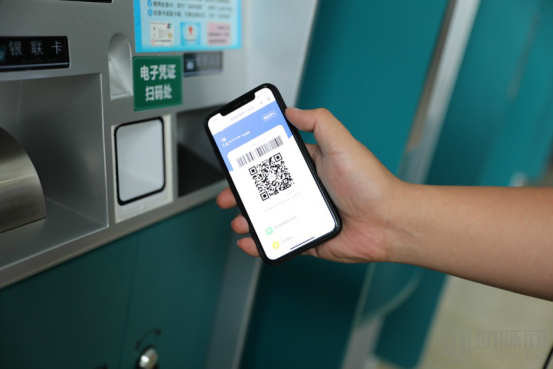
To date, Tencent’s Electronic Medical Insurance Certificate has covered all 31 provinces in China and more than 150 cities with payment capabilities, comprehensively integrating application scenarios across medical consultation, treatment, medication purchase, and reimbursement services. Leveraging the Electronic Medical Insurance Certificate to deliver smart healthcare services, Tencent has applied its blockchain platform technology to prescription circulation and chronic disease management, building a full-stack platform for medical treatment and pharmaceutical purchasing. By integrating data from medical insurance agencies, hospitals, delivery enterprises, and insured individuals, big data technologies drive prescription circulation and convenient medication access, ensuring a worry-free experience for patients seeking care and purchasing medicines. Furthermore, by providing patients with end-to-end closed-loop services—from clinical visits to medical reimbursement—and recording the entire lifecycle of invoices (generation, transmission, storage, and reimbursement) on the blockchain, Tencent has bridged the “last mile” in the medical insurance settlement process within internet healthcare, making medical reimbursement hassle-free.