

Spatial Transcriptomics Set to Become the Next Hotspot in Genomics: 10x Genomics Makes Massive Strategic Acquisitions to Dominate the Field
In 2016, researchers from institutions such as the Karolinska Institutet and the KTH Royal Institute of Technology in Sweden published a paper in Science, describing a novel transcriptomics technique and introducing the concept of “spatial transcriptomics.” Although they were not the first team to attempt a one-to-one correspondence between transcriptomic sequencing and spatial location, their solution was indeed the most comprehensive and closest to commercialization.
This technology did not create a huge sensation at the time, but there were always companies with keen eyes for talent, such as 10x Genomics. In late 2018, 10x Genomics acquired this technology and brought it to market after a year of refinement and optimization.
Spatial transcriptomics today closely resembles single-cell sequencing in its early days. Although still in the research phase, its future development potential is already becoming apparent. We are now witnessing single-cell sequencing technology gradually transition from proof-of-concept to clinical applications, and spatial transcriptomics is highly likely to emerge as another promising extension of sequencing technologies following single-cell sequencing.
Conventional transcriptomic sequencing typically involves extracting RNA from a population of cells to construct libraries for sequencing. This approach offers significant guidance when the cellular composition is homogeneous. However, in cases of complex cellular compositions, such as in tissue samples, the library preparation process results in the pooling of RNA from all cells, leading to mutual interference. Consequently, the final output represents only the average profile of the entire cell population, substantially reducing data resolution. Meanwhile, spatial localization information is lost during library preparation, even though positional context is crucial for understanding tissue function and pathological changes.
The subsequent emergence of single-cell sequencing has, to some extent, addressed the issue of mutual interference. Different cell types can be individually isolated and separately prepared into libraries for single-cell sequencing. However, since the isolation process requires dissociating cells, spatial information cannot be fully preserved.

Structure of Capture Primers on a Chip
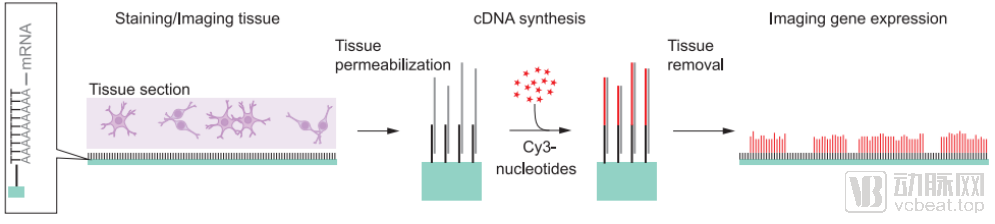
Principles of Spatial Transcriptomics Sequencing
The key to spatial transcriptomics sequencing lies in resolving the issue of preserving spatial location.
Frozen tissue sections placed within the chip area undergo permeabilization to release cellular RNA after H&E staining and imaging. The capture primers on the chip contain a barcode region with unique identifiers in their middle segment. The chip is divided into several distinct capture areas, each anchored with primers bearing different barcode sequences. The tissue location corresponding to each area is recorded; following sequencing, the results from different regions are mapped back to their respective tissue locations via barcodes, ultimately reconstructing a spatial transcriptomic image of the tissue sample.
Compared with conventional sequencing methods, spatial transcriptomics sequencing offers several distinct advantages:
1. Correlate transcriptomic data with spatial information to reflect intra-tissue heterogeneity:Unique barcodes in each region establish a one-to-one correspondence between sequencing results and spatial locations. Although single-cell resolution is not yet achievable, such regional partitioning is sufficient to reveal transcriptomic differences among distinct areas within the tissue.
2. Does not affect comprehensive analysis of the entire tissue:The whole transcriptome captured on the chip is sequenced in a single reaction, effectively reducing errors across multiple replicate experiments. If the sequencing results are not demultiplexed by barcode, they directly reflect the transcriptomic profile of the entire tissue section, eliminating the need for separate assays.
3. Provide guidance for further research:Conventional transcriptome sequencing continues to guide subsequent experiments only at the whole-tissue level. In contrast, spatial transcriptome sequencing can identify more valuable regions of interest, enabling researchers to further subdivide tissue samples.
After completing the foundational research on spatial transcriptomics sequencing, researchers quickly established a company to begin attempts at mass-producing this technology. The company was named Spatial Transcriptomics, which is quite straightforward and blunt.
Following its establishment, the company maintained a remarkably low profile. Until its acquisition by 10x Genomics, it had engaged in no corporate publicity and had never undergone any financing rounds; information regarding its founders and development trajectory remained entirely undisclosed. Therefore, while analyzing the industry, one must also acknowledge 10x Genomics’ prowess in identifying promising ventures, as evidenced by its discovery of Spatial, a high-potential startup from Sweden, among numerous biotech companies.
In December 2018, 10x Genomics announced the acquisition of Spatial Transcriptomics, a Swedish developer of spatial genomics technologies. Joakim Lundeberg, a co-founder who spoke on behalf of Spatial Transcriptomics at the time, was one of the corresponding authors of the paper published in Science. Both 10x Genomics and Spatial agreed that the technological foundation provided by Spatial reveals intercellular interactions, helping researchers gain a more comprehensive understanding of biology.
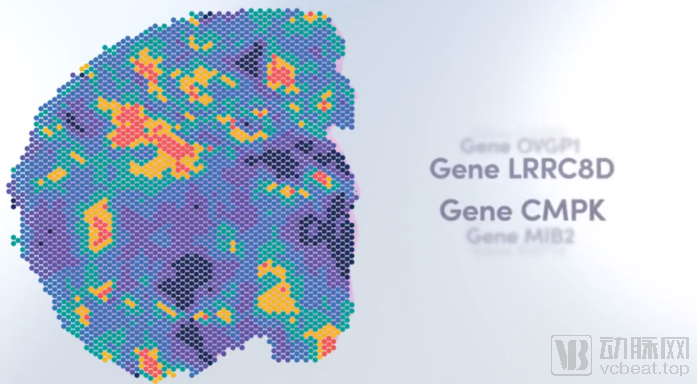
Visium Platform Examples
Following its acquisition by 10x Genomics, Spatial’s technology platform was rebranded as Visium and continued to be incubated within 10x Genomics. Initially, 10x Genomics did not disclose the specific details of the acquisition. It was not until August 2019, when 10x Genomics filed its prospectus in preparation for its Nasdaq initial public offering, that certain details of the transaction were disclosed in the filing.
According to the information in the prospectus, 10x Genomics acquired Spatial for $38.6 million, obtaining a series of patents, trademarks, and customer relationships related to Spatial. The value of the patents alone reached $36.9 million, while the total value of the remaining tangible and intangible assets was only about $1.66 million.
By December 2019, marking one year since 10x Genomics announced its acquisition of Spatial, the Visium platform was officially launched, becoming the first spatial transcriptomics product to enter commercialization.
At the AGBT (Advances in Genome Biology and Technology) conference in early 2020, 10x Genomics announced plans to further enhance the compatibility of its Visium platform, particularly by enabling simultaneous measurement of protein and gene expression from the same sample during sequencing, as well as by extending compatibility to formalin-fixed paraffin-embedded (FFPE) samples. These new features will significantly broaden the application scope of the Visium platform.
Just as 10x Genomics was enthusiastically charting its course forward, Visium, which had been on the market for only two months, faced challenges from new entrants. At this year’s AGBT conference, ReadCoor also launched its own spatial transcriptomics sequencing product, RC2.
ReadCoor’s technological foundation stems from the FISSEQ in situ sequencing method developed by the team of genetics pioneer George Church. This technology was invented earlier; as early as 2014, George Church’s team published related articles in Science and subsequently disclosed the detailed protocols for FISSEQ in Nature Protocols.
ReadCoor, built on this technology, has naturally attracted significant interest from the primary market. Its Series A financing round secured $23 million, with participation from prominent investment firms such as Lilly Asia Ventures, Vivo Capital, and Decent Capital. After several years of dedicated research and development, ReadCoor officially launched its spatial transcriptomics sequencing platform, RC2, at the 2020 AGBT conference. Just prior to the product launch, the company closed a $27 million Series B financing round led by Lanting Investment.
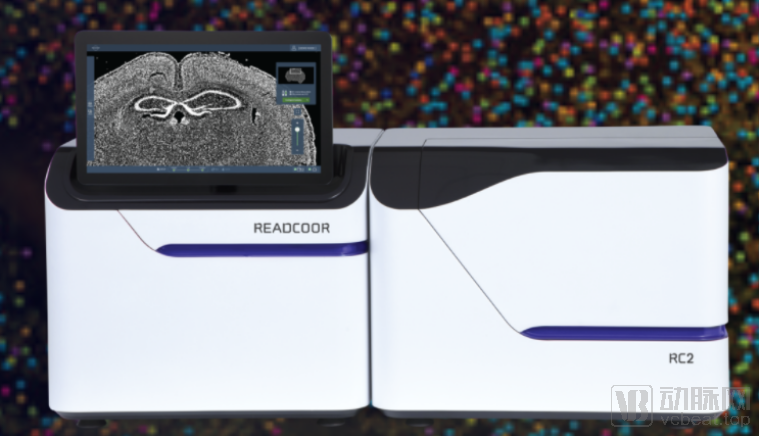
Readcoor’s Sequencing Platform RC2
The core technology employed by ReadCoor is FISSEQ, a fluorescence in situ sequencing technique. Due to the small size of RNA molecules, direct sequencing of RNA within tissue samples presents significant challenges. Therefore, during sample preparation, FISSEQ first reverse transcribes RNA into cDNA, which is then circularized. Subsequently, rolling circle amplification (RCA) is performed using specific DNA polymerases (such as Φ29) to generate large-sized amplicons. All resulting amplicons are cross-linked to ensure that their spatial positions remain stable and do not shift during the sequencing process. In this way, by scanning the tissue section at each cycle of sequencing, the sequence information of the amplicons can be correlated with their spatial locations, thereby achieving the goal of spatial transcriptomics sequencing.
Compared to Vissium, RC2 is an all-in-one solution that truly achieves single-cell resolution. Beyond transcriptomic analysis at the RNA level, its detection capabilities extend to proteins and DNA, enabling simultaneous multi-omics profiling. However, RC2 has significant drawbacks. First, the entire system is expensive, with a single instrument costing $400,000. Furthermore, due to the time-intensive nature of high-precision section scanning, the throughput is very low. A single analysis can take anywhere from one day to several days, and the system can process a maximum of four samples simultaneously. This limited throughput barely meets research needs and makes it difficult to achieve industrial-scale application.
Setting aside usability, RC2 demonstrates significantly higher detection accuracy than Vissium. Despite its obvious drawbacks, as this technology is still in its nascent stage, RC2 has undoubtedly emerged as Vissium’s most formidable potential competitor.
More importantly, RC2 currently supports the analysis of FFPE samples, whereas 10x Genomics’ solution is limited to frozen sections. For the broader research and clinical markets, the existing stock of FFPE samples is larger and their application scope is wider, clearly representing a larger market opportunity.
Driven by these factors, 10x Genomics ultimately decided to make a significant investment to transform ReadCoor, its greatest threat, into a partner. Furthermore, the technological approaches of RC2 and Vissium are likely to be complementary, combining their respective strengths to create a product with high detection accuracy and strong usability.
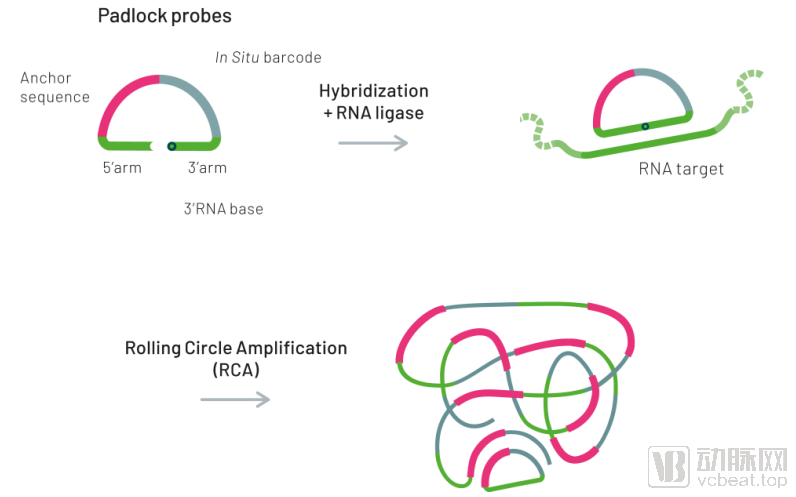
Lock-type probe
10x Genomics has more competitors than just ReadCoor. Another company, Cartana, is developing similar products using a method that shares certain similarities with both Visium and RC2. Cartana employs specific padlock probes to achieve rolling circle amplification on linear cDNA. The barcode region on the primers ensures accurate spatial localization of the amplification products. However, this technology currently does not support full transcriptome sequencing; instead, it requires the design of targeted primers based on specific research objectives. Nevertheless, this approach still poses potential competitive pressure on the development of the Visium platform, a point that 10x Genomics has quickly recognized.
Today, both competitors have been fully acquired by 10x Genomics. On October 5, 2020, 10x Genomics announced that it would acquire ReadCoor, a spatial multi-omics platform, for $350 million. The company also revealed that it had previously acquired Cartana, an RNA analysis technology developer, for $45 million in August. These two consecutive major acquisitions demonstrate 10x Genomics' firm commitment to advancing further in the field of spatial transcriptomics sequencing.
Following the acquisitions of ReadCoor and Cartana, 10x Genomics has virtually no competitors left in the spatial transcriptomics sequencing market. With Visium having been on the market for nearly a year, many domestic scientific research solution providers have already launched spatial transcriptomics research services.
In the scientific research services market, companies such as Berry Genomics, Novogene, Biomarker Technologies, and Biohypo have successively launched their own spatial transcriptomics sequencing services. Based on the information we have currently gathered, the overall market is experiencing a situation where demand exceeds supply. Whether driven by curiosity or by the genuine significance to research, the scientific community has demonstrated strong interest in this emerging technology.
“In fact, as early as the beginning of 2019, the scientific research market had already begun to promote spatial transcriptomics. It is widely regarded as another major breakthrough in the field of gene sequencing following single-cell sequencing,” said Liu Guojing, Head of Spatial Transcriptomics Business at Novogene.
“The primary applications remain in the research sector, where we can process patient samples, model animal samples, and now even plant samples,” said Liu Min, General Manager of the Medical Business Unit at Biomarker.
Visium primarily addresses issues at the transcriptomic level, specifically concerning mRNA. Well-established solutions already exist for the upstream genomic level and the downstream proteomic level. Since cellular genomes generally exhibit minimal variation, whole-genome sequencing or exome sequencing is sufficient to resolve genomic-level questions, without the need to consider spatial information. At the proteomic level, immunohistochemistry (IHC) enables protein detection; however, its throughput is limited. Typically, only one protein target can be detected per tissue section, and specific primary antibodies are required for detecting different proteins.
Given the correlation between transcriptomic and protein expression, high-throughput spatial transcriptomics sequencing can provide guidance for subsequent proteomic analyses, helping researchers identify more promising protein markers from large-scale transcriptomic datasets.
Currently, the pricing of this product remains relatively high. According to data from several sources we surveyed, the cost per sample ranges from 40,000 to 50,000 RMB, covering the entire workflow from sample preparation to final data analysis. This high price point is attributable to the costs of detection instruments, reagents and consumables, as well as the complexity of the sample preparation process. However, with technological innovations and continuous methodological improvements, we believe this technology will ultimately become a widely adopted solution, much like Next-Generation Sequencing (NGS).
“From our current perspective, there is still considerable room for price reduction for this product, and its future growth potential is substantial. The functionality of Visium is currently limited to transcriptomics; if it can be expanded to include methylation or other detection targets that influence gene transcription and expression, the platform’s value would increase significantly,” said Liu Min.
Of course, before widespread adoption, Visium still has many challenges to overcome.
“This product is used in the scientific research field, and its technology is relatively mature with a moderate level of operational difficulty. However, first, the resolution still needs improvement; for instance, achieving single-cell level or even higher resolution would meet more advanced requirements. Second, for this product to be widely adopted in the future, it must not be limited to frozen sections; overcoming the challenge of detecting FFPE samples is essential,” said Liu Guojing.
The two issues raised by Liu Guojing are already being addressed by 10x Genomics. The analysis of FFPE samples is expected to be launched in the first half of 2021. In terms of accuracy, Visium has shown significant improvement based on Spatial technology, increasing from over 1,000 spots to 4,992 spots, and it will clearly continue to improve in the future.
Regarding deeper clinical applications, Liu Min believes that one should not rush: “From a long-term perspective, clinical application is certainly very promising, but it may still take a considerable amount of time. This is not only because accuracy and cost have not yet reached the level required for clinical adoption, but more importantly, there is currently insufficient accumulation of transcriptomic data and inadequate understanding in the clinical setting. Therefore, while the value is undeniable, it will be difficult to reach the clinical level in the short term.”
With the development and maturation of next-generation sequencing (NGS) technology, particularly following a significant reduction in costs, NGS has shown an emerging trend in recent years toward replacing conventional genetic testing methods such as PCR and FISH. For instance, among the test kits for novel coronavirus (COVID-19) detection this year, the metagenomic NGS test kit developed by BGI Genomics was one of the first batch of products approved for market launch.
However, on the other hand, although sequencing technology has become increasingly mature, its clinical application scenarios have not been sufficiently explored. Currently, the most direct clinical applications are primarily in two areas: companion diagnostics for oncology and metagenomic testing. The detection targets mainly revolve around the genome, ranging from small gene panels to whole-exome sequencing. Nevertheless, these provide only genomic-level information, which must undergo transcription and translation processes to ultimately manifest in the tumor phenotype. Moreover, during transcription and translation, the complex regulatory mechanisms contribute to tumor heterogeneity, which genomic sequencing is even less capable of elucidating.
The emergence of spatial transcriptomics sequencing has brought new opportunities to the field of gene sequencing. Whether for the upstream sequencer industry or the future possibilities it offers at the application level, spatial transcriptomics sequencing is a new direction that warrants serious consideration by the genetic testing industry.
In the field of scientific research, large-scale transcriptomic studies primarily rely on PCR arrays. A PCR array is essentially a high-throughput real-time PCR process implemented via microarray technology, allowing researchers to customize panels of varying sizes to detect specific target genes according to their needs. While this method yields satisfactory results in the analysis of in vitro cultured cell samples, it falls short at the tissue level, as it cannot adequately account for tissue heterogeneity and only enables bulk analysis of mixed samples.
Spatial transcriptomics sequencing can better meet the needs of scientific research than PCR arrays. PCR arrays are often used to explore potential possibilities from large amounts of transcriptome data. Compared to in vitro samples, tissue samples more closely reflect the natural state of the organism and clearly have higher value than in vitro samples. Moreover, spatial transcriptomics sequencing can distinguish heterogeneity within tissues from a spatial dimension, providing researchers with deeper research value.
As previously discussed in our analysis of the sequencer industry, Illumina currently holds a near-monopoly position in the global sequencing instrument market. For Chinese-made sequencers to break through this dominance in the future, collaborating with application-layer partners for practical implementation may be one of the most effective market expansion strategies. Products tailored to specific application scenarios, such as single-cell sequencing and tumor companion diagnostics, typically do not incorporate sequencing capabilities themselves. By partnering with these diagnostic products to achieve integrated deployment, a comprehensive analytical system can be established, thereby providing users with an end-to-end workflow solution.
This holds true for the spatial transcriptomics sequencing industry as well. Taking Visium as an example, Visium primarily provides sample processing solutions, including tissue optimization kits and spatial gene expression kits. The subsequent sequencing step is left to the user’s discretion. If China’s domestic sequencing instrument industry can perform targeted optimizations for spatial transcriptomics sequencing, or even integrate these into a fully automated end-to-end processing system, it may have the opportunity to capture a share of this market.
Although it is still premature to discuss applications at this stage, spatial transcriptomics sequencing provides new analytical dimensions for characterizing cellular subtypes and their spatial distribution within tissues, potentially enabling more precise molecular stratification of patients in clinical practice. In particular, regarding biomarker discovery, incorporating these two critical dimensions into multi-omics analyses will offer pivotal guidance for identifying patient populations likely to respond to specific therapies.
Liu Guojing told us that they have already engaged with several pharmaceutical companies in their practical work: “Some pharmaceutical companies have indeed expressed interest in this new technology, but specific collaborations are still under negotiation. Their expectation is to leverage the new dimensions provided by this technology to identify novel biomarkers, new functional cell populations, and new modes of cell communication, thereby supporting their R&D efforts.”
New technologies always bring new opportunities and new markets. Although spatial transcriptomics sequencing has only been commercialized for a year so far, we can already see the value of this technology in future clinical applications. After several acquisitions, 10x Genomics has temporarily achieved comprehensive control over this field. Of course, we also hope that domestic technical platforms can follow up with projects more quickly and achieve a comprehensive breakthrough in this area.