

AI Unicorn Unisound, Backed by $300M+ Funding and Developer of World's First IoT AI Chip, Files for STAR Market IPO
On the evening of November 3, the IPO application materials submitted to the STAR Market by Unisound AI Technology Co., Ltd. (hereinafter referred to as “Unisound”), an AIoT unicorn, were accepted. The company has completed all pre-listing tutoring requirements, and the relevant information has been published on the official website of the Shanghai Stock Exchange’s STAR Market.
In June 2012, Unisound was established in Beijing. At that time, the concept of “cloud” had not yet been clearly defined, and “deep learning” technology was just emerging.
With a founding team of fewer than ten members who recognized the development potential of two key technologies, Unisound launched its public cloud platform just three months after its establishment. On December 28 of the same year, Unisound introduced deep learning capabilities, pioneering the integration of DNN into the traditional i-vector framework for speaker recognition—a move that predated Baidu’s adoption of DNN by a full year.
In 2014, Unisound AI Technology Co., Ltd. proposed its “Cloud–Edge–Chip” strategy, aiming to establish a closed-loop ecosystem. However, although the concept of a “chip ecosystem” was far ahead of industry understanding at the time, Unisound still had to rely on general-purpose chips from overseas manufacturers such as Qualcomm. This left the company dependent on others for core technologies and unable to fully integrate its natural language processing (NLP) capabilities with the hardware—a challenge that plagued Unisound for four full years.
In May 2018, Unisound finally overcame the chip development challenge and launched its first-generation UniOne IoT AI chip and solution—Swift. As the world’s first AI chip designed specifically for the Internet of Things (IoT), it seamlessly integrates with Unisound’s AI capabilities, delivering a performance improvement of more than 50 times compared to general-purpose solutions.
Over the past eight years, Unisound AI Technology Co., Ltd. has completed a total of nine funding rounds (according to Tianyancha data), secured 51 software copyrights, and obtained 533 patents.
During this period, Unisound secured at least RMB 2 billion in funding, with support from prominent companies such as Goldman Sachs, Qihoo 360, and JD Cloud. Today, Unisound has firmly established itself as one of the leading unicorns in the artificial intelligence/internet of things (AI/IoT) sector.
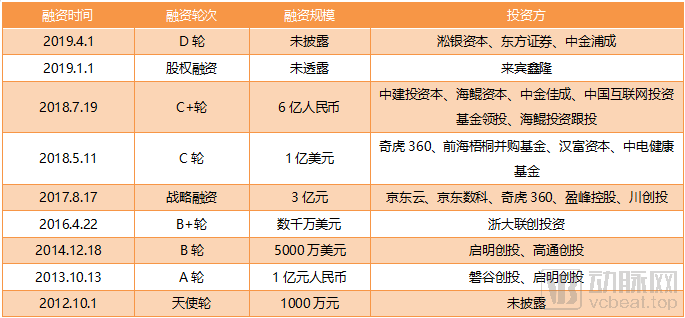
Unisound Financing Process (Data Source: Tianyancha)
However, the industrialization of AI technology remains immature, and neither the home education nor the healthcare sector has yet established a viable commercialization model. Can Unisound leverage the dividends of the STAR Market to achieve further growth?
Despite achieving disruptive technological breakthroughs, Unisound’s gold rush has been somewhat constrained by the market, as both the smart home and smart healthcare sectors remain in their nascent stages with far-from-mature commercialization of related businesses.
During the reporting period, Unisound AI Technology Co., Ltd. reported net losses of RMB 173.7633 million, RMB 213.5487 million, RMB 291.8873 million, and RMB 111.8114 million, respectively. The net losses attributable to owners of the parent company, after deducting non-recurring gains and losses, were RMB 177.2772 million, RMB 229.4382 million, RMB 317.1248 million, and RMB 110.3641 million, respectively. Overall, Unisound has incurred substantial losses and is unlikely to achieve profitability in the short term.
In this scenario, Unisound AI Technology Co., Ltd. attempted to list on the STAR Market under the second set of listing criteria. This standard requires that a company have an “estimated market capitalization of no less than RMB 1.5 billion, annual operating revenue of no less than RMB 200 million in the most recent year, and cumulative R&D expenditure accounting for no less than 15% of cumulative operating revenue over the past three years.”
Unisound’s R&D investment carries a hint of burning its bridges. During the reporting period, the ratios of its R&D expenses to operating revenue were 109.13%, 117.78%, 77.61%, and 163.55%, respectively, far exceeding the 15% threshold required by regulations.
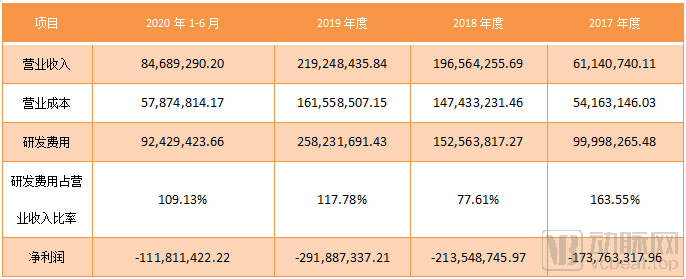
Excerpt of Financial Indicators
During the pandemic, Unisound’s businesses serving hospitals, home appliance manufacturers, and commercial real estate clients were all significantly impacted in the first half of the year. Hospital clients shifted their primary focus to patient admission and care, generally postponing other business needs, including intelligent upgrades. This led to sluggish sales of products such as voice-enabled electronic medical record (EMR) systems and medical record quality control systems. Meanwhile, sales to home appliance clients declined sharply due to the pandemic, resulting in reduced demand for both existing products and new product innovation.
The ratio of R&D expenses to operating revenue in 2020 indicates that Unisound AI Technology Co., Ltd. aligned with market trends by intentionally moderating its development pace, thereby curbing the further expansion of its net loss for the year.
Revisiting Operating Revenue. After achieving a threefold increase in operating revenue in 2018, Unisound AI Technology Co., Ltd. saw only modest growth in 2019. Given the rapid surge in consumption across all sectors expected in the second half of 2020, it is almost certain that the full-year figures will surpass those of 2019.
Although Unisound’s revenue in 2019 did not experience significant growth, it successfully surpassed the critical threshold of RMB 200 million, thereby qualifying for a listing on the STAR Market. However, within the artificial intelligence industry, while this figure is substantially higher than that of many medical AI companies at Series B or C funding stages, it still lags far behind AI security unicorns such as SenseTime and Yitu. To justify a valuation in the tens of billions, Unisound must continue to strengthen its commercialization efforts.
Guided by the vision of “Connecting Everything, Understanding Hearts and Minds,” Unisound has developed two product series—intelligent voice interaction products and smart IoT solutions—with a focus on the home and healthcare sectors.
In the smart home sector, Unisound has leveraged air conditioner voice modules as a breakthrough in residential and hotel scenarios. By forging deep collaborations with leading home appliance manufacturers such as Gree, it has expanded its portfolio into a comprehensive series of IoT voice interaction products covering dozens of connected devices. Building on this foundation, Unisound has further upgraded its standalone products into integrated solutions, enabling large-scale deployment across hotels, communities, and other scenarios.
According to data from Frost & Sullivan, the company’s market share in the field of smart voice modules for home appliances has currently reached 70%. Furthermore, the company has entered into a strategic partnership with Shimao Group to establish a joint venture, which is delivering smart IoT solutions in bulk to the numerous hotels under Shimao Group, thereby driving rapid growth in sales revenue.
In the white goods market, a sub-sector of smart living, the company has partnered with white goods giants such as Gree. According to data from Frost & Sullivan, Unisound’s market share has reached 70%.
Smart healthcare is a key focus area for Unisound. Its voice-enabled electronic medical record (EMR) entry system holds a significant competitive advantage, with a market share of up to 70%; its EMR quality control system is also gaining momentum, currently holding approximately 30% of the market. These smart healthcare products have been deployed and are in use at nearly 100 Grade III Class A hospitals, including Peking Union Medical College Hospital, and continue to expand their reach.
Based on a rough estimate from the sales performance in the first half of 2020, Unisound’s business volume ratio between the smart home and healthcare sectors is approximately 4:1. This article primarily analyzes Unisound’s business development in the healthcare sector.
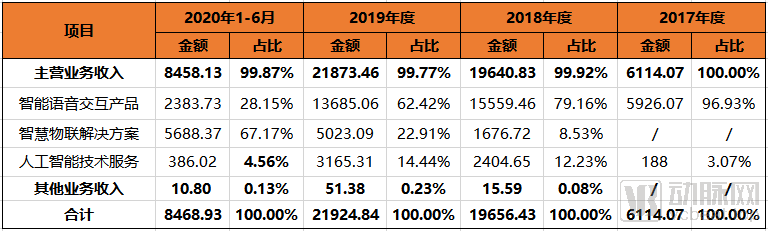
During the reporting period, Unisound’s revenue from its main products and services showed that smart IoT has gradually become the primary source of revenue.
(Data sourced from the prospectus of Unisound AI Technology Co., Ltd.)
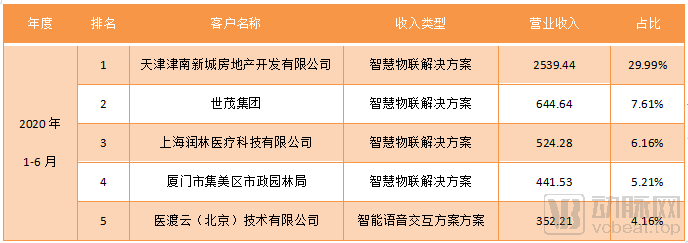
Details of the Top Five Customers During the Reporting Period (Data sourced from Unisound’s prospectus)
Compared to its presence in the smart home sector, Unisound has a relatively smaller business volume in smart hospitals. However, driven by policy support, Unisound’s two core medical businesses—its medical voice interaction solution and its intelligent medical record quality control system—are facing unprecedented opportunities.
Unisound’s Medical Voice Interaction Solution comprises a medical speech recognition engine, a voice entry client, customized microphones, and mice. It is built on AI technologies such as deep learning, high-performance computing, and big data.
According to statistics from the American Medical Association, physicians spend 35% to 40% of their professional careers on medical record collection and entry. If measured by time value, a chief physician’s investment in electronic medical records amounts to €65,500 per year.
The situation in China is equally grim. Under the overarching trend of digitalization, many physicians are compelled to devote increasing amounts of time to electronic medical record (EMR) documentation. This is particularly true for physicians in township and rural areas, where a single complete EMR entry may require up to six separate data inputs.
Addressing this issue requires a two-pronged approach: on one hand, enhancing system interoperability to reduce the complexity of medical record entry; on the other, optimizing voice input workflows to accelerate data entry. Unisound AI Technology Co., Ltd. has adopted the latter strategy, leveraging knowledge graph-supported voice input to replace keyboard typing and manual documentation, thereby reducing the time physicians spend on electronic medical record (EMR) entry.
This approach is supported by practical evidence abroad. The 2018 HIMSS survey on electronic health records (EHRs) showed that voice entry and keyboard entry accounted for 37% and 33%, respectively, in the United States. Compared with other input methods, voice entry generally improves efficiency by 20% to 40%.
To accommodate the practical usage requirements of different hospital departments, this system is offered in two versions. The Standard Version provides a convenient and efficient assisted entry method: physicians dictate patient conditions, and the system automatically converts speech to text, entering electronic medical record data in a structured format and inserting the text in real time at the cursor position, thereby improving entry efficiency. The Enhanced Version develops specialized functions—such as specialty-specific recognition models, voice control interfaces, and voice filtering—as independent modules to achieve low system coupling. These modules can be freely integrated with the Standard Version according to business and scenario needs, packaged into tailored solutions for various medical specialties.
In addition, Unisound has enabled the coexistence of keyboard and voice input, allowing users to switch freely between them without the need for specific steps such as “turning off the voice input method and turning on the keyboard input method.” These details are also key to improving physicians’ efficiency.
However, regardless of the method used for entering medical record data, errors are inevitable. Moreover, quality control of medical records is not a simple calibration issue; this aspect is akin to a “dilemma”—it cannot be ignored, yet it is difficult to manage effectively.
On one hand, medical record quality control places exceptionally high demands on the competencies of quality control personnel. Qualified staff must possess a clinical background; for instance, the job posting for quality control positions at West China Hospital requires applicants to hold “a master’s degree or higher” and have “a background in clinical medicine or related fields.” Such recruitment criteria are by no means low—in fact, they are significantly more stringent than those for many clinical departments in central urban hospitals across China. Against the backdrop of severe shortages in medical resources, even outstanding clinical medical graduates fail to meet the demand for frontline clinical care. Consequently, it is difficult for both hospital administration and physicians themselves to accept the idea of diverting these professionals away from clinical practice into full-time quality control roles.
On the other hand, a single medical record can range from dozens to hundreds of pages. Manual quality control is highly time-consuming, and even experienced physicians struggle to identify errors within such voluminous data in a short period. Many discrepancies can only be detected by cross-referencing various sections of the medical record, which places exceptionally high demands on the comprehensive competencies of quality control personnel.
In this context, Unisound has developed an intelligent medical record quality control system by leveraging a knowledge graph built on millions of data points. This system accurately interprets the content of medical records and screens for defects, thereby reengineering business processes, significantly improving the efficiency of medical record quality control, and expanding both the depth and breadth of quality assurance.
Xie Guanchao, President of Unisound’s IoT Division, once told VCBeat: “To improve the coverage of medical record quality control, Unisound first established a comprehensive set of quality control points based on the quality control standards of different provinces and hospitals. On this basis, Unisound supplements the database according to specific scenarios at individual hospitals.”
Zhongda Hospital, affiliated with Southeast University, is a partner of Unisound in the field of medical record quality control. As of 2019, the coverage rate of medical record quality inspection at Zhongda Hospital had reached 100%. The scope of defect detection has been upgraded from focusing on key defects to comprehensive all-defect inspection, and the efficiency of quality inspection work has increased by nearly tenfold.
From the current perspective, Unisound’s voice interaction solutions and medical record quality control solutions are primarily driven by policy initiatives. On one hand, in the post-pandemic era, hospitals at all levels have been striving to establish new public health defense systems and upgrade their information technology infrastructure, under the framework of electronic medical records (EMR) and the performance assessment of tertiary public hospitals. Consequently, numerous secondary and tertiary hospitals are facing the need to update and iterate their Hospital Information Systems (HIS) and EMR systems.
On the other hand, the comprehensive pilot implementation of Diagnosis-Related Groups (DRGs) has prompted hospitals to place greater emphasis on medical record oversight by their medical records departments. Since undercoding of medical records leads to sustained financial losses for hospitals, there is a subjective incentive for hospitals to strengthen quality control of medical records.
If Unisound’s product portfolio can effectively align with the needs of the healthcare system, its revenue and valuation will see further growth.
Based on Unisound’s existing business portfolio, its smart home operations will face intense competition from formidable rivals such as Baidu, Xiaomi, Huami, Panasonic, Apple, and Amazon. As the market continues to mature, Unisound may need to increase its R&D investment in smart home applications to sustain its current competitive advantage.
Although the healthcare sector benefits from policy support, the overall market size for its two major business lines is not substantial. Taking listed informatics companies with similar operations as examples, their annual revenues generally range from RMB 500 million to RMB 1 billion, with net profits between RMB 50 million and RMB 500 million. In comparison, Unisound’s healthcare business scope is relatively narrow. If it can solidify its position in healthcare informatics, Unisound’s revenue may see a multiple-fold increase; however, to justify a valuation of tens of billions, the company may need to expand into additional product portfolios.
However, the internet era moves at a rapid pace, making it difficult to predict what opportunities a company with numerous patents may seize in the future. If it successfully goes public, Unisound AI Technology Co., Ltd. could potentially usher in a true renaissance for artificial intelligence.