

WeDoctor Strengthens Medical Capabilities with Former Deputy Director of China Academy of Chinese Medical Sciences, Fan Jiping, Leading Its Internet General Hospital
At the recently held 2nd World Conference on Internet Industry of Traditional Chinese Medicine (TCM), a series of innovative projects were launched, including the World TCM (Herbal Materials) Internet Trading Center and the World TCM (Herbal Materials) Quality Inspection Center. The business leader behind these initiatives is a new face in the executive team of WeDoctor Group, the conference organizer: Fan Jiping, President of WeDoctor Internet General Hospital.
During the conference, Fan Jiping granted an exclusive interview to VCBeat. With extensive management experience spanning public hospitals, government agencies, research institutions, and professional media, Fan’s decision to join WeDoctor marks a pivotal turning point in his career. For the industry, it signifies that a top-tier management expert from China’s medical academic and administrative systems has personally entered the fray, which will inevitably accelerate the digital transformation of the traditional healthcare service system.
Fan Jiping received his bachelor’s degree from Shandong University of Traditional Chinese Medicine and later earned his doctoral degree from Beijing University of Chinese Medicine. He conducted postdoctoral research at the National Center of Neurology and Psychiatry in Japan. Upon completing his studies, he joined Dongzhimen Hospital of Beijing University of Chinese Medicine, where he served as Department Director and Vice President. After leaving Dongzhimen Hospital, he was appointed Deputy Director of the Department of Science and Education under the State Administration of Traditional Chinese Medicine, and subsequently served as Vice President of the China Academy of Chinese Medical Sciences while concurrently holding the position of Director of its Eye Hospital. Later, he assumed the roles of President and Editor-in-Chief of China Press of Traditional Chinese Medicine.

Fan Jiping, President of WeDoctor Internet General Hospital
From healthcare institutions to government departments, and further to research institutes and professional media, Fan Jiping has accumulated extensive management experience over his 36-year career, while also making significant contributions in clinical and academic fields. He has presided over and participated in multiple research projects under the National “Eighth Five-Year Plan” and “Ninth Five-Year Plan” Key Technologies R&D Programs, as well as numerous ministerial- and bureau-level initiatives. Additionally, he has led or undertaken five research projects at the ministerial or bureau level or above, received three awards for his achievements, and published more than 60 papers in domestic and international journals.
Over the past decade, Fan Jiping has been dedicated to the education and practice of management theory. He founded the “Senior Executive Program on Professional Management for Presidents of Traditional Chinese Medicine (TCM) Hospitals,” which is hailed as the “Whampoa Military Academy” of the TCM industry. The program has provided management training to presidents of more than 3,000 TCM and integrated Chinese-Western medicine hospitals across China, as well as to leaders of 560 publishing houses, earning widespread acclaim from both the TCM and publishing sectors.
Dr. Fan Jiping’s career pinnacle represents the aspiration of many physicians: to achieve clinical excellence and academic renown, or to attain a senior position within the healthcare management hierarchy—with the ideal scenario being the attainment of both. After securing this “dual success” in both management and academia within the traditional healthcare system, he decisively transitioned into the digital health sector. In contemporary parlance, Dr. Fan’s career move constitutes a self-imposed challenge to “step out of his comfort zone.”
“Through my past management experience, I have observed that while industries across the board are rapidly undergoing internet-based transformation, the digitalization of the healthcare system has been relatively slow. This indicates substantial room for innovation in this sector. Furthermore, since the onset of the pandemic, the state has introduced numerous highly favorable policies supporting ‘Internet + Healthcare’ and ‘Internet + Medical Insurance.’ Meanwhile, the generation now in their fifties, who are digitally literate, is gradually entering an age bracket prone to chronic and age-related diseases,” said Fan Jiping, expressing his optimism about the broad prospects of the digital health industry. “WeDoctor topped CB Insights’ 2019 list of the Top 150 Global Digital Health Companies and has retained its position this year, demonstrating significant potential. I also greatly appreciate Mr. Liao Jieyuan, the company’s founder, for his strategic vision, resource mobilization capabilities, open-mindedness, as well as WeDoctor’s approach and strategic layout in the healthcare sector.”
In Fan Jiping’s view, many industry participants have entered the internet healthcare space from angles such as pharmaceutical e-commerce and consumer healthcare, without touching the core aspects of medical care. Their efforts have largely been limited to facilitating the “digitalization” of drug transactions or payments for pharmaceutical companies, hospitals, and other institutions. In contrast, WeDoctor has strategically positioned itself in serious medical care and synergy across the healthcare industry chain. By focusing on the primary battlefield of healthcare services, it deeply connects providers, patients, and payers, delivering integrated online-and-offline services for diagnosis, disease management, and health maintenance. This has created a business model distinctly different from those of its peers. Meanwhile, as a platform leveraging digitalization to drive innovation in China’s healthcare industry, WeDoctor has accumulated extensive medical resources and robust underlying technological and operational capabilities over the past decade, laying a solid foundation for the implementation of its strategic layout.
As WeDoctor delves deeper into serious medical care, it needs to address more substantive issues related to medical treatment and health management—areas that fall squarely within Fan Jiping’s expertise.
Fan Jiping stated that he chose to join WeDoctor based on his assessment of the industry’s prospects, his alignment with WeDoctor’s strategy, and the fit between WeDoctor’s business needs and his own expertise.
Following the outbreak of the COVID-19 pandemic in 2020, the value of internet-based healthcare became increasingly prominent. On January 23, WeDoctor Internet General Hospital established the Command Center for Combating Novel Coronavirus Pneumonia and urgently launched a real-time assistance platform for COVID-19 patients. During the industry’s participation in anti-pandemic efforts, WeDoctor Internet General Hospital played a significant role in key areas such as the mobilization and allocation of medical resources.
Strategic Synergy between WeDoctor Internet General Hospital and the Digital Health Community
Since the beginning of this year, the “WeDoctor Internet General Hospital” has emerged as a new entity in the public eye, with its COVID-19 Real-Time Assistance Platform widely shared across social media. What exactly does this new entity signify, and what role does it play in WeDoctor’s overall strategy? Fan Jiping explained that, building upon the Wuzhen Internet Hospital platform, the WeDoctor Internet General Hospital serves as an integrated consortium of WeDoctor’s online and offline medical institutions. It acts as a central hub aggregating all of WeDoctor’s medical resources, focusing on integrating regional healthcare services with supply chain capabilities such as health insurance payment, pharmaceuticals, medical devices, and testing. This enables the delivery of professional, convenient, one-stop healthcare services to users. Furthermore, by actively collaborating with various regions to establish medical consortia, it functions as a central platform for implementing tiered diagnosis and treatment at the regional level.
As of June 2020, WeDoctor General Internet Hospital had 12 physical medical institutions and 27 internet hospitals, connecting more than 7,200 hospitals, over 250,000 doctors, and more than 210 million real-name registered users across China.
Fan Jiping introduced that WeDoctor deeply supports healthcare reform through its Digital Health Community strategy. In the medical sector, it connects local healthcare institutions within administrative regions, promoting the rational allocation of medical resources through internet hospitals, family doctor services, and basic public health services. In the pharmaceutical sector, the Haixi Pharmaceutical Trading Platform leverages digitalization to support centralized procurement of drugs and medical devices, thereby reducing costs and improving efficiency in their distribution. In the health insurance sector, it contributes to insurance reform by operating a smart health insurance supervision platform and supporting the development of the national health insurance information system. “WeDoctor has cultivated these three major fields and, through the coordinated reform of medical care, pharmaceuticals, and health insurance, promotes improved regional medical services and population health outcomes, while reducing healthcare costs.”
As Fan Jiping stated, WeDoctor’s initiatives to leverage digitalization in supporting healthcare reform and driving industrial upgrading have yielded certain results.
For example, the Haixi Pharmaceutical Trading Platform and Yilianzhong provided extensive digital service support during the “Sanming Healthcare Reform.” In 2019, the Leading Group for Deepening the Healthcare System Reform under the State Council issued a document to promote the “Sanming Healthcare Reform” experience nationwide. In February 2020, Sanming’s first internet hospital, the Sanming WeDoctor Internet Hospital, was launched, offering one-stop services including appointment registration, online consultations, e-prescriptions, online medical insurance payments, chronic disease management, and medication delivery. This initiative significantly accelerated the maximization of local healthcare resource utilization efficiency, marking another critical step forward in the informatization journey of the Sanming Healthcare Reform.
Furthermore, the chronic disease management model explored by WeDoctor in Tai’an provides integrated online and offline follow-up consultation and management services to 250,000 outpatients with major chronic conditions. This initiative has reduced the time required for follow-up visits and medication procurement from the original 2–3 hours to just 10–20 minutes, alleviated approximately 20% of the outpatient pressure on large hospitals, and lowered the average prescription cost per follow-up visit from RMB 550 to RMB 480, thereby effectively curbing medical insurance expenditures for chronic diseases. Currently, this model is being rolled out across Shandong Province through the Shandong Medical Insurance Health Big Data Platform.
Meanwhile, WeDoctor is establishing the Tianjin Primary Care Digital Health Community model. Led by Tianjin WeDoctor Internet Hospital and in collaboration with 267 primary healthcare institutions across the city, it forms a tightly integrated digital health community to comprehensively enhance the quality of primary care services and improve the health outcomes of citizens throughout Tianjin.
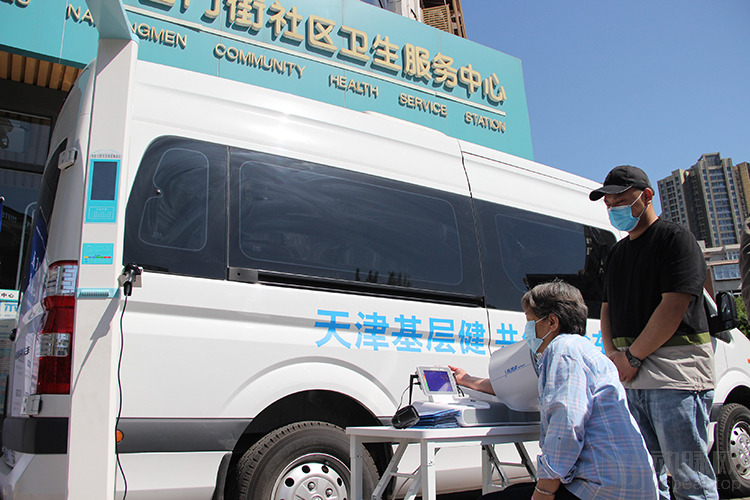
Basic Public Health Services Provided by Tianjin’s Primary-Level Digital Health Consortium
The aforementioned cases are a microcosm of the implementation of WeDoctor’s Digital Health Community initiatives. Fan Jiping stated that, within the overall strategy, WeDoctor Internet General Hospital serves as the primary vehicle for integrating B-side resources, connecting medical resources across medical insurance pooling areas, collaborating with industrial chain capabilities in pharmaceuticals, medical devices, and diagnostics, and delivering services to C-end users.
In-Depth Layout, Building Key Specialties
Despite having worked in the traditional healthcare system for many years, Fan Jiping has always maintained an open mindset toward the internet. In particular, during his tenure as President and Editor-in-Chief of China Press of Traditional Chinese Medicine, he made significant explorations in new media development, AR/VR teaching material creation, the digital library of Traditional Chinese Medicine (TCM), and internet-based TCM knowledge services.
Fan Jiping introduced that since joining WeDoctor, he has quickly immersed himself in upgrading the services of WeDoctor Internet General Hospital. “In the past, WeDoctor’s core online service offerings were appointment registration and rapid consultation, positioning it primarily as an intermediary model between internet platforms and healthcare services. Recently, WeDoctor has made specialist consultations its flagship product and strengthened the development of key specialties, including Traditional Chinese Medicine (TCM) and psychological counseling, to deliver more substantive medical care. Building on text-and-image-based doctor-patient interactions, we are accelerating the enhancement of multi-modal services such as telephone and video consultations, thereby creating a clinical experience that more closely resembles real-world medical scenarios.”
Meanwhile, following Fan Jiping’s appointment, efforts will be intensified on the supply side to tap into expert resources and strengthen discipline development. “We plan to establish 12 key specialties, such as internal medicine, gynecology, and pediatrics—departments with high patient demand—by collaborating closely with over 1,000 experts. We will gradually expand this network of tightly integrated experts, ensuring they dedicate more fixed time to providing online patient services, thereby developing distinctive specialties and service capabilities. Furthermore, we aim to foster synergy between our online platform and offline physical medical institutions to better deliver membership services.”
VCBeat has observed that with the addition of Fan Jiping, WeDoctor’s medical management capabilities in its internet hospital services segment have been further strengthened. Among WeDoctor’s management team, Chief Medical Officer Xi Lisuo is a renowned healthcare expert, and the heads of business units such as the General Practice Center and Health Management are also well-known experts in medical or hospital administration within the industry.
The medical sector is characterized by high professional barriers, making it impossible to fully replicate the success of the internet in the consumer sector within the healthcare industry. Therefore, in the process of integrating the internet with healthcare, relying solely on an internet mindset is far from sufficient; the active participation of seasoned professionals from the traditional medical system is indispensable.
However, for internet healthcare companies to attract the participation of healthcare administrators, the latter must possess sufficient understanding of and willingness toward the industry.
Looking back on the development of internet healthcare, early participation by traditional medical practitioners was limited due to unclear policies and uncertain benefits associated with this new business model. There were two primary modes of involvement: first, presidents of public hospitals drove digital transformation within their own systems, leveraging internet healthcare to provide convenient services to the public; second, some department heads and leaders of small medical institutions left the public system to join internet healthcare companies as business executives. Regional initiatives driven by government authorities, such as the case in Yinchuan, were exceedingly rare.
In summary, key opinion leaders in the traditional healthcare system tend to favor experimentation within the existing framework, while generally adopting a wait-and-see attitude toward directly entering the industry.
On December 7, 2015, the Wuzhen Internet Hospital, established by WeDoctor, officially opened, becoming the first internet hospital in China and bringing the new model of internet hospitals into the spotlight. Starting from Wuzhen, a wave of internet hospital construction swept across the country.
On October 28, 2020, at a press conference held by the State Council Information Office, Mao Qun’an, Director of the Planning Department of the National Health Commission, stated that there were already 900 internet hospitals across China, and more than 5,500 hospitals at the secondary level or above were capable of providing online services. During the pandemic prevention and control period, various regions leveraged “Internet + Healthcare” to open up a “second front” in the fight against the epidemic.
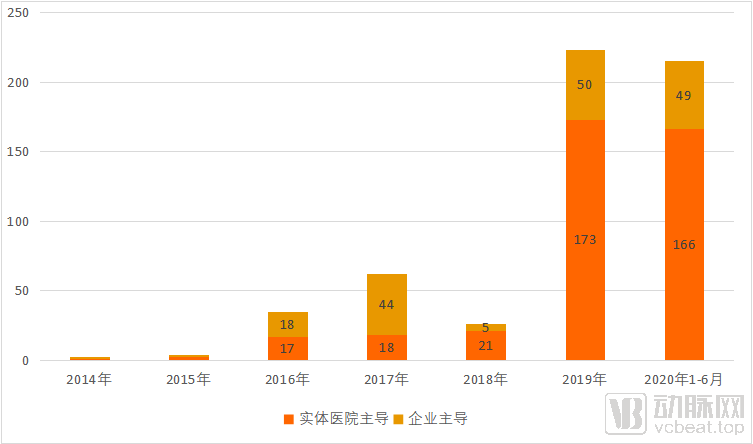
Changes in the Leading Parties of Internet Hospitals Across Different Periods. Source: Local Health Commissions, Official Websites and Social Media Accounts of Hospitals; Chart by VCBeat
Note: Internet hospitals with unclear establishment dates are not included in the chart.
According to statistics from VCBeat in its “2020 Internet Hospital Report,” prior to 2017, internet hospitals were predominantly established and operated by enterprises, with limited participation from brick-and-mortar hospitals. Following the introduction in 2018 of foundational policies and supporting regulations for internet hospitals, brick-and-mortar hospitals have increasingly invested in their development. In particular, since the onset of the pandemic in 2020, these hospitals have rapidly launched online medical services and vigorously promoted them through both in-hospital and external channels.
Meanwhile, government encouragement of internet-based healthcare and the opening of medical insurance reimbursement for such services signify that the industry’s value has gained recognition at a higher level.
It is evident that administrators of traditional healthcare systems are increasingly embracing the internet and adopting a more optimistic outlook toward internet-based healthcare. This shift is manifested in two ways: on one hand, by intensifying efforts to explore digital transformation within their existing frameworks; on the other hand, by directly entering the field. Fan Jiping represents the latter approach.
At the same press conference held by the State Council Information Office on October 28, Mao Qun’an, Director of the Department of Planning and Information under the National Health Commission (NHC), stated that the NHC would continue to promote the deep integration of information technology with the health sector, further advance the “Internet Plus Healthcare” initiative to provide convenient and affordable services, and enhance public satisfaction with healthcare delivery.
As can be seen, “integration” is undoubtedly the overarching trend. The active participation of top-tier management experts from China’s medical academic and administrative systems, represented by Fan Jiping, in internet healthcare enterprises also signifies a form of integration. This indicates that the convergence of digitalization with the traditional healthcare system has entered an acceleration phase, which can be regarded as a watershed moment in the emergence of new forces in Chinese medical services. This accelerated integration is also expected to fundamentally transform the delivery model of healthcare services in China.
As integration accelerates and service delivery models evolve, Fan Jiping believes that digital healthcare spending is expected to account for 20%–30% of total healthcare expenditures in the future. “The fundamental role of internet-based healthcare is to provide follow-up consultations for common and chronic diseases. Since the population with chronic conditions is predominantly elderly, and this current generation of seniors is not proficient with, or even unfamiliar with, the internet, online medical services will become the norm only as time passes and those who are highly dependent on the internet, particularly mobile internet, become the primary demographic affected by chronic diseases.”
However, in Fan Jiping’s view, online healthcare remains a nascent sector. “In 2018, total expenditure from China’s national basic medical insurance fund amounted to RMB 1.78 trillion. Assuming that medical insurance coverage accounts for 70% of total healthcare spending, the overall healthcare expenditure can be estimated at approximately RMB 2.54 trillion. By contrast, the combined revenue of mainstream internet healthcare platforms did not exceed RMB 2 billion.” According to Fan Jiping, these figures indicate that online healthcare currently constitutes only a small fraction of the entire healthcare system. Although the future growth potential is substantial, it also implies that there is still a long road ahead.
During the pandemic, internet-based consultations at hospitals under the National Health Commission surged 17-fold year-on-year, while some third-party platforms saw a more than 20-fold increase in online medical consultation services. The pandemic accelerated users’ awareness and acceptance of digital healthcare, heightened their urgency for substantive medical care, and raised higher expectations for healthcare service transformation. In the post-pandemic era, accelerating the integration of online and offline services, as well as the convergence of innovation with traditional practices to meet patients’ real-world needs, represents the core value proposition for digital health companies operating within this vast market opportunity.