

Chunhui Smart Expands to 21 Provinces Within a Year, Building an Integrated Online-Offline Home-Based Elder Care Network
Just as parents once flocked to cities in their struggle to support their families, a growing number of young people today are choosing to move to coastal regions or hubs of high-tech industries for work and study. As China gradually transitions into an aging society, the population of “empty-nest elderly” is expanding at an unprecedented rate.
Influenced by traditional Chinese concepts of elderly care, the majority of seniors opt for aging in place. Many regions have adopted a “9073” or “9064” elderly care model, wherein 90% of seniors age at home, 7% or 6% receive care through community-based services, and 3% or 4% reside in institutional facilities such as nursing homes. Consequently, smart home-based elderly care has become a preferred solution for numerous elderly care service providers.
Smart home-based elderly care primarily leverages advanced information technologies, such as the Internet of Things (IoT), cloud computing, and the internet, to create a smart elderly care service model integrating “systems + terminals + seniors + services.”
Confronted with China’s aging population and elderly care challenges, a group of professionals in Shenzhen with years of experience in the healthcare and telecommunications sectors felt deeply compelled to act. As “technical immigrants” themselves, they empathized strongly with the plight of empty-nest elders and believed they should leverage their expertise, tailored to national conditions, to address this societal issue. In November 2019, “Chunhui Smart Care” was established: leveraging IoT and cloud computing technologies, it provides round-the-clock monitoring of home safety for the elderly, builds a professional service network, and delivers services directly to senior citizens.
Chunhui Smart Health was founded just one year ago, yet it has already expanded its service network to parts of 19 provinces and two municipalities directly under the central government in China, covering more than 100 cities in total. What is its secret?
The Elusive Balance Between Work and Family: Who Will Care for Empty-Nest Seniors?
When discussing the original intention behind their startup, the team at “Chunhui Wisdom” did not immediately delve into their entrepreneurial journey. Instead, they first posed two questions to VCBeat: one concerning age and the other regarding their vision for fifteen years into the future.
What does a fifteen-year span signify? It may represent the time it takes for a child to grow from innocence to maturity, the prime years of a young adult’s career development, or the process of parents aging. Aging is a gradual process, yet the moment when children become aware of their parents’ decline and their own powerlessness often occurs in an instant.
“Since graduating, I have made it a habit to call home regularly. However, due to my demanding work schedule, I rarely return home to visit my parents. It was only during a phone conversation with my mother that I learned my father had been injured at home a few days earlier. At that moment, all I felt was guilt.”
There are many others in similar situations. Driven by policies such as the family planning program and the expansion of university enrollments, the children of many elderly people have undergone an irreversible demographic migration, growing increasingly distant from their aging parents.
According to relevant data, individuals aged 64 and above have at least a 28% annual probability of experiencing adverse health events at home. As children share a direct blood relationship with their parents, they are often unable to be notified immediately when their parents’ health conditions deteriorate.
For most people, striking a balance between family and career is an insurmountable challenge. In this context, elderly care has shifted from the traditional model of hands-on involvement by children to purchasing professional eldercare services.
Within Chunhui Wisdom’s service system, adult children are the subscribers, while elderly individuals are the recipients of care. Most older adults exhibit low consumption desire; they are reluctant to burden their children or neighbors and hesitate to spend money on accessing services. However, this does not mean that seniors lack needs; rather, they often tend to downplay them.
Online: IoT + Cloud Computing for Intelligent Care
Within the entire home-based elderly care service system, most stakeholders focus primarily on how to provide services that are respectful, safe, and caring for older adults. In response to this challenge, Chunhui Smart Care has offered its own solution.
After children successfully activate the subscription service, staff will install smart care devices at their home within the specified timeframe, simultaneously launching 24/7 online and offline care services. Taking into account factors such as seniors’ usage habits, ease of operation, and privacy concerns, Chunhui Wisdom exclusively employs wireless sensors rather than video surveillance equipment.
“Video monitoring is indeed a very intuitive method for elderly care, but its adoption requires consideration of two factors: on one hand, as adults, whether the elderly are willing to be under constant surveillance; and on the other hand, their children do not have the time to monitor the screens 24 hours a day.”
Based on the lifestyle trajectory data of elderly individuals fed back by devices, Chunhui Wisdom’s cloud computing platform can establish behavioral models of their home life. Children can also view visualized reports of their parents’ daily home activities through automatic daily push notifications via the WeChat Official Account.
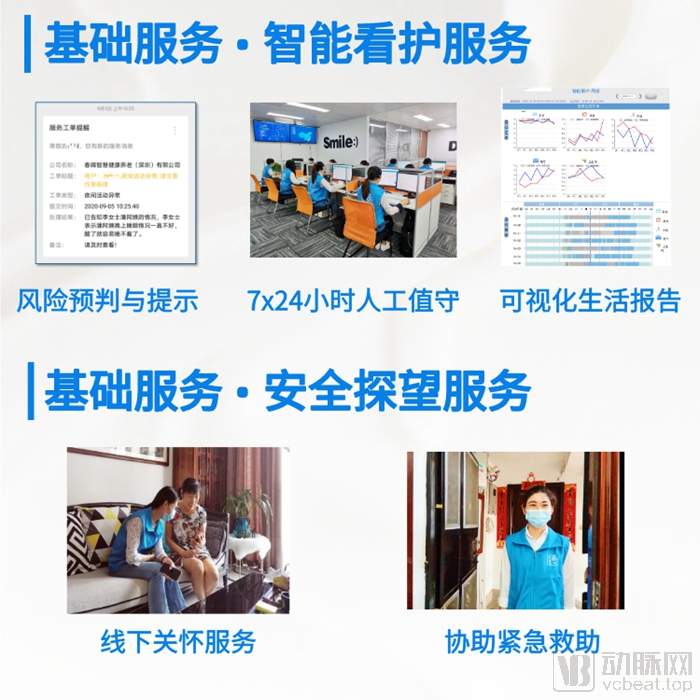
In the event of an emergency alert, Chunhui Wisdom’s 24/7 online monitoring staff will analyze the alert and its specific details, and attempt to verify the senior’s safety. If necessary, they will immediately activate the emergency response mechanism involving offline service personnel. To ensure efficiency in handling emergencies, the step of contacting adult children for verification is omitted; however, risk alerts and service updates will be promptly sent to them.
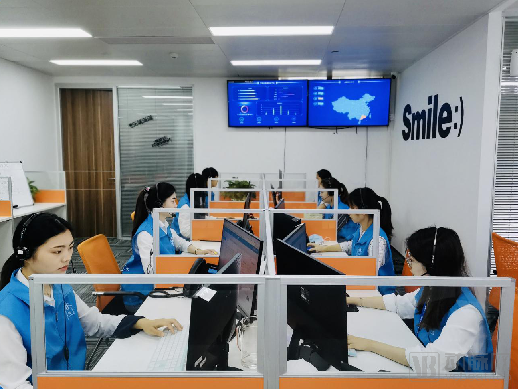
Chunhui Online Service Center
Offline: Collaborate with elderly care assistants to provide in-home convenience services
After purchasing basic smart care services, children can additionally subscribe to value-added services for their elderly parents. Throughout this process, the children are the payers of the service, while the elderly directly enjoy the designated services without incurring any extra costs. This arrangement also helps prevent service personnel from engaging in product promotions or charging fees directly to the elderly.
These staff members who provide services to the elderly are known as elder care assistants, whose primary responsibility is to help seniors with daily living challenges through in-person support. To ensure service delivery efficiency, Chunhui Wisdom schedules elder care assistants on duty by community sub-districts, enabling them to reach the service location promptly upon receiving a service request.
To ensure service quality and the safety of elderly clients, every elderly care assistant at “Chunhui Smart Care” must undergo systematic professional training prior to employment. They are required to pass a series of rigorous assessments, including personality type tests, online theoretical examinations, and offline practical evaluations. Before signing the contract, real-name authentication and upload of health certificate information are mandatory. Additionally, real-time photos must be uploaded during each service provision to guarantee service reliability.
For certain key positions, elderly care assistants are required to undergo periodic “rotating examinations.” The company also encourages them to obtain certification as health managers and regularly conducts training in emergency first aid and cardiopulmonary resuscitation (CPR).
A senior care assistant at Chunhui said, “Only after joining Chunhui did I realize that life holds so many ‘exams.’ Learning never stops; we must continually recharge and enhance our value...”
Chunhui HR colleagues believe that, “In fact, the group of elderly care assistants who are truly able to stay in the profession—demonstrating self-discipline through continuous learning and patiently passing exams one after another—is actually more trustworthy and provides greater peace of mind for the elderly.”
As of November 2020, Chunhui Wisdom had over 3,300 contracted elderly care assistants, and this number is only expected to grow as Chunhui Wisdom expands its service coverage in the future.
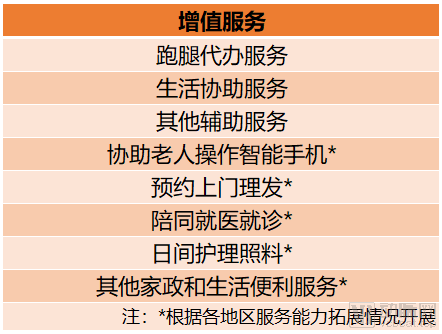
As the saying goes, “Some grasp the Way earlier than others, and each has their own area of expertise.” Chunhui Wisdom’s service model is centered on “online intelligent monitoring + offline human-assisted services.” Grounded in a long-term philosophy of smart nursing care, the company has clearly defined its positioning to avoid becoming a traditional provider of domestic housekeeping or conventional nursing services.
Furthermore, leveraging modern technological means, Chunhui Wisdom directly provides services to the elderly through its proprietary network of elder-care assistants, which distinguishes its product chain positioning from companies that develop smart elderly care hardware and software for institutions.
Continuously expand the service network to reach county-level cities.
Regarding future development, Chunhui Intelligence will shift its focus to expanding its service network into lower-tier markets. Currently, Chunhui Intelligence’s service network is primarily concentrated in major provinces and cities, and has not yet been widely extended to county-level and township areas.
“The further we go down, the higher the cost of expanding services becomes, but this is something Chunhui Wisdom has decided to do and must do.” To ensure the smooth expansion of services, Chunhui Wisdom has developed a special compensation system—equal pay for equal work, regardless of region.
The primary objective of this system is to channel service resources toward regions below the prefecture-level city tier in inland China, which are also the hardest-hit areas for “empty-nest” elderly due to net population outflow. In fact, elderly individuals residing in developed cities have easier access to the resources they need.
By the end of 2020, Chunhui Smart Health’s services are expected to expand to 21 provincial-level administrative regions and more than 150 cities, with partial penetration into urban and rural areas in select regions.
“A prominent issue in the current elderly care industry is its significant fragmentation, with the younger generation lacking a systematic understanding of the sector. Moreover, most elderly care projects still rely on local government subsidies for public welfare, focusing primarily on ensuring basic social well-being. This results in limited income for practitioners, stifles innovation, and leads to high staff turnover.” This has also led to an insufficient supply of high-quality services centered around the elderly and a shortage of professional talent in society.
By extending and expanding its service network, Chunhui Smart Care has popularized the concept of smart elderly care—integrating online and offline services—among a broader population. This approach challenges conventional perceptions of elderly care services and enables seniors to personally experience care that is smarter, more convenient, and more affordable.
When asked about the need for new investment, the Chunhui Wisdom team stated, “With the intensifying aging population and the widespread prevalence of ‘empty-nest’ elderly—a phenomenon characteristic of our times—the home-based elderly care industry boasts broad prospects. However, market education will take time, requiring a period for accumulation and consolidation. From the perspective of the company’s long-term development, we welcome strategic investors with an industrial vision and business synergy capabilities who are interested in our elderly care initiatives, to jointly shape the future.”