

Abartys Health Aims to Cut $750 Billion in Annual U.S. Healthcare Waste with Integrated Data Platform
Abartys Health
Developer of Medical Insurance Information Systems

⊙ Image SourceAbartys Health Official Website
Dolmarie Mendez, co-founder of Abartys Health (hereinafter referred to as “Abartys”), nearly died in 2010 due to her inability to accurately obtain her own medical records.
Which specialists to consult, which medications to take, and what treatments are covered by insurance? This fragmented information left Dolmarie Mendez deeply confused. Despite her seven years of experience in the health insurance industry, she was still shocked by the complexity of the process.
Since then, Dolmarie Mendez has embarked on research in related fields and co-founded Abartys Health with her close friend Lauren Cascio, dedicated to providing technological solutions to inefficiencies in healthcare.
Dolmarie Mendez is a healthcare systems expert with extensive experience in the Affordable Care Act (ACA), ERISA, self-funded group management, U.S. corporate health policy, and actuarial underwriting. She is a Certified Healthcare Reform Specialist, Certified Self-Insurance Specialist, Corporate Health Expert, and U.S. Healthcare Policy Compliance Officer. In 2015, Dolmarie was named one of the Caribbean Business 40 Under 40 Women, and in 2016, she was recognized as a Women Leader in Caribbean Business.
Lauren Cascio has been dedicated to research in the healthcare sector, boasting extensive academic expertise and management experience in the medical industry. She was recognized by Forbes as a leading businesswoman under 30.
⊙ Image SourceAbartys Health Official Website
When it comes to the U.S. healthcare system, three words can accurately summarize it:High Consumption, Low Coverage, and Low Efficiency。
High expenditure: Total annual healthcare spending in the United States accounts for more than 15% of its gross domestic product (GDP). Low coverage: As the only developed country without a universal health coverage system, the U.S. relies primarily on commercial insurance mechanisms, yet tens of millions of people remain uninsured. Low efficiency: The unique healthcare model has led to a misalignment of priorities, with ineffective communication among various levels and components of the system.
In the “World Healthcare Efficiency Index” launched by Bloomberg, a prominent U.S. financial media outlet, the United States ranked second to last among the 56 selected economies, even trailing behind less developed regions such as the Dominican Republic and Mexico, underscoring the poor state of healthcare efficiency in the U.S.
You’ve already recovered, yet you may still be unable to secure a doctor’s appointment. Such absurdities are not uncommon in the United States.
Annie, a Los Angeles resident, complained on her personal social media: “A simple blood test took over 40 days from start to finish—from seeing my primary care physician to receiving the diagnostic results!”
Why has it taken so long? Which part of the process went wrong? When submitting a request for blood tests to the insurance company, it takes nearly half a month for approval. Then, another week is needed to schedule an appointment with a doctor for the blood draw. Finally, it takes nearly two more weeks to receive the final results.
During the waiting period, Anne separately inquired about the progress with both the insurance company and her doctor. The doctor claimed that the insurance company’s review process was slow, while the insurance company responded that the doctor had submitted the application too late. It seemed as though neither party was at fault.
But fundamentally, the root cause of this situation lies in the absence of an effective communication network among the various constituent elements, andAbartys is the “golden key” to solving this challenge.
“Healthcare information is fragmented; we aim to efficiently integrate all content through a rational approach.”Co-founder of Abartys HealthDolmarie Mendez stated this.
Abartys Health, founded in 2015, is dedicated toLeverage a unique centralized data center to enable smarter, faster care, thereby addressing the inefficiencies plaguing healthcare services.
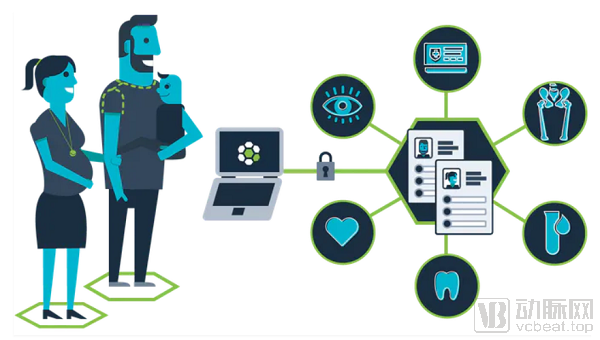
Abartys Health integrates healthcare services with front-end technologies to comprehensively create a system platform that enables seamless data exchange and communication among insurance companies, physicians, and patients.It will reduce losses in the U.S. healthcare market by $750 billion annually.
To date,Abartys has established partnerships with 120,000 healthcare professionals, integrated 6 million personal medical records, and expanded its service coverage to the United States, Puerto Rico, and Latin America.
Abartys has built a robust executive team staffed with industry elites in insurance, healthcare, and data science research. While driving the superior development of Abartys’ business, they also unlock greater future possibilities for the company.
“You may be surprised by the incomplete, outdated, or entirely inaccurate information that insurance companies have on file about you. Our mission is to resolve these challenges and foster transparent and effective communication among insurers, patients, and physicians.”—Lauren Cascio, Co-founder of Abartys Health
Abartys centers on its service recipients, systematically developing four core products—InsreLynk, PatientLynk, ProviderLynk, and ClinicLynk—that work in synergy to deliver personalized and precise services to users.
InsureLynk (Serving Health Insurance Companies)
Break through barriers to access the latest member information from anywhere.
—Breaking Barriers: Break through environmental barriers and access the latest information across networks.
—Filter Content: Filter out irrelevant information through database searches to improve work efficiency.
—Find Member: Use geospatial search tools for visual management of members.
—Send Message: Send messages with high-level security or access restrictions to members.
PatientLynk (Serving Patients)
Establish a full-cycle personal medical record.
—Flexibility: Personal data can be queried via the system anytime and anywhere, enhancing self-management.
—Convenience: Rapidly obtain medical results and provide detailed explanations tailored to the findings.
—Systematic: Establish full-cycle medical records to maintain the continuity of personal information.
ProviderLynk (Serving Healthcare Institutions and Physicians)
Access patient personal information and corresponding insurance data on a unified platform.
—Flexible Operation: View patient information anytime, anywhere, and communicate with patients in a timely manner.
—Information Update: Certificates and records provided by health insurance companies are updated in real time.
—Information Notice: Each data update will quickly generate visual alerts.
—Safety and Peace of Mind: Utilizing high-tech systems compliant with the HL7 international standard to ensure patient data resides within an ultra-secure domain.
ClinicLynk (For Scientific Research)
Data-Driven, Establishing a Comprehensive Service Model
clinicLynk’s data tools provide a comprehensive overview of disease distribution across various geographic regions and offer predictive capabilities to precisely identify individuals at highest risk. clinicLynk is currently in the pre-market phase, butAbartysdata services are now widely used.
clinicLynk fully leverages its data-driven advantages and continuously deepens optimization on this basis, injecting powerful momentum into the research field.
—Preventing Disease Trends:Based on aggregated data, through statistical analysis and practical application, clinicLynk can map the incidence, prevalence, comorbidities, and trends of infectious diseases such as hepatitis C, and use system models to predict the number of cases currently under treatment and those approaching cure.
—Identifying Disease Risk:clinicLynk leverages data to help patients understand their health status. It establishes a data integration mechanism, performs statistical analysis on various datasets, and identifies anomalous factors, thereby forming a preventive model for chronic diseases such as diabetes.
—Tracking COVID-19:Provide real-time, comprehensive data on infectious diseases, with key sections covering high-infection areas, peak case periods, positive test rates, and patient demographics. Additionally, by tracking testing rates across geographic regions, it offers data support to relevant research institutions.
—Preventing Viral Transmission:Using clinicLynk not only enables monitoring of disease spread but also allows for early prediction of transmission trends. By providing real-time infectious disease data, it monitors confirmed cases of COVID-19, influenza, and Mycoplasma infections. Furthermore,
The screened historical data will be used to construct a research model that predicts susceptibility to infection and the likelihood of complications, as well as identifies common comorbidities.
—Advantages of Data Monitoring:Real-time clinical data provide robust support for qualitative research by relevant institutions, facilitating rapid advancement in related research modules.
Although it was founded only five years ago, Abartys has achieved remarkable growth. Guided by advanced core principles and cutting-edge operational models, Abartys has become a highly influential healthcare enterprise in the United States, earning acclaim from both the government and the public.
AtDuring the COVID-19 outbreak, the United States fell into a state of extreme chaos, butAbartys Health has leveraged its strengths to provide a real-time infectious disease data access system, making outstanding contributions to controlling the spread of epidemics.
This year, Abartys launchedThe all-new PatientLynk 2.0 series features both PC and mobile client platforms, enabling targeted patient identification to provide research institutions with faster and more precise solutions for disease prevention and control.
In the future, Abartys will be guided by its core corporate philosophy, aiming toTo provide a convenient, intelligent, and secure medical data management platform for patients, insurance companies, healthcare institutions, and physicians, thereby enhancing the efficiency of healthcare delivery across the United States and maximizing benefits for all stakeholders involved.