

Biodesix Aims to Become the 'Lung Cancer Terminator' with $75.6 Million IPO to Advance Early Precision Diagnostics

Biodesix
Molecular Diagnostics Product Developer
Lung cancer is one of the most prevalent and deadly cancers worldwide; once cancer cells metastasize and develop resistance to treatment, its survival rate is comparable to that of any late-stage cancer.
According to the latest 2018 global cancer statistics, among the 18.19 million new cancer cases worldwide, lung cancer ranked first, accounting for 11.6% of all new cancer cases. Among the 9.6 million cancer deaths, lung cancer also ranked first, accounting for 18.4% of all cancer deaths.
Behind these shocking figures lies the paucity of modern medical knowledge in this field, while also heralding humanity’s continued focus and commitment to research in this area. This is the fundamental law governing progress and the conventional trajectory along which human healthcare continually advances.
Biodesix is a standout in this era.
On October 28, 2020, Biodesix officially listed on the Nasdaq, pricing its initial public offering of 4 million shares of common stock at $18 per share, with plans to raise $75.6 million.
Due to their unique host interactions, tumors often remain “partially concealed” in the early stages, making them difficult to detect even through routine screenings. It is not until the middle to late stages that they lift their “mysterious veil,” a pattern particularly evident in lung cancer.
Early warning signs from the body are subtle and difficult to detect. In the initial stage of lung cancer, the tumor grows within the lung parenchyma; because it is distant from the bronchi and pleura, patients do not experience any discomfort. Corresponding symptoms only emerge when the tumor begins to metastasize or exerts local pressure. By the time patients become alert to these changes, the disease has often progressed to an advanced stage.
General health checkups have very limited diagnostic value for lung cancer. On a posteroanterior chest radiograph, approximately 43% of the lung area overlaps with structures such as the heart, mediastinum, and diaphragm, where early-stage tumors are often concealed.
In addition,Chest radiographs also lack density contrast, resulting in a low detection rate of mediastinal lymph node metastases from lung cancer. Even when a mass is identified on chest radiography, its precise location, nature, and staging cannot be definitively determined.Thus, it is easily overlooked.
Although early-stage lung cancer performs its “self-protection” quite effectively, it can still be diagnosed through other methods such as biopsy; however, these approaches often entail substantial “costs.”
For physicians, when diagnosing patients with pulmonary nodules, although the majority of such nodules carry no risk of malignancy, it is often difficult to determine whether a nodule has become cancerous without performing invasive surgery to obtain tissue samples for further testing. However, theseSurgery is not only costly but also carries the risk of complications., therefore, both doctors and patients need to make certain attempts.
Another non-surgical alternative is to have patients undergo lung scans every 3 to 6 months to monitor whether pulmonary nodules are growing or becoming malignant.The prolonged waiting period during observation often imposes a heavy psychological burden on patients and their families, and may also lead to missing the optimal window for treatment.
To this end, healthcare professionals require simpler and more effective detection methods to assess the malignancy risk of pulmonary nodules, enabling timely selection of appropriate treatment plans for patients.Biodesix was born at the right time.
⊙Image SourceBiodesix Official Website
Biodesix is a lung cancer diagnostic solutions company, founded in 2005 and headquartered in Colorado, USA. The companyDedicated to providing professional guidance and long-term care plans, ranging from early diagnosis of malignant transformation risk in pulmonary nodules to treatment of advanced-stage cancer.
At its inception, Biodesix co-founder David Brunel established the company’s mission: to provide physicians with rapid, comprehensive, and actionable solutions to improve lung disease care for every patient.
To fulfill this mission, Biodesix has built an elite team,The leadership team comprises seasoned experts in the field of biotechnology, providing a continuous impetus for the company’s rapid growth.
Chief Executive Officer Scott Hutton is a highly accomplished leader with over 20 years of experience in the biotechnology and medical device sectors. In April 2012, Mr. Hutton served as Vice President and General Manager of Visualase Neurosurgery, where he oversaw the operations of the neurosurgery business unit, which had a scale of approximately $1 billion. In March 2018, he joined Biodesix as Chief Operating Officer. In January 2020, Mr. Hutton officially assumed the roles of President and Chief Executive Officer of Biodesix, responsible for corporate management and business development.
Chief Development Officer Gary Pestano has been engaged in product development and operations at Biodesix since March 2012. Dr. Pestano’s experience in laboratory operations management and assay development for high-complexity molecular diagnostics in oncology and virology encompasses molecular and proteomic testing. Dr. Pestano is also a co-inventor on multiple national and international patents for diagnostic tests.
⊙ Image SourceBiodesix Official Website
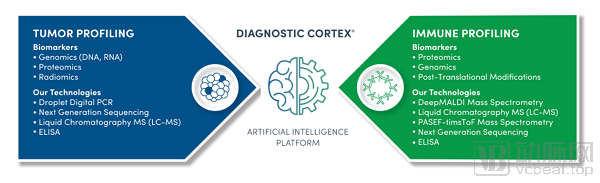
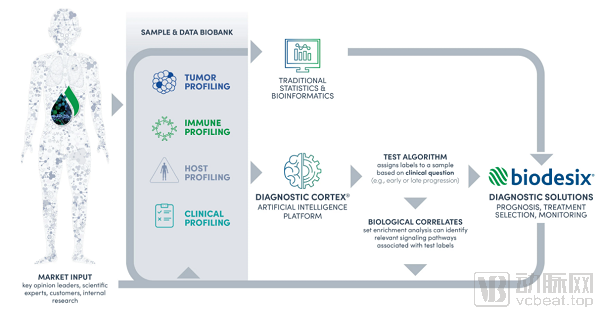
Biodesix has developed a variety of blood-based clinical diagnostic tests, includingNodify CDTandNodify XT2etc.,These methods all leverage the combined power of multi-omics and artificial intelligence (AI).
Nodify CDT expands its blood-based liquid biopsy portfolio, a test designed to help healthcare professionals identify high-risk nodules with malignant potential. ItA simple blood-based biopsy can diagnose whether incidental pulmonary nodules in high-risk patients are malignant.
The Nodify CDT test leverages the patient’s own immune system, which is capable of autonomously detecting disease. This assay detects circulating antibody proteins produced by the immune system in patients with lung cancer. Once blood samples arrive at the Biodesix laboratory in De Soto, Kansas, USA, results are typically generated within one day.
Nodify CDT is designed to complement Biodesix’s other clinical diagnostic test, Nodify XL2, a liquid biopsy assay based on a simple blood draw that the company previously launched.
Nodify XL2 is primarily used to detect pulmonary nodules with an extremely low risk of malignancy. By integrating these two assays into the "Pulmonary Nodule Risk Assessment" protocol, healthcare providers can perform both tests simultaneously using a single blood draw from the patient.
These two testing methods can separately assess whether a patient is in a low-risk or high-risk stage for carcinogenesis. Such a combined testing approach can serve as an internal control measure during treatment, enabling healthcare professionals to make accurate judgments regarding the carcinogenic risk of pulmonary nodules.
“Given the short turnaround time required for these tests, we can help healthcare professionals promptly initiate appropriate treatment for patients after pulmonary nodules are detected,” said Scott Hutton, CEO of Biodesix.
“Combining the Nodify CDT and Nodify XL2 assays allows us to reassess the risk of malignancy in patients with suspicious pulmonary nodules. With just a single blood draw, healthcare providers can determine whether a patient has lung cancer,” added Scott Hutton.
Bonnie Addario, Co-Founder and Chair of the Board of Directors of the GO2 Foundation for Lung Cancer, stated, “We thank Biodesix for its leadership in developing diagnostic tests that help patients assess their risk of malignancy. These tests spare patients from unnecessary procedures and avoid wasting their precious time. This significantly reduces the many uncertainties that plague patients during the interval between the detection of pulmonary nodules and the determination of a treatment plan.”
⊙ Image SourceBiodesix Official Website
October 28, 2020Biodesix Prices 4 Million Shares of Common Stock in Its Initial Public Offering at $18 Per Share, Aiming to Raise $75.6 Million
Biodesix will use the proceeds from this financing to support its commercial expansion, including sales, marketing, reimbursement, customer support, business development, product development support, and research and development, as well as for working capital and general corporate purposes.
In addition, Biodesix will also use a portion of the net proceeds from its IPO to co-develop, acquire, or invest in products, technologies, or businesses that are complementary to its operations.
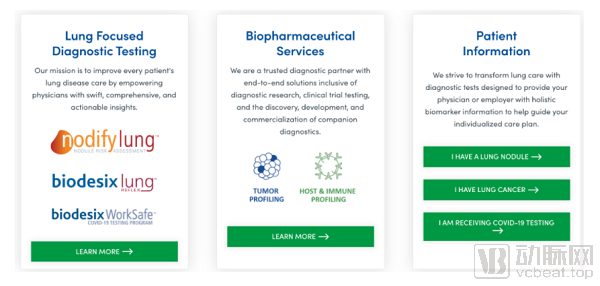
To date, Biodesix has commercially launched six diagnostic tests and more than 30 research-use-only assays, which the company states have been utilized by over 50 biopharmaceutical clients and academic partners, including for Tecentriq.
In the wake of the COVID-19 pandemic, BiodesixwithBio-Rad Laboratories Collaboration, in order toCommercializationThe company’s tests, SARS-CoV-2 ddPCR and Platelia SARS-CoV-2 Total Antibody, are used for the detection of SARS-CoV-2. Both tests have received Emergency Use Authorization from the U.S. Food and Drug Administration.
Looking ahead, Biodesix will continue to deepen its engagement in the field of precision diagnosis for lung cancer, striving to prevent disease at its source and address issues in their nascent stages, thereby delivering high-quality solutions for the early diagnosis of lung cancer.