

WeDoctor and Novartis Sign Strategic Collaboration Memorandum to Explore 'Disease-Specific Health Communities'
On November 6, WeDoctor Group, an internationally leading digital health platform, and Novartis Pharmaceuticals (China), a renowned pharmaceutical company, signed a strategic cooperation memorandum at the 3rd China International Import Expo. Leveraging their respective strengths, the two parties will empower innovative digital health management models through big data and jointly explore the “Specialized Disease Health Community.”
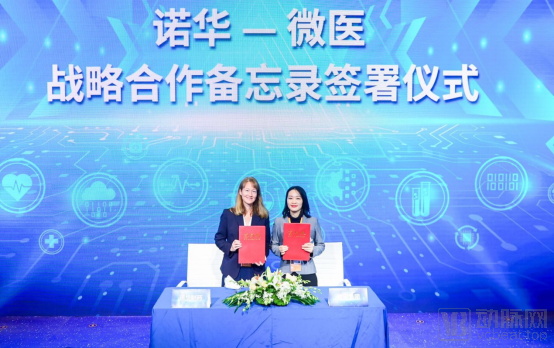
(Ding Haihuan, Senior Vice President of WeDoctor Group, and Gail Seymour, Head of the Immunology, Hepatology, Dermatology, and Respiratory Business Unit at Novartis Pharmaceuticals (China), signed the agreement on behalf of their respective parties)
Both parties will focus on ankylosing spondylitis, a rheumatic and immune-mediated disease in urgent need of societal attention, as their initial specialty area. By leveraging innovative digital solutions, they aim to address the challenges patients currently face in long-term treatment and disease management, thereby enabling more Chinese patients to receive timely, professional, comprehensive, and whole-course health services.
Data shows that with economic development and the accelerating pace of life, the number of people suffering from chronic diseases in China has reached approximately 300 million. Implementing prevention and control measures for long-term and chronic diseases has become a major public health challenge facing society as a whole.
Micro Medical Group is extensively exploring the “Specialized Disease Health Consortium” model across China. Supported by a digital platform, it integrates supply-side resources such as chronic disease management services. Through standardized diagnosis and treatment systems and specialized disease management tools, it provides insurance-covered specialized disease (including chronic disease) services to residents in cities, counties, townships, and villages. This initiative effectively enhances regional disease management capabilities, improves disease awareness and treatment rates, reduces complications, and substantially alleviates the financial burden on local medical insurance funds and patients’ out-of-pocket expenses for medical care and medications.
“The core of the ‘Specialized Disease Health Consortium’ initiative is to enhance service efficiency by delving deeply and thoroughly into individual disease categories, thereby building core competencies on a disease-by-disease basis,” said Ding Haihuan, Senior Vice President of WeDoctor Group. “We aim to leverage big data services across the entire care continuum—including prevention, diagnosis, treatment, medication management, diet, and exercise—not only to help patients find suitable physicians more efficiently but also to foster stronger doctor-patient relationships. This ensures that patients have access to medical consultation even after leaving the clinic, while physicians have evidence-based insights to guide follow-up care. We hope to collaborate with industry partners such as Novartis to truly address the challenges of long-term and chronic disease management through cloud-based solutions, allowing an invisible yet highly efficient digital health ‘network’ to permeate patients’ daily lives.”
Accelerating the Upgrade of Healthcare Services Through Digitalization Is Becoming a Global Consensus. Novartis, a globally renowned pharmaceutical and healthcare company, leverages innovative science and digital technologies to create transformative treatments in areas with growing healthcare needs, serving nearly 800 million patients worldwide.
“We firmly believe that digitalization is a key driver for optimizing end-to-end patient care management, enhancing patients’ healthcare experience, and improving long-term disease management,” said Zhang Ying, President of Novartis China. “This collaboration with WeDoctor integrates Novartis’s extensive expertise in medical science and patient insights with WeDoctor’s strengths in digital technology and ecosystem connectivity. We are confident that this partnership will yield significant results and deliver substantial health benefits to patients across China.”
It is understood that, in the future, both parties will further extend this successful model to multiple disease areas, including cardiovascular diseases, so as to benefit more patients and promote substantial development of China’s healthcare industry.