

Electronic Health Card Expansion and the Breakthrough of Triple Healthcare Integration
“Which came first, the chicken or the egg?” This philosophical question exploring the origins of life has also emerged in the developmental journey of electronic health cards. In this context, the electronic health card is the “chicken,” while the applications underpinning it are the “egg.”
As early as the beginning of the second decade of the 21st century, institutions such as the National Health Commission (formerly the Ministry of Health) began conceiving plans to digitize and standardize various cards, including health cards, medical insurance cards, and social security cards. This initiative aimed to address the inconvenience faced by patients who had to carry numerous cards for each medical visit and struggle to locate the correct card during payment settlements. However, at that time, the concept of “internet healthcare” was still in its infancy, and reforms in medical informatization had just begun. Whether it was urging hospitals to issue cards to patients or integrating these cards with various applications within hospital information systems, these tasks posed nearly insurmountable challenges at the time.
This concept persisted until 2016. As hospitals’ informatization upgrades and the interoperability of information systems garnered increasing attention, separate solutions emerged for card digitization and application integration; however, new challenges quickly followed.
“Should we prioritize the widespread issuance of cards or focus on hospital application first? This question troubled us for a long time at that time,” recalled Zhong Weijun, Director of the Information Center of the Hunan Provincial Health Commission. That year, the electronic health card project in Hunan Province entered the planning stage, but problems emerged as soon as work began. “As the Provincial Health Commission, we required all hospitals to undergo system upgrades to replace their original medical treatment cards with electronic health cards. At that point, hospital directors would ask: ‘Hospitals can certainly complete the upgrades, but if the public hasn’t obtained the cards, how can they be used?’ However, if we issued cards to the public first, only to find that hospitals could not accept them, the situation would be even worse.”
The predicament at that time was indeed difficult to resolve, which certainly hindered the development of electronic health cards and their access point, the electronic health code. However, with the state’s promotion of medical informatization and strong support for internet-based healthcare, interoperability among hospital information systems has continued to accelerate. Barriers between different systems and applications have been gradually broken down, and issues on the application side have been addressed one by one.
Coupled with the sudden outbreak of the epidemic this year, epidemic prevention efforts have rapidly promoted electronic health cards to residents across various regions through channels such as WeChat and hospitals, making the card issuance process twice as effective with half the effort. The “chicken-and-egg” dilemma has been readily resolved.
But this is only the beginning. In the process of using electronic health codes for epidemic prevention, people gradually discovered that such a simple QR code can not only track patients and resolve the interconnectivity of personal health and epidemic prevention information, but also address the interconnectivity between travel health status and medical care access. Medical insurance, pharmaceuticals, and healthcare services seem to be linked by this small code, once again opening a small breach in the long-standing challenge of coordinating these three sectors...
In 2019, a municipal Health Commission in Guangxi pointed out in its report titled “New Measures for Implementing the Three-Medical Linkage, Existing Problems, and Recommendations” that,One of the challenges in implementing the coordinated reform of healthcare, medical insurance, and pharmaceuticals is the incomplete execution of “coordination.”Specifically, without a database containing complete patient information as a foundation, regulatory authorities are unable to supervise and manage the healthcare institutions involved in patients’ medical-seeking behavior.
During the pandemic, to meet the needs of resident travel tracking in anti-epidemic work, electronic health card information in some cities was naturally integrated with public security identity systems. This event has milestone significance for the leap forward of electronic health—With the interoperability of personal health information and epidemic prevention data, a prototype of a big data center based on electronic health cards has begun to emerge.。
“Why can regulation be implemented via the electronic health card? Because it contains the patient’s medical identity,” Wu Wei from Yihui Technology, a subsidiary of Yilianzhong, told VCBeat. “As long as patients seek care at hospitals connected to the electronic health card system, physicians can conveniently access a range of the patient’s medical records—including historical prescriptions, diagnoses, and medical history—by verifying their electronic health card identity.” This demonstrates that the electronic health card establishes the foundation for information interoperability.
However, merely digitizing health cards cannot fully resolve the issue of “interconnectivity”; the integration of medical insurance and payment systems is equally critical.Thus, the concept of “multi-code integration” has emerged.
Taking Fujian Province as an example, in 2018, the National Health Commission, in collaboration with the Fujian Provincial Health Commission and the Fujian Provincial Healthcare Security Administration, pioneered a nationwide pilot program to integrate the electronic health code, the electronic healthcare insurance voucher, and the financial payment code into a single entity, known as “Three-Code Integration.” Leveraging this “multi-code integration” QR code, the province implemented end-to-end “one-code medical visit” services, covering all patient journey stages including record creation, appointment scheduling, diagnosis and treatment, examinations, laboratory tests, medication dispensing, and report retrieval. This initiative not only improved the patient experience but also strengthened government oversight and service delivery.
After more than a year of pilot implementation, the initiative has yielded both achievements and challenges. The National Health Commission and relevant departments have recognized that the term “integration of three codes into one”—referring to the electronic health card, the electronic medical insurance voucher, and the financial payment code—is not sufficiently accurate; “coordination” better captures the essence of mutual recognition and coexistence among multiple codes. Departments do not need to redevelop unified service portals; instead, a new unified access layer can be added on top of existing portals. When residents scan the code through this unified entry point, the system automatically identifies the required service and redirects them to the appropriate interface for the health card, medical insurance voucher, or payment platform. In layman’s terms, this is similar to shopping at a supermarket: if you scan the code with WeChat, the system redirects you to the WeChat interface; if you use Alipay, it redirects you to the Alipay interface. Overall, this approach addresses the most critical issue of multi-departmental coordination. Fujian Province, for example, has established a “multi-code coordination” system centered on the “Ba Min Health Code.” At the 15th China Health Information Technology/Health and Medical Big Data Application Exchange Conference held in Haikou this September, the official terminology for multi-code integration and related industry product demonstrations were officially adjusted to “multi-code coordination.”
So, when information connectivity among patients, medical services, and health insurance within the system has been largely achieved, who will guide patients into this system? And who will be responsible for payments outside of health insurance coverage? Beyond hospitals, internet companies have also played a significant role in this process.
In a survey on appointment-based consultations conducted by VCBeat, statistics were compiled on the activity levels of various entry points for online medical appointments in the era of internet healthcare. The survey sampled appointment and consultation data from four regions: Beijing, Chongqing, Fujian, and Guangdong. The data revealed that WeChat Official Accounts dominated among all healthcare access channels, followed by Alipay Life Accounts. Specifically, among 47 hospitals offering online appointment registration, 44 allowed patients to book appointments via WeChat Official Accounts, and 22 hospitals provided multiple appointment booking channels. This indicates that WeChat is becoming the primary portal for patients to access medical services in the era of smart hospitals, as well as one of the main channels for issuing electronic health cards and electronic medical insurance vouchers during the pandemic.
Meanwhile, WeChat also plays a critical role in financial payments. Due to its extensive coverage across all age groups, even many individuals over the age of 60 are now able to make payments via WeChat. By eliminating complex payment procedures and the need to submit receipts, Tencent’s involvement has indeed simplified the medical consultation process.
At this point, the basic functions of the Electronic Health Card and the Electronic Health Code have been fully deployed. It is not difficult to see that,Whether it is a “card” or a “code,” its form is not important; the key is that there exists a medium that connects patients with healthcare services and health insurance.In the future, physical cards and QR codes may become obsolete, with facial recognition and fingerprints potentially replacing them as new authentication mediums. The key to this transition lies in the foundational level of healthcare informatization in China.
“Building a basic health information integration platform based solely on multi-code synergy presents almost no technical challenges. However, loading it with sufficiently valuable applications...”First, hospitals themselves must possess a certain level of informatization capability to support cutting-edge smart applications; second, enterprises like ours need to establish an internal channel to connect various applications and resolve indexing issues.“Wu Wei told VCBeat. Taking the aforementioned Fujian Province as an example, Yilianzhong has fully leveraged its foundation in information technology infrastructure for healthcare, medical insurance, and pharmaceuticals to integrate resources and open up applications. Through multi-code synergy, it has closely linked convenient medical services with the ‘Three-Medical Linkage’ initiative.”
“The challenge with the former lies in the fact that many hospitals fail to recognize the importance of informatization capabilities, or lack sufficient funds for IT infrastructure upgrades. This results in either an inability to deploy many applications, or the presence of applications whose outdated data standards lag behind national standards. The challenge with the latter lies in coordination; to establish effective connectivity, we must identify informatization clients along the network and integrate their interfaces one by one.”
Therefore, the extent to which e-health card-based medical services in a region can be made convenient for residents depends both on the level of hospital informatization in that region and on the capabilities of local healthcare IT enterprises.
At the Digital China Summit held in Fujian in 2020, Fujian Province’s “Facial Recognition for Medication Pickup” was a key process showcased at the National Healthcare Security Administration’s exhibition booth. Specifically, users only need to claim their Health Card through channels such as the hospital’s official WeChat account or the Fujian Provincial Health Commission’s official WeChat account. Subsequently, they can pick up their medications via facial recognition after completing outpatient settlement at designated hospitals, without needing to present any physical identification. The core technology is consistent with that of the Electronic Health Card; it simply replaces the authentication credentials—previously “cards” or “QR codes”—with facial recognition, thereby offering greater convenience to the public. This represents an extension of the Health Card’s functionality.
“Facial recognition for medication pickup” is just one component of Fujian’s convenient medical services. In fact, health IT companies such as Yilianzhong are working to streamline the 11 offline steps down to four, retaining only those that necessarily require patients’ physical presence at the hospital: consultation, examinations and tests, medication pickup, and report printing. With further advancements, medication pickup and report printing could eventually be replaced by home delivery via courier services.
Overall, under a mature electronic health card system, the changes in facilitating medical access for the public can be mainly categorized into three aspects:
First, changes in healthcare-seeking behavior.Under government standards, various physical cards used for patient visits are gradually being migrated to electronic cards, progressively enabling “whole-process medical care via a single smartphone.”
Second, changes in the medical consultation process.The original offline patient visits are shifting online, achieving integration of online and offline medical services. Processes such as triage, appointment scheduling, payment, and report viewing, which previously required patients to queue in person, can now be performed in real time online via the mobile-based electronic health card.
Third, changes in payment methods.Previously, hospitals needed to open manual service counters or deploy payment terminals to assist patients with billing settlements. With the advent of mobile payment for settlements, the number of payment terminals will gradually decrease, and mobile payments will save patients a significant amount of time.
Currently, the development and implementation of electronic health cards at the regional level in China remain at a relatively low stage, characterized by an exploratory approach. Only a few cities in Fujian and Zhejiang provinces have made more significant progress. Moving forward, existing smart healthcare applications are likely to integrate more extensively with electronic health cards, while the electronic health card database will also facilitate the development of additional innovative applications.
Both stages mentioned above are confined to specific regions; however, in practice, there is substantial cross-regional population mobility. Under the current circumstances, individuals are required to activate a local health code upon arriving in each city, and further need to register for a hospital-specific health code when visiting local hospitals.
Adding to the complexity is the issue of electronic medical insurance credentials. Due to variations in medical insurance policies across different regions, reimbursement practices differ among hospitals. For example, a child from Fuzhou seeking treatment at a children’s hospital in Xiamen would have to pay out-of-pocket, whereas the same visit in Fuzhou would be eligible for medical insurance reimbursement. In such cases, electronic medical insurance credentials cannot facilitate information exchange as straightforwardly as electronic health cards; instead, they must be governed by specific rules to accommodate regional policy differences.
Regarding this situation,The National Health Commission Plans to Establish a Unified Standard for Health Cards, to resolve the "proliferation of health codes" issue that has persisted since 2020. On this basis, provinces and municipalities should implement customized solutions tailored to their local conditions.
However, compared with the vertical integration of electronic health codes within a single city, horizontal integration across provinces and among cities within the same province is evidently much more challenging.ButMutual recognition of patient identity across systems will be a key focus of healthcare informatization reform in the coming years.
Having discussed the functions and potential issues, what is the current pace of electronic health card adoption in China? A set of figures released by Wang Cunku, Deputy Director of the Statistical Information Center of the National Health Commission and Vice Chairman of the Special Committee on Health Card Application Management, during CHITEC 2020 may help clarify the current situation.
As of September 2020,The total number of cards issued across all provinces in China has reached 569 million. The coverage rate of city-level implementation has reached 100% in 13 provinces, including Hunan, Gansu, Zhejiang, Shandong, Jilin, and Inner Mongolia, while four provinces—Hebei, Xinjiang, Sichuan, and Jiangsu—have exceeded 50%. A total of 209 cities (excluding municipalities directly under the central government) have been launched nationwide, with an overall coverage rate of approximately 63%.
From the perspective of acceptance by medical institutions, a total of 1,179 tertiary hospitals across China have adopted the Electronic Health Card, representing an adoption rate of 48%. There are seven provinces where the coverage rate of Electronic Health Card adoption in tertiary hospitals has reached 100%, with an additional six provinces exceeding 50%. Furthermore, seven provinces have achieved an Electronic Health Card adoption coverage rate of over 50% in secondary hospitals.
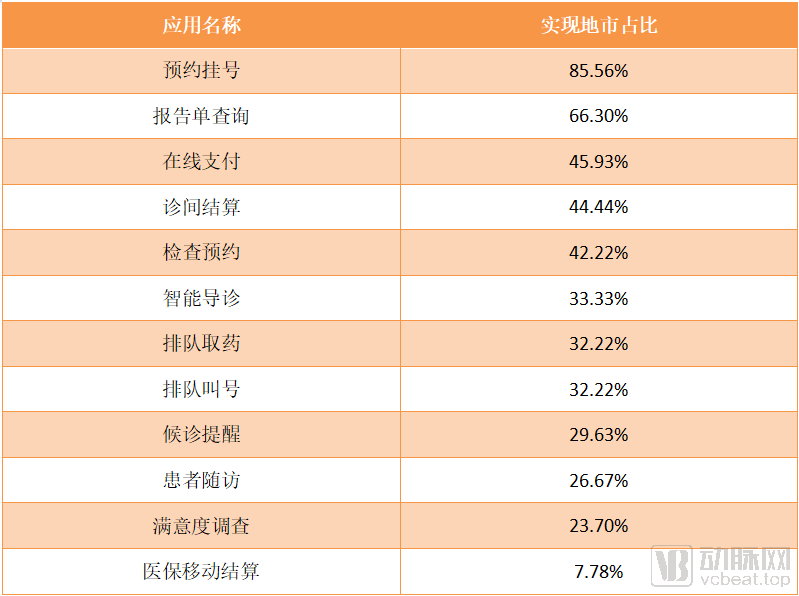
From an application perspective, two services—appointment registration and report inquiry—have achieved adoption rates exceeding 50% across prefecture-level cities; six services—online payment, point-of-care settlement, examination appointment, intelligent triage, queue-based medication pickup, and queue-based number calling—have achieved adoption rates exceeding 30% across prefecture-level cities.
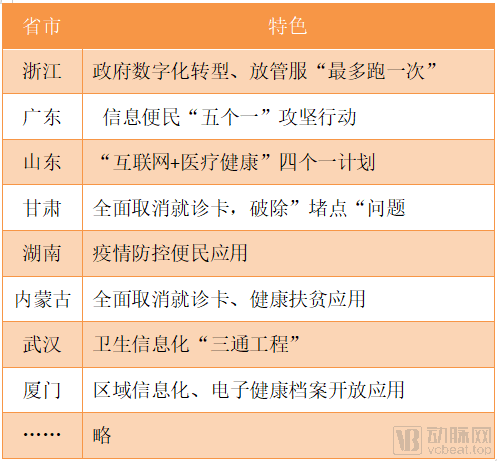
As discussed above regarding regional policy disparities, the progress and distinctive features of electronic health card implementation vary across regions. Specifically, this paper will elaborate on the implementation of electronic health cards in two cities each from Hunan Province and Shandong Province.
Hunan Province
Hunan Province’s electronic health card initiative is renowned for its “extensive coverage.” Since the rollout of the electronic health card began in 2018, within just two years, all 198 public hospitals at the secondary level and above across the province completed system upgrades to support the use of electronic health cards throughout the entire diagnosis and treatment process. A total of 77.6216 million electronic health cards were issued in the province (against a resident population of 69.81 million), achieving essentially full coverage among local residents.
The surge in card issuance in Hunan Province occurred primarily during the pandemic control period. Previously, card issuance faced difficulties due to unappealing promotional campaigns, but the pandemic naturally resolved these barriers. Subsequently, with the normalization of pandemic prevention and control, the role of electronic health cards has undergone a transformation. The Hunan Provincial Health Commission aims to establish the electronic health card as the primary gateway for convenient and beneficial medical and healthcare services.
Specifically, the Hunan Provincial Health Commission coordinated individually with the Provincial Department of Culture and Tourism, the Provincial Department of Housing and Urban-Rural Development, the Provincial Department of Education, the Provincial Public Complaints and Proposals Administration, and the Provincial Department of Human Resources and Social Security to promote integrated queries of tourism information, migrant worker data from infrastructure construction sites, teacher and student information from primary and secondary schools and kindergartens, visitor records, and “Xiang Jiuye” (Hunan Employment) data. This initiative achieved multi-code coordination and single-code query functionality, while Tencent assisted the Hunan Provincial Health Commission in issuing digital cards through the WeChat platform.
Building on this foundation, the Hunan Provincial Health Commission has not ceased its exploration of the significance of electronic health cards. “Hunan has proposed leveraging the health card to create eight major health application scenarios, covering eight aspects of medical and healthcare services: health codes, health passes, health certificates, health records, health scores, health coupons, health payments, and health insurance, all integrated into our health code system. As a result, the application scenarios for the Hunan Health Card have become increasingly diverse, with more resources being integrated. To date, we have become the largest mobile application platform in Hunan Province. With 78 million users, we have also become the largest platform nationwide,” stated Zhong Weijun, Director of the Information Center of the Hunan Provincial Health Commission.
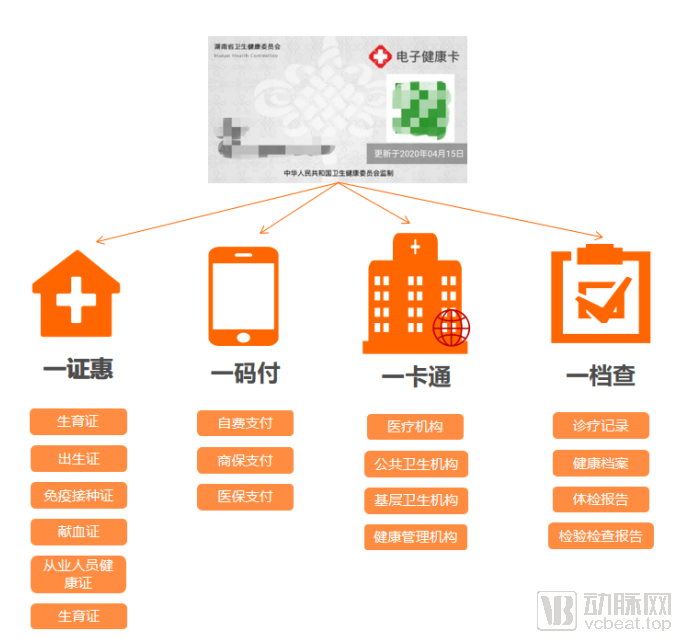
Hunan Province’s “Four Ones” Goal
The ultimate goal of the “Four Ones” initiative is to benefit the public, and a key aspect of this is to break down the information asymmetry between doctors and patients by returning the ability to manage health information to the patients themselves.
“Who cares most about your health? Not doctors, not close friends—the answer is undoubtedly yourself. Therefore, we must place health records directly into the hands of the public. Previously, health record management followed a general practitioner model, where contracted physicians created files for patients; however, these records remained static and inactive. Hence, we need to establish dynamic health records that allow open access and emergency utilization, truly achieving the goal of ‘returning health records to the people.’”
“Through the electronic health card as an entry point, we can enable the public to supplement, update, verify, and interact with their own health records. Therefore, we are currently working to integrate the electronic health card with primary healthcare institutions. If individuals have disputes regarding their health records, they can file online appeals, which will be immediately forwarded to their general practitioners, thereby forming a closed-loop health management system. In this context, having the public review their own data can significantly address quality issues in source data collection, ultimately meeting the demands of big data in healthcare.”
Shandong Province
The Shandong Provincial Electronic Health Card is characterized by extensive policy support. During the pandemic, Shandong Province issued a total of 12 official documents, strengthening the circulation and functional enhancement of the health card through government-led initiatives (including seven major module revisions and 189 iterative upgrades).
Unlike the architecture of Hunan Province’s Electronic Health Card, Shandong separates the data of the Electronic Health Card from that of the Electronic Health Code, with relatively independent issuance mechanisms. However, at the system level, the use of the Electronic Health Code still relies on the identity identifier of the Electronic Health Card.
In terms of card issuance effectiveness, as of September 2020, Shandong Province had issued 107.4 million electronic health cards, with 633.7 million card activations; it had also issued 98.98 million electronic health codes, which residents had displayed a total of 6.874 billion times. In 12 prefecture-level cities, the number of codes issued accounted for over 90% of the permanent resident population.
Strict control measures have not only brought safety to Shandong Province but also spurred the further development of health codes. In May this year, Shandong began transitioning from epidemic response to routine management, implementing further upgrades to its electronic health card system, accelerating the establishment of the “Internet + Public Benefit and Convenience Service Platform,” and progressively integrating hospitals into the electronic health card system. Currently, all tertiary hospitals in Shandong have completed the transformation, while the completion rate for secondary hospitals has reached 73.55%.
WeChat has also become a key gateway for convenient public services in Shandong Province, while the “Healthy Shandong” service account serves as the primary platform through which residents can directly access these beneficial and user-friendly services.
Li Lei, Deputy Director of the Planning, Development, and Information Division of the Shandong Provincial Health Commission, stated: “When planning the platform, our primary objective was to deliver a comprehensive online healthcare service covering the entire patient journey—from appointment registration to health information inquiry—thereby making it more convenient for the public to access information online. Furthermore, we aim to establish ‘Healthy Shandong’ as the unified official WeChat Service Account serving as the sole entry point for internet-based medical services across the province, gradually phasing out individual hospital apps and their proprietary official accounts. Hospitals’ own WeChat official accounts will be retained solely for promotional purposes and will no longer provide functional services.”
Meanwhile, Shandong has achieved a certain degree of integration between its health and education systems. When primary and secondary school students in Shandong resumed classes this year, the pressure on epidemic prevention and control management was immense. In response, the Shandong Provincial Health Commission and the Department of Education leveraged the province-wide government service sharing platform to enable real-time daily data reconciliation. The Department of Education conducted daily comprehensive checks of each student’s health data to ensure their health and safety.
In terms of security, the Shandong Electronic Health Card adopts a “1+16+N” architecture. Under the unified planning and intensive construction by the Provincial Health Commission, the system employs a single provincial platform with distributed deployment, thereby alleviating implementation pressure, accelerating project progress, and reducing construction costs.
Furthermore, the electronic health card system architecture adopts a microservices architecture, dividing the original monolithic application into multiple modules based on business scope. Each microservice runs in its own process, ensuring mutual isolation and enabling automated, independent deployment.
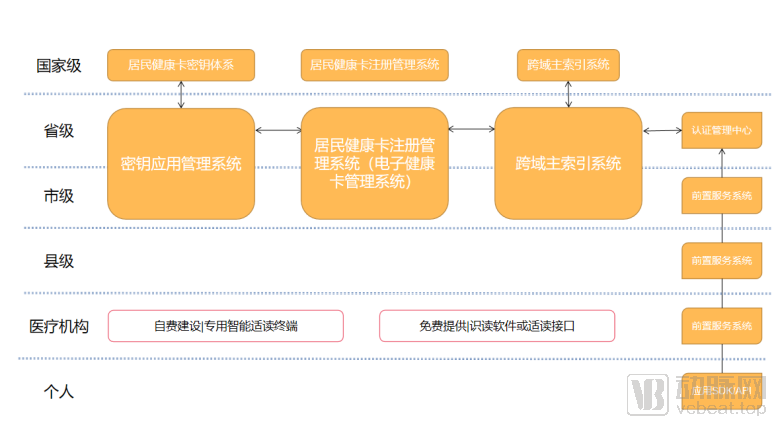
System Architecture of the Health Pass System Based on Electronic Health Cards
Although the development of electronic health cards varies across provinces and cities in China at this stage, it remains inseparable from the overall planning of the National Health Commission.Wang Cunku, Deputy Director of the Statistical Information Center of the National Health Commission and Vice Chairman of the Special Committee on Health Card Application Management, presented the overall planning for the six major systems of electronic health card development at CHITEC. These six systems can be regarded as the future direction for the development of electronic health cards.
I. Unified Resident Health Authentication System Based on the Electronic Health Card
Promoting the coordinated development of medical care, health insurance, and pharmaceutical services through electronic health cards hinges on identity authentication. Therefore, the National Health Commission positions the resident electronic health card as a unified identifier for residents’ health identities and a unified repository for their health information. Achieving this positioning requires both integration with the public security bureau’s identity database and the establishment of a resident health identification system by the National Health Commission. The development of this identification system is fundamental to building the entire framework.
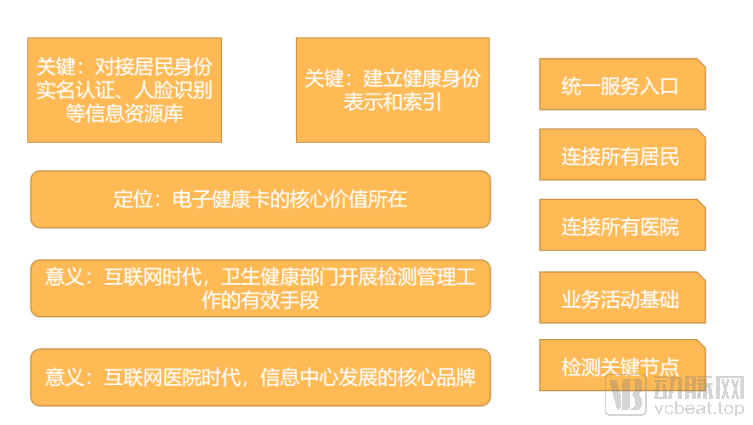
II. Public-Oriented Service System for “Internet + Healthcare” Based on the Electronic Health Card
The purpose of establishing this system is to layer convenient services on top of the certification framework, namely by leveraging electronic health cards to provide health service support to residents and to offer healthcare institutions streamlined applications and optimized workflows.
First, the National Health Commission aims to eliminate the coexistence of multiple cards (codes, apps). Second, it is necessary to explore ways to optimize processes and develop innovative applications in practice. This requires establishing a dedicated electronic health card management network. Finally, relevant access and security standards must keep pace.
III. Unified Payment System for Medical Expenses Based on Electronic Health Cards
The aforementioned multi-code coordination in Fujian serves as a typical example of a unified payment system. Notably, the National Health Commission aims to incorporate pharmacies into this payment ecosystem in the future and encourages various financial transaction institutions to participate in facilitating the payment application process, thereby establishing a diversified payment model.
IV. Health-Finance Synergistic Public Benefit Service System for Electronic Health Cards
Following the involvement of financial transaction institutions, the National Health Commission aims to establish innovative financial service models, such as credit-based medical payments and commercial health insurance, to expand the scope of services within the electronic health card system.
V. Big Data Aggregation Service System Based on Electronic Health Cards
The National Health Commission aims to establish an authorized service system to help residents securely authorize and share their health information, such as laboratory and diagnostic test results, thereby creating personal health profiles for individuals. This initiative serves as a critical foundation for the development of big data in healthcare.
VI. Application Service System for Health Accounts Based on Electronic Health Cards
The Electronic Health Card serves as a foundation, upon which the National Health Commission aims to build long-term services such as chronic disease management and maternal healthcare, integrating all patient health information into a unified system.
Overall, some regions have completed the construction of certain components within the six major systems; however, for the later-stage application-related systems, it is necessary to solidify the foundation before establishing them one by one.
The development of electronic health cards is a long-term strategic initiative that requires not only top-level design to provide directional guidance, but also dissemination efforts by companies such as Tencent and Alibaba, and application infrastructure development by enterprises like Yilianzhong and Wanda Information.
A rough estimate suggests that the ideal electronic health card system is still some distance away,We may not yet be halfway there; the current “three-medical-linkage” initiative remains limited in scope. Moving forward, challenges such as coordination between healthcare security administrations and health commissions, incentives to encourage pharmacies to participate in information disclosure, and regional disparities in health informatics infrastructure still require multi-stakeholder collaboration and will take time to resolve.
Fortunately, the existing achievements have indeed greatly advanced the development of health big data and internet-based healthcare, enabling the general public to access medical services more conveniently.
Boundless in reach, realizing the dream of transitioning from “Healthy China” to “Healthy Chinese Citizens” is quite challenging, but the electronic health card has mapped out a feasible path for this leap.