

Digital Platforms Propel Hospitals into a New Era of Informatization Transformation
For hospitals, 2020 was undoubtedly a critical year for assessing their progress in health information technology. Previously, the Medical Administration and Hospital Management Bureau of the National Health Commission (NHC) issued the "Notice on Further Promoting the Construction of Information Systems in Medical Institutions with Electronic Medical Records at the Core," and the General Office of the NHC printed and distributed the "Administrative Measures for Grading and Evaluation of Electronic Medical Record System Application Levels (Trial)" and the "Evaluation Standards (Trial)." These documents clearly stipulated the digitalization levels that tertiary hospitals were required to achieve by 2020. Having met these prior objectives, hospitals’ digital transformation will now enter a new phase.
In the upcoming new phase, a greater diversity of industry stakeholders will participate in the digital transformation of hospitals. The COVID-19 pandemic that erupted in 2020 served as a major test for China’s social governance. Faced with high-intensity workloads and intricate, detailed tasks, frontline healthcare workers and grassroots community personnel urgently required intelligent and digital management tools. This situation has also made more industry players realize that the healthcare sector will be reshaped through the integration of digital technologies, creating new demands and opportunities.
“AI-Powered Heart Care: Breaking Through with Transformation” – Microsoft’s Series on Digital Innovation in Healthcare Has Previously Held Two Online Events. In Last Week’s Third Session, Guests Finally Gathered Offline for Face-to-Face Discussions and Sharing. The Event Focused on Digital Hospitals, Exploring Topics Such as Personalized Patient Management, Medical Information Protection, and the Future of Hospitals in the Post-Pandemic Era, to Identify the Next Stage of Development in Hospital Digitalization.
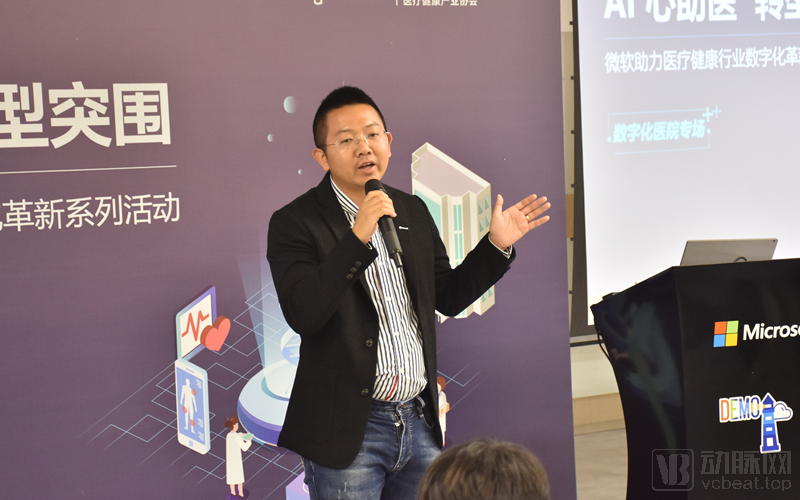
Zhang Qiang, Head of Product Strategy for the Healthcare Industry at Microsoft China
As the host of this conference, Zhang Qiang, Head of Product Strategy for the Greater Health Industry at Microsoft China, introduced several key Industry Preferred Scenarios (IPS) through which Microsoft empowers hospitals. These include enabling personalized diagnosis and treatment, empowering medical teams, establishing agile operational processes, safeguarding healthcare information security, and reshaping the broader health ecosystem. Microsoft will closely align with these five IPS to help healthcare institutions achieve digital transformation and upgrading.

Yang Jiajia, Director of the Microsoft AI and IoT Lab Program
The conference was held at the Microsoft AI and IoT Lab, located on Shanghai Zhangjiang Artificial Intelligence Island, which is Microsoft’s largest AIoT Lab globally. Yang Jiajia, Project Director of the Microsoft AI and IoT Lab, stated that the lab plays a pivotal role by integrating hardware and software within its AI and IoT facilities, complemented by the combined ecosystem resources of Microsoft and Zhangjiang, to help innovative enterprises accelerate product prototyping and bring their products to market.
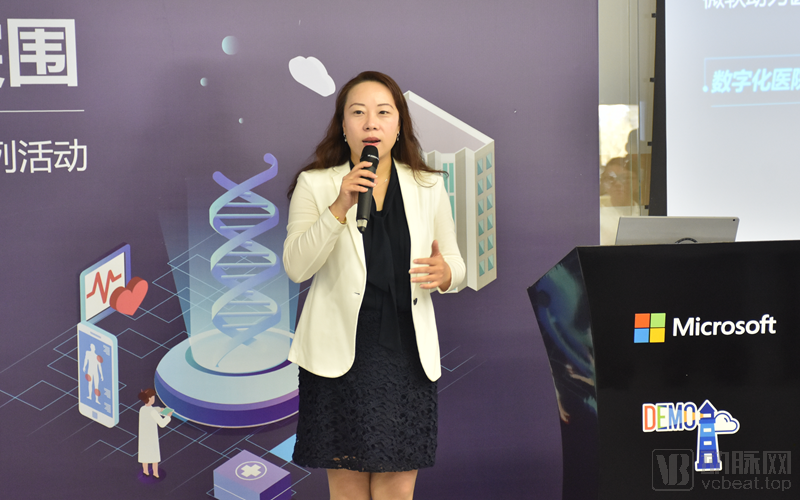
Sun Weiqin, Deputy General Manager of Shanghai Zhangjiang Technology Venture Capital Co., Ltd.
The laboratory not only occupies a pivotal position within Microsoft’s own ecosystem but also serves as a vital component of Zhangjiang’s innovation ecosystem. Sun Weiqin, Deputy General Manager of Shanghai Zhangjiang Technology Venture Capital Co., Ltd., stated, “Innovation platforms such as the Microsoft AI Laboratory can continuously empower successive waves of innovative enterprises. We target companies with the potential to list on the STAR Market (Science and Technology Innovation Board) in ten years, engaging them through equity investments at an early stage and accompanying them throughout their long-term growth. Furthermore, by continually investing in the development of a series of open innovation centers—such as the Microsoft AI & IoT Laboratory and the Johnson & Johnson Open Innovation Platform—we further empower the regional ecosystem, helping startups transform ideas into R&D products and achieve joint market commercialization.”

Executive Vice President of the China-Europe Medical and Health Association, Luo Nianci
As for the host, Luo Nianci, Executive Vice President of the China-Europe Medical Health Association, was invited. His witty and humorous hosting style won rounds of applause from the guests present.
The digital transformation of hospitals has undergone earth-shaking changes in recent years. Guided by national policies on smart hospitals, the direction of hospital digitization is gradually shifting from initial digital systems applied to internal hospital management toward empowering connections between doctors and patients.

Zhai Xiaowen, Vice President of Medical Affairs and Academic Leader of Hematology at Children's Hospital of Fudan University
Zhai Xiaowen, Vice President of Medical Affairs and Leader of the Hematology Discipline at Children’s Hospital of Fudan University, introduced to the attendees the breakthrough achievements the hospital has made in recent years: “In May 2018, we became the first pediatric institution in China to be designated as the Pediatric Collaborative Center of the National Telemedicine and Internet Medicine Center, enabling various digital functionalities such as remote consultations, remote surgeries, remote conferences, mobile ward rounds, and remote training. Our internet hospital has also gone live, initially focusing on follow-up visits, with plans to gradually open services for initial consultations as policies permit. During online diagnosis and treatment, medical safety is our top priority, and we have implemented strict management measures for patients receiving online care.”
During the process of digital transformation, the value of healthcare big data has been prominently demonstrated. By leveraging artificial intelligence to interpret big data, the healthcare industry can gain novel insights from fresh perspectives. Moreover, data security is paramount in the collection and application of healthcare big data.

Dr. Xu Mingqiang, CTO of the Omnichannel Business Unit at Microsoft China
As a leading global cloud services provider, Microsoft’s authority on security matters is unquestionable. Dr. Xu Mingqiang, CTO of Microsoft China’s All-Channel Business Division, vividly described Microsoft’s comprehensive security efforts using the metaphor of a “cat-and-mouse game”: “In the process of digital transformation, data security is paramount. Security resembles an endless cat-and-mouse game between law enforcement and criminals; no operating system is inherently more secure than another at its foundation. The reason Windows experiences a higher volume of security-related incidents is that targeting Windows yields greater profits for attackers, leading to more frequent attacks. Microsoft has consistently maintained high investment in security. We employ 3,500 top-tier security experts worldwide to continuously safeguard our users, with annual spending on security reaching $1 billion.”
Microsoft’s empowerment of the healthcare industry goes beyond merely enhancing security. Microsoft has launched its first industry-specific cloud solution for the healthcare sector—Microsoft Cloud for Healthcare—aimed at helping physicians and healthcare institutions deliver better services and leverage advanced data analytics technologies to streamline cross-application data sharing.
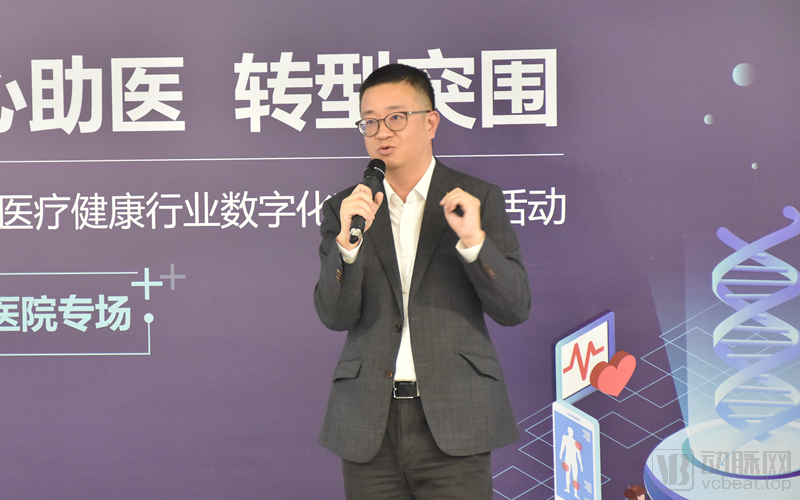
Li Wei, General Manager of Product, Commercial Solutions Business Group, Microsoft Greater China
Li Wei, General Manager of Product for the Commercial Solutions Division at Microsoft Greater China, summarized the capabilities of Microsoft’s Healthcare Cloud into three key areas: “Microsoft’s Healthcare Cloud primarily encompasses three functional dimensions. The first is enhancing the patient healthcare experience. The second is empowering healthcare institutions by improving internal hospital operational efficiency through digitalization. The third involves integrating and consolidating data collected and stored across various systems within healthcare institutions, thereby leveraging rich data assets to deliver deeper data insights that help healthcare organizations achieve comprehensive improvements in efficiency, operations, and clinical data management.”
Although this was a special session dedicated to digital hospitals, representatives from pharmaceutical giants were also among the guest speakers. In recent years, as the digital transformation of the healthcare industry has continued to advance, multinational pharmaceutical companies have recognized the substantial opportunities hidden in the era of digital health. They aim to leverage their abundant capital and extensive channel operation expertise to redefine their roles in this new landscape.
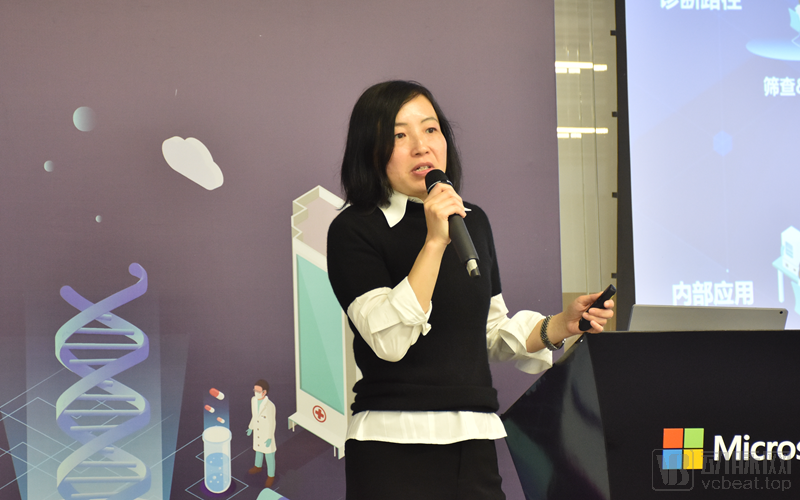
Yuan Feng, Head of the Big Data & AI Technology Team, Digitalization and Commercial Innovation Department, AstraZeneca; Head of Digitalization and Innovation, Oncology Business
AstraZeneca serves as a quintessential example of digital transformation within the pharmaceutical industry. The China Health IoT Innovation Center, established by AstraZeneca China in Wuxi, has achieved remarkable success over the past few years and is now expanding this innovative model to five additional cities. Yuan Feng, Head of the Big Data and AI Technology Team within the Digital and Commercial Innovation Department at AstraZeneca, as well as Head of Digitalization and Innovation for the Oncology Business, reflected on this shift with considerable pride: “In the past, we primarily learned from foreign experiences, observing practices in the United States and Europe. That is no longer the case. We have begun to export our expertise, sharing with the global community how we operate in China. For professionals in multinational corporations, having the opportunity to contribute such insights globally is truly a source of great pride.”

Zhang Xiaoxu, Senior Researcher at VCBeat Eggshell Institute
As more industry players join the wave of hospital digitalization, the era of digital healthcare will usher in a series of new changes and innovations. Zhang Xiaoxu, Senior Researcher at VCBeat’s Eggshell Research Institute, believes that digital upgrading will bring about four key changes: “In today’s digital age, particularly in the field of digital healthcare, we are increasingly focused on reinterpreting the medical value chain from a consumer-centric perspective. Under this logic, digital upgrading may lead to four changes. First, the decentralization of knowledge and consumer empowerment will transform the doctor-patient relationship. Second, the internet is gradually evolving from an innovative model into fundamental industry infrastructure. Third, data will raise the average level of service efficiency and quality. Fourth, digital therapeutics will begin to emerge as a new platform for service delivery.”
At the conclusion of the conference, Yin Jing, Chief Digital Officer of Microsoft China’s Enterprise Services Division, engaged in a distinctive roundtable discussion with representatives from various sectors of the healthcare industry.

From left to right: Yin Jing, Chief Digital Officer of Microsoft China’s Enterprise Services Division; Yuan Huahui, Founder of Shanghai Midi Information Technology Co., Ltd.; Yu You, CTO of Yuxueyuan; Sun Junyuan, Deputy General Manager of Shenzhen Eden Software Co., Ltd.; and Xu Peng, Former Head of Value, Health Economics, and Real-World Data Research for Gilead Sciences China.
Yin Jing steered the conversation directly toward hospital informatization. Yuan Huahui, founder of Shanghai Midi Information Technology Co., Ltd., who has previously been directly involved in digital transformation at public healthcare institutions, summarized hospital informatization into three stages: “The first stage involves helping hospitals address management issues, representing the most fundamental applications. From the perspective of evolving current demands, the second stage focuses on improving medical efficiency. For instance, the internet hospital industry has seen rapid development in the post-pandemic era. Additionally, a range of applications—including AI-assisted diagnosis and software-based recognition—are all aimed at enhancing physicians’ work efficiency. The third stage remains a topic of ongoing discussion. However, I believe that with the advancement of National Medical Center initiatives, the integration of data and resources across multiple hospitals and centers will become the core focus of this third stage.”
Yu You, CTO of Yu Xueyuan, a representative of mid-to-high-end healthcare services, continued the discussion initiated by Yuan Huahui: “Between Phase II and Phase III, I believe there exists an intermediate phase—namely, the determination of offline consumers and patients to upgrade their healthcare consumption. The key to such consumption upgrading lies in the management of processes before, during, and after clinical consultations. This issue is particularly pronounced in pediatrics, as the primary complainants are not the patients themselves but their parents, whose descriptions of symptoms during medical visits may sometimes lack clarity. Therefore, we have made certain attempts to encourage patients to develop the habit of documenting the entire course of their illness, enabling physicians to make more accurate assessments based on more comprehensive reports. This approach can help address certain challenges encountered in diagnostic screening protocols and clinical decision-making, thereby achieving higher quality of care.”
Yuan Huahui and Yu You are both representatives of medical institutions. As the provider of information technology systems, Sun Junyuan, Deputy General Manager of Shenzhen Eden Software Co., Ltd., offers a different perspective: “Hospitals have always been in a passive position, receiving patients only after they present with symptoms. The current hospital workflow involves patients seeking examination, diagnosis, and treatment upon noticing symptoms. However, much valuable information is not captured throughout this process. There is also significant room for improvement in post-discharge follow-up, patient care, and continuous tracking during rehabilitation. Only by implementing comprehensive management across the pre-hospital, in-hospital, and post-hospital stages, and collecting richer patient data, can we achieve proactive and preventive patient services, facilitate cross-departmental collaboration, and enhance the overall patient experience.”
How Can Hospitals Continue to Break Through After Achieving Initial Digitalization? Xu Peng, Former Head of Value Strategy, Health Economics, and Real-World Data Research for Gilead Sciences China, Highlights Three Key Points: “Data Connectivity; Expansion of Data Scope; and Development of Data Science Capabilities. One of the greatest benefits of data connectivity is its potential to redefine how healthcare professionals think about and approach problem-solving. It enables pharmaceutical companies to look beyond just medications, hospitals to look beyond just diseases and symptoms, and insurers to look beyond just risks and costs. Through top-level design and technology, data connectivity can create a patient-centric data interface where all stakeholders operate. Furthermore, in addition to data units such as clinical care, drug efficacy and safety, and genomics, we should incorporate data units related to human behavior, natural environments, and social contexts into the new infrastructure of big data, recognizing their significant impact on human health. Regarding capability building, we have observed that healthcare institutions in Europe and the United States are establishing their own data science teams to better integrate AI with local medical decision-making. Finally, at the level of social ethics and regulation, attention and anticipation are warranted for ensuring that AI achieves inclusivity, transparency, interpretability, and extended service coverage to broader grassroots regions.”
As the insightful remarks from several roundtable panelists brought this conference to a gradual close, Microsoft’s series of events is far from over.“AI-Powered Heart Care: Breaking Through with Transformation”—The next stop of Microsoft’s series on driving digital innovation in the healthcare industry will be held in December at the Microsoft-Yidian AI Innovation Institute in Shanghai.Unlike this event, the next discussion will center on the insurance industry, continuing to invite stakeholders from across the healthcare sector to examine, from their respective perspectives, the profound impact that digital transformation in the insurance industry will have on the development of the healthcare sector. Whether you attend in person or participate online, Microsoft looks forward to connecting with you again.