

Kingdee Healthcare Launches Next-Gen Smart Hospital Cloud Product Wisetop Cloud to Fully Empower Hospital Capability Enhancement (HCE)
On November 6, the “Frontier Forum on Innovation and Development of Smart Hospitals,” co-hosted by Kingdee Healthcare and Chinese Digital Medicine magazine, grandly opened in Sanya, Hainan. At the event, Kingdee Healthcare simultaneously launched its next-generation smart hospital cloud product, Wisetop Cloud. This product is dedicated to providing hospitals with standardized services based on cloud technology, comprehensively supporting “Hospital Capability Enhancement” (HCE) and leading the digital upgrade of smart hospitals.
The event brought together hundreds of hospital administrators, department heads, and key technical personnel from across China, along with experts in healthcare informatics and finance, as well as senior media representatives, to jointly discuss the innovation and development of smart hospitals.
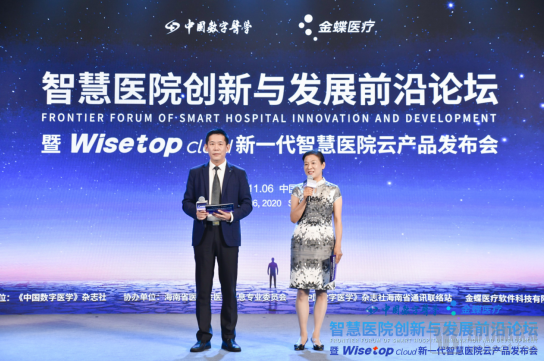
The meeting was co-hosted by Pan Xiaolei, Deputy Secretary-General of the Guangdong Hospital Association, and Zhu Yuanyuan, former Vice President of the Air Force No. 454 Hospital.
Si Chaoqi, Deputy Researcher of the Sanya Municipal Health Commission, delivered the opening address at the conference. He stated that the Fifth Plenary Session of the 19th Central Committee of the Communist Party of China clearly set forth goals for the 14th Five-Year Plan period, including a significant improvement in the physical and mental health of the population and a more robust healthcare system. The Sanya Municipal Health Commission will prioritize studying, implementing, and adhering to the spirit of the Fifth Plenary Session as a key political task for the current and foreseeable future. It aims to shift the development paradigm from a disease-centered approach to a people’s health-centered one, comprehensively advance the Healthy China Initiative, and strive to provide comprehensive, lifecycle-wide health services for the entire population.
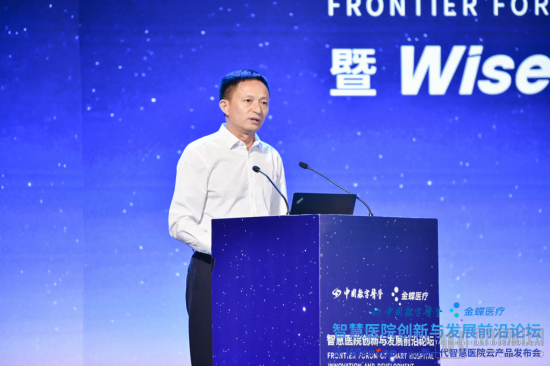
Si Chaoqi, Deputy Researcher of the Sanya Municipal Health Commission
Liu Yang, Chairman of the Medical Information Professional Committee of Hainan Provincial Medical AssociationIn sharing insights on smart hospital policies, it was noted that as the policy framework for smart hospitals becomes increasingly clear, the requirements for hospital informatization construction are correspondingly rising. From a top-level design perspective, the “Internet + Healthcare” policy has established a comprehensive blueprint, and the post-pandemic phase has further accelerated the implementation of smart hospital initiatives. Over the next five years, the development trend of smart hospitals will focus on leveraging smart services as a key driver, actively embracing new technologies to achieve intelligent and platform-based internal systems, internet-enabled external services, and integrated online-offline operations. Healthcare institutions should seize the major trend of “promoting construction through evaluation,” shifting from passive participation in ratings to proactively enhancing “hospital capability building,” thereby continuously empowering the development of smart hospitals.
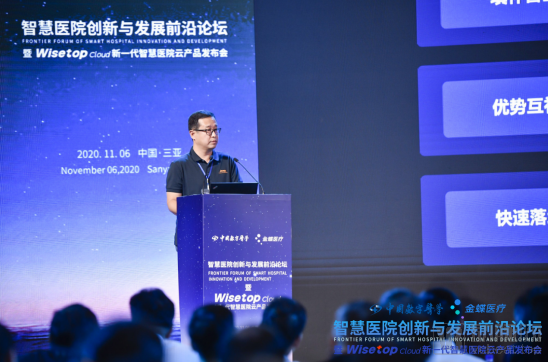
Liu Yang, Chairman of the Medical Information Professional Committee of the Hainan Medical Association
As the host of this press conference,Yin Zhiguo, CEO of Kingdee HealthcareUsing the three “New”s—New Environment, New Capabilities, and New Products—to describe the company’s current strategic positioning and development plan. He pointed out that Kingdee Healthcare started with hospital informatization, grew through hospital internetization, and will lead the way in hospital intelligence. By continuously delivering high-quality products and services, it has already supported over 3,000 hospital clients. In light of the current landscape of independent technological innovation and normalized epidemic prevention and control, hospitals urgently need to enhance their digital capabilities in areas such as clinical care, services, operations, research, and medical collaboration, based on changes in the external environment and internal development demands. At this critical juncture, Kingdee Healthcare is increasing its investment in the R&D of next-generation smart hospital cloud products, adopting an annual cloud subscription model to enable out-of-the-box usability with minimal customization for hospitals. The core principle is “patient-centric, capability-driven,” ultimately empowering Hospital Capability Enhancement (HCE).
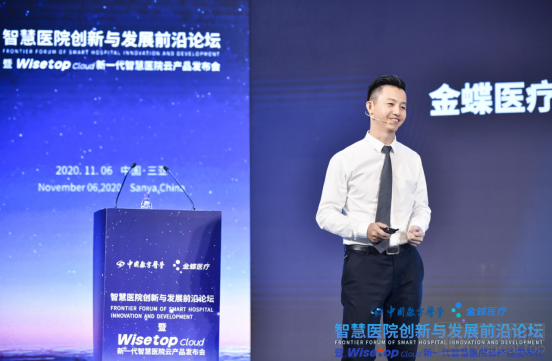
Yin Zhiguo, CEO of Kingdee Medical
For the new generation of smart hospital cloud products,Lao Kun, CTO of Kingdee MedicalHe offered a unique technical interpretation, stating that the “newness” of next-generation products lies in their novel perspective, architecture, and capabilities. The new perspective is user-centric, shifting away from the traditional focus on billing and electronic medical records to truly prioritize the patient’s healthcare journey, thereby enhancing patient experience and ensuring the quality of medical services. In terms of technical architecture, cloud-native technologies are adopted to address requirements such as high transaction volumes, high concurrency, and distributed applications. By integrating Kingdee Cloud Cosmic’s Dynamic Domain Model (KDDM) and low-code development platform, the solution effectively meets personalized needs beyond those addressed by standardized products. Regarding product capabilities, it satisfies both external environmental demands and internal developmental needs of hospitals. Following Gartner’s Enterprise Business Capabilities (EBC) model, products and applications are designed from a business perspective, with continuous validation and ongoing improvement.
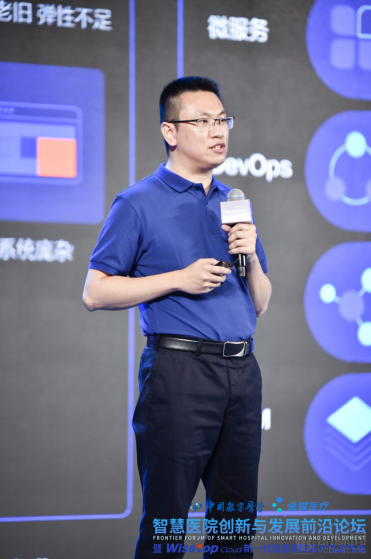
Lao Kun, CTO of Kingdee Healthcare
In summary, Wisetop Cloud features “1 platform, 2 deployment models, 3 middle platforms, 4 categories of applications, and 5 key characteristics.” Specifically, these include: a hospital information platform built on a middle-platform architecture; support for two deployment models—public cloud and hybrid cloud; the establishment of three middle platforms—technology, data, and business; coverage of four application categories—smart services, smart healthcare, smart management, and ecosystem applications for partners; as well as five key characteristics—OMO (Online-Merge-Offline), open sharing, on-demand customization, data-driven operations, and intelligent empowerment.
Wisetop Cloud has been validated at multiple tertiary hospitals in South China, includingSouthern Medical University Dermatology Hospital. Deputy Director Zheng DaochengThe initial impetus for building a smart hospital stemmed from three key backgrounds: first, various accreditation programs and health information infrastructure initiatives have imposed higher requirements on hospital systems; second, the development of traditional offline service models has faced constraints; and third, there is a pressing need to effectively address the challenges of difficult and costly access to medical care. The hospital aims to promote business growth through the construction of a smart hospital, better align with national policies, and leverage accreditation processes to drive improvement. Over the course of several years, Dermatology Hospital of Southern Medical University has achieved comprehensive implementation of smart healthcare and smart services. It was among the first batch of institutions in Guangdong Province to receive an Internet Hospital license in 2019 and successfully passed the evaluation of electronic medical record (EMR) application maturity levels in 2020.
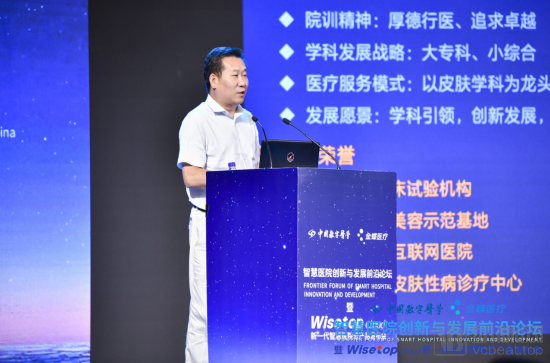
Zheng Daocheng, Vice President of the Dermatology Hospital of Southern Medical University
Chen Jianbin, Deputy Director of the Information Department at Foshan Hospital of Traditional Chinese MedicineIn recent years, against the backdrop of the state’s vigorous promotion of Traditional Chinese Medicine (TCM), hospitals have experienced rapid business growth. This trend presents both opportunities and, more significantly, challenges for informatization initiatives. The key question is how to adjust development strategies to meet the diverse, “demand-driven” evolving needs of hospitals. This cannot be achieved by simply procuring and deploying hardware and software; instead, it requires holistic architectural adjustments to address these issues effectively. Such a system must fulfill several critical criteria: stability, security, scalability, and sufficient flexibility. Wisetop Cloud leverages cloud-native technologies and a microservices architecture to effectively meet these requirements, helping hospitals build business middle platforms and implementing solutions such as the outpatient physician workstation.
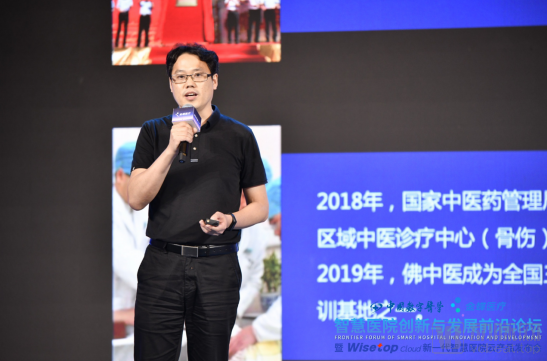
Chen Jianbin, Deputy Director of the Information Department, Foshan Hospital of Traditional Chinese Medicine
As an influential comprehensive hospital,Tangdu Hospital of Air Force Medical UniversityInformation technology construction played a pivotal role during the pandemic response.Yu Yingtao, Director of the Information Department at Tangdu HospitalIt was introduced that the internet hospital for epidemic prevention and control, which was urgently launched during the pandemic, offers the following advantages: deep integration with the Hospital Information System (HIS) to achieve a closed-loop process for online diagnosis and treatment services; data isolation and information security ensured by using self-controlled, domestically produced middleware; and being among the first batch of internet hospitals in Shaanxi Province to support online medical insurance payments. This system opened up a second front in the fight against the epidemic, providing free services to nearly 100,000 people and fully leveraging the core advantages of smart healthcare services. Director Yu also discussed the development trends of internet hospitals in the post-pandemic era, noting a progression from service provision to data utilization and then to innovation. The goal is to first achieve integrated services with physical hospitals, then unify online and offline medical data into a single network, and ultimately realize the integrated innovation of health management platforms and medical service platforms.
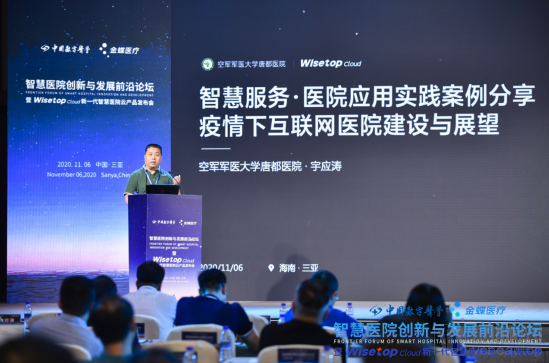
Yu Yingtao, Director of the Information Department, Tangdu Hospital of Air Force Medical University
With extensive experience in hospital financial managementSu Jingjing, Deputy Director of the Finance Department, Zhujiang Hospital of Southern Medical UniversityIt was introduced that, under the new healthcare reform landscape, tertiary Grade A hospitals such as Zhujiang Hospital of Southern Medical University are facing internal and external pressures—including payment method reforms, zero markup on pharmaceuticals, tiered diagnosis and treatment, and the rise of privately run medical institutions—leading to financial strain. Meanwhile, in terms of smart hospital management, these institutions encounter pain points such as constraints on financial integration due to limitations in information technology infrastructure; difficulties in assessing budget performance owing to a lack of data; insufficient accurate data support for pricing and payment standards; unclear equipment inventory and benefit analysis, hindering procurement decisions; inability to completely eliminate material waste and losses; and complex statistical work with poor data traceability in human resources departments. The application of smart management solutions has enabled digital transformation in areas such as comprehensive budget management, expense reimbursement management, and online reimbursement processing, thereby helping hospitals comprehensively enhance their overall management efficiency.
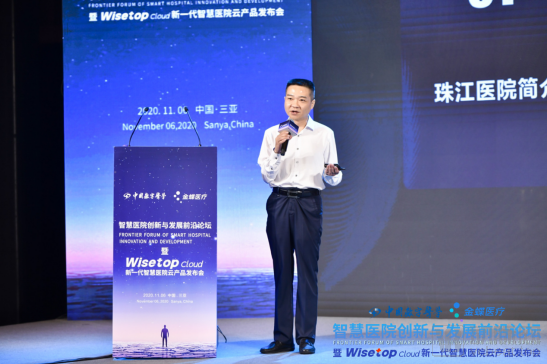
Su Jingjing, Deputy Director of the Finance Department, Zhujiang Hospital of Southern Medical University
The First Affiliated Hospital of Hunan University of Chinese MedicineIt is a Grade A tertiary general hospital integrating traditional Chinese and Western medicine, with distinctive features in traditional Chinese medicine, and has over 500 affiliated medical consortium units.Director of the Emergency Center, FormerJiang Zhongliang, Director of the Primary Healthcare Service CenterIntroduction: In response to the national “Year of Grassroots Service” initiative, the hospital established a Grassroots Medical Service Center in 2018. It urgently needed to address challenges such as timely interconnectivity within medical alliances and medical consortia, tools for two-way patient referrals, effective channels to convert grassroots patients into hospital users, and support for grassroots facilities. After thorough research, the hospital partnered with Kingdee Healthcare to build the Xiangzhongyi Cloud Smart Platform, ultimately establishing an interconnected platform for a three-tier medical consortium. This achievement has enabled smart tiered diagnosis and treatment, pharmaceutical coordination, doctor-patient services, and ecosystem operations. Looking ahead, the hospital’s smart platform will achieve comprehensive coverage, precise matchmaking, and real-time online-offline interaction, committed to promoting the enhanced utilization and long-term development of traditional Chinese medicine capabilities in grassroots medical institutions.
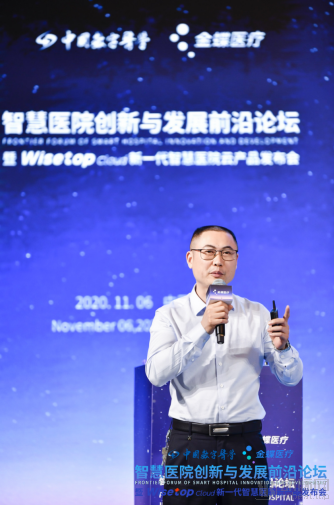
Jiang Zhongliang, Director of the Emergency Center, The First Affiliated Hospital of Hunan University of Chinese Medicine
Subsequently, the guests also participated in a roundtable discussion, moderated byLiu Dong, Editor-in-Chief/Partner of VCBeatServing as the moderator, the discussion focused on hospitals’ most urgent needs for informatization and strategies to enhance institutional capabilities. Yin Zhiguo, CEO of Kingdee Healthcare, also outlined the original intentions and objectives behind investing in next-generation smart hospital cloud products. First, the approach is driven by user needs. Second, it aims to build a more robust and sustainable ecosystem of industry partnerships. Third, it seeks to enable Kingdee Healthcare to “leapfrog via the cloud,” innovating an annual subscription-based business model in the healthcare sector and providing hospitals with cloud-based standardized services. Ultimately, the goal is to empower hospitals’ capability building and lead the digital transformation of smart hospitals.
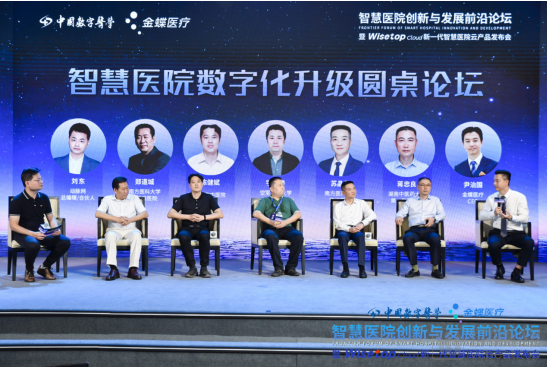
Roundtable Discussion