

Atman Files IPO Prospectus: Empowering Medical Affairs with AI in the Era of Digital Transformation
Whether it is the “4+7” centralized drug procurement, the national pilot of DRG-based payment, the promulgation of the new Drug Administration Law, or the introduction of the Measures for the Filing and Management of Medical Representatives (Trial), the increasingly stringent national regulatory policies all point to one fact: compliance requirements are becoming ever more rigorous, and academic promotion has become an inevitable trend.
The time windows for the promotion, marketing, market access, and national reimbursement drug list (NRDL) negotiations of new drugs have become shorter, significantly compressing the market profit cycle. Amid the pandemic, the strategic deployment of digital healthcare has become an indispensable topic in pharmaceutical companies’ development strategies. In this context, the role of Medical Science Liaisons (MSLs), who provide support for new drug launches, hospital formulary inclusion, and NRDL negotiations, has become increasingly prominent due to evolving industry trends and the impact of the pandemic.
This emerging trend not only provides new career options for a broad audience but also signals promising market opportunities. As is well known, medical data is inextricably linked to the role of Medical Affairs. In the era of big data, digital strategy has become an essential component on pharmaceutical companies’ priority development agendas and a core element in building their competitive advantage.
It seems that they had early on sensed the opportunities in market development, or perhaps it was a matter of chance; in 2016,Ma LeiLeading a team of former Microsoft employees, he founded Atman and established a strong foothold in the biomedical field.
As an artificial intelligence technology company, Atman has been engaged in long-term research on core technologies such as natural language understanding, machine learning reasoning, and autonomous learning since its establishment, striving to become a linguistic intelligence expert in the medical field.As a technology-driven medical intelligence company, Atman is dedicated to the research and development of innovative intelligent products and platforms. It provides medical clients with smart solutions such as machine translation, automated writing, knowledge graphs, and evidence-based medicine platforms, helping them significantly shorten information processing cycles, reduce information processing costs, and enhance business innovation efficiency.
In the fields of machine translation and industry data, Atman has developed a comprehensive product portfolio covering solutions for various scenarios, enabling it to provide industry users with the most suitable solutions.Our current client base encompasses more than 50 multinational pharmaceutical companies (MNCs), leading domestic Chinese pharmaceutical firms, and several CROs, including world-renowned pharmaceutical companies ranked among the global Top 10.
Driven by continuous innovation in core technologies, Atman has been twice named to the authoritative “Top 50 AI Startups of the Year” list and won the “Grand Champion” title in the Chinese-English bidirectional biomedical track of the 2019 International Machine Translation Competition.
As an AI technology company focused on the medical field, Atman has currently formed two business segments: Language Intelligence and Medical Intelligence.
Language Intelligence Business SegmentThe primary focus is on the research and development and application of artificial intelligence technologies, with an emphasis on natural language processing (NLP). Currently, Atman’s core technological developments are centered on machine translation and document analysis. Notably, Atman’s document analysis capabilities extend beyond text files to encompass multimedia files, including audio, video, images, and rich media documents.
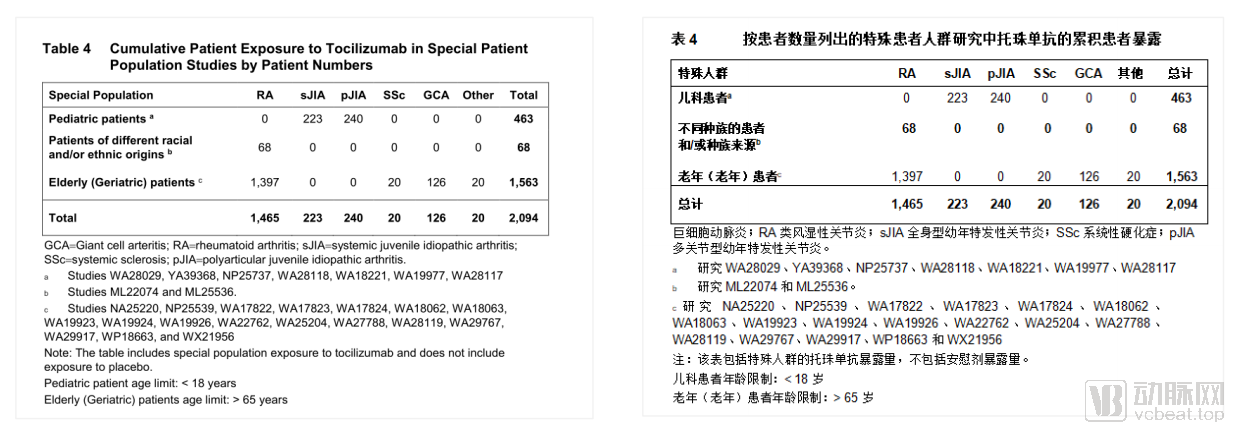
Atman-Formatted Translation: Side-by-Side Reading of Complex Biomedical Formats
In terms of machine translation technology, the Atman Machine Translation Platform—Atman Cloud Translation (ACT)—is a SaaS-based computer-assisted translation platform. It boasts tens of billions of high-quality linguistic assets and employs real-time incremental learning technology to continuously optimize its models, thereby enhancing translation accuracy and fluency. Its independently developed neural machine translation engine continually expands the breadth and coverage of medical industry knowledge.
According toMa Lei, Founder and CEO of AtmanIntroduction: In most medical fields, Atman's machine translation can basically reach the level of junior translators, and only requires a small amount of proofreading to achieve professional-level application results.
Furthermore, for certain specially optimized application scenarios, Atman has achieved full automation and can be directly integrated into third-party software systems, such as those in the field of pharmacovigilance (PV). For clients with a certain level of data accumulation, Atman enables machine translation models to undergo further learning and optimization to achieve the best possible translation quality.
Atman’s intelligent translation solutions are widely applied in the pharmaceutical industry, covering areas from early-stage R&D to late-stage clinical trials, as well as manufacturing and marketing.Preclinical studies, clinical trials, drug manufacturing, pharmacovigilance, diagnostic equipment, and laboratory consumables all fall within Atman’s professional translation domain. Analyzing from a business model perspective, Ma Lei stated that the application of Atman’s intelligent translation in the pharmaceutical sector can primarily be divided into two dimensions: the existing market and the incremental market.
“A typical example of a stock market scenario is new drug registration. Traditionally, in the registration process, pharmaceutical companies outsource the translation of regulatory documentation packages to translation agencies within a short timeframe (prior to market launch) to address the challenges of high volume and tight deadlines. This represents the primary demand traditionally met by translation agencies.” Ma Lei explained that in such scenarios, machine translation can help translation agencies improve efficiency and significantly reduce turnaround time.
In addition, Ma Lei stated, “With the continuous advancement of artificial intelligence technologies, machine translation not only improves efficiency but also offers high security, real-time responsiveness, and consistent quality.” These characteristics have given rise to a series of incremental scenarios that are uniquely suited for machine processing. Such scenarios include the collection and routing of adverse event reports, the exchange and archiving of content related to R&D, production, and collaboration, as well as document reading and writing.
Medical Intelligence Business SegmentThe primary focus is on advancing the research, development, and application of artificial intelligence technologies in the pharmaceutical and medical device sectors. These technologies mainly include content search, knowledge extraction and analysis, and content generation. Application scenarios exhibiting these characteristics are primarily categorized into three major areas within the medical field:Used to define research pathways during early-stage drug development; employed to summarize clinical trial data during clinical studies; and utilized to address physicians’ inquiries after product launch.
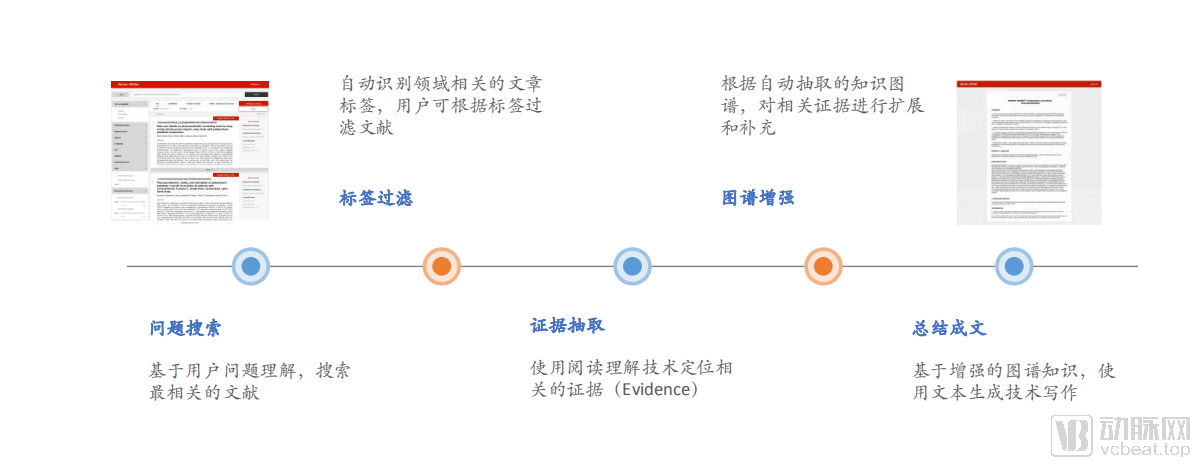
Atman’s flagship evidence-based medicine platform in this sector represents its practical application in the field of medical affairs, integrating advanced technologies such as machine translation, automated writing, and knowledge graphs. Overall, the evidence-based medicine platform encompasses three core functionalities: automated evidence discovery, collaborative evidence management, and intelligent analysis and summarization of medical evidence.
In terms of evidence discovery,Atman unifies data from diverse sources, offers vertical search through a consistent user interface, and allows for the addition of data sources tailored to specific therapeutic areas. Users can also perform searches using mixed Chinese and English queries. This application directly addresses the traditional pain points encountered by medical affairs professionals.
In the early days, medical affairs professionals found it time-consuming and labor-intensive to comprehensively gather medical evidence. Multiple databases existed for each domain—drug information, clinical trials, literature, and guidelines—each requiring different search strategies. The complexity of medical terminology necessitated verifying accurate expressions in both Chinese and English to ensure comprehensive retrieval. Furthermore, since existing search tools relied solely on literal keyword matching, medical affairs professionals either failed to locate relevant literature or were overwhelmed by dozens or even hundreds of results, drowning in a sea of information. The launch of this product will undoubtedly significantly enhance the work efficiency and job satisfaction of medical affairs professionals.
In terms of evidence handling,Atman automatically identifies and correlates evidence based on source materials. Leveraging a knowledge graph, Atman autonomously establishes an evidence framework for therapeutic areas. To facilitate user sharing, evidence data can be disseminated via the internet. This evidence system helps pharmaceutical companies internally to formulate product competitive strategies and define effective R&D strategies; externally, it drives the transition from simple sales models to academic marketing, and promotes the shift of clinical medicine from an experience-based model to an evidence-based model.
In the intelligent analysis and summarization of medical evidence,Atman has constructed a knowledge graph. Ranging from open-access literature to proprietary R&D data, and from textual descriptions to records of experimental data charts and even multimedia documents conveying ideas, Atman extracts valid information points from these disparate data sources and interconnects them to form a knowledge graph. This enables qualitative and quantitative analysis of medical evidence and facilitates the development of solutions for new cases.
During the R&D process, Ma Lei’s team conducted extensive user interviews, including directly involving users in the product iteration process, to ensure that the product requirements aligned with the genuine needs of potential customers.
Although the volume of openly available medical data is substantial, the relatively closed segment—proprietary data developed in-house by medical research institutions—constitutes a critical asset for each enterprise. How can companies alleviate customer concerns to foster deep-level collaboration and overcome data barriers?
Atman’s general approach is to leverage publicly available data to train machine learning models in generic data processing capabilities, and then apply these capabilities to scenarios involving both shared and private data, thereby ensuring the security of customers’ private data.
Ma Lei told VCBeat that, in serving its clients, Atman has always adhered to a customer-first service philosophy: prioritizing the security of clients’ assets, compliance with regulatory requirements, and the fulfillment of client needs. It is through this approach that Atman has earned a strong reputation among its clients for the quality of its products and services.
“Many of our new customers come through the recognition and referrals of existing ones,” said Ma Lei with delight. He added that such trust and affirmation from customers serve as a strong impetus for them to continuously optimize and upgrade their products and services.
“Starting a business isn’t my first rodeo. In fact, I’d consider myself a seasoned veteran,” Ma Lei said.
According to Ma Lei, he founded a company while still studying at Tsinghua University. However, perhaps influenced by the belief that “students should focus on their studies during their student years,” Ma did not immediately embark on a full-time entrepreneurial path. After graduation, Ma went abroad and joined Microsoft, embarking on what most people would consider a promising and successful career trajectory.
“Perhaps because we grew up listening to the stories of entrepreneurial pioneers like Liu Chuanzhi, the spark of our entrepreneurial dreams has never been extinguished.” Ma Lei’s thoughts seemed to drift into the distance. “After working at Microsoft for three years, I resigned to start my own business. At that time (in 2009), we were developing applications based on speech recognition technology for foreign language teaching. However, we relied on relatively traditional channels—publishing houses—and lacked sufficient insight into market trends. Coupled with the limited commercialization capabilities of our team (composed entirely of technical researchers), we decided, after careful consideration, to return to Microsoft to pursue a more in-depth strategic layout.”
Two years later, Ma Lei led his team out of Microsoft and returned to the entrepreneurial track. Building on the accumulation of past startup experience, Ma Lei’s team appeared full of confidence this time.
“In the early stages, Atman’s core team was composed entirely of former Microsoft employees, bringing strong capabilities in product implementation and the application of artificial intelligence technologies. Our talent advantage enabled us to develop cutting-edge technologies, including machine translation, pioneering machine-generated writing, and data acquisition, extraction, analysis, reasoning, and response capabilities related to knowledge graphs. By translating these technological strengths into products, we have established Atman’s current business segments in language intelligence and medical intelligence,” said Ma Lei. These products have helped Atman secure clients among the top 10 multinational pharmaceutical companies, as well as a large number of domestic pharmaceutical firms, CROs, and research institutions.
Now, after several years of rapid growth, Atman has gathered high-end and senior technical talents from well-known enterprises and institutions such as Microsoft, Baidu, Peking University, Tsinghua University, and Beijing University of Posts and Telecommunications. The team currently has more than 60 members.
When it comes to future development strategies, Ma Lei summarizes them as“One Center, One Main Thread, Two Foundations”:
“In the future, Atman will remain customer-centric, continuously expanding its base of pharmaceutical enterprise clients while strengthening both its business operations and product portfolio. The company’s core products and business lines will continue to advance into deeper applications in biomedicine. Meanwhile, the accumulation of medical data—ranging from static sources (such as literature and databases) to dynamic data (user behavior)—and the aggregation of cutting-edge technologies, all serving the overall product portfolio, constitute the fundamental basis for our continuous growth.”
Going forward, how Atman will leverage a more proactive market-oriented approach to bring cutting-edge intelligent technologies, high-quality products, and services to a broader customer base, thereby empowering pharmaceutical companies to enhance efficiency and effectiveness, remains to be seen.