

Eargo Redefines Hearing Accessibility: Disrupting the Industry with Affordable, Invisible, and User-Centric OTC Hearing Aids

Gilde Healthcare
Healthcare Investment Company

Eargo
Hearing Aid Manufacturer

Longitude Capital
Venture Capital Firms
The classic masterpiece *The Story of My Life: Three Days to See* has allowed readers to deeply experience the various challenges faced by individuals who are blind. But have you ever tried experiencing a day as someone with hearing loss—able to see a vibrant, colorful world, yet unable to hear its sounds?
Hearing impairment has long been a challenging issue for humanity. According toAccording to the latest data from the World Health Organization, approximately 466 million people worldwide currently suffer from disabling hearing loss, accounting for more than 5% of the global population.
Throughout the course of history, humanity has never ceased its exploration into the field of hearing impairment. As early as 1895, Miller Reese Hutchison, known as the “father of the hearing aid,” invented the world’s first electro-acoustic hearing aid, named the “Akouphone.” From that moment on, hearing aids completely transformed societal perceptions and became a boon for individuals with hearing loss.
As technology continues to advance, hearing aids have undergone continuous updates and iterations through successive waves of innovation. From the initial electroacoustic hearing aids, to vacuum-tube hearing aids in the early 20th century, transitioning to semiconductor-based hearing aids in the mid-20th century, and finally to today’s programmable hearing aids, humanity has remained committed to developing cutting-edge technologies to provide optimal solutions for individuals with hearing impairment.
However, to this day, hearing aids still suffer from numerous issues, and Eargo is seen as the “key” to solving these problems.
Authoritative data show that among the 43 million people with hearing impairment in the United States, only 27% own hearing aids. This is an astonishing figure. What factors have led to such a low market acceptance rate for hearing aids?
The price is too high.
As Clayton Christensen, the “father of disruptive innovation,” emphasizes in his book The Innovator’s Prescription, people are always more concerned about wealth than about health, and price always precisely influences their judgments.
Since their inception, hearing aids have been labeled as “prohibitively expensive,” a phenomenon that is particularly pronounced in the United States. As hearing aids are not covered by insurance, most individuals with hearing loss must pay for them out-of-pocket. However, the price of a single hearing aid typically ranges from $1,000 (approximately RMB 6,500) to $4,000 (approximately RMB 26,000), and such high costs often deter those with hearing impairment from purchasing them.
Inconvenient
After successive waves of technological revolution, modern hearing aids have shown significant improvements in comfort compared to their predecessors. However, as the primary focus of modern medicine is on addressing patients’ practical clinical needs, their application has not yet effectively extended to all aspects of daily life.
The primary concern is battery life. In currently available hearing aids on the market, batteries typically need to be replaced approximately every five days, with no predictable pattern. To avoid unexpected power failures, individuals with hearing impairment must constantly carry bulky chargers with them.
In addition, hearing aids require daily maintenance, drying, and other procedures during use. The process is extremely cumbersome, and they must be removed before sleep to prevent ear damage, resulting in a very poor user experience.
Stigma
“Whenever I wear a hearing aid, it feels like I’m telling everyone that I have a hearing impairment.” This is the authentic voice of a person with hearing loss.
Unlike eyeglasses, which have become commonplace, hearing aids have not gained widespread social acceptance and are often perceived as a symbol of disability; consequently, many individuals with hearing impairment are reluctant to wear them.
This disparity is primarily attributable to two factors: first, compared with hearing aids, eyeglasses have a much larger demand and are more readily accepted by the general population; second, eyeglasses boast a long history dating back to 13th-century Florence, a heritage that hearing aids cannot match.
Eargo is a hearing aid manufacturer founded in 2010 and headquartered in California. The company is dedicated to assisting individuals with hearing impairment and has meticulously developed its eponymous product, Eargo. This innovative solution effectively addresses the various challenges associated with traditional hearing aids, including cost, adaptability, and the stigma surrounding their use.
At its inception, Eargo’s founder, Daniel Shen, established the company’s mission: to fully consider user needs and lead the future development of the hearing aid industry with a new value proposition.
To fulfill this mission, Eargo has meticulously assembled an elite team, with its leadership comprising distinguished experts who possess extensive experience in their respective technical fields.
Founder Daniel Shen is a highly professional healthcare entrepreneur. He first studied engineering at the Massachusetts Institute of Technology (MIT) and then attended Stanford University, specializing in otology. After graduation, Daniel continued to conduct in-depth research in the field of otology and founded Eargo, a hearing aid manufacturer, with the aim of bringing relief to individuals with hearing impairment. Daniel excels at adopting the patient’s perspective and offers unique insights into patient needs, thereby providing detailed solutions that truly address challenges in innovation and technical development.
CEO Christian Gormsen is a graduate of Copenhagen Business School. Although he has no prior experience in the medical field, Christian possesses strong leadership capabilities in driving change management across industries, functions, and geographies. His excellent management skills enable him to fully inspire employee motivation and enthusiasm, thereby fostering high work efficiency; his exceptional business acumen provides the impetus for rapid market entry, guiding the company swiftly through the commercialization process.
With cutting-edge core technologies and a specialized execution team, Eargo stands at a pivotal juncture of the times, poised to revolutionize the entire hearing aid industry.
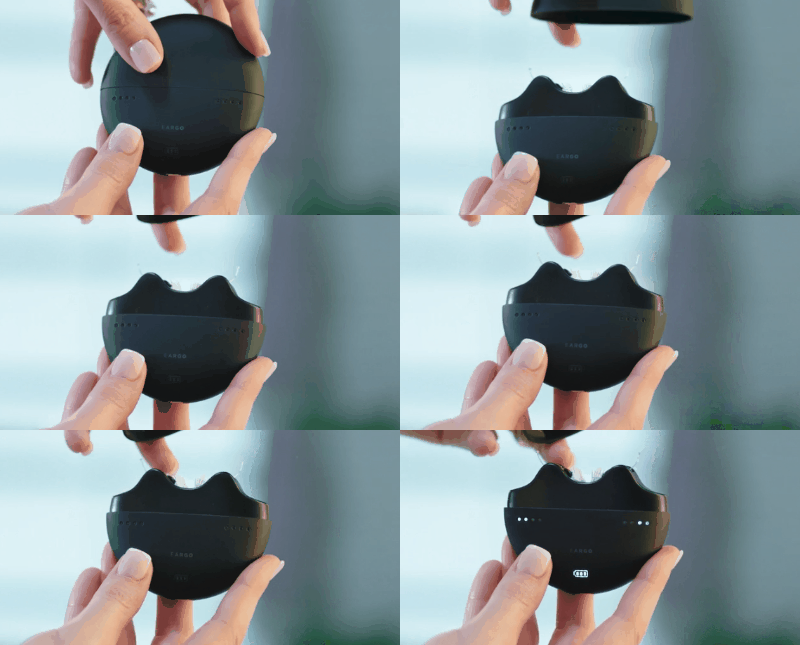
Image SourceEargo Official Website
Unlike traditional hearing aids on the market, Erago features a lightweight design that is ultra-discreet and highly breathable. It selectively amplifies sound sources, and its built-in charging station ensures it remains fully powered anytime, anywhere. Priced at just $2,500 (approximately RMB 16,000), Erago is more affordable than most comparable products available.
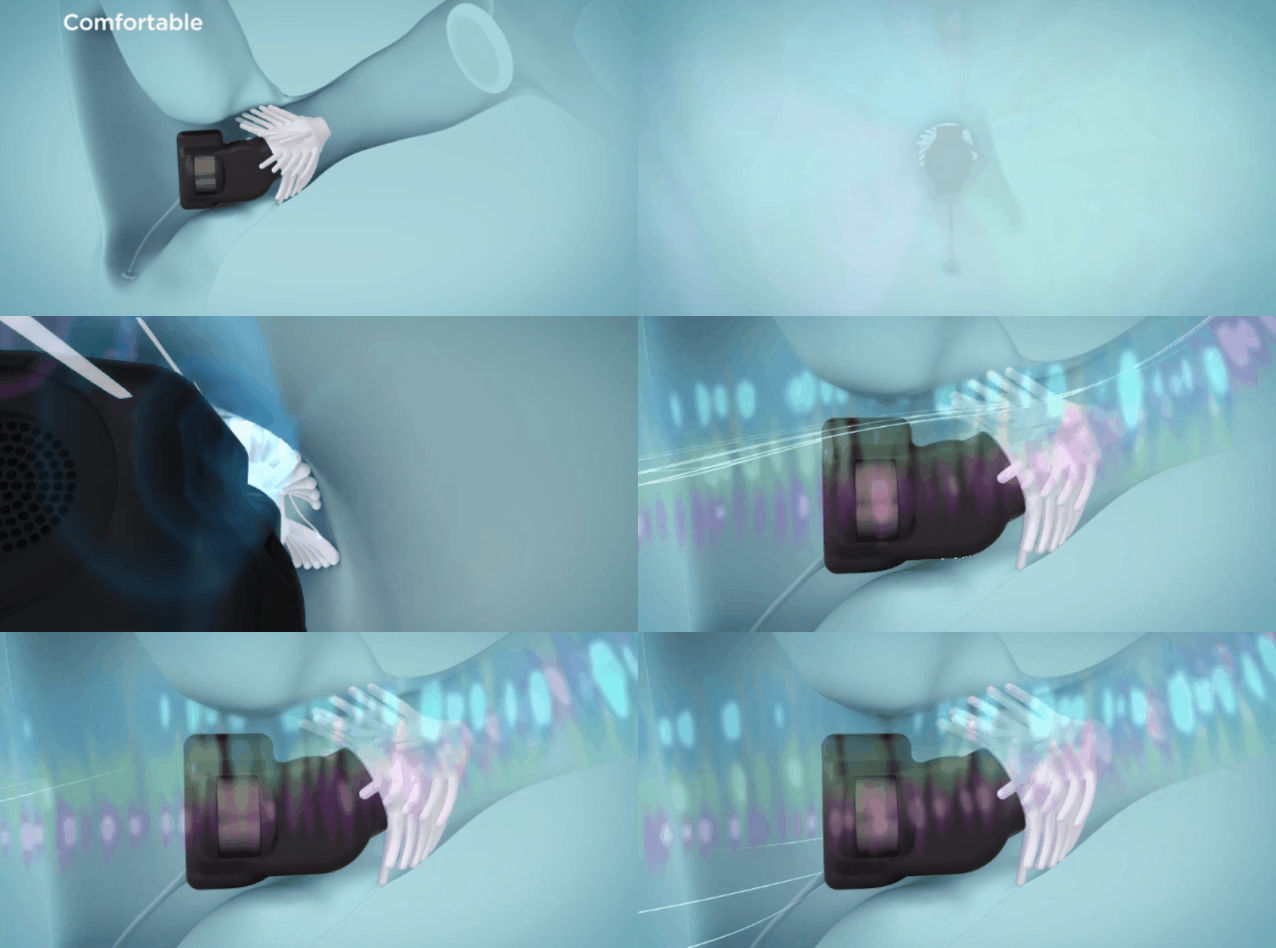
Image SourceEargo Official Website
Eargo’s design philosophy is inspired by flying fish. The earbud tip features “bristles” made of small, soft, medical-grade silicone. Once inserted into the ear canal, these bristles act like the wings of a flying fish, gently creating a supportive mesh within the confined space. This structural design ensures adequate airflow in the ear canal. A well-ventilated ear environment helps alleviate the occlusion effect and reduces the buildup of earwax and debris. Furthermore, this component incorporates elastic fibers to enhance wearing comfort and minimize the risk of unnecessary injury, offering multiple benefits and effectively addressing significant drawbacks associated with invisible hearing aids.
Eargo has no buttons; the team specifically designed it with voice-activated controls. After putting on Eargo, users simply tap their ears twice to automatically activate the device.
Eargo features four preset modes. By tapping the ear twice, users can automatically adjust the sound and volume to the optimal level. Notably, the two earbuds can be set to different volume levels independently, making them well-suited for users with unilateral hearing loss.
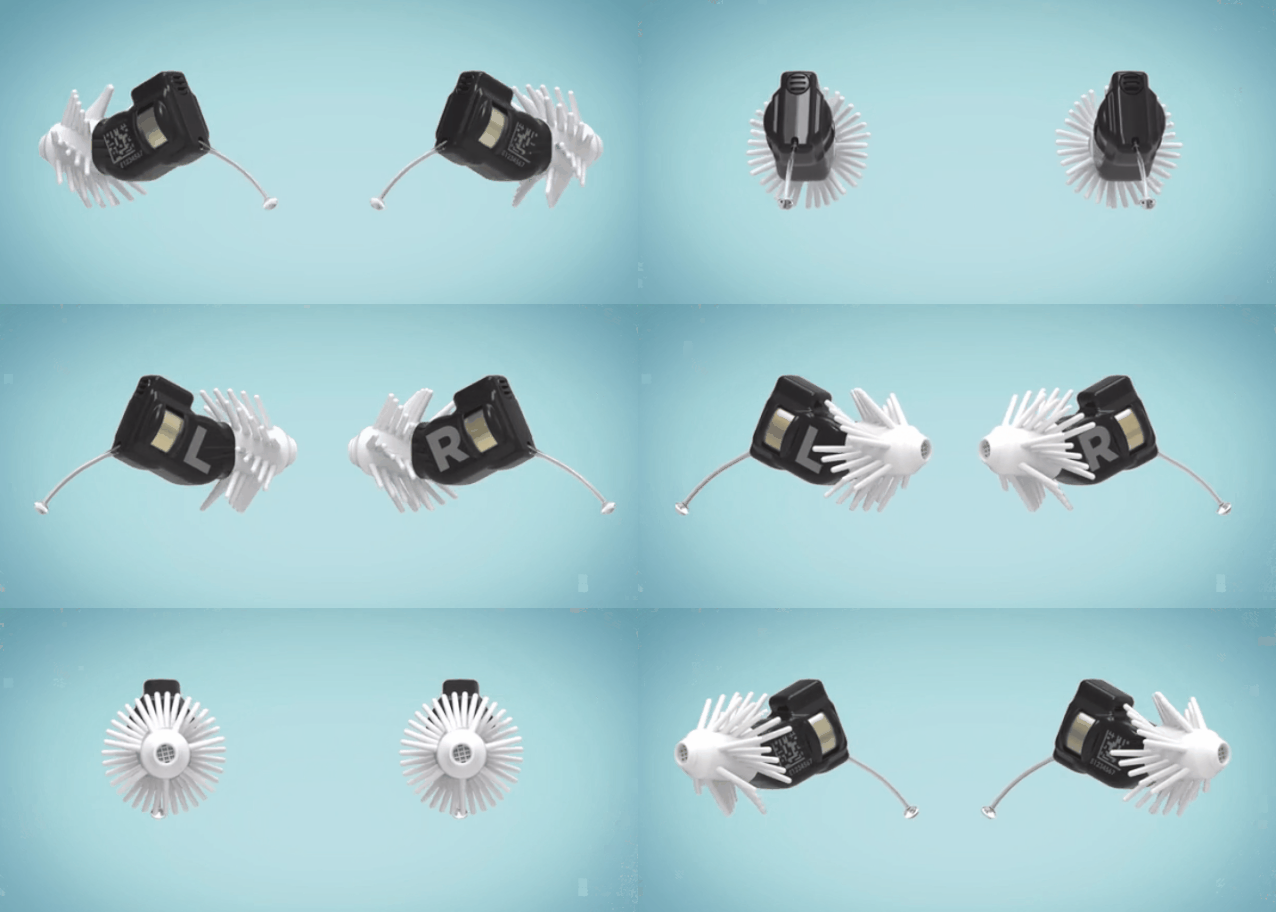
Image SourceEargo Official Website
To enhance the perception and discrimination of sound for individuals with hearing impairments, Eargo also employs dynamic noise cancellation technology. For these individuals, the function of a hearing aid extends beyond merely hearing sounds; it is primarily about extracting information from auditory signals, facilitating communication with those around them, and enabling comprehensive perception of the world. Simply amplifying external sound sources results in increased environmental noise, leading to more chaotic and disordered auditory input for individuals with hearing impairments.
Eargo currently comes in two sizes, making it suitable for virtually all ear shapes. When not in use, the earbuds can be stored in the included compact circular case, which offers both portability and charging capabilities. On a single full charge, Eargo hearing aids typically provide a full day of use. The portable circular charging case supports wireless charging and holds enough power to recharge the Eargo devices for an entire week.
Moreover, unlike the cumbersome and complex fitting process associated with traditional hearing aids, Eargo enables users to go from purchase to use in just three days. Consumers begin by visiting the official website for consultation and engaging in one-on-one discussions with professionals, then place their order online. Upon receiving the device, they can quickly start using it.
Eargo has managed to break through numerous barriers to enter the market and offer a refreshing experience, relying on its deep understanding of human needs, a people-centric approach, and a foundation of innovation-driven development and technological advancement. Gradually taking the lead in the market, Eargo is shaping the future of hearing aids.
In 2020, Eargo ushered in unprecedented opportunities for development.
On January 6, 2020, Eargo launched its fourth-generation product, the Eargo Max, at CES. The product improvements primarily focused on sound quality, including increased bandwidth and enhanced wind noise reduction and feedback cancellation.
On July 29, 2020, Eargo announced the completion of a $71 million equity financing round. The round was led by Gilde Healthcare and Longitude Capital, with participation from existing investors New Enterprise Associates (NEA), Charles and Helen Schwab Foundation, and Nan Fung Life Sciences. This financing provides Eargo with sufficient capital to continue expanding its commercialization efforts during a period of accelerating demand for hearing aids.
On October 16, 2020, Eargo officially listed on the Nasdaq Stock Market, conducting an initial public offering (IPO) of approximately 7.9 million shares of common stock at a price of $18 per share, with expected proceeds of approximately $141.3 million. The size of this IPO was increased from the initially planned offering of approximately 6.7 million shares of common stock, which had been priced in the range of $14 to $16 per share. Additionally, Eargo granted the underwriters an option to purchase up to an additional 1.2 million shares at the offering price, exercisable for a period of up to 30 days.
The massive influx of capital has endowed Eargo with greater future possibilities, as it disrupts the historical trajectory of the entire industry by enabling individuals with hearing loss to return to the world of sound at an earlier stage—free from constraints related to appearance, lifestyle, or even financial resources—and fully embrace the vibrancy of the world.