

Medical Device Transformation Amid Volume-Based Procurement: Accelerating Domestic Substitution and Deepening Independent Innovation
In 2020, the medical device industry bucked the trend to become a new hotspot. In addition to the frequent introduction of favorable policies, capital markets also heavily invested in companies with outstanding innovation within the sector. Against this backdrop, how should medical device companies embrace policies and respond to changes during this period of rapid industry growth? Furthermore, how can they seize multi-level development opportunities to achieve long-term, independent innovation-driven growth?
We have compiled the transcript of the “8th China Renaissance Healthcare and Life Sciences Leaders Summit—Medical Devices Forum,” aiming to offer fresh perspectives at this critical juncture as China’s medical device industry accelerates its transformation.
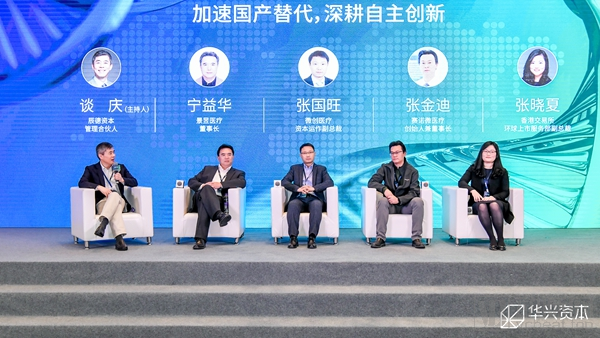
Forum Guests:
Ning Yihua, Chairman of Jingyu Medical
Vice President of Capital Operations, MicroPort Scientific Corporation: Zhang Guowang
Zhang Jindi, Founder and Chairman of SinoMicro Medical
Zhang Xiaoxia, Vice President of Global Listing Services at the Hong Kong Stock Exchange
Host:
Managing Partner, Chende Capital: Tan Qing
Tan Qing:Among today’s forum guests are four veterans with ten to twenty years of experience in the medical device sector, as well as a representative from the Hong Kong Stock Exchange; all bring extensive industry expertise.First, we would like to invite everyone to share their perspectives: with the trend of domestic substitution gaining strong momentum in the current medical device market, how should we view this development?
Ning Yihua:China will undoubtedly surpass the United States to become the world’s largest medical device market. From the perspectives of market opportunities, capital availability, startup formation, and corporate growth, China represents highly fertile ground.
After the founding of the People's Republic of China, we learned from the Soviet Union and established a medical device industrial system with a relatively weak foundation. In the early 1990s, I joined a foreign enterprise and personally witnessed the entire process by which foreign medical devices entered the Chinese market, nearly devastating the domestic medical device industry. It was not until around 2005, after more than two decades of national economic development and talent cultivation, that the wave of China’s medical device industry began to emerge. A large number of professionals in the industry have matured, and many overseas talents mastering new technologies have chosen to return to China to start businesses. To date, China’s medical device industry is entering a golden age of development.
Regarding domestic substitution and independent innovation, China’s situation differs from that of the United States. Over the past decade or more, innovation in our country has referred to domestic substitution of imports, namely mastering the products and technologies already available in the United States. This strategy has been highly successful. According to a survey we conducted, China now independently possesses over 95% of the medical devices explicitly used or under development in the United States and Europe. Thanks to strong national support, there are now very few segments of the medical device industry in which Chinese enterprises are not involved.
True innovation, however, can be modeled after the U.S. medical device industry, where emerging devices are developed by integrating therapeutic theories and scientific research with clinical needs, materials, technologies, and other factors, thereby achieving desired outcomes in clinical practice. The U.S. model has been validated by the market, and China is now entering this phase. As China’s medical device industry matures, more companies are expected to launch original clinical technologies and device products that achieve intended results in the market, paving the way for global expansion.
However, at present, China’s investment community primarily benchmarks its assessment of domestic medical device innovation against the U.S. market. Investors are more receptive to products developed by Chinese companies if similar offerings already exist in the United States, whereas homegrown innovations originating from China tend to receive less recognition. In contrast, the U.S. investment sector predominantly funds novel products, while projects characterized by homogenization in the medical device space often fail to secure financing. When will China’s medical device investment philosophy reach this level, directing capital toward genuine domestically produced innovations? This remains a pressing question.
Tan Qing:Mr. Zhang from Sinowei, as a Chinese company, Sinowei is currently pursuing an “In China for China” strategy. From your perspective, how do you view domestic substitution?
Zhang Jindi:I believe that domestic substitution is an inevitable trend, with gradual progress being made across passive devices, ranging from coronary stents to orthopedic implants. As the quality of domestically produced coronary stents continues to improve, they have become the leading brands in the Chinese market, truly achieving import substitution. In comparison, progress in surgical products has been somewhat slower, particularly in active device product lines.
In an era of scarcity, companies only needed to produce goods; however, in the current landscape of intense competition with multinational corporations, achieving domestic substitution solely through policy-driven measures is challenging if Chinese-made product lines lack sufficient competitiveness. Despite policy support, domestic manufacturers must continuously upgrade their offerings and enhance their capabilities.
For example, against the backdrop of increasingly favorable policy trends, there are many domestic companies in China capable of producing import-substituting ultrasonic scalpels. However, they still fail to secure an ideal market share, primarily due to significant gaps between their products and those of internationally renowned brands. From the perspective of clinicians, support for domestically produced alternatives will only be forthcoming if their quality matches that of top-tier international brands, or even surpasses them in specific areas. Taking the ultrasonic scalpel market as an example, if the current practice of reusing devices 5–10 times can be eliminated, companies will see a 3–5 fold increase in market volume over the next 3–5 years.
In addition to policy support, the capital market has also driven the development of the medical device industry. In the past, companies had to face survival challenges from day one; now, with policy and capital support, they can patiently enhance product quality to a considerable level and gain more opportunities for development.
Tan Qing:With the imminent implementation of the third batch of the National Centralized Drug Procurement policy, “National Centralized Procurement” has become another hot topic in the medical device industry. How do MicroPort and SinoMicroview view the National Centralized Procurement?
Zhang Guowang:MicroPort has been in operation for 22 years and stands as one of the representative enterprises in China’s high-value medical consumables sector. It has also played a significant role in advancing the goal of import substitution with domestically produced alternatives. Its flagship coronary stent business has achieved a combined domestic market share of over 70% among Chinese manufacturers, making it one of the few sectors where substantial import substitution has been realized. However, MicroPort faces considerable pressure amid the national centralized volume-based procurement (VBP) program. In the third round of national centralized drug procurement launched recently, MicroPort’s coronary stents secured the highest intended market share at approximately 36%, far outpacing competitors, albeit at significantly reduced prices.
Volume-based procurement is a double-edged sword. Like a sudden, harsh winter, it drastically compresses corporate profit margins. Products or companies with weak vitality will perish, leaving only the strongest contenders. However, the side effects may hinder the subsequent development of these top performers, as innovation requires a continuous influx of capital. When profitability is severely squeezed, companies face financial strain and dilemmas in reinvesting in innovation, and may even encounter survival challenges.
Therefore, we strongly urge greater attention to the centralized procurement of domestically produced medical devices, particularly in the high-end segment such as high-value consumables. The early-stage research and development of high-end medical devices inevitably involve substantial investment and high risk; if centralized procurement prices are driven too low, it could have a devastating impact on enterprises. We hope that the government will streamline policy measures supporting the development of domestic companies, enabling them to achieve import substitution across more sectors.
Zhang Jindi:Centralized procurement is currently a major concern for many stakeholders. SinoMicro’s ultrasonic scalpels have also been included in the centralized procurement program. In the recent inaugural centralized procurement round for ultrasonic scalpels, due to the lack of effective competitors, imported devices saw only modest price reductions, resulting in limited overall cost savings. We must elevate the quality of domestically produced products to compete with top-tier international brands, thereby gaining pricing influence and the ability to drive market dynamics.
The scope of centralized procurement primarily covers drugs and medical devices with high clinical demand that meet basic healthcare needs. A key difference between medical devices and drugs is that drugs can undergo a one-time consistency evaluation, whereas such evaluation is more challenging for medical devices, requiring time to establish clinical assessment standards. Therefore, in the centralized procurement market, I believe that surgical devices, including ultrasonic scalpels—particularly active medical devices—will undergo a continuous process of adjustment and evolution as they are incorporated into the system.
Another issue arising from centralized volume-based procurement (VBP) is that companies incur substantial upfront R&D investments; if VBP squeezes profit margins too tightly, how can subsequent R&D efforts be sustained? To address this challenge, SinoMicro has adopted a product portfolio strategy. It manufactures products with large market sizes that are likely to be included in VBP, such as ultrasonic scalpels and staplers, while also developing products in less crowded niches with smaller market sizes but higher profit margins, such as technology-driven tumor ablation solutions. Within SinoMicro’s product portfolio, certain product lines generate the profits necessary to support the company’s survival and growth, while others serve to broaden market adoption. Additionally, the company employs a regional diversification strategy to balance its overseas and domestic markets.
Tan Qing:In the past two years, MicroPort has undergone corporate spin-offs and public listings, among other market activities, leading to a continuous rise in employee wealth. Could Mr. Zhang share insights into MicroPort’s business model? What internal mechanisms does MicroPort have in place to foster a culture of continuous innovation for both the enterprise and its employees? Furthermore, how does the company stimulate employee enthusiasm and innovative spirit?
Zhang Guowang:MicroPort’s development model is highly distinctive. Over the past two decades, MicroPort has established a large-scale platform mechanism for the continuous incubation of emerging businesses, achieving a synergistic development model that integrates industrial operations with capital management. MicroPort Group positions itself not merely as a company that manufactures products, but also as a “company that builds companies.” Our parent company is listed on the Hong Kong Stock Exchange, and our spun-off subsidiary, MicroPort Endovastec, was listed on the STAR Market last year. In the future, we aim to have more subsidiaries listed on various domestic and international capital markets.
A critical prerequisite for this development model is that the company’s businesses must not only have market potential but also avoid horizontal competition with other business units. Furthermore, the group must establish an internal mechanism to nurture and incubate projects, rather than relying on external mergers and acquisitions. Through a series of endogenous and platform-based support mechanisms, we can continuously nurture and incubate emerging businesses into maturity, secure regulatory approvals at the optimal timing, and ultimately bring products to market to serve patients and physicians.
At MicroPort, different sub-businesses are developed as independent subsidiaries. In the early stages of entrepreneurship, core internal employees are first invited to invest and acquire equity stakes, which can even constitute a significant proportion of the subsidiary’s shares. This may be followed by multiple rounds of employee equity participation, fully realizing team incentives. As the subsidiaries reach a certain stage of development, they proceed with external financing. When the timing is ripe, the subsidiaries are ultimately listed on domestic or international capital markets.
Leveraging its robust internal capability for incubating emerging businesses, MicroPort Scientific Corporation currently has approximately one hundred R&D projects underway in parallel, with R&D expenditure consistently accounting for around 15%–20% of its revenue. Thanks to these innovative R&D efforts, MicroPort secures multiple new product registration certificates annually for market launch. As a result of its sustained investment in innovation, nearly 20 of MicroPort’s products have been admitted into the National Medical Products Administration’s Special Examination and Approval Procedure for Innovative Medical Devices (the “Green Channel”). The number of products entering this Green Channel places MicroPort at the forefront among domestic enterprises.
MicroPort has established a virtuous cycle through its relatively mature “talent and capital convergence” mechanism: investor recognition brings in additional funding, which enables the company to attract top talent, build a larger platform, and develop superior technologies and products. This enhances corporate value, attracts further investment, and thereby sustains the company’s ongoing development vitality.
Tan Qing:Mr. Zhang has just introduced MicroPort’s internal incubator mechanism. While each project within the incubator may appear modest in scale, together they form a powerful fleet, with each project capable of operating independently. It is through years of technological innovation and talent accumulation that MicroPort has achieved the results we see today—a model that is difficult for most companies to replicate. Now, let us invite Mr. Zhang and Mr. Ning to discuss the differences between the innovation paths of Sinowave and Jingyu Medical.
Zhang Jindi:When it comes to product innovation, Sinowei currently has several products whose technologies are at a world-leading level. As a technological leader in the industry, how to further innovate is a question we have been actively considering. At this stage, we rarely engage in “zero-to-one” innovations; instead, we focus more on “micro-innovations,” i.e., localized innovations. The core driving force behind innovation still stems from clinical frontline needs, with technology serving merely as an auxiliary tool. Sinowei places great emphasis on clinical demands, dedicating substantial time to communicating with physicians and clinical practitioners to understand the problems encountered during product use, thereby determining which technologies and business models can best address these issues.
For example, SinoMicro’s newly launched electroporation ablation system is the second product of its kind to be marketed in Europe. Over the decade since competitors first introduced similar devices, this technology has gained widespread recognition for its efficacy in the local treatment of complex tumors, particularly in pancreatic and prostate cancers. However, physicians still face numerous challenges during procedures, such as the inability to visualize various energy parameters in real time. In the event of procedural interruptions or system reboots due to technical issues, timely and effective intervention is not possible. Recognizing the clinical need for safe and controllable surgical procedures, SinoMicro addressed these practical pain points by enabling real-time display of all parameters, thereby allowing physicians to easily maintain safety and control throughout the operation.
Overall, we consider innovation project initiation from three dimensions:
1. Clinical Drive: Addressing real-world clinical problems. Business opportunities and value are often embedded in clinical pain points;
2. Technological Collaboration: Empowering traditional medical devices through cross-industry technological integration. For instance, leveraging Internet of Things (IoT) and 5G technologies enables device interconnectivity and real-time online connectivity, facilitating the transition from the era of feature-based devices to that of smart devices, thereby enhancing various operational efficiencies.
3. Commercial Viability: Consider the enterprise’s sustainability. Ensure that new projects demonstrate a certain level of profitability from a commercial perspective, effectively translating technology into business value. Additionally, address a range of issues such as the reasonableness of pricing and the affordability for both hospitals and patients.
Ning Yihua:Jingyu Medical primarily focuses on technologies such as DBS (Deep Brain Stimulation) brain pacemakers. It is well known that there are currently no highly effective pharmacological treatments for most brain-related disorders, and the core direction of medical research now lies in neuromodulation. The Jingyu team possesses specialized expertise in neurobiology and electrical neuroscience. We believe this field holds the key to unlocking new avenues for the treatment of brain diseases. Guided by this original aspiration, we have decided to enter the industry, with the hope of better serving patients.
Currently, the most mature therapeutic application of deep brain technology internationally is for Parkinson’s disease. Therefore, we have also targeted Parkinson’s disease as a stepping stone to develop related therapeutic products. During the R&D process, we defined two levels of innovation for Jingyu Medical:
First, innovation from scratch. For example, Jingyu’s goal is to treat more brain-related diseases, so we spent eight years in the early stage proposing our own neurobiological treatment theory. Starting with the definition of theoretical science, we formulated a technical roadmap, developed our own brain-computer interface (BCI) chip, and created a new generation of deep brain stimulation (DBS) devices for addiction treatment, achieving a process of creation from nothing. This product has received national innovation certification and is currently undergoing clinical trials.
Another category of micro-innovation involves further enhancing therapeutic efficacy based on existing products, thereby making them more convenient for both patients and physicians to use. Since the launch of our first-generation product for Parkinson’s disease treatment, we have continuously iterated and upgraded it to improve reliability and reduce costs, resulting in greater market acceptance of the newer versions.
Tan Qing:Today, companies have multiple listing options, whether it’s the registration-based system on the STAR Market and ChiNext Board or Chapter 18A in Hong Kong, each corresponding to different capital market environments. We would like to hear from Mr. Zhang of the Hong Kong Stock Exchange on how companies should choose the appropriate capital market.
Zhang Xiaoxia:The factors determining a company’s listing venue are multifaceted, extending beyond unilateral considerations such as listing rules and investor structure. A holistic assessment is required, taking into account whether the market aligns with the company’s future development, refinancing efficiency, and the overall market ecosystem. As enterprises grow and evolve, their choice of capital markets will also shift, necessitating careful consideration of which market best suits their current-stage needs. The Hong Kong market features a distinct advantage: it is highly integrated with the global financial system, enabling companies to leverage their presence in China to connect with the world. This allows businesses to retain funding from domestic investors while simultaneously accessing capital from overseas investors.
Furthermore, we have observed that the trend of dual listings has become increasingly pronounced in recent years. Some healthcare enterprises, after listing in the domestic market, require international capital platforms to support their global expansion, enabling cross-border acquisitions, mergers and acquisitions, and technology integration. Consequently, many companies listed on China’s A-share market choose to pursue a dual A+H listing by subsequently listing in Hong Kong. Additionally, numerous biotechnology firms in the R&D phase opt to list in Hong Kong first to enhance financing efficiency and facilitate international market cooperation, before returning to list on the STAR Market. In summary, enterprises should select capital markets that best align with their development strategies in a phased manner.
Tan Qing:Today, we discussed many topics related to innovation and corporate development. I believe there is a common thread: innovation in the medical device industry is a long journey. However, unlike other sectors, the medical device industry boasts many seasoned veterans, which constitutes a distinct advantage for the industry. The capital market has provided us with excellent opportunities, and we look forward to the synergistic integration of enterprises and capital to create a better future.