

Li Tiantian: DXY Never Abandoned To B, Aims to Collaborate with More Enterprises to Serve Both Doctors and Patients
On November 10, the wildly popular third China International Import Expo (CIIE) officially concluded. The COVID-19 pandemic made this year’s CIIE distinctive, propelling the medical exhibition zone into the spotlight as the standout attraction of the event.
It is reported that the Medical Devices and Pharmaceutical & Healthcare Exhibition Zone at this year’s China International Import Expo (CIIE) has a planned exhibition area of 60,000 square meters, with nearly 340 exhibitors participating, including more than 70 Fortune Global 500 companies and industry leaders.
As one of the key windows for multinational pharmaceutical companies to showcase new products and strategies in the Chinese market, this year’s China International Import Expo (CIIE) saw several multinationals announce major strategic moves in their digital marketing transformation. The trend toward digital marketing transformation in the pharmaceutical industry, accelerated by the COVID-19 pandemic, was fully evident.
In this context, we have invited Li Tiantian, Founder and Chairman of DXY, China’s leading internet healthcare platform, to jointly explore new trends in the digital marketing transformation of the pharmaceutical industry in the post-pandemic era, as well as DXY’s strategic thinking and business layout in this field.
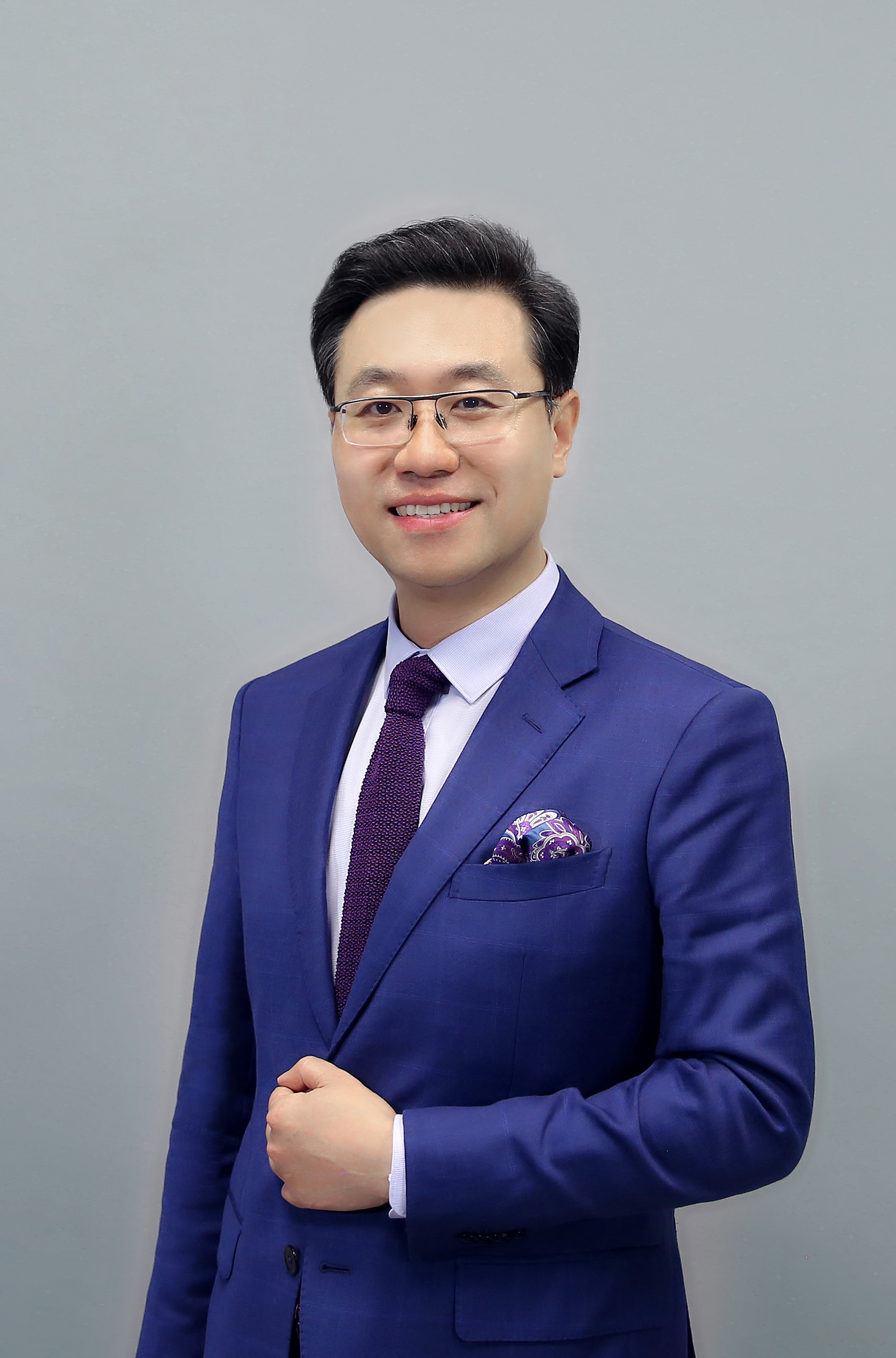
Dingxiang Yuan has experienced rapid brand and business growth in the healthcare sector in recent years, emerging as a standout player in the spotlight during the pandemic. Li Tiantian believes that the pandemic has accelerated new trends toward “digitalization” and “out-of-hospital care” in the healthcare industry, necessitating a gradual shift in industry mindset from “downstream” to “upstream.”
New trends have strengthened DXY’s commitment to its consistent corporate strategy and vision. Looking ahead, the company aims to collaborate with more pharmaceutical and consumer goods enterprises to better serve physician users, patient users, and the general public.
The following is an edited transcript of the interview.
Li Tiantian:At the China International Import Expo (CIIE), we observed many renowned pharmaceutical companies engaging in more frequent and open collaborations with internet platforms, placing greater emphasis on patient experience and digital marketing, and highlighting user value—a highly representative trend.
Driven by the pandemic, I have observed two emerging trends in the digitalization of the pharmaceutical industry:
The first trend: "Online Transformation".
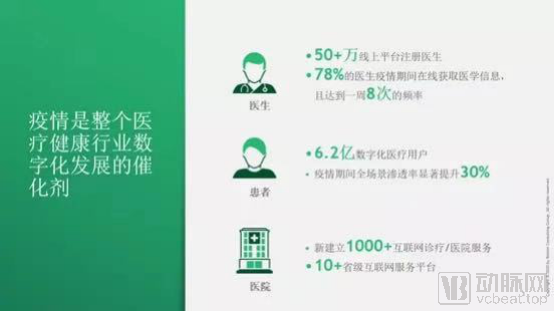
Traditionally, pharmaceutical companies and healthcare institutions have relied more heavily on offline operations, with medical facilities, physicians, and patients all operating in physical settings. The recent pandemic has highlighted the trend toward “digitalization,” including the online transition of physician education, patient management, clinical research, and marketing activities.
Digitalization is a clearly defined trend. During the pandemic, DXY experienced a surge in traffic, with our medical academic live-streaming product, “DXY BoKa,” seeing its service volume increase more than tenfold year-over-year. Our online consultation volume, along with traffic to our epidemic map and popular science articles, reached nearly 10 billion visits within three months. This underscores the significant role the pandemic has played in accelerating digital transformation.
The Second Trend: “Out-of-Hospital Care”
During the pandemic, all medical institutions were suspended; during this period, people could consult doctors, obtain prescriptions, and even purchase medications online.
The original offline service models and scenarios were rapidly replicated online. These new “out-of-hospital” scenarios will inevitably see a decline after the epidemic eases and medical institutions resume operations. Nevertheless, even with such a decline, their frequency and impact will remain significantly higher than pre-pandemic levels.
。
When addressing common minor ailments and health issues, people are increasingly inclined to seek online solutions, thereby reducing the frequency of hospital visits. This aligns with observations made by DXY as it moved “upstream” in the healthcare value chain: the further upstream one goes, the more diverse the “out-of-hospital” scenarios become.
Therefore, the two trends of “out-of-hospital care” and “digitalization” are the opportunities I have identified.
So, where does the challenge lie?
From a macro perspective, regulatory oversight in the healthcare industry is an imperative we must confront. Requirements for compliance in medical practices, legality of prescriptions, as well as service quality and patient safety, distinguish this sector from ordinary consumer goods industries, presenting undeniable challenges.
The second challenge,Building TrustIt is a difficult matter.
The ability to inspire users to confidently transition from offline to online channels ultimately hinges on a brand’s influence over consumer perception.
Offline public hospitals are well-established institutions with decades or even centuries of history, backed by official endorsement. Naturally, I am inclined to trust these hospitals; despite occasional poor service attitudes, my confidence in them remains. However, when an unfamiliar online institution suddenly emerges, claiming it can resolve your medical issues, would users truly dare to choose it?
Why are a large number of users willing to engage on DXY’s platform? The key lies in whether the brand can shape user perception, which is precisely the professional advantage that DXY has accumulated over two decades.
Over the past two decades, DXY has become China’s largest professional platform for physicians, establishing a strong professional brand presence in the minds of Chinese doctors. Although “Dingxiang Doctor” was founded only five years ago, it has already cultivated a perception of professional health expertise among users through a series of products, content offerings, and tool applications.
Li Tiantian:DXY’s business model has not undergone a transformation, never has and never will abandon its B2B segment, as it constitutes an indispensable and essential link in DXY’s overall service chain.
DXY has been in existence for twenty years since its founding. Over these two decades, we have become China’s largest physician community. Whether assessed by our proprietary products such as forums and mobile apps, or by our influence across various external social media platforms, DXY has consistently remained the most active professional physician community in China.
For two decades, we have steadfastly adhered to our positioning of “professionalism,” serving physicians and, through them, empowering and assisting patients and consumers.
Dingxiang Yuan’s mission is to “unite professional expertise and deliver reliable products.”
This “professional force” primarily refers to physicians.Without the continuous support and professional contributions of physicians, it would be difficult for us to serve the general public. Therefore, DXY has been consistently strengthening its product offerings, operational strategies, and technical development tailored to physicians. By continuously delivering high-quality content and efficient tools, we aim to empower the professional growth of doctors in China.
"As physicians continuously grow and receive support on this platform, we extend their expertise, capabilities, and knowledge to consumer-facing services, developing professional and reliable products that leverage these clinical competencies to help the general public and patients achieve healthier lifestyles. This constitutes DXY’s overarching corporate strategy, which we refer to as the 'Dual-Core Drive.'"
“Dual-core drive” is our strategy, and the implementation of this strategy entails addressing specific issues. What problems does DXY aim to solve? We have found that focusing solely on treating diseases themselves represents a problem-oriented mindset, which is certainly valid. However, we can adopt an alternative approach by addressing the root causes behind these problems—enabling people to avoid illness, reduce its incidence, or delay its onset.
To use a metaphor, addressing disease is akin to working at the “downstream” stage of a river, whereas we must adopt an “upstream” mindset. By synergizing with broader professional expertise and leveraging industrial advantages, we aim to build a healthy, open industry ecosystem upstream, thereby resolving downstream challenges.
"In the process of moving from 'downstream' to 'upstream,' we have found that all three elements—'people,' 'goods,' and 'scene'—have undergone changes."
Previously, we focused solely on patients. However, as we move “upstream,” we are concerned not only with patients but also with health-sensitive populations and potential patients.As our user base has expanded and the population has become more diverse, you will see that in addition to focusing on patients with chronic and common diseases, we have also begun to address the health concerns of the general public.
I have come across data indicating that currently, one-third of prescription drug patients hold the decision-making power for purchases (i.e., the autonomy to select manufacturers and brands). As public demand for personal health rises and health literacy improves, this autonomy is undoubtedly expanding. Such “consumerization” will create significant opportunities for digital transformation in the pharmaceutical industry.
Secondly, the “products” have also evolved. At the “downstream” level, what can be offered to patients consists mainly of pharmaceuticals and diagnostic tests. Moving “upstream,” we find that many additional offerings related to patient education and public health can also be provided. These knowledge-based resources and capabilities enable users to improve their quality of life and prevent the onset and progression of diseases. Thus, the “product” portfolio has become more comprehensive and diverse.
Third, the “setting” has also changed. In the “downstream” segment, the “setting” primarily referred to environments within hospitals, such as outpatient clinics and inpatient wards. As we move “upstream,” we find that many settings outside the hospital have emerged, including new scenarios related to work, daily life, travel, and education. These out-of-hospital settings are characterized by higher frequency and greater activity.
In the “upstream” environment, we have observed changes in “people,” “products,” and “places.” “People” have become more diverse, “places” have seen higher frequency of interactions, and “products” have grown richer.
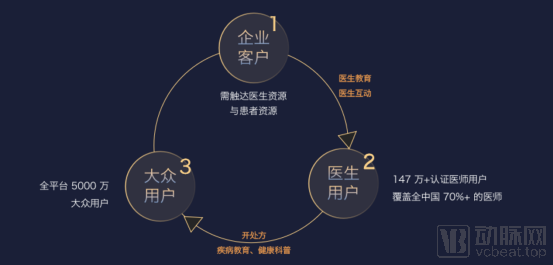
DXY’s strategy is not a shift from To-B to To-C, nor is it an abandonment of the To-B segment; rather, it adheres to our long-standing B-to-D-to-C model. DXY has never abandoned, nor will it ever abandon, the B-side, as enterprise clients are also a vital source of professional expertise. Professional strength requires not only physicians but also the active participation of pharmaceutical companies, medical device manufacturers, consumer health companies, healthcare institutions, and other organizations. Many of these enterprises and institutions possess substantial reserves of specialized knowledge “upstream.”We aim to better coordinate these partners and, with the collective efforts of all professional physicians on DXY, build a professional advantage on the supply side at the “upstream.” This is what we call “Pooling Professional Strength.”
A few days ago, Dr. Chen Jun from Eli Lilly China and I were jointly interviewed by “Health Shanghai” at the China International Import Expo (CIIE). Over the next eight years, Eli Lilly China plans to introduce more than 40 new drugs (including new indications) to the Chinese market. In this process, DXY is also paying close attention to the target and potential patient populations for these new medications. Beyond pharmacological treatment, we aim to provide continuous, comprehensive online solutions, including patient education and disease management. We even seek to intervene early during the pre-disease stage when warning signs first appear, helping these “potential patients” develop healthy lifestyle habits, thereby jointly controlling the onset and progression of diseases.
Li Tiantian:As DXY expanded upstream, it became acutely aware that tackling such a vast industry alone was not feasible. I would like to quote the proverb, “If you want to go fast, go alone; if you want to go far, go together.”
Therefore, we are committed to fostering deep synergies with a broader range of ecosystem partners—including pharmaceutical companies, medical device manufacturers, insurance providers, consumer goods enterprises, and healthcare institutions—that possess outstanding professional expertise. By leveraging the “dual-core driven” platform of DXY and Dingxiang Doctor, we aim to better showcase the specialized capabilities of each partner.
At the DHC Conference in late July this year, we also stated that we are willing to entrust “half our lifeline” to our partners. We are highly committed to sharing more of our organizational capabilities and industry insights with these institutions, thereby expanding the scope of “pooling professional expertise” and fostering mutual, healthy growth within the online ecosystem.
Li Tiantian:Dingxiangyuan is a neutral, third-party professional platform with the largest scale, highest engagement, and longest history. It delivers more authentic, objective, and accurate information to physicians. This is our primary principle and the core value we have upheld for the past two decades.
Second, within the vast internet ecosystem, DXY is the partner with the strongest product and operational capabilities. Having cultivated deep expertise in the field of internet healthcare for many years, we have a keen understanding of the digital landscape and have achieved outstanding results.
Third, DXY can continuously develop high-quality products by leveraging the professional expertise of the healthcare industry and physicians, thereby establishing and enhancing users’ mindset toward healthy lifestyles.
Pharmaceutical companies and healthcare institutions are increasingly engaging in the “treatment” phase. DXY can leverage the professional expertise of these enterprises and institutions to intervene earlier, thereby participating in higher-frequency, more active out-of-hospital scenarios. These companies and institutions also need professional partners like DXY to jointly serve patients.
With two decades of deep engagement in the healthcare and internet industries, we have accumulated not only methodologies and experience but also brand equity and trust. We are eager to collaborate with B2B enterprises to build a new online ecosystem, jointly cultivate upstream advantages on the “supply side,” and thereby better serve more “downstream” users.