

From 'People Seeking Content' to 'Content Finding People': Tencent Medpedia Redefines Medical Science Popularization in the 3.0 Era

Tencent
Internet Comprehensive Service Provider
“We believe that technology should be used for good, and when combined with medicine, it can help alleviate human suffering. By using technology to safeguard the light of life, we can make everyone’s health measurable, manageable, and improvable.” This was stated by Tang Daosheng, Senior Executive Vice President of Tencent and President of the Cloud and Smart Industries Group, at this year’s Tencent Medical ME Conference.
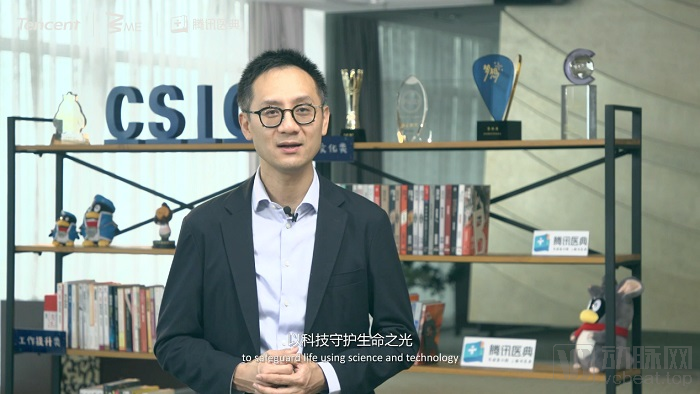
Tang Daosheng, Senior Executive Vice President of Tencent and President of the Cloud & Smart Industries Group
For Tencent, the annual Tencent Science Week held in November not only fulfills its social responsibilities as a technology enterprise but also embodies its mission and vision of “Tech for Good.” At this year’s Tencent Science Week, the Tencent Medical ME Conference, alongside the Tencent Science WE Conference, the Science Exploration Prize Award Ceremony, and X-Talk, garnered significant attention from various sectors.
If the Tencent WE Conference is an exploration of the mysteries of the cosmos, then the Tencent ME Conference is more akin to an exploration of the human inner microscopic world, using technology to build a bridge for the public to understand life, and presenting the world’s most cutting-edge medical breakthroughs to the public eye.
The term “medical science popularization” is on the tip of the tongue.
Most users have likely experienced searching online for disease symptoms and treatment options, only to find the results returned by search engines overwhelming and confusing.
In addition to the “minor issue” of inefficient information retrieval, the internet is rife with instances where pseudoscientific content disguised as medical popularization is used for genuine marketing purposes. For users with authentic healthcare needs, this not only risks incurring substantial costs but may also delay optimal treatment timing.
Patients lack access to authentic and effective medical science popularization knowledge, which in turn affects physicians’ consultation and treatment processes. Given their limited time, doctors struggle to address every patient concern comprehensively. Time that should be dedicated to discussing patients’ conditions and treatment plans is instead wasted on answering basic questions. Over 80–90% of patient inquiries involve simple, repetitive issues. There is a strong demand among physicians to disseminate accurate and advanced medical knowledge and concepts to a broader audience in a manner easily understood by the general public.
The policy responds to the needs of both patients and physicians. The Healthy China Action (2019–2030), released in 2019, states that “everyone is the primary person responsible for their own health and bears health responsibilities toward their family and society.” The Healthy China Action (2019–2030) calls for “making the improvement of health literacy a prerequisite for enhancing the health of the entire population, strengthening targeted health education and promotion based on the characteristics of different groups, and ensuring that health knowledge, behaviors, and skills become universal qualities and capabilities among all citizens, thereby achieving health literacy for everyone.”Policy guidance, user needs, and physician demands have all placed new requirements on medical science popularization.Internet platforms including Tencent, Baidu, Alibaba, and Toutiao have all engaged in medical science popularization.
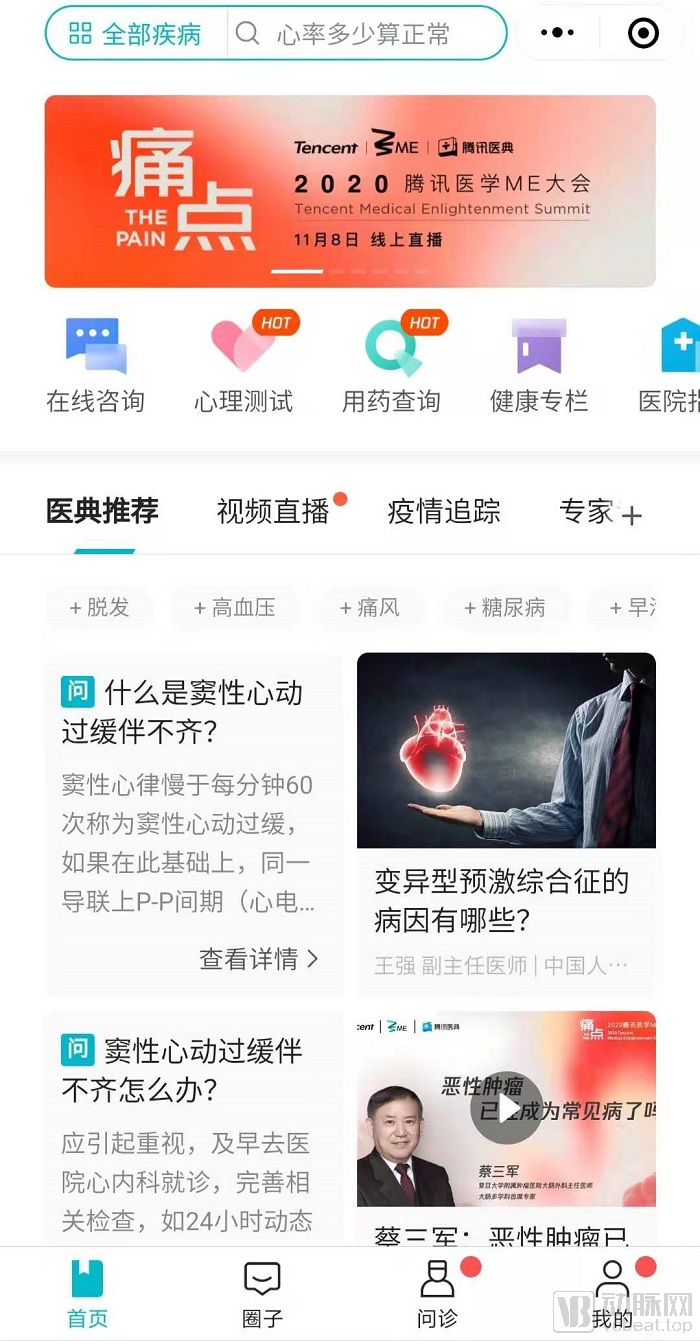
“Tencent Medical Encyclopedia” Mini Program Interface
Various internet platforms may have different objectives when conducting medical science popularization. For instance, some platforms treat it as a supplementary module to their medical services, aiming to sustain user engagement and foster long-term retention.Most internet platforms have recognized that medical science popularization may become a new gateway for traffic. By aggregating users, these platforms are capable of transforming the low-frequency demand for medical knowledge into high-frequency engagement, and will further explore potential business models in the future.
Currently, the emergence of internet-based medical science popularization platforms is largely driven by leading internet platforms’ recognition that the status quo needs to change and that they need to attract users through high-quality medical science content. Imperceptibly,The company has also assumed its social responsibilities.Similar to popular science platforms such as Tencent Medical Dictionary, users can currently access medical popular science knowledge free of charge.
In the course of developing medical science popularization platforms, their value has gradually become evident. As Huang Lei, Vice President of Tencent Healthcare, pointed out at the Tencent ME Conference,During the pandemic, medical science popularization platforms have leveraged the internet’s powerful connectivity and dissemination capabilities to demonstrate their effectiveness in both the efficient release of epidemic-related information and the mitigation of rumors. Furthermore, these platforms have facilitated users’ access to more convenient medical services and healthcare tools, thereby conserving offline resources and enabling their more effective and optimal utilization.
However, delivering high-quality medical science popularization is no easy task. Medical science platforms must carefully consider how to provide professional medical knowledge and convey it in a manner accessible to everyone.
The ability to rapidly advance and achieve results is linked to Tencent Medical Encyclopedia’s strong capability in connecting doctors and patients.As of September 2020, Tencent Medical DictionaryCollaborating with 5,000 physicians and academician experts across China, we have established a professional medical science popularization platform covering the entire diagnosis and treatment process for over 10,000 disease types., covering not only common diseases but also critical illnesses such as cancer and chronic conditions.
On the other hand,Tencent Medical Encyclopedia fully reaches users through channels such as WeChat, Tencent KanDian, Tencent Video, and Tencent News.In Tencent’s latest third-quarter financial report, the combined monthly active users of WeChat and WeChat reached 1.213 billion, while the combined monthly active users of QQ on smart terminals reached 617 million. Leveraging Tencent’s robust social networking capabilities, Tencent Yidian is well-positioned to achieve further breakthroughs.
Since its launch in 2017, Tencent Medical Dictionary has continuously explored and experimented, collaborating with various partners to better disseminate medical science knowledge. VCBeat has briefly reviewed some of Tencent Medical Dictionary’s recent initiatives, clearly demonstrating that while continually enhancing its own capabilities, it is also exploring and testing medical science communication methods that are more aligned with current trends.
In terms of the presentation of medical science popularization, Tencent Medical Encyclopedia has made some attempts both externally and internally. In the presentation of medical science popularization content,Tencent Yidian is also transitioning from static text and images to dynamic video streams, promoting medical science popularization through live broadcasts, short videos, and other formats that resonate with the general public.
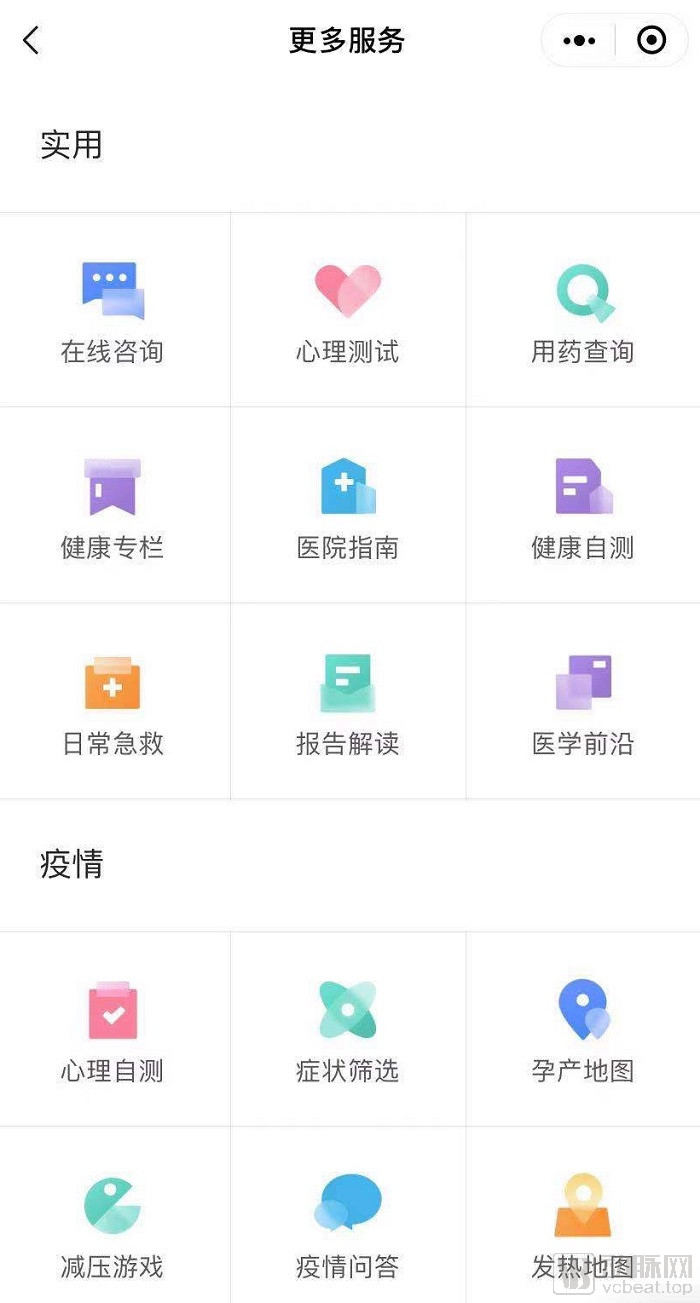
Medical Service Tools Provided by Tencent Medical Encyclopedia
Tencent Medical Encyclopedia is also continuously exploring the integration of medicine and technology.Through tools such as personalized recommendations and an intelligent Q&A assistant, Tencent Medipedia continuously enhances the efficiency with which users access health information; meanwhile, its online consultation and inquiry services help alleviate patient anxiety. Tencent Medipedia is also integrating cutting-edge technologies to empower patients in self-managing their health, including optical character recognition (OCR) for interpreting laboratory reports, a COVID-19 self-screening tool powered by a big data platform, and AI-driven posture assessment using keypoint recognition.
Tencent Medical Encyclopedia, capable of connecting both doctors and patients, is continuously exploring new possibilities in medical science popularization through high-quality educational content and powerful "medicine + technology" user service tools, thereby stepping firmly into the era of Medical Science Popularization 3.0.
Huang Lei, Vice President of Tencent Medical, traced the origins of online medical science popularization at the Tencent ME Conference and divided its development into three stages.
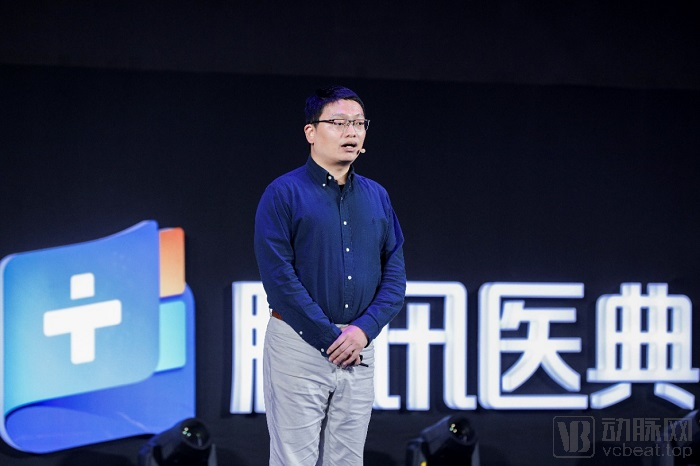
Huang Lei, Vice President of Tencent Healthcare
Medical Science Popularization 1.0 Era,The widespread adoption of the internet has made it possible to extensively disseminate popularized medical knowledge. However, the quality of such content varies significantly, with a substantial amount of so-called “popular science” serving as disguised marketing. Both users seeking information and physicians publishing content face numerous pain points.
The Era of Medical Science Popularization 2.0, which swept away the chaos of the 1.0 era, with professional medical science content created by doctors replacing the previous “editorial spin-off” style of writing. Meanwhile, medical science popularization is no longer composed of isolated, unrelated pieces of information, but has taken on a more structured character. The 2.0 era of medical science popularization is characterized by specialization, structuration, and ecosystem integration. Society as a whole has begun to participate in the process of medical science popularization, moving away from the previous landscape of fragmented, individual efforts.
With the diversification of participants, the multimodal nature of content, and the opening up of coverage scenarios, medical science popularization is also undergoing new changes.In the Era of Medical Science Popularization 3.0, there have been new changes in the “people-content-scenario” dynamics of medical science popularization. For instance, young physicians are leveraging live streaming to disseminate medical knowledge to their audience, who can actively engage through comments and share the content with others. Meanwhile, beacon patients within vertical disease communities not only spread medical science knowledge but also demonstrate greater humanistic care.
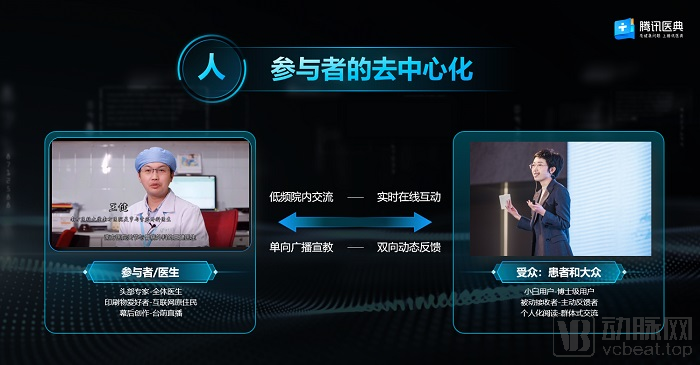
The Socialization of Medical Science Popularization
In the era of Medical Science Popularization 3.0, we can understand this phase as one where, following the systematic structuring of medical science communication, the dissemination model has shifted from “users seeking content” to “content seeking users,” with the public also contributing back to the creation of such content. Through social and scenario-based interactions, a vast amount of medical knowledge has been disseminated. No longer confined within dedicated apps, medical science content now appears in various unexpected places: news clients, weather forecast apps, and even on smart terminals such as wearable devices.
The realization of the advent of the 3.0 era of medical science popularization has also promptedTencent Medical Encyclopedia has timely launched three major initiatives: the Medical Science Popularization Officer Program, the Public Science Popularization Officer Program, and the Content Openness Program.
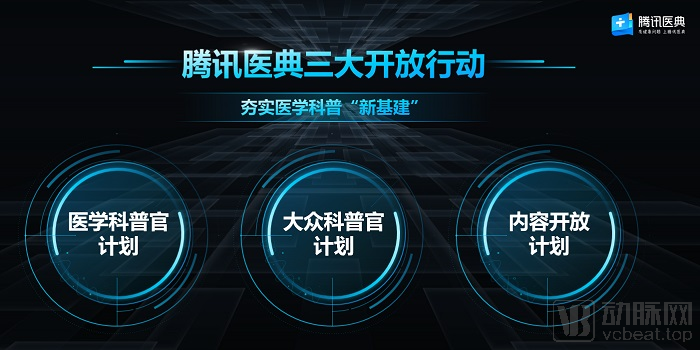
The Medical Science Popularization Officer Program is primarily targeted at physicians.Tencent Medical Encyclopedia has introduced Wikipedia’s open collaborative model into medical science popularization, and seeks to encourage physicians to provide valuable educational content and build their personal brands through support policies such as operational guidance and service connectivity, as well as traffic and cash incentives for emerging authors.
The Public Science Popularization Officer Program is primarily targeted at KOLs.For key opinion leaders active in science popularization communities and patient support groups (who may themselves be patients), Tencent Yidian will provide standardized toolkits—comprising extensive medical content, resource connections with hundreds of hospitals and thousands of physicians, and systematic training and guidance. Additionally, through the “Circles” mutual-aid community module within Tencent Yidian, specific disease areas will be selected, and “Public Science Popularization Officers” will be appointed as community managers to help these leaders expand their influence.
Content Open Plan is available to other platforms.Tencent has open-sourced its APIs and established partnerships with various platforms, including search portals, content platforms, mobile applications, and smart hardware, thereby enabling widespread access to a vast repository of medical science popularization knowledge.
During this September’s Tencent Global Digital Ecosystem Conference, VCBeat interviewed Zhang Meng, Vice President of Tencent Healthcare. Zhang Meng stated, “Much like the development of WeChat,”Tencent Healthcare’s focus on the consumer side is to build up its user base, which constitutes the accumulation of Tencent’s core competitiveness, while simultaneously integrating with the business side and advancing the digital transformation of healthcare partners through a C2B model.However, consistent with our original intent in developing the Medical Compendium, while consumers (C-end users) are the recipients of our services in the healthcare sector, they are not necessarily the payers. WeWhen monetizing user value, we strive to safeguard users’ interests and remain true to our original mission.”
For Tencent, the more pressing priority at present is to deliver high-quality content that meets user needs, rather than focusing on commercial monetization. This also reflects Tencent’s commitment to its vision of “Tech for Good.”
For Tencent Medical Dictionary, the ultimate goal is, in fact, to continuously leverage its strengths in social networking and operations, thereby truly integrating medical science popularization into people’s daily lives. As Huang Lei, Vice President of Tencent Healthcare, stated at this year’s ME Conference,“Medical science popularization is expected to permeate the public’s daily life like capillaries, bridging the information gap, driving the evolution of public health literacy, and helping to improve residents’ health levels.”。