

Biden's Healthcare Rescue Plan: Tackling Pandemic Response and Overhauling U.S. Health Insurance Post-2020 Election
According to the Associated Press (AP)、CNN (CNN, Fox News Channel (Fox News), National Broadcasting Company (NBC), British Broadcasting Corporation (BBC), and other foreign media outletsAuthorityReport: Democratic Presidential CandidateJoseph·BidenInWon the 2020 U.S. presidential election.This meansThe most intense and chaotic leadership election in U.S. history has come to a close,BidenUpcomingTo officially assume office in early next year.
As evident from Biden’s campaign speeches, his administration will implement reforms across multiple domestic sectors in the United States, with healthcare regarded as a top priority.
According to Gallup’s annual survey of public satisfaction with industry image, the healthcare sector ranked among the 25 industries surveyed in 2020.Third from the last, thus highlighting the extreme disappointment and distrust of the American public toward the national healthcare system.
Where Should the U.S. Healthcare System Go Amid Its Current Quagmire? What Changes Will Biden, Who Holds Great Promise, Bring to the American Healthcare Landscape? Can He Effectively Control the Deteriorating Pandemic Situation, and How Will He Address the Long-Standing Challenge of Reforming Universal Health Coverage in the United States?

Unlike the Trump administration’s inaction, Biden has given sufficient attention to the healthcare sector, considering it the most critical component of his agenda.
He put forward new healthcare proposals in his campaign manifesto, emphasizing that he wouldEpidemic Prevention and Control, Medical Insurance Policies, Global Layoutimplement “sweeping” reforms in these areas, thereby bringing the chaotic U.S. healthcare system back on track. According to expert predictions, Biden will, in the near term,Increase federal healthcare spending to $2 trillion or more over the next 10 years, which demonstrates Biden's determination and resolute resolve to succeed in healthcare reform.
Rebuilding Public Trust, Going All Out on Vaccine R&D
In pandemic control, unlike the “lax and unstructured” approach advocated by the Trump administration, Biden advocates a more proactive and assertive strategy. The top priority is to rebuild public trust in the Centers for Disease Control and Prevention (CDC) and in vaccine utilization. Additionally, Biden will establish a team of experts to fully accelerate vaccine research and development, with vaccines to be provided free of charge to the public in the future.
It is worth mentioning that Biden willLeverage the Defense Production Act to enhance the nation’s capacity to manufacture personal protective equipment. He also supported legislation introduced in the Senate by then-Senator Kamala Harris in the spring, which aimed to establish a separate task force focused on racial and ethnic diversity during the COVID-19 pandemic.
Meanwhile, BidenThe plan aims to help businesses and schools reopen, provide greater financial support for workers, and ensure that everyone who contracts the virus, as well as those caring for patients, can access paid leave.
Revitalizing the Affordable Care Act: Striving to Insure Over 97% of Americans
During his tenure as Vice President, Biden personally witnessed the historic moment when President Obama signed the Affordable Care Act into law. Thus, in contrast to the Trump administration’s disdain for the legislation, Biden seeks to protect and expand the Affordable Care Act introduced under President Obama.
Biden plans to introduce government-run public health insurance, such as Medicare (the U.S. Federal Health Insurance Program), to coexist and compete with private health insurance, giving Americans more choices.
Meanwhile, Biden advocates eliminating the current income cap set at four times the federal poverty level for subsidized enrollees. His plan aims to reduce the cap on healthcare premiums as a percentage of enrollees’ income from the current 9.86% to 8.5% through tax credits, and requires insurers to cover 80% of medical expenses.“Golden Plan”(The Gold Plan) serves as the calculation standard. (Currently, the “Silver Plan,” under which the insurance company covers 70% of expenses, applies.)
To address the issue of 4.9 million adults being unable to obtain health insurance due to state policy barriers, Biden will expand insurance coverage to a broader population by offering a public network plan with waived premiums.
Return to the WHO, and Secure Substantive Global Power and Influence
On July 6, 2020, the Trump administration formally notified the U.S. Congress and the United Nations of its decision to withdraw from the WHO (World Health Organization); the application has been submitted and will take effect on July 6, 2021.
In response to the Trump administration’s “withdrawal from international agreements,” Biden was firmly opposed, publicly stating, ““On my first day in office as President, I will lead the United States back into the WHO and restore our leadership role on the world stage.”
In Biden’s view, the United States’ withdrawal from the WHO will entail serious consequences in the future. On one hand, the U.S. would have to take unilateral measures to address global public health emergencies; on the other, it would forfeit substantive rights and influence within major global public institutions. This would create significant obstacles for the U.S. in managing the pandemic and pursuing its future development.
The ongoing spread of the epidemic has left the United States facing one of the most severe and complex national crises in more than half a century. Therefore, President Biden’s top priority is to lead the American public in combating the pandemic and doing everything possible to save more lives this winter.
The Pandemic Continues to Worsen, and Biden Has Begun to Take Action
As of November 11, 2020,U.S. COVID-19 Cases Surpass 10 Million, Ranking First Globally, and even more alarming is that the average daily number of new cases has begun to surpass the 100,000 mark, with daily deaths once again exceeding 1,000. Furthermore, as the holiday season and winter approach, millions of Americans will be traveling, and case counts and fatalities may continue to rise.
Complicating matters further, during the ensuing eight-week transition period, the outgoing Trump administration may take no additional action to curb the surge in infections, while state and local leaders may fail to mount an adequate emergency response. Meanwhile, in a nation plagued by misinformation, the public is already exhausted; many individuals are no longer adhering to social distancing measures and remain skeptical about vaccine efficacy.
But it is reassuring that President-elect Biden has already focused his attention on the pandemic, as he announcedA special task force composed entirely of physicians and epidemiologists has been established.He will immediately undertake several daunting tasks, includingSignificantly expand testing capacity, restore the credibility of government scientists, and oversee the final distribution of hundreds of millions of vaccine doses.
Although it did not receive the support of the current administration, Biden’s aides stated that Biden had already begun communicating with experts and local governments on the details of pandemic response before the election. While the Trump administration filed one election lawsuit after another, he had already started considering how to carry out epidemic prevention and control work nationwide.
>>>>
Rebuilding Trust to Encourage Public Proactive Participation in Epidemic Prevention and Control
To preventBiden to Take Action Against the Trump Administration’s Relentless Lies and Misinformation on the PandemicRevitalizing the U.S. Centers for Disease Control and Prevention, this institution, once regarded as the gold standard for global public health, has been overshadowed by politicization during the pandemic.
To fully demonstrate its value, the Biden administration will allow the Centers for Disease Control and Prevention (CDC) to act based on science rather than political expediency. This will not only enable the agency to provide clearer guidance on epidemic prevention and control but also facilitate the rapid formulation of practical and feasible policies, such as mandating mask-wearing on public transportation.
Another issue to address is rebuilding public trust in COVID-19 vaccines. The Biden administration will encourage more people to voluntarily get vaccinated by having scientists provide open and transparent updates on the progress of vaccine development and distribution.
Assemble a Scientific Team to Fully Commit to Vaccine R&D
In responding to the epidemic, prevention and control measures are indispensable; however, vaccine development is the “centerpiece” if we are to truly resolve the issue.
Biden Administration PlanEstablish a Special Task Force on the COVID-19 Pandemic Led by Public Health Experts, the team includes Murthy, who served as the U.S. Surgeon General during the Obama administration, and Rick Bright, the “whistleblower” of the U.S. pandemic response, who warned President Trump in the early stages of the outbreak that the country’s core medical infrastructure was severely inadequate. In addition, the core team comprises former FDA Commissioner David Kessler and Yale School of Medicine professor Smith, among others. They will devote themselves fully to vaccine research and development.
Not only that, the Biden administration willComprehensively Improve the Federal Government’s Coordination in Combating COVID-19.This could revitalize the White House Office of Pandemic Preparedness and Response Policy, which was disbanded under the Trump administration. It would facilitate expanded testing efforts by partnering with laboratories and companies across the United States to address bottlenecks that have hitherto constrained U.S. testing capacity. Furthermore, it could establish aNational Contact Tracing Program, helping lower-level governments coordinate efforts across local and state boundaries.
In contrast to Trump’s “willful neglect” of the COVID-19 pandemic, Biden has given it sufficient attention, stating in a speech:“I believe in vaccines, and even more so in science. The United States can no longer afford to make repeated missteps in its pandemic response.”
The immediate challenge lies in pandemic control, while looking ahead, Biden will devote greater attention to the long-standing issue of universal healthcare reform.
AsThe Only Developed Country in the World Without a “Universal Healthcare System”, the U.S. healthcare insurance policy has long been mired in an awkward position of widespread criticism. In the face of this nearly irreconcilable social contradiction, the Biden administration will embark on comprehensive reforms from the inside out, aiming to extend health insurance coverage to a broader population.
>>>>
A Century-Long Tug-of-War: Universal Health Coverage Repeatedly Misses Opportunities
A look at the history of U.S. healthcare reform toward “universal health coverage” reveals a narrative more captivating than any Hollywood blockbuster, replete with dramatic twists and legendary intrigue.
Over the past century, supporters and opponents of universal health care in the United States have taken turns taking center stage, with one side advancing its cause under the banner of “equality” and the other opposing it in the name of “freedom,” each steadfast in its position and unwilling to yield.
In 1901, upon taking office, Theodore Roosevelt immediately began planning a national healthcare security system. His approach mirrored contemporary proposals: mandating increased financial contributions from both individuals and employers to ensure access to medical care when needed. However, in the United States of that era, where liberalism was the prevailing ideology, such “hegemonic policies” were not only unacceptable but also difficult for many to comprehend. Consequently, during his eight-year presidency, Roosevelt made virtually no progress in reforming the national healthcare security system.
In 1916, economist Irving Fisher took up the mantle, vigorously advocating for the adoption of the German model to advance universal health insurance. However, just as Fisher was promoting universal health coverage with Germany as the blueprint, World War I broke out. In 1917, the United States declared war on Germany, sparking an immediate wave of anti-German sentiment across the country. As expected, the proposal for universal health insurance was once again stillborn.
After nearly two decades of dormancy, Franklin D. Roosevelt once again placed the promotion of universal health insurance on the agenda, even drafting the Social Security Act specifically for this purpose. However, just as Roosevelt and the American Medical Association (AMA) were locked in a stalemate, Germany inadvertently provided a decisive boost to the opposition: the outbreak of World War II shifted the nation’s focus to whether the United States should enter the war, causing the issue of universal health insurance reform to be “completely forgotten.”
After the death of Franklin D. Roosevelt, Harry Truman assumed the presidency and, with it, the noble mission of advancing national health insurance reform. He devoted half his life to this cause, earning him the title of “the political godfather of universal healthcare in the United States.” The reform plan he crafted was remarkably comprehensive, yet it crossed a red line for many Americans: its system bore too close a resemblance to the “state-funded medical care” model of the Soviet Union at the time. Unsurprisingly, this effort also ended in failure.
Although the road ahead is long, the flame in the hearts of Americans who yearn for universal health coverage has not been extinguished. In 1960, upon officially assuming office, President John F. Kennedy appointed a task force on his first day to advance universal health insurance. Tragically, however, Kennedy was assassinated while campaigning. This bullet, paradoxically, paved the way for the first major victory for universal health coverage. Following Kennedy’s assassination, Vice President Lyndon B. Johnson assumed the presidency amid crisis. Leveraging the nation’s mourning and enduring affection for Kennedy, Johnson seized the momentum and, on July 30, 1965, secured the passage of the Social Security Amendments, thereby establishing the United States’ first-ever social health insurance program.
But this could not be considered a true success, as the insurance system did not cover the vast majority of Americans. Over the next half-century, numerous leaders—including Nixon, Carter, Clinton, and Hillary—embarked on repeated efforts to implement universal healthcare reform, only to meet with failure each time.
On March 23, 2010, the U.S. Congress passed the bill by the then-U.S. PresidentObamaThe proposed healthcare reform bill, namely the Affordable Care Act. This is the first truly universal healthcare legislation in the United States, which will mainly proceed from three aspects: first, covering the remaining one-sixth of the uninsured population through mandatory insurance purchases; second, strictly prohibiting insurance companies from denying coverage or discriminating against insured individuals to ensure fairness; and third, increasing taxes on the middle and upper classes to enhance federal government healthcare funding.
The good times were short-lived. On May 6, 2017, the U.S. House of Representatives passed the Trump administration’s draft American Health Care Act by a vote of 217 in favor to 213 against. This meant that the Affordable Care Act, regarded as the most significant political legacy of Obama’s presidency, would henceforth vanish into thin air, and the universal healthcare system once again teetered on the brink of “collapse.”
And Biden’s inauguration may once again bring hope for universal health care reform.
Offer Americans a new choice by establishing public health insurance similar to Medicare.
Biden seeks to lower the minimum eligibility age for Medicare from 65 to 60. Additionally, he plans to offer public health insurance options, such as Medicare, alongside existing private plans, thereby providing Americans with more choices.
Modeled after Medicare, the health insurance plan created by President Biden will leverage effective negotiations with hospitals and other healthcare providers to curb exorbitant costs. Furthermore, the plan will coordinate care between patients and physicians to enhance the efficiency and quality of treatment, all without any out-of-pocket expenses. This development will provide relief to small businesses striving to offer insurance coverage for their employees.
Increase the value of tax credits to lower premiums and expand coverage to more households
Biden advocates for tax credits for households with incomes between 100% and 400% of the federal poverty level to reduce their health insurance costs for various treatments.
On the other hand, Biden will eliminate the 400% income cap for tax credit eligibility and lower the premium contribution limit from 9.86% to 8.5% of income, bringing significant benefits to middle-class families. This means that regardless of income level, families purchasing insurance in any marketplace will not have to spend more than 8.5% of their income on health insurance. Notably, Biden will also calculate tax credits based on the cost of more generous Gold plans rather than Silver plans, thereby increasing the size of the tax credits. The substantial reduction in out-of-pocket costs will enable more families to afford the insurance they need.
Expanding Insurance Coverage for Low-Income Americans
Nowadays,Approximately 30 million people in the United States lack health insurance., among whom the low-income population constitutes the vast majority. On one hand, they are not covered by the existing public health insurance system; on the other hand, the high cost of private insurance deters low-income individuals who are struggling to make ends meet.
But Biden’s inauguration may make health insurance no longer out of reach for low-income populations.
Access to affordable health insurance should not depend on the politics of the state in which people live, yet today, state governments are blocking millions of low-income Americans from obtaining coverage. Governors and state legislatures in 14 U.S. states have refused to accept the Medicaid eligibility expansion provisions under the Affordable Care Act, thereby denying Medicaid coverage to 4.9 million adults. Biden’s plan will ensure these individuals are covered by providing a free public option to the 4.9 million people who are eligible for Medicaid but lack access due to state inaction, and will guarantee that this public option covers the full scope of Medicaid benefits.
Additionally, states that have expanded Medicaid will have the option to transition the expansion population into a public option without additional premiums, provided that the states continue to pay their current share of the costs for covering these individuals.
Most importantly, Biden extended insurance coverage to individuals with incomes below 138% of the federal poverty level, enabling them to automatically qualify for health insurance policies when their data intersects with certain institutions (such as public schools) or other programs targeting low-income populations (such as SNAP).
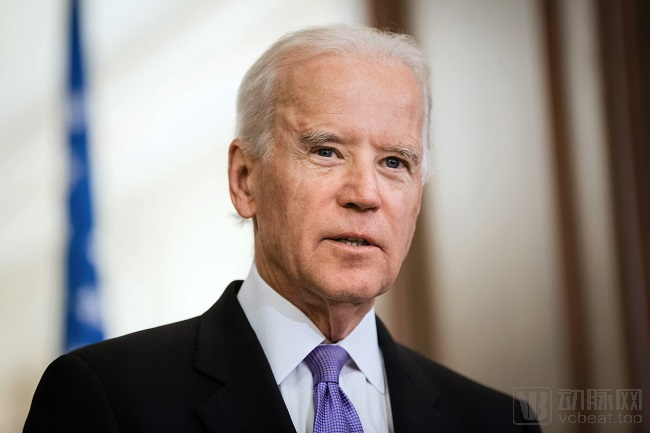
Image source: 123rf
The severity of the pandemic has put newly inaugurated President Biden in a precarious position. How can monitoring efforts be strengthened? Can comprehensive prevention and control measures be formulated? How much longer will vaccine development take? These are urgent challenges that lie before Biden.
Furthermore, will the fate of universal health insurance reform see a turning point under Biden’s leadership? What attitudes have various sectors in the United States adopted toward it? Where will the substantial funding requirements be addressed? The future performance of the Biden administration will directly test whether the goal of insuring over 97% of the U.S. population is merely a pipe dream.
All of this still awaits the test of time.