

Lingyan Tech Empowers Clinical Research for Over 200 Hospitals with AI-Driven SaaS Platform Ahead of IPO
Clinical practice and scientific research have never been isolated from each other. Ideally, clinical practice provides direction and samples for research, serving as a validation of scientific findings; meanwhile, scientific research offers new theories and methods to clinical practice, enhancing clinicians’ analytical capabilities and transforming their way of thinking.
In reality, physicians often encounter the following challenges when conducting scientific research: lack of time, difficulties in data analysis and processing, and absence of expert guidance. These issues have led to low utilization efficiency of clinical data and a need for improvement in the quantity of high-quality clinical papers in the current medical research field.
In light of this, Beijing Lingyan Technology Co., Ltd. (hereinafter referred to as “Lingyan Tech”) has launched the Lingyan Medical Research Platform, underpinned by scientific disciplines including clinical medicine, epidemiology, evidence-based medicine, artificial intelligence, big data, and statistics. By professionally streamlining research workflows and leveraging AI technologies, the platform provides maximal research support to clinical medical professionals and hospital administrators.
Over 30 Years of Expertise in Public Health: Building Research Tools for Physicians
The founding of Lingyan Technology stems from founder Chen Chen’s accumulation of over 30 years of work experience and his personal observations and insights.
Chen Chen, who studied public health at Beijing Medical College (now Peking University Health Science Center) in his early years, initially aspired to become a clinical physician. However, by a twist of fate, he entered the field of public health and has dedicated 30 years to it, contributing his efforts to the healthy development, reform, and innovation of China’s public health sector.
During his time at university, Chen Chen interacted with many students from the Department of Clinical Medicine and observed a phenomenon: clinical medicine students do not receive in-depth training in statistics and related subjects during their undergraduate studies, even though such knowledge constitutes an essential professional foundation for physicians conducting clinical research using data. Consequently, Chen Chen recognized that medical school education does not include systematic research training, leaving most physicians able to identify clinical problems but ill-equipped to address them through data analysis.
After graduation, Chen Chen joined the Health and Epidemic Prevention Station (now the Center for Disease Control and Prevention), where he worked at various levels and participated in emergency disaster relief efforts such as the Wenchuan and Yushu earthquakes. During this period, Chen Chen served for more than ten years as Deputy Director of the Office of Scientific and Technological Development, primarily responsible for the commercialization of scientific and technological achievements. Over these years, Chen Chen realized that what the current health industry lacks is not the ability to solve problems, but the tools to do so.
Guided by these insights and reflections, Chen Chen founded Lingyan Technology and assembled a multidisciplinary team of experts and professionals specializing in information technology, data analytics, clinical medicine, and public health. It is a young team; as Chen Chen puts it, Lingyan Technology bridges traditional medical research methodologies with modern scientific and technological advances, which explains why the team is predominantly composed of young professionals.
Three Major Modules to Meet Multi-Process Research Needs
For most clinicians, various stages of scientific research—including topic selection, study design, data collection and processing, statistical analysis, and manuscript preparation—are associated with varying degrees of challenges.
In this regard,Zero Research Technology focuses on areas where tools can simplify operations and has developed the Zero Research Medical Research Platform to help researchers address challenges such as data processing and statistical analysis.To ensure the significance of the research, the key stages of generating research ideas, collecting data, and writing manuscripts are still carried out by the researchers themselves throughout the entire scientific process.
The Lingyan Medical Research Platform primarily consists of three modules—research support, research templates, and literature retrieval—to facilitate the smooth conduct of clinical medical research.
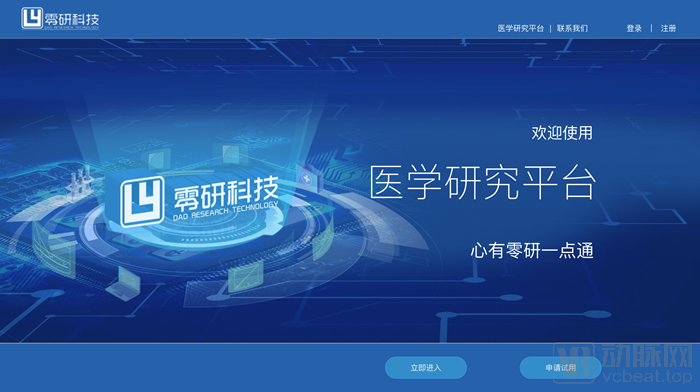
Through research-assistance features, researchers can freely choose their research pathways and methods, while the platform intelligently generates core charts with interpretations and article outlines, significantly reducing researchers’ workload and enhancing research efficiency.
The platform generates research templates by defining diseases, treatment regimens, observational indicators, and outcomes. Guided by these template tools, researchers can rapidly generate specific core charts and results, further lowering the barrier to scientific research.
The Lingyan Medical Research Platform aggregates millions of scholarly articles, providing researchers with literature search capabilities for both domestic and international publications.
Throughout the entire research process, researchers can customize their research pathways and methodologies at any time to meet a wider range of research needs. Furthermore,By leveraging the Zero Research Medical Research Platform, Zero Research Technology also provides researchers with methodological expert services and patient outcome query services, further empowering them to achieve scientific research outputs.。
The "Scalpel" in the Doctor's Hand
Since its inception, Lingyan Technology has consistently adhered to its platform positioning and followed its own principles:
Adhere to SaaS-based services; no on-premises deployment.. The Lingyan Medical Research Platform is a tool designed to assist medical professionals in solving problems, rather than a consumer-oriented product. Currently, the platform primarily provides each hospital with an administrative account, which can then generate individual accounts for physicians; all services are delivered via the cloud.
In terms of data processing, the Lingyan Medical Research Platform does not retain data imported by physicians; it only performs analytical processing on the data.;
Adhere to AI machine services, not human labor。
“Throughout, I have remained committed to positioning the Lingyan Medical Research Platform as a technical tool, akin to office productivity software, with the ultimate aim of enhancing physicians’ research efficiency and lowering the barriers to conducting medical research.” When using the Lingyan Medical Research Platform, physicians must still engage as researchers, leveraging machine assistance to facilitate the translation of their findings into tangible research outcomes.
Since its development was completed, the Lingyan Medical Research Platform has been adopted by physicians from 225 hospitals and researchers from seven medical institutions, with positive user feedback.
Assessment Tool for Medical Treatment Capacity During the Pandemic
The sudden outbreak of the COVID-19 pandemic led to strained medical resources and an imbalanced doctor-to-patient ratio in some hospitals in Wuhan. In response, Dr. Yan Li from Tongji Hospital affiliated with Huazhong University of Science and Technology contacted Zero Research Technology and commissioned the company to develop a self-screening tool designed to help patients perform self-diagnosis and self-testing.
This system not only provided significant support during the most severe phase of the epidemic in Wuhan, but also enabled overseas Chinese communities to access self-diagnosis and self-testing tools via the internet. This reduced the risk of infection associated with in-person medical visits and provided them with protective guidance from domestic experts, earning gratitude and acclaim from numerous overseas Chinese organizations worldwide.
Furthermore, Chen Chen led the Lingyan Technology team to actively respond to the national demand for epidemic prevention and control by developing a comprehensive suite of smart pandemic prevention and control solutions. These tools include a medical treatment capacity assessment platform, a clinical auxiliary management system for mild COVID-19 patients and suspected cases, and an intelligent screening and auxiliary diagnosis system for healthy populations. Notably, the medical treatment capacity assessment platform was completed on February 18 this year, becoming the world’s first tool for assessing medical resource needs during the COVID-19 outbreak.
This medical treatment capability assessment platform was developed by the Zero Research Technology team, based on the translation of scientific research outcomes from the Zero Research Medical Research Platform, and is primarily used forAssessing the demand for medical resources during the COVID-19 pandemic, including the current number of hospitalized patients and the severity of disease prevalence, to provide data-driven insights for decision-makers.。
By inputting basic demographic information, the platform estimates required medical resources using either static models or infectious disease transmission dynamics models within pandemic scenarios. To maximize the reliability of assessment results, VCBeat Research Institute has established collaborations with disease control experts to train model parameters. Throughout the platform’s operation, the two models are applied in different scenarios and yield distinct types of output.
Based on the model evaluation results, the platform can estimate the total number of peak daily admissions within a week, as well as the required medical and human resources, and ultimately generate an automated assessment report on healthcare resource demands.
By adjusting backend model parameters, the platform can be utilized for resource assessment in other infectious diseases., users need only select the disease type when using it.
Building a Scientific Research Ecosystem to Meet the Growing Needs of Medical Researchers
When discussing future development, Chen Chen stated that the primary focus will be on meeting the needs of more mid- to senior-level researchers. In addition to providing platforms and services to hospitals, research institutes, and other entities,Zero Research Technology will focus on hospitals and institutional entities as its primary clients, establishing extensive and in-depth partnerships with medical enterprises, data service providers, and other corporate entities.. In response, Chen Chen stated, “Lingyan Technology’s goal is to help the entire health and wellness industry and benefit more people.”
In the future, Lingyan Technology will integrate internet-based SaaS public cloud services with emerging information technologies such as big data and artificial intelligence to comprehensively achieve platform-based, intelligent, and innovative development in the healthcare industry.