

Sun Lizhong: Advancing Cardiothoracic Surgery Through Industry-Academia-Physician Collaboration
The patient’s blood was diverted to the cardiopulmonary bypass machine, the heart was arrested, and the body temperature was lowered to approximately 22°C. During this aortic dissection surgery, Professor Sun Lizhong needed to resect the diseased vessel and replace it with a prosthetic graft. He was required to implant a stent into the true lumen of the patient’s descending aorta, replace the aortic arch with a four-branched prosthetic graft, and then perform vascular anastomosis.
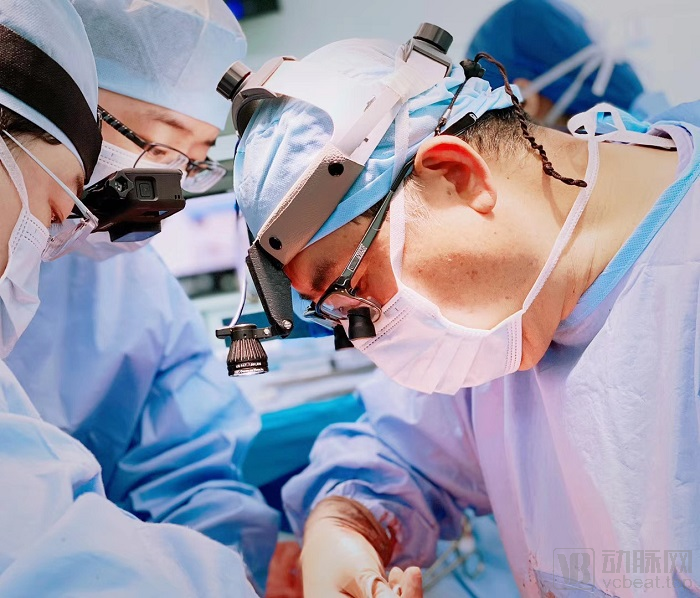
Professor Sun Lizhong during surgery
Less than an hour after Professor Sun Lizhong began the procedure, he completed what laypeople might consider a harrowing surgery. In reality, as the inventor of the “Sun’s Procedure,” specifically designed for patients with Stanford type A aortic dissection, he was already well-versed and highly proficient in performing it.
For Professor Sun Lizhong,Every surgery demands absolute precision; every second is a race against death.A tense and busy life has always been the norm, with daily surgical schedules packed to the brim.
However, the operating room is no place for individual heroism. Sun Lizhong emphasized, “Surgery for aortic dissection does not rely solely on individual effort; it requires collaboration across the entire team.” The significance of surgery extends beyond saving patients: “As surgical procedures advance, the entire team continuously improves and refines its coordination. The discipline has gradually developed from scratch, growing from small beginnings through the accumulation of individual cases.”
However, to truly advance the field of cardiac surgery at the national level, active collaboration among industry, academia, and research institutions is required.“Enterprises need to understand the needs of physicians and patients, set R&D goals based on these needs, and conduct research and development through collaboration with relevant technical personnel, including medical professionals,” while continuously improving products through clinical practice, ultimately driving industry advancement.
The “Sun’s Procedure,” pioneered by Sun Lizhong, has long gained widespread recognition within the medical community. Statistics show that the total number of such procedures performed across hospitals last year reached 8,500 cases. Currently, physicians at more than 100 hospitals are capable of performing this surgery, and the technique has been adopted in multiple countries and regions for the treatment of aortic dissection.
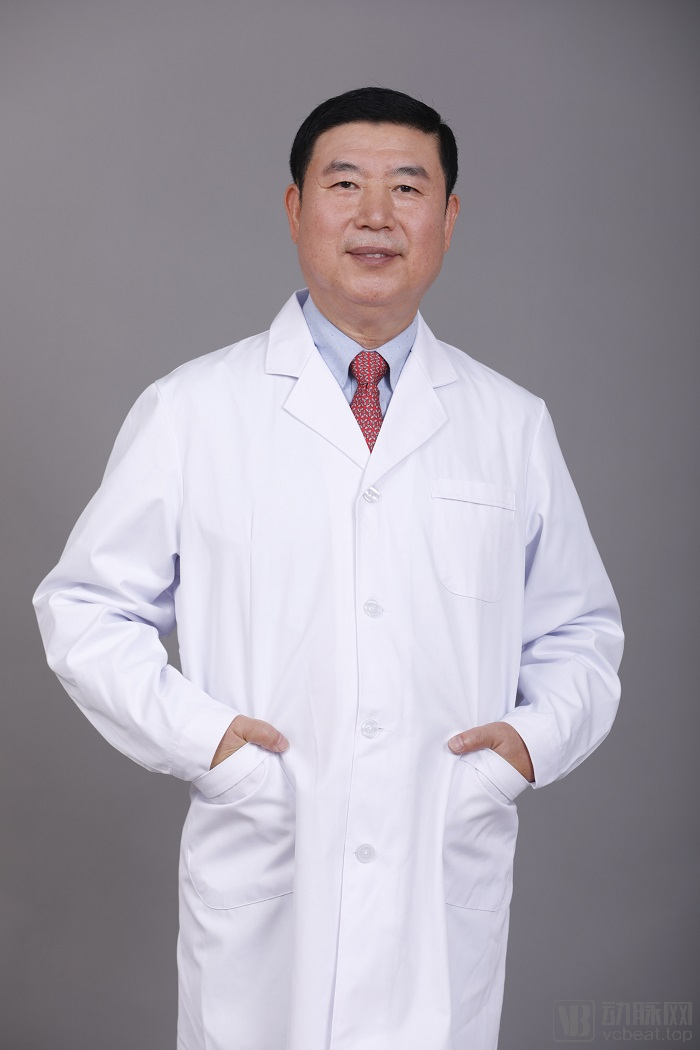
Sun LizhongProfessor, Chief Physician, Doctoral Supervisor, President-Elect of the Cardiothoracic Surgery Branch of the Chinese Medical Association
He proudly stated, “For many patients, treatment can be administered locally upon onset of symptoms, eliminating the need for long-distance transfer. Receiving surgery within the shortest possible time can prevent deaths caused by prolonged waiting.”New Surgical Techniques Reduce Operative Mortality in Aortic Dissection Patients from 20%-30% to 2%-3%.
As a cardiovascular surgeon, Director Sun Lizhong recognized early on that “due to the limited technological capabilities and materials available at the time, physicians found it difficult to perform aortic surgeries, often leading patients with aortic diseases to forgo surgical treatment.” To better serve these patients, he embarked on a series of explorations and was among the first to look toward his international counterparts for insights.
However, he soon realized that surgical techniques for the aortic arch used abroad were not necessarily suitable for patients in China. In December 1998, Sun Lizhong introduced the “aortic arch replacement + elephant trunk procedure,” a technique invented by German surgeons in 1987 to treat complex aortic arch pathologies, and performed this surgery on patients with aortic dissection in China. However, this procedure, which is applicable to aortic aneurysms, was not suitable for aortic dissection. From 1998 to 2003, he performed only 26 such surgeries. The surgical technique was not only highly challenging, but the outcomes were also less than ideal.
In 2003, during the SARS outbreak, Sun Lizhong, who remained preoccupied with how to simplify surgical procedures to benefit patients, had more time in the quiet, locked-down hospital to refine his surgical techniques. He humbly stated, “The new surgical approach draws on the German ‘elephant trunk’ procedure, stent-graft materials developed by Japanese physicians, and strategies for aortic arch replacement.” Building on this foundation, through the successful development of novel stent-graft materials and the establishment of a comprehensive protocol for neurological protection,Established a Chinese-characteristic and systematically comprehensive approach to aortic arch replacement combined with stented elephant trunk procedure.
In the process of establishing new surgical techniques, the emergence of novel stent-graft materials has been of paramount importance. Sun Lizhong emphasized, “Medical progress advances in tandem with technological progress, not just in surgery.”Without technological advancements, it is difficult for medicine to progress.Cardiovascular surgery, in particular, is highly dependent on materials. For instance, heart valve replacement surgery cannot be performed without prosthetic heart valves. Without equipment such as cardiopulmonary bypass machines, cardiac surgery would not even exist.
He added, “Even a minor technical improvement to any product can alter clinical outcomes. In the future, it will remain essential to encourage engineering and technical personnel to devote more time and energy to the research and development of new products; only in this way can physicians and patients truly appreciate the medical advancements driven by technological progress.”
In fact, talent proficient in both medicine and R&D will remain in short supply, both now and in the future.The development of novel materials that transform clinical technologies ultimately requires collaboration between clinicians and corporate R&D personnel.
Throughout the development of his stent-graft, enterprises played an indispensable role. Upon receiving his request, a Shanghai-based company dispatched an engineer to his hospital, who accompanied him into the operating room to gain a firsthand understanding of his requirements.
Initially, his idea was to “insert a water balloon inside the artificial blood vessel and, after the artificial blood vessel is implanted in place, inflate the artificial blood vessel by injecting water into the balloon.” Later, after various attempts with engineers, it was determined to use self-expanding artificial blood vessels, and the problem of the delivery device for delivering stent grafts was finally solved: by wrapping a thread around a guidewire, placing it into the blood vessel, and simply pulling the guidewire, the thread would naturally unfold; after removing the thread, the stent graft would be positioned correctly.
Recalling the process, he noted that it took nearly two years from the initial concept to the emergence of the new material. “Throughout this period, we specified our requirements, and the engineers developed and refined the product accordingly. Once the product was developed, we conducted various clinical trials.” He pointed out that, given physicians’ urgent needs, they are generally willing to actively participate in the clinical use of new products. “The key lies in whether the product can truly streamline clinical workflows, reduce physicians’ workload, and ensure patient safety.”
He toThere are three criteria for determining whether the clinical application of new materials and methods can be sustained:
First, for patients, the product must be both safe and effective. Neither can be compromised.
Second, for physicians, it should serve to simplify their workflows rather than increase the level of difficulty.
Third, after the product is officially promoted and applied, the costs borne by patients and society should continue to decrease.
andBoth the research and development process and the application process of new materials require collaboration between clinicians and corporate engineers.“The more sophisticated and cutting-edge the product, the greater the need for collaboration between medical professionals and R&D teams. For instance, although artificial hearts are developed by engineers, such products cannot be created without the direct involvement of clinicians; relying solely on engineers is insufficient.” To facilitate broader adoption and promotion, “hospitals and enterprises should jointly promote these technologies through various academic activities and lectures, educating the public on their proper use.”
In this process, in addition to corporate social responsibility, economic incentives are necessary to drive companies to increase their R&D and production efforts. Sun Lizhong also expressed hope that policies would continue to encourage corporate participation in scientific research and innovation. He further emphasized that clinical demand must come first. “In the area of aortic arch reconstruction, companies are currently conducting research and exploration, such as developing sutureless stent grafts. These materials have the potential to change our clinical practices in the future.”
In response to the needs of clinicians, he stated,Patient needs come first.“If the volume of product application is low, even highly sophisticated products may have little market potential. Without sustained production, it is impossible to continue realizing their value.” The market demands that patient needs be placed first.
Placing clinicians’ needs second is because patient demand drives the emergence of the entire market, whereas clinicians’ needs only drive the development of medical devices and materials. Physicians require labor-saving medical devices and materials; if these materials are overly complex, physicians will be unable to meet patient demand, thereby hindering further promotion and adoption of the products.
Patients serve as the payers, and medical devices should be affordable to them.“Although China has a large number of heart failure patients, cardiac assist devices have not been widely adopted. This is largely because patients cannot afford them. Similarly, robot-assisted cardiac surgeries are accessible only to specific populations, partly due to patients’ inability to bear the costs, which also hinders the broad dissemination of these products.”
The Sun’s procedure has been able to gain widespread adoption precisely because the new product’s combination of high quality and affordability meets patient needs. A large number of domestic and international physicians have traveled to the hospital where Sun Lizhong practices for training. According to his statistics, the hospital has held 15–16 domestic training courses and 7–8 international training courses to date, with an innumerable number of medical professionals having participated in advanced studies. For this reason, physicians performing the Sun’s procedure both domestically and abroad are directly or indirectly affiliated with him.
In this process,"The existence of patient demand has also fostered the development of a large number of healthcare professionals."It involves not only cardiac surgeons but also anesthesiologists, perfusionists, intensive care physicians, as well as a large number of nurses and technicians. The promotion of the Sun’s procedure has enabled extensive training for numerous technicians, significantly enhancing the level of cardiovascular surgery at their respective hospitals.
When asked whether the pain points in the field of cardiac surgery have changed after addressing the issue of aortic dissection, Sun Lizhong expressed his concern, stating, “Cardiovascular surgery is currently at a bottleneck stage. Cardiovascular surgery in China is divided into four main sectors, including congenital heart disease, valvular heart disease, coronary artery disease, and large vessel diseases. Surgical procedures for large vessel diseases have seen rapid development over the past decade, while among other conditions, only the number of valvular surgeries has increased.”
On one hand, patients have concerns about open-chest surgery due to the influence of traditional beliefs. On the other hand, current economic conditions and healthcare service capabilities are insufficient to fully meet patient needs.He stated that there is currently a severe shortage of cardiac surgeons, with only about 5,000 nationwide. Further healthcare policy reforms are needed in the field of cardiac surgery, including adjustments to compensation and benefits for medical personnel, to ensure they receive the dignity commensurate with their profession.
Even the Sun’s procedure has been refined over the past 15 years, keeping pace with technological advancements.For instance, some physicians are exploring distal suture-free materials, while others are investigating alternative multi-branched artificial graft materials. In terms of surgical techniques, some surgeons are attempting endovascular suturing methods. He is optimistic about the future prospects, noting that “aortic arch surgery is undergoing improvement and advancement.”
In the interview, Sun Lizhong emphasized more than once thatTo foster the development of cardiac surgery, multi-party collaboration is essential to forge a unique path. In this process, policymakers must improve the compensation and professional standing of healthcare workers to ensure they receive due respect; enterprises should be encouraged to innovate and develop new products, securing corresponding economic returns to enable sustainable, cyclical investment in R&D; and commercial insurance should integrate into the medical payment system to better meet patient needs.
He proudly stated that there is currently little difference between domestic products, such as heart valves, and those from developed countries abroad, emphasizing that Chinese people should have confidence in their own products. “From the bottom of my heart, I hope that our peers in the future will be able to carry out their work with their heads held high.”
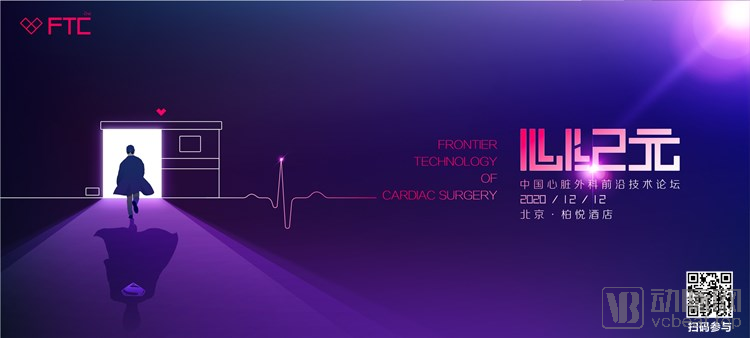
To further advance the field of cardiac surgery, deep collaboration among academia, industry, research institutions, and clinical practice, coupled with continuous innovation, is essential. The "China Cardiac Surgery Frontier Technology Forum (2020 FTC)," initiated by Professor Sun Lizhong, will be held in Beijing on December 12. Themed "Cardiac Era," the forum features four key segments: discipline development, talent cultivation, frontier technology trends, and integrated collaboration among academia, industry, research, and clinical practice. Distinguished academic and industry experts will convene to comprehensively analyze the current status and challenges of cardiac surgery in China, fostering a strong nationwide synergy among cardiac surgery departments across the country.