

CD47: The Next PD-1? I-Mab’s Lemzoparlimab Overcomes Safety Hurdles and Shows Early Efficacy

NovaBridge Biosciences
Biological Agent Developer
CD47 Monoclonal Antibodies Take Center Stage at SITC 2020, with Tianjing Biotechnology’s Best-in-Class Candidate Showing Early Promise
PD-1 monoclonal antibodies have become a hot topic in the pharmaceutical industry in recent years due to their broad applicability and clinical value. Starting from late 2018, four domestically produced PD-1 monoclonal antibodies were successively launched, gradually signaling the end of the first round of competition for PD-1 inhibitors and officially kicking off an arms race for expanding product indications. Meanwhile, the pharmaceutical industry has begun to focus on another question: Who will be the next PD-1?
Many people have pinned their hopes on another immune checkpoint target, CTLA-4, as the U.S. FDA has approved two products targeting this pathway: ipilimumab and tremelimumab. However, based on current clinical outcomes and sales figures, CTLA-4 inhibitors are still unlikely to unseat PD-1 from its dominant position.
In early 2020, Gilead Sciences acquired Forty Seven, a pioneer in CD47 monoclonal antibodies, for $4.9 billion, reigniting interest in this target. In the second half of 2020, I-Mab and AbbVie entered into a global strategic collaboration on lemzoparlimab, a CD47 monoclonal antibody, with a total value of $2.94 billion, bringing the CD47 target back to the center stage of the pharmaceutical industry. At the recent Society for Immunotherapy of Cancer (SITC) Annual Meeting 2020, several companies presented clinical trial results for their CD47 monoclonal antibodies, suggesting that the market approval of CD47 monoclonal antibodies is drawing nearer.
The CD47 target last made headlines several years ago, but the news at that time was hardly encouraging. In late 2017, Tioma (now renamed Arch Oncology) terminated a Phase I clinical trial of its anti-CD47 monoclonal antibody Ti-061 for solid tumors in Europe. In late 2018, Celgene quietly halted the clinical development of its anti-CD47 monoclonal antibody CC-90002 for the treatment of acute myeloid leukemia (AML) and high-risk myelodysplastic syndromes (MDS). These two consecutive setbacks cast doubt on the therapeutic value of the CD47 target, sparking discussions such as, “Is the CD47 story already over?”
The underlying reason is that the distribution of the CD47 target in the human body makes the development of innovative drugs targeting it extremely challenging.
As immune checkpoints, CD47 and PD-1 share certain fundamental mechanistic similarities. CD47 is abundantly expressed on the surface of tumor cells; upon binding to SIRPα on macrophages, it transmits a “don’t eat me” signal that inhibits macrophage-mediated phagocytosis of tumor cells. Therefore, blocking the interaction of CD47 enables macrophages to properly recognize tumor cells and subsequently phagocytose and eliminate them.
This story sounds like a direct parallel to the PD-1 narrative, with PD-1 replaced by CD47, PD-L1 replaced by SIRPα, and T cells replaced by macrophages. Therefore, from the perspective of underlying mechanisms, anti-CD47 monoclonal antibodies indeed have the potential to become the next anti-PD-1 monoclonal antibodies.
However, unlike PD-1, CD47 is not only widely distributed on the surface of tumor cells but is also abundantly expressed on human red blood cells. Consequently, if a CD47 monoclonal antibody is designed merely to accurately recognize its target, the drug will expose red blood cells to macrophage-mediated phagocytosis while targeting tumors, thereby triggering hemolytic anemia. The druggability of the CD47 target has therefore been widely criticized. The greatest challenge it faces is not the ultimate efficacy of the drug, but rather how to design antibodies that avoid adverse reactions.
Indeed, Forty Seven’s magrolimab nearly failed to advance beyond early development. During the Phase I dose-escalation trial, two dose-limiting toxicities (DLTs) occurred at the 3 mg/kg dose level. Learning from this experience, the company adopted a priming dose regimen to reduce the incidence of severe anemia: all patients first received an initial dose of 1 mg/kg before proceeding to the scheduled escalating doses. By late 2019, Forty Seven delivered impressive results. At ASH 2019, the company reported findings from its Phase 1b clinical trial evaluating the CD47 monoclonal antibody magrolimab in combination with azacitidine as first-line therapy for acute myeloid leukemia (AML) and myelodysplastic syndromes (MDS). In the MDS cohort, 12 patients achieved complete remission (CR), yielding an overall response rate (ORR) of 92%; in the AML cohort, 9 patients achieved CR, with an ORR of 64%. To mitigate drug-related adverse effects, all patients received an initial magrolimab dose of 1 mg/kg, which was gradually escalated up to 30 mg/kg. Based on the statistical data available at that time, the treatment was well tolerated across all patients.
Forty Seven’s clinical trial results have undoubtedly served as a major boost to the market, indicating that the CD47 target is not only druggable but also holds significant clinical value.
Although Forty Seven was the first company to report positive clinical trial results, it is not alone in the race to develop CD47 monoclonal antibodies. Nearly 20 companies worldwide are targeting CD47 mAbs, including several innovative Chinese pharmaceutical firms.
At SITC 2020, several Chinese innovative pharmaceutical companies, including I-Mab, Innovent Biologics, and Akeso, presented their data on CD47 monoclonal antibodies. Among them, I-Mab, which had just announced a collaboration with AbbVie, naturally became the center of attention. There was widespread interest in seeing how lemzoparlimab (TJC4), the asset for which AbbVie paid nearly $3 billion, would perform.
Tianjing Biotechnology has maintained a steadfast focus on the CD47 target since its inception, never wavering even during periods when this target faced skepticism from the broader community. In an interview with VCBeat, Dr. Zang Jingwu, Chairman of Tianjing Biotechnology, noted that the explosive popularity of PD-1/PD-L1 inhibitors and CAR-T therapies had led the innovative drug industry to concentrate predominantly on T cell-related treatments. Consequently, four years ago, Tianjing Biotechnology established a strategy of differentiated competition, directing its attention toward other immune cells and novel targets associated with modulating the tumor microenvironment. As one of the critical pathways regulating macrophage function, CD47 naturally became a key focus for Tianjing Biotechnology.
Lemzoparlimab has maintained a leading position throughout its development. In preclinical studies, it demonstrated high affinity for tumor CD47 while exhibiting minimal binding to CD47 on the surface of red blood cells. In preclinical toxicology studies in cynomolgus monkeys, lemzoparlimab remained well tolerated even at repeated high doses of up to 100 mg/kg.
Based on robust preclinical results, lemzoparlimab received Investigational New Drug (IND) clearance from the U.S. Food and Drug Administration (FDA) in January 2019, with the first patient dosed in June of that year. Shortly thereafter, in July 2019, the Center for Drug Evaluation (CDE) of China’s National Medical Products Administration approved the Phase 1/2a clinical trial application for lemzoparlimab, and the first patient was dosed in April of the following year.
The rapid progress of lemzoparlimab was quickly noticed by multinational pharmaceutical companies. Before AbbVie made its significant investment, Merck had already extended an olive branch to lemzoparlimab. In September 2019, Tianjing Biotechnology established a clinical partnership with Merck.Merck & Co. is conducting clinical studies on combination therapy involving its star PD-1 monoclonal antibody product, Keytruda, and TJC4.The powerful combination of two generations of immune checkpoint inhibitors is truly promising.
To date, the first clinical trial of TJC4 is gradually drawing to a close, allowing us for the first time to glimpse its potential clinical value. Unlike Forty Seven, which chose to start with hematologic malignancies, I-Mab Biopharma directly targeted hard-to-treat solid tumors, confronting them head-on. In this Phase 1 clinical trial, lemzoparlimab further confirmed the favorable safety profile that had been demonstrated in preclinical studies.
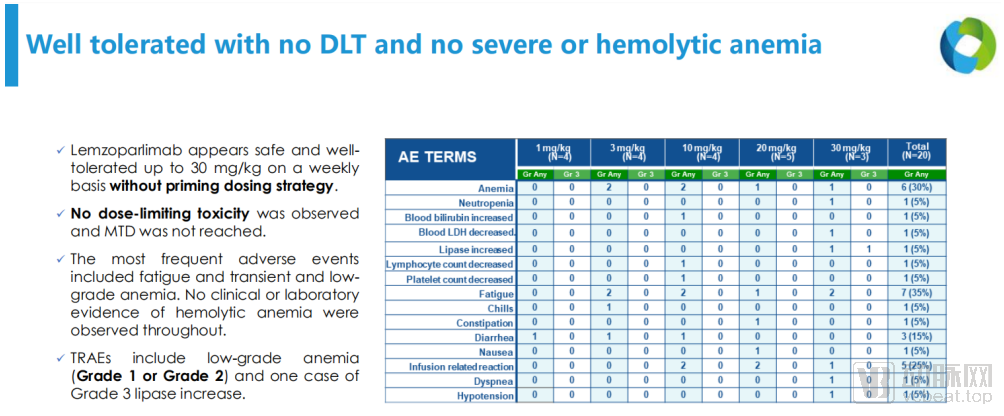
Safety-Related Data in Phase I Clinical Trials
In the absence of any premedication, lemzoparlimab administered weekly demonstrated good tolerability across the dose range from the lowest dose (1 mg/kg) to the highest dose (30 mg/kg). No dose-limiting toxicities or hemolytic anemia were observed in any dose cohort. The pharmacokinetic profile of single-dose lemzoparlimab was linear at mid-to-high doses, with no significant antigen "sink effect." No dose-limiting toxicity (DLT) events occurred.
As previously analyzed, demonstrating safety in clinical trials is critically important for CD47 monoclonal antibodies currently in the development stage.Therefore, the favorable safety profile demonstrated by lemzoparlimab in Phase I clinical trials serves as a reassuring milestone.
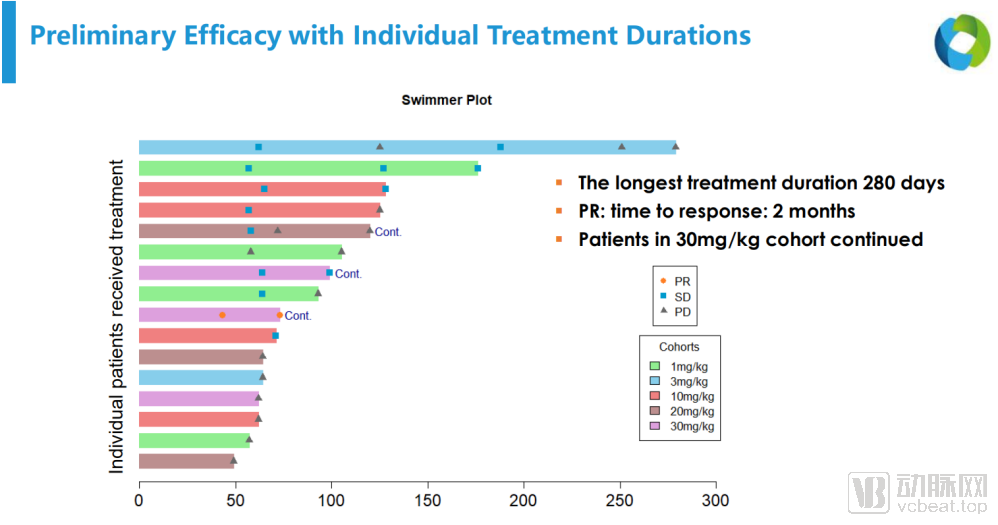
Treatment Status of Patients Participating in Clinical Trials
Meanwhile, TJC4 also demonstrated preliminary efficacy in this clinical trial.As of November 10, 2020, among all patients, one case of partial response (PR) and three cases of stable disease (SD) had been observed. The patient who achieved PR was a 74-year-old male with melanoma (liver metastases), who had previously undergone six months of monotherapy with Opdivo followed by combination therapy with Opdivo and Yervoy. Response was observed on Day 1 of Cycle 3 of lemzoparlimab treatment, and the patient remains in ongoing response.
Compared with the results of similar products previously announced, lemzoparlimab has stood out from its peers due to the safety and preliminary efficacy demonstrated in its Phase I clinical trial, showcasing its potential as a “Best-in-Class” candidate.
To date, Tianjing Biotechnology has followed its chosen path to establish a dual-drive development model of independent R&D plus License-in.
The development of innovative drugs requires long-term accumulation and a protracted clinical trial process. Tianjing Biotechnology needs an appropriate approach to ensure that it can generate revenue to balance its long-term R&D investments while continuing independent research and development. Most innovative drug companies face the same challenge, but their chosen solutions vary. Some opt for collaborations with other pharmaceutical companies to share R&D costs, while others choose to develop generic products. Tianjing Biotechnology has made the strategic choice to in-license drug products from external sources.
Leveraging its strong industry insights and project sourcing capabilities, Tianjing Biotechnology targets the time lag between the international and domestic launches of innovative drugs. Through collaborative in-licensing, it introduces globally clinically validated innovative drug products, while utilizing its advantages in clinical development and regulatory submission to accelerate their market entry. These in-licensed products will offset the lengthy commercialization timeline of Tianjing Biotechnology’s internally developed pipeline in the short term, enabling the company to reach profitability sooner.
Dr. Shen Huaqiong, CEO of Tianjing Biotechnology, shared with us that the company has developed its own methodology for selecting in-licensed products: “In the long term, the primary purpose of drug in-licensing is to bridge the product gap during our independent R&D process. When licensing drugs, we select new drug candidates that align with our drug pipeline based on our specific characteristics, demonstrate value within our investment portfolio, and can be launched in the Chinese market within a relatively short timeframe. Therefore, our selection of in-licensing targets is highly targeted.”
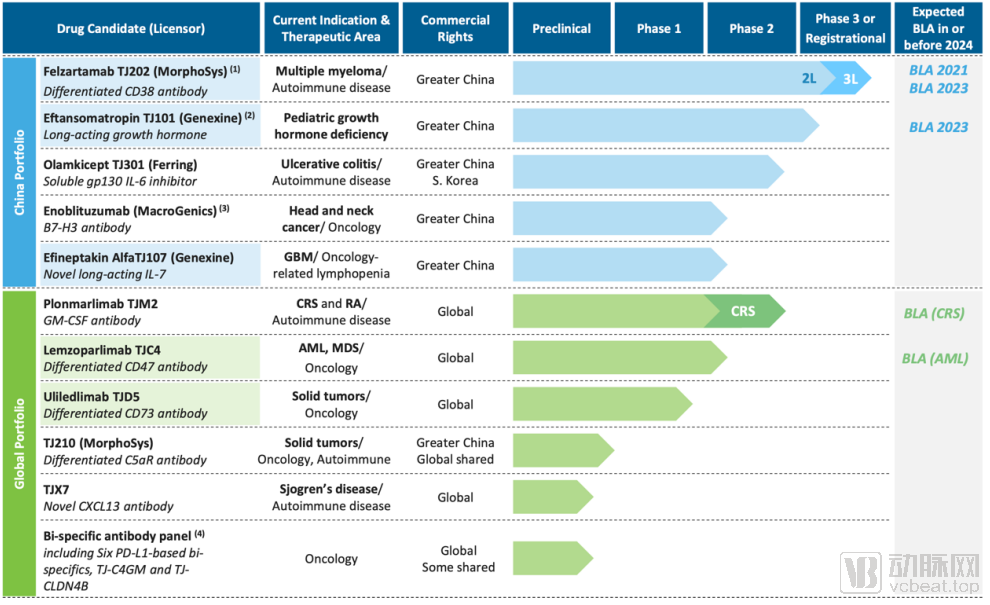
Tianjing Biotechnology's Pipeline Overview
All of I-Mab’s in-licensed product pipeline is progressing smoothly, with five key candidates having successfully entered clinical development. Among them, the core asset TJ202, a potential best-in-class therapeutic targeting the CD38 antigen on the surface of multiple myeloma cells, has advanced into Phase III clinical trials. If development continues as planned, I-Mab may file for marketing approval of TJ202 in 2021.
In terms of proprietary products, Tianjing Biotechnology possesses four advanced technological platforms for biological drug development, dedicated to the research and development of monoclonal antibodies, bispecific antibodies, HyFc fusion proteins, and antibody-cytokine conjugates. Regarding its product pipeline, three leading candidates have already initiated clinical trials in the United States.
In fact, the development of I-Mab’s self-developed pipeline should have been faster than it is now. However, during its growth, I-Mab selectively divested certain parts of its product portfolio, such as transferring its PD-L1 monoclonal antibody to Lepu Medical, assigning the hGLP-1-Fc fusion protein product TJ103 to CSPC Pharmaceutical Group, and licensing out the ex-Greater China rights for its bispecific antibody project to the South Korean biotechnology company ABL Bio.
This decision is closely tied to Tianjing Biotechnology’s original commitment to developing highly differentiated products. Many of the projects that Tianjing Biotechnology has out-licensed were not inherently flawed; although they remain highly valuable, they no longer align with the company’s strategic positioning, prompting the decision to transfer them.
Returning to lemzoparlimab, as the only CD47 monoclonal antibody with no comparable products currently on the market, it undoubtedly aligns with I-Mab’s original vision of developing “highly differentiated products.” Now demonstrating clear safety and clinical value, and backed by the multinational pharmaceutical company AbbVie, lemzoparlimab has clearly become one of the most promising candidates in the CD47 monoclonal antibody landscape.
The race for CD47 monoclonal antibodies has only just begun, and the ultimate winner remains uncertain. Given current development trends, Chinese innovative pharmaceutical companies have a strong opportunity to achieve a First-in-Class breakthrough on this target. I-Mab Biopharma, currently in the leading position, will also emerge as a key contender with its candidate lemzoparlimab, helping to transform China’s innovative drugs into global innovations.