

Qingyun Tech and IQVIA: A Strategic Alliance Unlocking the Full Potential of Digital Pharmaceutical Marketing in China
As pharmaceutical costs soar and medical insurance funds grow increasingly strained, optimizing the allocation of these funds has become a key policy focus. The implementation of policies such as generic drug consistency evaluations, volume-based procurement, and medical insurance negotiations is gradually eroding the high-margin structure of the pharmaceutical industry. The traditional kickback-driven sales model is becoming unsustainable, making digital marketing an essential tool for pharmaceutical companies to achieve better promotional outcomes at lower costs.
On the other hand, the rapid development of internet technologies and the accelerating pace of digital transformation have become new avenues for global enterprises seeking growth. The significantly increased acceptance of online communication tools among patients and healthcare providers has also created a fertile ground for the digital marketing of pharmaceuticals.
Digital marketing in the pharmaceutical industry has gained significant momentum. However, as the sector is still in its early stages, most companies lack experience in implementing digital marketing initiatives. Key topics of ongoing industry discussion include how to track marketing effectiveness, achieve synergy between online marketing and offline sales representatives, customize personalized and precise marketing strategies, ensure effective execution, and establish a closed-loop system for pharmaceutical digital marketing.
In this article, VCBeat uses the virtual representative collaboration project between IQVIA, a global leading consulting firm, and Qingyun Technology, a domestic digital pharmaceutical marketing company, as an example to explore how digital pharmaceutical marketing services in China can promote the advancement of digital precision marketing and unlock the value of omnichannel smart marketing.
Globally, the digital pharmaceutical marketing industry developed earlier abroad, where pharmaceutical companies have adopted a more proactive stance toward digital marketing, with many establishing dedicated digital marketing departments. In China, although some enterprises made early moves in this area, their numbers remain limited.
In recent years, digital marketing in the pharmaceutical industry has begun to develop rapidly. According to estimates by VCBeat Research Institute, the market size of China's pharmaceutical digital marketing was approximately RMB 1.08 billion in 2017, with a high annual growth rate of around 20% over the past three years. It is expected to maintain a year-on-year growth trend in the coming years, outpacing the overall growth rate of the digital marketing industry. By 2025, the market size of China's pharmaceutical digital marketing industry is projected to reach RMB 8.01 billion.
Driven by the vast market potential, numerous domestic and international pharmaceutical technology service providers have entered the field in recent years, launching related solutions in hopes of capturing a share of the market. As a foreign enterprise, IQVIA has chosen to accelerate the rollout of its AI-based remote digital marketing solutions by partnering with established domestic companies.
How does IQVIA weigh the choice between building an in-house digital marketing team and seeking strategic partners? Wang Zheng, Head of Digital Commercial & Healthcare Solutions and Head of APAC Strategy at IQVIA, stated: “Speed is the key to gaining a first-mover advantage. The pharmaceutical digital marketing market is evolving rapidly. Establishing an in-house digital operations team involves data integration, compliance management, local talent acquisition, and daily operational maintenance, which typically takes one to two years. Moreover, China has its unique characteristics; simply replicating foreign operational models often leads to poor adaptation. Partnering with an experienced local enterprise allows IQVIA to leverage its technological strengths while bypassing the lengthy period required to build and maintain an operations team, enabling direct entry into business operations. This approach better aligns with the actual dynamics of the Chinese market, ensuring agile, efficient, cost-effective, and rapid business execution.”
In selecting partners, IQVIA places significant emphasis on balance. IQVIA believes that a mature provider of digital marketing services for the pharmaceutical industry should possess and balance competencies across medical expertise, technological development, data reserves, and operational management. After conducting research, analysis, and brief collaborations with domestic companies, Wang Zheng observed: “Most companies in China face varying degrees of challenges in compliance, operational capabilities, and data acquisition. While most possess system development capabilities, they severely lack operational management thinking and are unable to provide comprehensive outsourced digital sales solutions.”
Ultimately, IQVIA selected Qingyun Technology as its partner. As one of the earliest companies in China to establish a presence in digital pharmaceutical marketing services, Qingyun Technology is committed to providing digital solutions and marketing services for pharmaceutical brands, leveraging its independently developed Zhiyun SCRM system and big data analytics platform.
IQVIA is highly optimistic about Qingyun Technology’s capabilities in grassroots market coverage, implementation execution, and artificial intelligence.
“The grassroots market best demonstrates the advantages of digital marketing—low cost and broad reach—but it has also long posed significant challenges. Grassroots physicians often have relatively weak academic orientations, and resource-driven sales models remain highly dominant. ‘However, Qingyun Technology’s coverage in the grassroots market is impressive. They maintain strong engagement with grassroots physicians, having already reached more than 7,500 grassroots hospitals and accumulated behavioral data from 330,000 grassroots physicians,’ said Wang Zheng.”
The pharmaceutical industry is characterized by complex regulations and stringent compliance requirements, making it a significant challenge to ensure that projects are executed efficiently and in full compliance. In terms of regulatory adherence, Qingyun has not only obtained the license for domestic call center operations but also secured qualifications such as the Internet Drug Information Service License, ISO 27001 Information Security Management System certification, and Level 3 Classified Protection of Cybersecurity for information systems. By establishing robust compliance management processes, Qingyun ensures a high degree of transparency and traceability throughout the implementation of digital marketing projects.
Wang Zheng also noted that digital marketing is far from reaching its ideal state at the current stage, and there is a need to continuously optimize data processing capabilities and strengthen AI-driven recommendation capabilities. “Qingyun Technology invests heavily in artificial intelligence every year. We believe that Qingyun can maintain a long-term leading advantage in this area, achieve precision marketing, and maximize the value of digital marketing.”
IQVIA is a large multinational corporation primarily engaged in healthcare management consulting, boasting robust capabilities in data analytics consulting and strategic decision-making. Having cultivated China’s core markets for many years, it has accumulated substantial data assets. Yan Guowei, founder of Qingyun Technology, stated, “The collaboration between the two parties generates significant synergistic effects. Qingyun’s coverage and execution capabilities in grassroots markets strongly complement IQVIA’s strengths in market strategic decision-making, key data integration, and compliance management.”
For a long time, industry players have grappled with persistent challenges: how to efficiently cover both primary-care hospitals and core tertiary hospitals simultaneously; how to curate products and rapidly iterate updates in response to customer needs and industry shifts; and how to provide end-to-end services spanning from top-level design to on-the-ground execution. The collaboration between Qingyun and IQVIA has effectively resolved these issues, offering a viable model worthy of emulation across the industry.
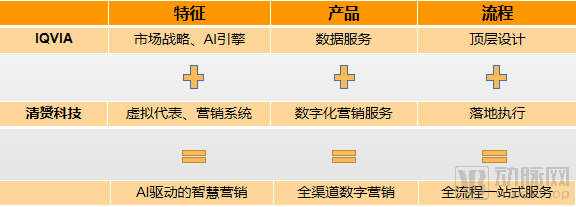
Qingyun Technology and IQVIA Achieve Complementary Advantages
Qingyun Technology’s digital marketing service solution, developed in collaboration with IQVIA, is built on comprehensive, multi-layered data—including CRM and SCRM system data, online physician interaction data, and social listening data. Leveraging deep industry insights from multiple data scientists and powered by artificial intelligence and deep learning algorithms, the solution constructs detailed physician profiles to identify their academic specialties and communication preferences. This enables the customization of personalized, precision marketing strategies, ultimately achieving enhanced professional engagement and tailored communication.
A comprehensive digital marketing service solution for the pharmaceutical industry encompasses strategy, software, big data, and an implementation team. Strategy is the primary consideration; formulating top-level strategies fundamentally ensures that digital marketing initiatives do not become mere formalities but achieve their intended outcomes. Software serves as the foundation for project execution; big data is a critical component for enhancing efficiency and enabling personalized, precision marketing; while the implementation team determines whether the project can operate efficiently, compliantly, and smoothly in accordance with the established strategy.
In this collaboration, Qingyun Technology and IQVIA have clearly defined roles. IQVIA is responsible for preliminary data analysis and strategic decision-making, providing top-level design solutions, and supporting the implementation and optimization of big data integration and AI-driven recommendation algorithms throughout the precision marketing process. Based on the strategies established in the initial phase, Qingyun Technology handles subsequent project execution to achieve sales excellence and compliance management. Meanwhile, Qingyun consolidates feedback from the execution level and provides comprehensive input to IQVIA, enabling timely optimization of strategic decisions and facilitating a closed-loop digital marketing ecosystem.
Qingyun and IQVIA provide customized digital marketing solutions tailored to products at different stages of their lifecycle. For instance, during the expansion phase following a new drug launch, digital representatives can be deployed to rapidly acquire high-potential customers. Additionally, digital representatives can support field sales teams in enhancing physician coverage and visit efficiency, thereby accelerating market penetration for products covered by national medical insurance. For products affected by volume-based procurement (VBP), a direct substitution model using digital representatives can facilitate the transformation of marketing strategies, ensuring continuous engagement with prescribing physicians and mitigating the decline in sales volume.
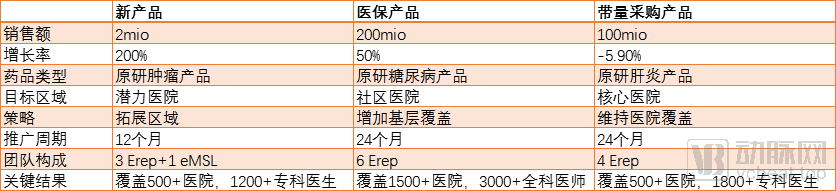
Qingyun Technology and IQVIA help new products and National Reimbursement Drug List (NRDL) products increase sales, expand market coverage, and slow the decline in sales of volume-based procurement (VBP) products through digital marketing projects.
To help pharmaceutical companies more intuitively observe and evaluate the success or failure of marketing digital transformation, Qingyun Technology and IQVIA have jointly refined relevant methodologies and practical tools. These tools include methods for calculating return on investment (ROI) from multiple perspectives—such as sales volume, brand influence, and physician engagement—as well as approaches for leveraging various parameters to identify appropriate control markets during the pilot phase.
Regarding how AI recommendation engines can bridge and integrate online and offline data, Yan Guowei stated that the first step is data cleansing, consolidating data from various channels into standardized fields for Doctor Journey. This process typically takes three months or even longer. Based on experience from previous projects, after implementing personalized and precise recommendations through the AI intelligent engine, the article read rate among physicians reached 15%-20%, the success rate of conference invitations stood at 20%-30%, and physician engagement levels were consistently maintained at around 30%-35%. Compared with traditional marketing methods, all these metrics have shown significant improvement.
To date, the pharmaceutical digital marketing services collaboration between Qingyun Technology and IQVIA has been operational for one year, establishing partnerships with most of the leading pharmaceutical companies in the industry. Yan Guowei stated that this collaborative initiative truly covers products across different lifecycle stages, delivering end-to-end services from strategy to implementation, thereby holding clear practical significance and playing a substantial role in advancing the digital transformation of China’s pharmaceutical industry.
Wang Zheng stated that digital pharmaceutical marketing aligns with the development direction of China’s healthcare reforms and the informatization of the medical industry, and this market is expected to maintain a high compound annual growth rate over the next five years.
Despite the enormous market potential and the existence of successful case studies abroad, many people remain concerned about and skeptical of digital marketing in the pharmaceutical industry.
It is noteworthy that domestic pharmaceutical companies have not yet become the main force in digital marketing within the pharmaceutical industry. Chinese pharmaceutical firms exhibit a highly ambivalent stance toward digital marketing. While their awareness of digital transformation is certainly no later than that of multinational corporations, their actual implementation lags significantly behind. This discrepancy stems from their heavy reliance on traditional sales models and a strong belief in incentive-driven ("kickback-based") and relationship-oriented sales approaches. Although they acknowledge the value of digital sales, they fear that abandoning traditional sales models would lead to a decline in sales performance.
Meanwhile, skepticism within the industry regarding the effectiveness of digital sales has never ceased. According to a global survey by Strategy&, the strategy consulting business of PwC, 31% of respondents expressed doubts about the efficacy of digital tools.
Wang Zheng believes that hesitation and skepticism regarding the effectiveness of digital marketing both stem from misconceptions about digital transformation. “For instance, many assume that online virtual representatives can completely replace field representatives. In reality, field representatives still play an irreplaceable role; machines and digital tools merely extend human capabilities. Furthermore, clients often view digital marketing as the responsibility of a single department. In truth, building and executing digital marketing projects requires collaboration with multiple teams, including IT, big data, algorithms, marketing, and performance management. Pharmaceutical companies should recognize that digital transformation is an enterprise-level change management process.”
Yan Guowei also stated that while pharmaceutical companies seek to validate the effectiveness of digital marketing in the short term, they should place greater emphasis on establishing online channels connecting physicians with pharmaceutical products and strengthening these digital pathways. Once robust online channels are in place, brands can directly reach physicians, enabling truly personalized marketing and ultimately achieving optimal marketing outcomes.
Wang Zheng emphasized that the digital transformation of pharmaceutical marketing has become a mainstream trend. The future will undoubtedly feature a human-machine hybrid model, where field representatives manage core markets while digital tools extend interaction frequency and coverage. The optimal mix of field representatives and digital channels depends primarily on factors such as geographic region, therapeutic area, hospital tier, and physician segment, allowing companies to adopt flexible strategic layouts.
“This is undoubtedly a gradual process, evolving from quantitative changes to qualitative leaps. Domestic companies must start with innovative drugs and products not included in the volume-based procurement (VBP) lists to gradually shift physicians’ treatment paradigms. Digital transformation is a protracted journey that may take up to ten years. As digital marketing service providers, IQVIA and Qingyun will spare no effort in driving this transition,” stated Wang Zheng.
Regarding future plans, Yan Guowei stated that digital marketing in the pharmaceutical industry must further solidify three foundational pillars. The first is data; currently, the key lever for pharmaceutical marketing remains physicians, and making physician data more complete and precise is a critical direction. The second is models; by leveraging extensive data for continuous learning, artificial intelligence models can be optimized to deliver personalized, precise solutions. The third is compliance and sustainability; it is essential to fully recognize the unique nature of pharmaceutical marketing and avoid compliance risks associated with pursuing sales volume alone. At the same time, continuous innovation aligned with physicians’ real-world needs will ensure that digital marketing remains a core competitive advantage in the commercialization of pharmaceutical products. “In the future, Qingyun will continue to deepen its collaboration with IQVIA to foster industry-wide consensus on digital transformation.”
Qingyun and IQVIA have also noted that, under the influence of policies such as the Two-Invoice System, Volume-Based Procurement (VBP), and Diagnosis-Related Groups (DRGs), transformation has become the new normal. Other stakeholders in the industry are undergoing significant changes, creating new opportunities for the development of digital marketing in the pharmaceutical sector. Currently, academic promotion of prescription drugs is no longer confined to hospitals but is expanding to additional channels, including Direct-to-Patient (DTP) pharmacies, internet hospitals, and distribution enterprises. This trend will serve as a key driver for the advancement of digital marketing in the pharmaceutical industry. By empowering various industry channels through digital marketing tools, it is possible to better reflect market dynamics of pharmaceutical products, provide pharmaceutical companies with multi-dimensional data, and further achieve precision marketing.
Wang Zheng believes, “Digital marketing will inevitably become integrated with DTP pharmacies, internet hospitals, and patient health management, empowering a broader range of industry stakeholders and offering immense potential. We are currently exploring strategic initiatives in this area, aiming to deepen collaboration with more participants in the healthcare industry. Our ultimate goal is to build a new healthcare ecosystem tailored for the internet era.”