

Frontier Biotech: China's First Anti-HIV Innovative Drug Company Behind Aikening

Frontier Biotechnologies
Innovative Biopharmaceutical Developer, Manufacturer, and Distributor
This new drug, Aikening—a boon for people living with HIV/AIDS in China—is available at 72 designated HIV treatment hospitals across 52 cities in 24 provinces, as well as at 60 DTP (Direct-to-Patient) pharmacies. Aikening is a true long-acting antiretroviral agent, independently developed by Chinese scientists, and was approved for marketing in China in May 2018.
The market launch of Aikening broke the monopoly held by foreign pharmaceutical companies on new anti-HIV drugs, establishing an innovation barrier for China in this field. In a double triumph, Frontier Biotechnologies, the developer behind Aikening, completed its listing on the STAR Market this October, successfully entering the capital market.
Hailed as the “First HIV Treatment Stock” After Its IPO, What Kind of Company Is Frontier Biotechnologies? How Did the Company Achieve the “Dual Listing” of Both a New Drug and the Enterprise Within Just Over a Decade? VCBeat Conducted Exclusive Interviews with the Founder and Investors of Frontier Biotechnologies to Recount the Company’s Development Over the Past Few Years from Their Perspectives.
Dr. Xie Dong, founder of Frontier Biotechnologies, holds a Ph.D. from Johns Hopkins University in the United States. He previously served as a scientist and principal investigator in the Biochemical Structure Program and the Biophysics Laboratory at the Frederick Cancer Research and Development Center of the U.S. National Cancer Institute. Prior to establishing Frontier Biotechnologies, Dr. Xie participated in and led the successful development of three novel anti-HIV drugs. This experience laid the foundation for his subsequent focus on the field of HIV/AIDS treatment, his return to China, and the establishment of Frontier Biotechnologies.

Xie Dong, Founder of Frontier Biotechnologies
AIDS is an infectious disease that strikes fear into the hearts of many. According to UNAIDS statistics, the global number of people living with HIV increased from 34.3 million in 2013 to 37.9 million in 2018, representing a compound annual growth rate (CAGR) of 2%, making it one of the major diseases threatening public health.
However, 39 years after the discovery of AIDS, there is still no therapy that can completely cure the disease. Clinically, the standard treatment for patients with HIV/AIDS is “cocktail therapy,” which involves long-term administration of antiretroviral drugs to suppress the viral load in patients’ blood to undetectable levels, thereby achieving prevention through treatment. This approach means that once infected with HIV, patients must take medication for life, which inevitably causes other harms to their bodies, such as damage to organs including the liver and kidneys.
Furthermore, patients with AIDS often present with comorbidities, and the treatment process may trigger drug-drug interactions, leading to intolerance and causing significant suffering. However, patients cannot discontinue their medication, as cessation would increase the risk of HIV viral rebound and the development of drug resistance, resulting in the failure of the original treatment regimen. Therefore, there is an urgent need in the field of HIV therapy for a new long-acting antiretroviral agent with high efficacy, superior safety, and low dosing frequency.
Perhaps driven by a sense of social responsibility to curb the spread of HIV and safeguard national medication safety, Dr. Xie Dong, leveraging his profound expertise in the field of AIDS treatment, joined forces with two biomedical experts who shared the same commitment. One isDr. Wang Changjin, General Manager of Frontier Biotechnologies, the other isDr. Lu Rongjian, Senior Vice President of Frontier Biotechnologies。
Changjin Wang holds a Ph.D. in Biopharmaceuticals from the University of Kentucky, USA. With 20 years of experience in R&D and business management within the U.S. biopharmaceutical industry, he has served as Director/General Manager of ABsize; Vice President of Business Development at Vivus, Abmaxis, and TaiGen Biotech; Vice President of Marketing and Business Development at Cellomics; Director of Licensing, Mergers & Acquisitions, and Partnerships at Packard Biosciences; and Senior Scientist at Merck.
Dr. Lu Rongjian completed his postdoctoral training at Northeastern University and Harvard University, and served as a Senior Postdoctoral Fellow at the Frederick Cancer Research and Development Center of the National Cancer Institute (NCI) and as a Senior Postdoctoral Researcher at the NCI. He previously held positions as Principal Investigator/Project Leader in the Chemistry Department at Sequoia Pharmaceuticals/Trimeris, Inc., and as a Senior Scientist at Tibotec, Inc. He was involved in the development of multiple anti-HIV drugs, including T-20 and darunavir.
“The founding team of Frontier Biotechnologies boasts an impressive lineup, with all three scientists being seasoned experts in anti-HIV research. When Yifeng Capital first engaged with this team, we immediately recognized their formidable technical prowess,” affirmed Zhu Pai, Partner at Yifeng Capital. “Yifeng Capital has continuously participated in Frontier Biotechnologies’ funding rounds from the Series A in 2016 to the present. The company’s founders offered unique business insights that further strengthened our confidence in Frontier. We are delighted to see Frontier Biotechnologies enter the capital market. The company has pushed the boundaries of HIV/AIDS treatment to the utmost, which is a highly meaningful achievement.”
Currently, China offers eight free antiretroviral drugs for HIV treatment, including six generic medications and two imported drugs. Most of these regimens employ combination therapy using three or more agents with distinct mechanisms of action that target different stages of the HIV replication cycle. Common classes include reverse transcriptase inhibitors (RTIs), protease inhibitors, integrase strand transfer inhibitors (INSTIs), and entry inhibitors (EIs). Among these, EIs block HIV entry at the source and have become a key focus of research and development in the field of HIV treatment.
“There are many excellent oral anti-HIV drugs on the market, but we believe that long-acting injectable medications represent the future trend,” said the founder of Frontier Biotechnologies. “In selecting the mechanism of action for our product pipeline, we chose entry inhibitors (EIs) as our R&D focus. Our albuvirtide is the world’s first long-acting injectable fusion inhibitor to enter clinical trials and the first long-acting HIV fusion inhibitor approved for marketing globally.”
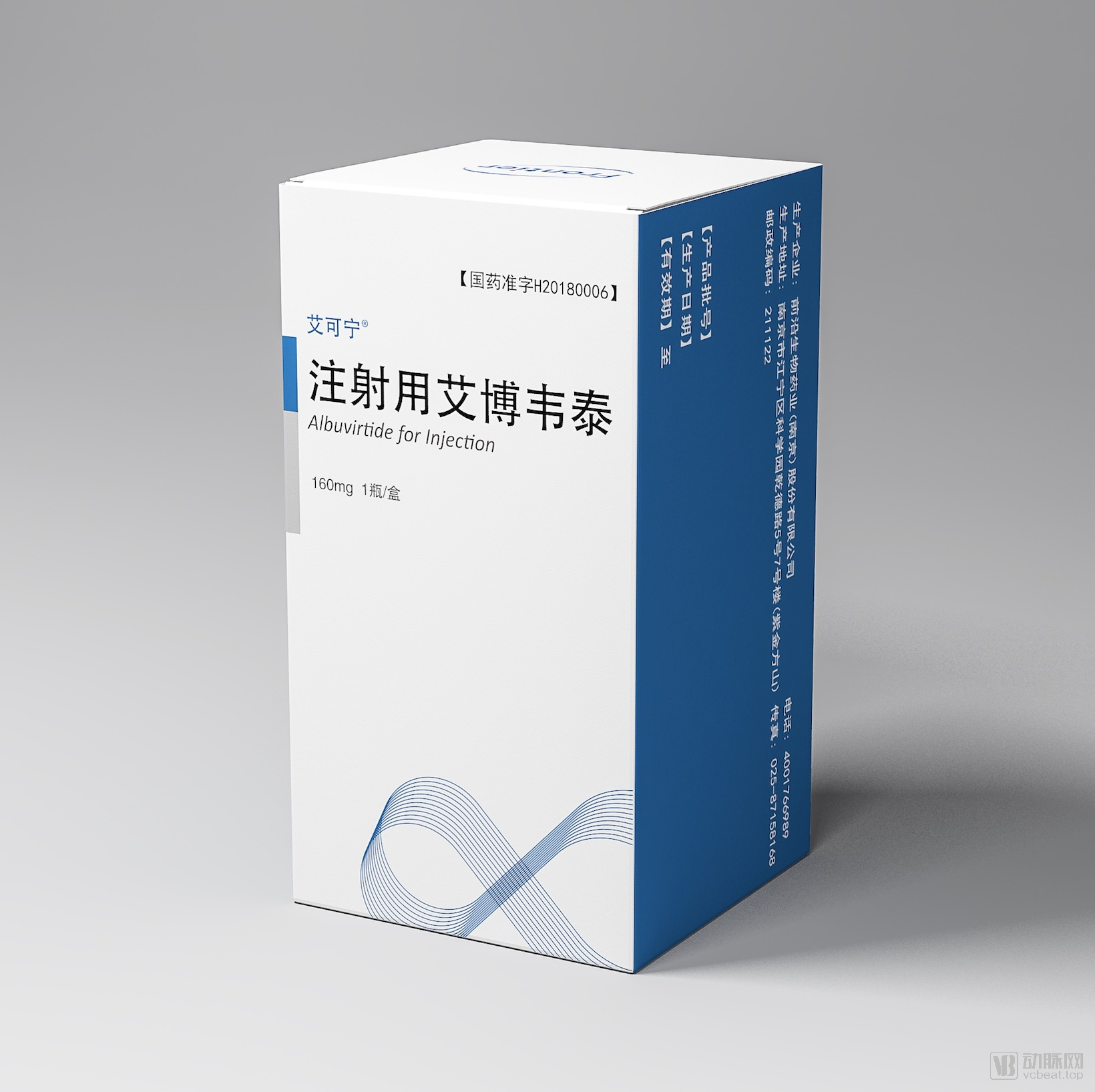
Aikening is a long-acting fusion inhibitor that acts on the first stage of HIV infection by targeting the gp41 protein of the virus, thereby effectively blocking viral entry into human immune cells. It is essentially a peptide drug composed of condensed natural amino acids without pharmaceutical excipients, demonstrating a high safety profile.
The target of Albuvirtide, the HIV envelope protein gp41, is present on all HIV-1 viruses and belongs to a highly conserved region. Albuvirtide binds to its target, the HIV envelope protein gp41, inhibiting the fusion of the viral membrane with the membrane of human CD4+ T cells, thereby preventing HIV-1 from entering the cells. By binding to the gp41 subunit of the viral envelope glycoprotein, Albuvirtide blocks the conformational changes required for the fusion of the virus with the T-cell membrane. Albuvirtide has achieved technological breakthroughs in molecular structure, peptide sequence and chemical modification, target specificity, as well as distribution and metabolism in the human body. It exerts synergistic effects with other antiviral drugs, providing external blockade and internal inhibition through complementary mechanisms.
Clinically, the greatest challenge with traditional peptide drugs is their short half-life in vivo, which prevents them from maintaining effective drug concentrations for extended periods. Albuvirtide has achieved a breakthrough in long-acting efficacy by introducing maleimide active groups into its peptide structure. This allows it to react with the single free sulfhydryl group on human serum albumin, rapidly forming an irreversible 1:1 peptide-albumin conjugate, thereby achieving prolonged drug action. It is reported thatAlbuvirtide has a long half-life of 11 to 12 days in the human body., which is significantly longer than the 2–3 hour in vivo half-life of typical peptide drugs.
From a commercial perspective, Frontier Biotechnologies has entered into commercial distribution and delivery agreements for Aikening with major pharmaceutical distributors such as Sinopharm Holdings, Shanghai Pharmaceuticals Holdings, and Guangzhou Pharmaceutical Corporation, covering key regions in East China, South China, Southwest China, and Northeast China. As of September 30, 2020, Aikening was being sold in 24 provinces, 52 cities, 72 designated HIV treatment hospitals, and 60 DTP (Direct-to-Patient) pharmacies across China.
Internationally, the target markets for Albuvirtide are developing countries. It is reported that by the end of 2018, there were approximately 33.76 million people living with HIV in developing countries. Taking into account the number of HIV-infected individuals and the affordability levels in these countries, Frontier Biotechnologies has identified 60 target countries with a combined population of approximately 15 million people living with HIV. The company has already initiated the drug registration and approval processes for Albuvirtide with overseas distributors in 24 countries.
In addition to already holding the original first-in-class new anti-AIDS drug, Frontier Biotechnologies is also actively exploring longer-acting combination antiretroviral therapies for HIV, with the aim of benefiting more patients living with AIDS.
The founder told VCBeat that the company is currently actively developing a combination therapy of “Aikening + 3BNC117.” This regimen has the potential to reduce medication frequency for HIV patients to once every two to four weeks, offering the promise of transforming the HIV treatment paradigm and achieving a functional cure for HIV. The company is also actively exploring multiple HIV indications for this combination therapy, including but not limited to the treatment of multidrug-resistant HIV, HIV immunotherapy, and HIV prevention.
In addition, Frontier Biotechnologies also has its own “cash cow” business—the novel transdermal analgesic patch AB001. This is an externally applied anti-inflammatory and analgesic transdermal patch developed using a novel patented formulation, intended for the treatment of muscular, skeletal, and joint pain. The drug is currently classified as a Class 2.2 new chemical drug in its clinical trial application. The China-based bridging Phase I clinical trial for AB001 was completed in March 2020, and the company is currently applying for Phase III clinical trials.
Furthermore, leveraging its extensive experience in the antiviral field, the Company entered into a Technical Development Agreement and supplementary agreements with the Shanghai Institute of Materia Medica in January 2020 and May 2020 regarding the “DC Series” of candidate drugs for the treatment of novel coronavirus. Through these agreements, the Company secured the rights to clinical development, production, manufacturing, and commercialization of this innovative drug.
As a veteran in the field of anti-HIV therapy, Frontier Biotechnologies will continue to strengthen its capabilities in this area, closely addressing unmet clinical needs. Leveraging its long-acting peptide technology platform and transdermal technology platform, the company aims to further enrich its product pipeline, striving to become the “Gilead” of China’s STAR Market, thereby benefiting more patients and creating greater social value.