

The Future Is Now: Global Experts Converge in Chongqing to Discuss Breakthroughs in Capsule Endoscopy
2020Year11Month15On the day, the 3rd Global Summit on Capsule Endoscopy (CEGS) Grandly held at the Chongqing Jinshan Science & Technology International Conference CenterHold. This summit is organized by the World Endoscopy Organization (WEO), the Chinese Health Management Association, the Global Capsule Endoscopy Alliance, the National-Local Joint Engineering Research Center for Microsystem Medical Devices, the National Capsule Endoscopy Research Center, the Capsule Endoscopy Group of the Digestive Endoscopy Professional Committee of the Chongqing Medical Association, and Chongqing Jinshan Science & Technology (Group) Co., Ltd.
Themed “The Future Is Here,” the summit integrated post-pandemic reflections to foster scientific and academic sharing and dialogue on hot topics in capsule endoscopy. Held in a hybrid online–offline format, the event brought together tens of thousands of medical experts and scholars from more than 100 countries and regions online, while hundreds of leading domestic experts engaged in on-site exchanges offline. Academician Li Zhaoshen of the Chinese Academy of Engineering sent a congratulatory letter to the conference. Opening remarks were delivered by Fabian Emura, President of the World Endoscopy Organization (WEO) and International Co-Chair of the Summit; Professor Zhang Shutian, Former Chair of the Chinese Society of Digestive Endoscopology and Chinese Co-Chair of the Summit; and Professor Linghu Enqiang, Current Chair of the Chinese Society of Digestive Endoscopology.
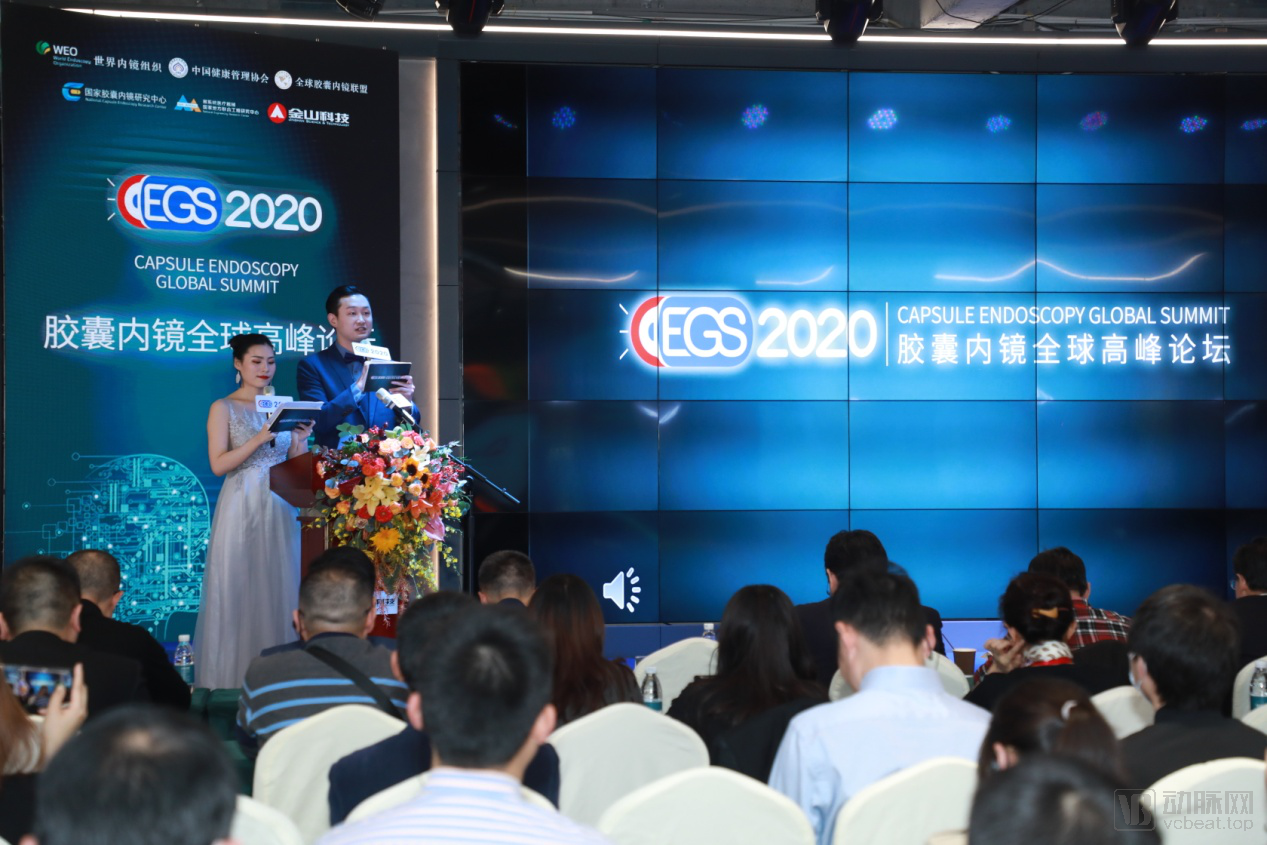
Opening Ceremony of the Summit
At the summit, 17 global experts in digestive medicine delivered keynote speeches in succession. Based on the content of these presentations, we have summarized four key development trends for capsule endoscopy worldwide this year: integration with 5G technology to enable remote, contactless diagnosis using capsule endoscopy; significant improvements in observational quality driven by enhancements in high-definition imaging, frame rate, and wide-angle capabilities; the application of AI for assisted diagnosis; and a further expansion of indications, spanning from the stomach, small intestine, to the colon, and extending from clinical diagnosis to early cancer screening.
Wang Jinshan, Chairman of Chongqing Jinshan Science&Technology(Group)Co.,Ltd, delivered a keynote speech on the “Progress Report on Capsule Endoscopy” at the summit, showcasing the company’s technological achievements over the past year.
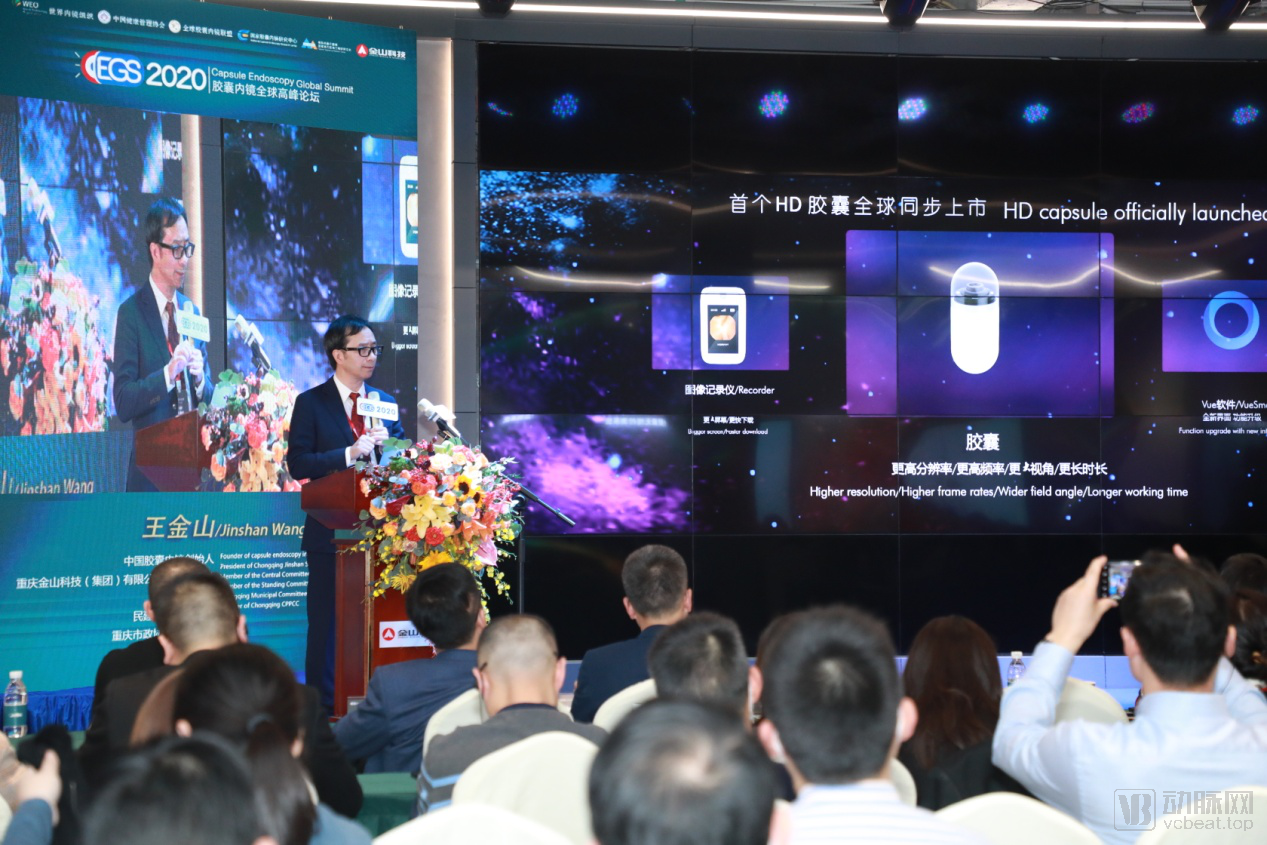
Wang Jinshan Showcases Latest Technological Achievements in Capsule Endoscopy
In the field of gastroenterology, endoscopy has become an essential method for examining the digestive tract. However, due to uneven distribution of medical resources and a limited number of endoscopic devices, healthcare institutions are unable to meet the demand for gastrointestinal endoscopy among patients at the primary care level. For patients, traditional endoscopy is often painful, whereas capsule endoscopy, with its painless nature, has become an important complementary approach to conventional endoscopic examination.
Over the past year, capsule endoscopy has seen significant advancements in both technology and application. In terms of performance, capsule endoscopes have set new industry benchmarks with higher resolution, higher frame rates, and wider-angle lenses. For instance, the SC100 high-definition small bowel capsule released by Chongqing Jinshan Science & Technology (Group) Co., Ltd. offers three times the clarity of comparable products on the market. It features a high image capture rate of up to 10 frames per second (fps) and an ultra-wide 160° field of view, enabling broad near-field coverage that facilitates rapid scanning and detection of small bowel lesions.
Technologically, capsule endoscopy is being equipped with artificial intelligence (AI), marking the advent of intelligent capsule endoscopy. For instance, Chongqing Jinshan Science & Technology (Group) Co., Ltd. leverages AI technology to automatically filter out similar images, achieving a redundancy filtering rate of up to 85%. While adhering to the principle of no missed diagnoses, the system retains valuable images and can automatically identify 16 types of lesions, thereby alleviating the workload of image readers and improving diagnostic efficiency and accuracy. In the future, AI technology will be deeply integrated into capsule endoscopy examinations.
In terms of applications, capsule endoscopy is expanding from gastroenterology to health check-ups and health management. Furthermore, the emergence of fully automated capsule endoscopy robots has made non-contact examination a reality. Currently, Chongqing Jinshan Science & Technology (Group) Co., Ltd.'s fully automated capsule robot has completed clinical trials and is expected to be launched for sale in 2021.
In terms of information technology applications, remote diagnostic centers expanded rapidly in 2020, contributing to epidemic prevention and control. During the development of these centers, technologies such as big data, cloud computing, and cloud storage were simultaneously implemented, continuously enhancing the informatization level of capsule endoscopy. Additionally, 5G-enabled capsule endoscopes have emerged this year, and are expected to become widely adopted as the technology becomes more accessible.
Wang Jinshan stated that reducing contact between doctors and patients has become a crucial measure for healthcare institutions worldwide to manage epidemic prevention, with non-contact diagnostic technologies gaining momentum. The high bandwidth, high speed, and low latency of 5G technology provide technical support for the cross-regional deployment of fully automated capsule robots in clinical examinations.
At the summit, Mei Zechuan, Vice President of the Second Affiliated Hospital of Chongqing Medical University, delivered a speech titled “Preliminary Report on Clinical Studies of Magnetically Controlled Fully Automated Capsule Endoscopy.”
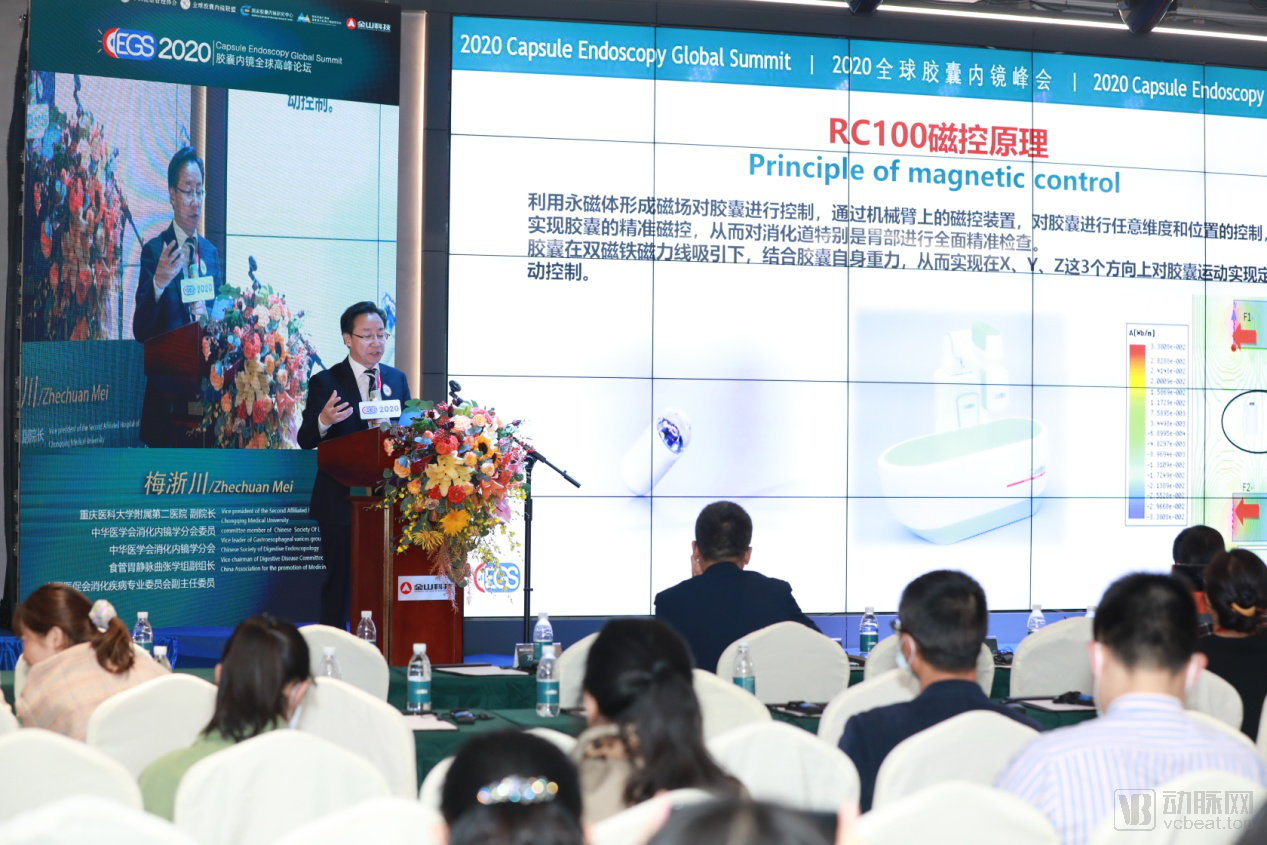
Mei Zechuan, Vice President of the Second Affiliated Hospital of Chongqing Medical University
The prospective, multicenter, self-controlled clinical study protocol for evaluating the efficacy and safety of the magnetically controlled capsule endoscopy system with navigation for gastric and small bowel examination was conducted at the Second Affiliated Hospital of Army Medical University and the Second Affiliated Hospital of Chongqing Medical University.
According to the clinical study protocol, clinicians used the RC-100, an automated intelligent navigable capsule robot supported by Jinshan Technology. This product features a fully automated examination procedure, requiring no manual control or multi-position changes during gastric examinations. Under AI-based intelligent recognition, it can perform sequential, cyclic examinations of specified locations from multiple angles along a preset gastric examination trajectory. Additionally, it allows for close-up and repeated detailed inspections of suspicious areas under manual control.
A comparison of lesion detection across various gastric anatomical structures using the fully automated intelligent navigation capsule robot versus painless electronic gastroscopy revealed a concordance rate exceeding 97%. The completion rate for whole-small-bowel examination with the capsule endoscope was 96.5%, surpassing the predefined target of 85%. Statistical analysis showed that all capsules were expelled within two weeks, resulting in a capsule retention rate of 0%, and no adverse events related to the capsule device occurred.
In summary, the findings from fully automated controlled gastric capsule endoscopy are highly consistent with those of conventional gastroscopy. Magnetically controlled, fully automated capsule endoscopy enables “comprehensive examination of both the stomach and small intestine using a single capsule.” In terms of safety, no capsule retention occurred in any subject; no product-related adverse events were reported; and the “one patient, one endoscope” exclusive examination protocol eliminates the risk of cross-infection.
Professor Mei Zechuan concluded by outlining four prospects: first, enhancing AI capabilities to shorten examination time; second, improving remote management functions to enable intelligent AI-based image interpretation; third, integrating medical big data to achieve data sharing; and fourth, realizing the vision of “comprehensive gastrointestinal tract examination with a single capsule.”
In addition, Professor Zhao Xiaoyan from the Second Affiliated Hospital of Army Medical University also delivered a report titled “From Concept to Application: Interim Report on Clinical Validation Trials of AI-Assisted Diagnosis.”
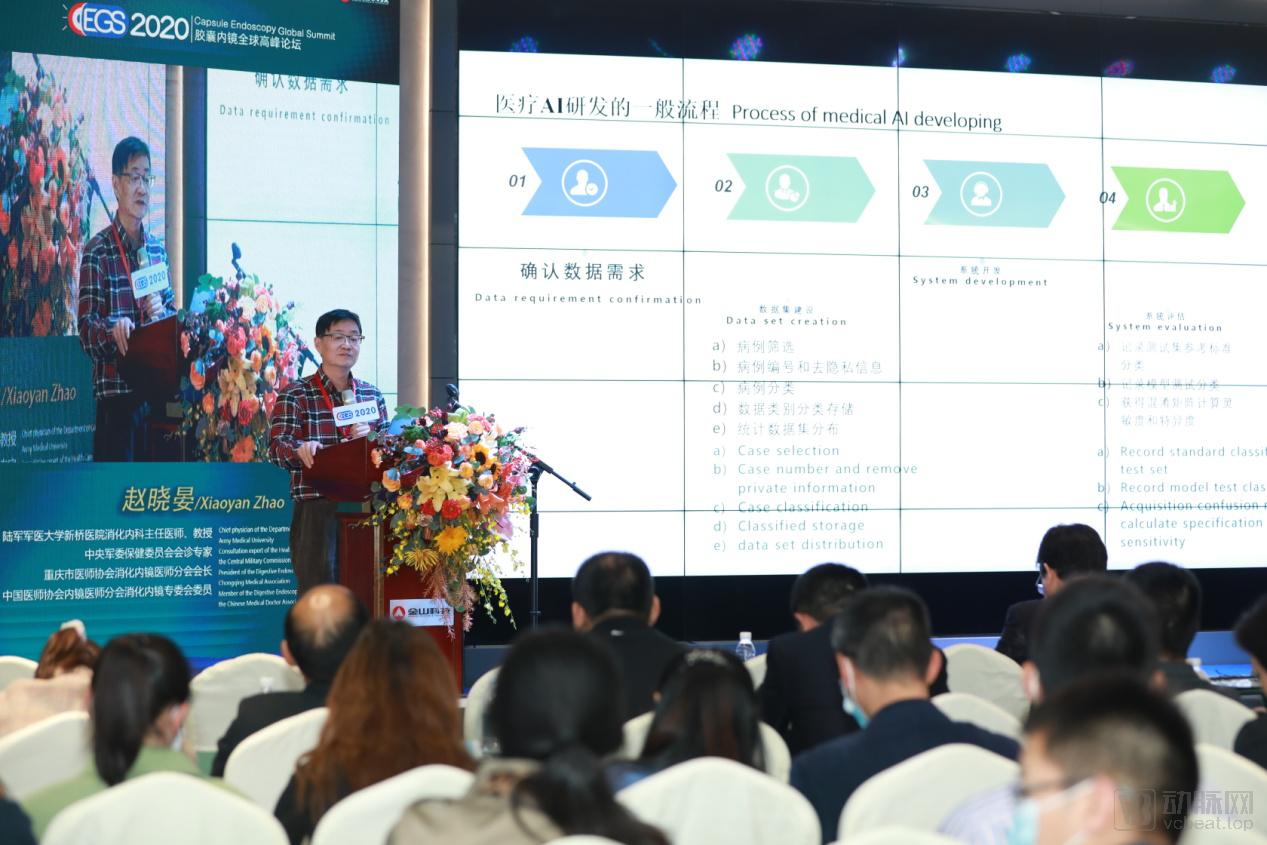
Professor Zhao Xiaoyan, the Second Affiliated Hospital of Army Medical University
The report indicates that the AI-assisted mode is significantly superior to conventional manual interpretation in terms of diagnostic time, patient detection rate, concordance with “gold standard” results, sensitivity for patient detection, accuracy, Youden’s index, and detection rates for 16 types of lesions. AI-enabled capsule endoscopy not only alleviates the workload of image readers but also effectively enhances diagnostic efficiency and accuracy.
The clinical value of capsule endoscopy is gaining increasing recognition, and it has also opened up new avenues in the screening for early-stage gastrointestinal cancers. At the summit, Dr. Zhang Kai, Director of the Department of Cancer Prevention at the National Cancer Center/Cancer Hospital of the Chinese Academy of Medical Sciences, delivered a keynote address titled “Application of Magnetically Controlled Capsule Endoscopy in Opportunistic Screening for Gastric Cancer.” He stated that non-invasive capsule endoscopy requires minimal equipment and physician resources, offers convenient operation, provides a non-invasive examination experience, and ensures good patient compliance.
Compared with electronic gastroscopy, magnetically controlled capsule gastroscopy achieves a diagnostic accuracy of 93.4%, making capsule endoscopy more suitable for gastric disease screening in health examination centers. By leveraging non-invasive initial screening technologies such as magnetically controlled capsule endoscopy, it is possible to explore feasible strategies for opportunistic screening of gastrointestinal tumors in larger populations, enhance the capacity of health examination centers for “early detection” of gastrointestinal tumors, and significantly reduce the incidence and mortality rates of digestive tract cancers.
In addition to expert lectures and discussions, the summit, as a premier global event this year integrating medicine and engineering in capsule endoscopy, has explored new formats and pathways for technical training and education. The pre-summit conference hosted the First National Capsule Endoscopy Skills Competition, which helped cultivate a cohort of skilled operators through competitive engagement. Furthermore, the Capsule Endoscopy Group under the Digestive Endoscopy Professional Committee of the Chongqing Medical Association was established. This group will integrate global resources in capsule endoscopy to advance the teaching, research, and development of capsule endoscopy technology in Chongqing.