

Jianke Announces RMB 200 Million Health Innovation Fund at 2020 H2H Ecosystem Conference to Accelerate Smart Healthcare and Chronic Disease Management
On the afternoon of November 18, Jianke Fangzhou Internet Hospital, a leading smart healthcare service platform in China, held the 2020 H2H Ecosystem Conference and Smart Healthcare Summit, themed “New Momentum for Smart Healthcare,” in Shanghai. The event attracted more than 400 expert representatives from renowned domestic and international pharmaceutical companies, Grade A tertiary hospitals, and healthcare investment institutions, who engaged in in-depth discussions on new development strategies for healthcare management systems, digital health, precision medicine, and chronic disease management in the post-pandemic era.
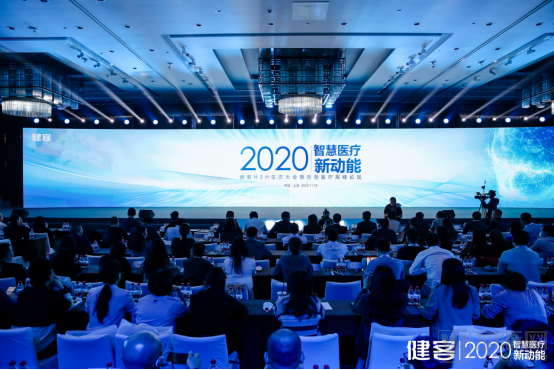
Investing 200 Million to Establish a Health Innovation Fund and Build a Health Ecosystem Centered on Chronic Disease Management
During this year’s COVID-19 pandemic prevention and control efforts, internet healthcare providers represented by Jianke Group have played a significant role in responding to the outbreak and meeting the public’s medical needs. This has demonstrated the broad prospects of internet-enabled health initiatives, signaling that internet healthcare is entering a phase of rapid growth in the post-pandemic era.
Against this backdrop, Xie Fangmin, Founder, Chairman, and CEO of Jianke, a pioneer and dedicated practitioner of the smart healthcare concept, announced at the conference that Jianke Group would invest RMB 200 million to establish a Health Innovation Fund. The fund will support technological applications in areas such as chronic disease management, specialized medical departments, clinics, and traffic acquisition, aiming to build a health ecosystem centered on chronic disease management and inject new momentum into industry innovation.
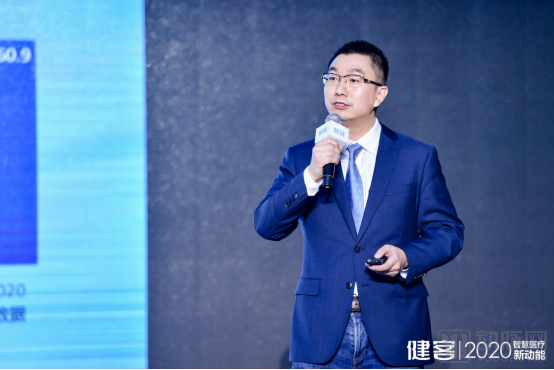
Xie Fangmin stated that the pandemic merely served as a catalyst for bringing internet healthcare to the general public. It remains uncertain how many patients internet healthcare platforms will be able to retain in the post-pandemic era. “Relevant data indicate that the internet healthcare industry has experienced rapid business growth this year. However, as the pandemic subsides, how internet healthcare and consultation platforms can sustain their functionality and retain users will become the next focal point in the post-pandemic period.”
Relevant data disclosed at the conference indicates that chronic disease prevention and control will become the most significant component of China’s pharmaceutical market, with internet platforms serving as a key force in reshaping services for both patients and healthcare providers.
Xie Fangmin emphasized that Jianke Group’s intensified efforts in chronic disease management aim to leverage the dual drivers of technological transformation and new forms of doctor-patient educational interaction. This strategy seeks to further accelerate the deployment of diversified scenarios within the H2H ecosystem by centering on patients and accurately delivering medical value, thereby aligning with the policy directive from the National Health Commission’s “Healthy China” initiative, which calls for a shift “from a disease-centered approach to a health-centered approach” as part of its “Four Transformations.”
What sets Jianke Group apart is its more refined chronic disease management service—leveraging artificial intelligence and big data to establish specialized clinics in andrology, dermatology, inflammatory bowel disease, and other related chronic conditions. Resident specialists and pharmaceutical consultants on the platform jointly provide long-term, standardized diagnosis and treatment services for patients with chronic diseases, including creating personal electronic health records, tiered customized care plans, disease monitoring, indicator feedback, lifestyle interventions, treatment regimen adjustments, and regular evaluation of therapeutic outcomes.
Xie Fangmin further explained that this online-offline integrated model, on one hand, leverages investments in wearable devices, IoT (Internet of Things), and other related technological equipment to monitor patient data in non-hospital settings, thereby creating a new model for full-lifecycle health management; on the other hand, it helps physicians optimize diagnostic and treatment efficiency, further advances tiered diagnosis and treatment in public hospitals, facilitates the decentralization of high-quality medical resources, and effectively alleviates the industry-wide challenges of difficult and costly access to medical care.
The theme of this conference is to focus on “New Drivers for Smart Healthcare.” In the view of Jianke, which has internet DNA, one of these new drivers is advanced internet technology and powerful medical intelligence tools.
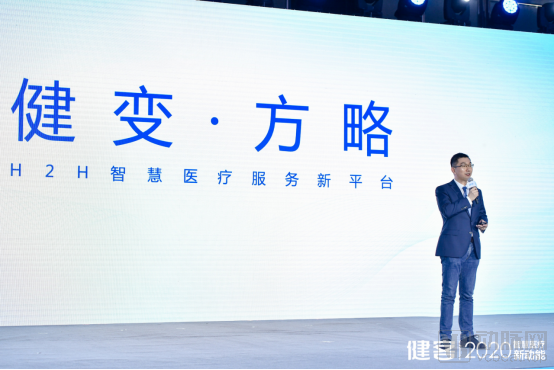
At last year’s Partner Conference, Xie Fangmin stated that digital technologies are enabling the rapid and orderly implementation of traditional family doctor and tiered diagnosis and treatment models at low cost, while unlocking vast potential. Jianke will help more physicians fully leverage their expertise to deliver precise healthcare services to every household.
Upon closer examination, every strategic move and evolution of Jianke Group represents a migration of medical scenarios driven by technological iteration. Last year, Jianke Group’s H2H (Hospital to Home) model, after a year of intensive development and strategic deployment, has yielded significant results. Today, both of Jianke Group’s major mobile platforms—Jianke Doctor and Jianke Online Pharmacy—have achieved comprehensive improvements in traffic growth, user acquisition, and business expansion. Notably, Jianke Online Pharmacy ranked first in the distribution of monthly active users among China’s major pharmaceutical service apps in the first half of 2020.
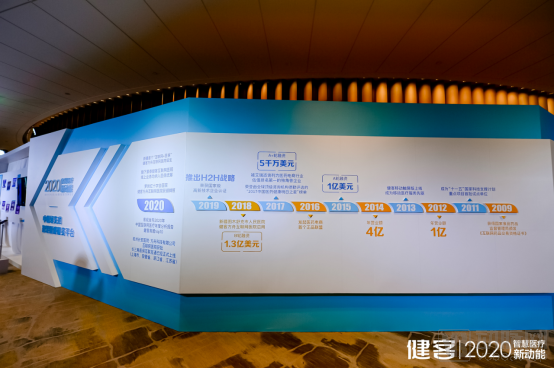
These initiatives leverage Jianke’s robust artificial intelligence technology to build four key capabilities: a disease course management service system, an automated channel data collection framework, an AI-powered customer service platform, and the Youcai Supplier Service Platform, thereby enhancing physicians’ diagnostic and treatment efficiency. It was revealed that in 2020, Jianke Group assisted 200,000 doctors and specialists, cumulatively providing health services to over 100 million patients, covering 24 major categories and 989 types of diseases.
After returning home, patients receive convenient and practical chronic disease management guidance tailored to their personalized needs—such as follow-up visits, prescription renewals, monitoring of rehabilitation indicators, and early warning alerts—through online consultations, follow-up prescription services, and chronic disease membership management provided by the Jianke Fangzhou Internet Hospital. This approach not only gives patients reliable medical support at home but also helps hospitals reduce the loss of existing patients, accumulate clinical management experience, and promote disciplinary development.
Xie Fangmin stated that Jianke Group is an innovative platform based on medical intelligence technology and the “Internet+” chronic disease management model. Of the health innovation fund launched at the event, RMB 100 million will be applied to scenarios beyond chronic disease management, while another RMB 100 million will be used to build a branded physician multi-channel network (MCN) agency in the broader health sector, incubating 100 branded physicians with an investment of RMB 1 million per physician to develop their brands in the health field. He expressed his hope to collaborate with a growing number of physicians to reshape patient–physician education scenarios through socialized and diversified service models, jointly building a new technology-driven platform for medical science popularization and education, thereby making positive contributions to national health.
Numerous pharmaceutical companies, hospitals, physicians, and other partners have joined forces in this fund project to build a more technologically advanced and green healthcare ecosystem, thereby alleviating the burden of disease on patients, doctors, and society as a whole.
Many conference attendees stated that Jianke Group has made full preparations and is embarking on a new journey in the post-pandemic era.