

Carbon Health Files IPO Prospectus: Pioneering an Integrated 'Online + Offline' Telemedicine Model as the 'Starbucks of Healthcare'

Carbon Health
Healthcare Service Provider

Dragoneer Investment Group
Growth-Oriented Investment Institution
In the late 1950s, American scholar Wittson first applied a two-way television system to medical care. Since then, there has been a continuous succession of individuals in the United States utilizing communication and electronic technologies for medical activities, giving rise to the term “Telemedicine,” namely"Telemedicine"。
The butterfly flapped its wings twice, generating a slight airflow, but failed to cause a hurricane in a distant city.
As with the development trajectory of most emerging innovations, telemedicine initially sparked a modest wave of enthusiasm after its introduction. However, for a prolonged period, it failed to enter the mainstream due to factors such as prevailing mindsets and technological limitations. It was not until the outbreak of the information technology revolution that telemedicine truly reached the general public.
Market demand has spurred a wave of industry development, with an increasing number of innovative enterprises gradually capturing this emerging sector, and Carbon Health stands out as the “frontrunner” in this space.
Carbon is the most stable chemical element in nature and the cornerstone that intimately connects all things in the world. This is the inspiration behind the founding of Carbon Health, as well as its core value.
Carbon Health, founded in 2015 and headquartered in California, is a healthcare company focused on personal health, dedicated to optimizing customers’ primary care and urgent care experiences.
The company aims to leverage its technology platformDigitize Existing Medical Information, comprehensively integrating complex components of the healthcare system—including insurance, physician appointment and consultation, diagnostic testing, treatment, payment, and medication purchase—enabling patients to easily connect with doctors via a mobile app, and providingReal-Time Tracking of Personal Medical Recordsnovel features that make healthcare services more efficient and compassionate.
The rapid growth of an enterprise is inseparable from the sincere cooperation of its team. Since its inception, Carbon Health has built a high-caliber talent pipeline, with leadership members being seasoned professionals with extensive experience in relevant technical fields.
Co-founder and CEO Eran Bail is a visionary entrepreneur with exceptional execution capabilities. Prior to entering the healthcare sector, he founded Udemy, the world’s largest online course marketplace, which has made high-quality education accessible to over ten million students. Additionally, he is an accomplished mathematician. A graduate of the Middle East Technical University, he was hailed as a “math prodigy” in his youth and has won numerous awards in competitions spanning mathematics, physics, computer science, and technology.
As the “helmsman,” Eran Bail will lead the team towardThe ongoing advancement of healthcare informatization strives to ensure universal access to high-quality, personalized medical services.
According to statistics from CBS, approximately one-fifth of the United States is classified as “medical deserts,” where medical resources are extremely scarce. However, these areas are often high-risk zones for the spread of chronic diseases, and this year’s pandemic has fully exposed the profound impact of these vulnerabilities.
Just as the U.S. Centers for Disease Control and Prevention (CDC) was grappling with challenges in pandemic testing, Carbon Health stepped forward to become a “mainstay” of pandemic testing efforts.
On March 20, 2020, Carbon Health announced that it would provide at-home COVID-19 testing services to individuals who were unable to access testing. The service cost $167.50 (approximately RMB 1,098) for online consultations and was completely free for those with insurance. According to U.S. media reports at the time, the cost for an average citizen to get tested at a CDC facility was $3,270 (approximately RMB 21,436). Even with insurance, patients still had to pay $1,400 (approximately RMB 9,177). In addition to the high costs, individuals also faced the risk of exposure by coming into contact with people from outside their immediate community.
On April 20, 2020, Carbon Health partnered with the digital health company Braid Health to fully integrate their respective strengths and provide the public with an online diagnostic platform. In addition, the two companies simultaneously launched a joint initiative aimed at accelerating information sharing among healthcare providers and promoting research on the signs, symptoms, stages, and care of COVID-19, based on the compilation and publication of a clinical data repository for novel coronavirus pneumonia.

Image sourceCarbon HealthOfficial Website
On September 10, 2020, Carbon Health launched a newPop-up Clinic Model, and has established 100 COVID-19 testing sites across China, with test results delivered to users via the app within 15 minutes. It is reported that this COVID-19 test is covered by most insurance plans; for uninsured individuals or if the test is not included in their insurance plan, the cost is $65 (approximately RMB 426).
As of now,Carbon Health Has Conducted Over 4 Million COVID-19 Tests, with Services Covering 16 States Across the U.S.。Building on its current foundation, the company plans to open an additional 100 pop-up COVID-19 clinics before the end of winter to expand testing capacity and reach a broader population.
In addition to focusing on testing, Carbon Health offers specialized care programs for patients already infected with COVID-19. This pioneering initiative provides patients with the tools needed to understand and monitor their condition, manage symptoms, and avoid missing opportunities for high-quality interventions. To enhance care efficiency, Carbon Health has announced the appointment of Dr. Aaron S. Weinberg, a board-certified physician in internal medicine, pulmonology, and critical care medicine, as Director of Program Development.
Carbon Health’s outstanding performance during the pandemic has earned widespread societal recognition, laying a solid foundation for its rapid business expansion in the near future.
Carbon Health aims to integrate telemedicine with in-person clinic care. Telemedicine leverages online platforms to deliver information-based services to users, while clinic care involves establishing dedicated offline facilities to create a chain-network effect, thereby expanding service coverage and complementing the operational model of telemedicine.
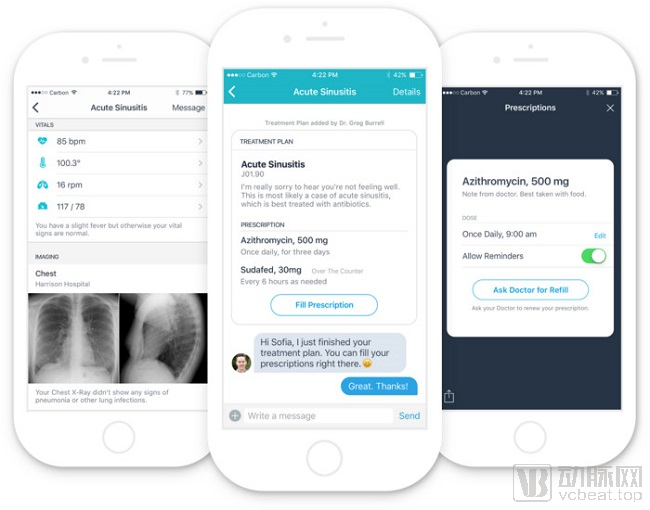
Image SourceCarbon HealthOfficial Website
Online: Providing timely and convenient diagnosis and treatment services to customers via the app
Virtual Doctor Visit:From 9:00 AM to 6:00 PM, Monday through Sunday, users can initiate diagnostic requests to healthcare providers at any time via the Carbon app. Upon receiving a request, healthcare providers will conduct online consultations within a short period. Currently, the app’s services cover a variety of common conditions, such as acid reflux, allergies, bronchitis, ulcers, and diabetes screening.
# Urgent Care:Conventional medical consultations typically require patients to visit healthcare facilities, queue for registration, and wait for treatment. However, this model poses significant risks for acute conditions, potentially even life-threatening ones. Carbon Health provides urgent care services; when patients experience acute symptoms, they can first receive online consultations to prevent condition deterioration, and then proceed to a hospital for systematic treatment once their condition stabilizes.
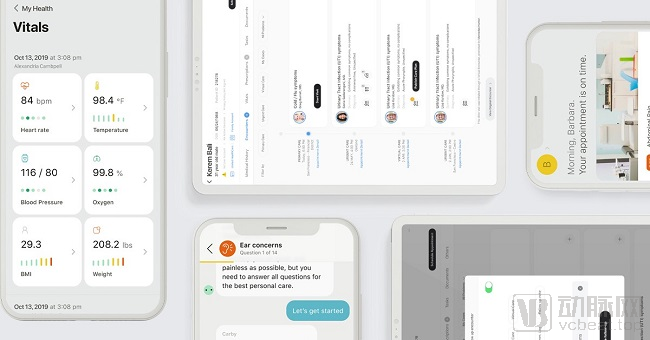
Image SourceCarbon HealthOfficial Website
In addition to disease diagnosis and treatment, the Carbon App also offersDaily health care services, including primary care and video consultations.Clients can upload health information to their personal accounts and submit it to the company’s research institution. A professional medical team will then develop customized care plans based on this information to help prevent diseases. Additionally, clients can schedule video consultations with specialists, who will provide in-depth guidance to help them scientifically manage their health.
The application will connect patients covered by several major insurance plans—including UnitedHealthcare, Humana, Blue Cross Blue Shield, and Aetna, but excluding Medicaid—facilitating virtual visits with Carbon Health’s primary care physicians.
How do users proceed? First, they must scan their insurance card via the user-facing app, complete the application form, and provide emergency contact information before selecting a physician. After the provider-facing system presents a series of automated questions, a licensed physician will step in to manage the treatment plan.
After determining the treatment plan, connect users to specialist care, then arrange for next-stage testing through subsequent steps, and finally issue prescriptions. (Carbon Health enables these capabilities through its partners Quest Diagnostics, LabCorp, Surescripts, and the prescription delivery service ScriptDash.)
Offline: Establish primary care clinics and build a care coordination platform
Unlike most telehealth service models, Carbon Health has established its own"Medical Resource Database". On the one hand, it enables further expansion of business scope, laying a solid foundation for the future establishment of a healthcare system network; on the other hand, it ensures high-quality delivery of nursing capabilities, allowing more people to access premium medical services.
Currently, Carbon Health operates seven brick-and-mortar clinics, primarily concentrated in California, where patients can access primary care, urgent care, and orthopedic services.
The entire service process is highly user-centric, ensuring an excellent experience for patients. Modern medical equipment enables patients to gain a more intuitive understanding of their condition, while professional healthcare providers develop detailed care plans. By leveraging the Carbon app, the care process remains fully visible, thereby achieving better outcomes.
The innovative service model has also enabled Carbon Health to establish a personalized commercial operations network. By creating an “online user acquisition, offline service delivery”supply chain, creating a cluster advantage for members. While continuously expanding the user base and service coverage area, it also “enhances” the services to achieve better outcomes.
The severe epidemic has dealt a heavy blow to many startups this year, butCarbon HealthYet it found a breakthrough amid this turbulence, entering a fast lane of rapid development.
Over the past ten months, Carbon Health has expanded from just seven brick-and-mortar clinics to 27, spanning six different states.On the other hand, they also work closely with local healthcare systems to establish co-branded clinics, further optimizing their services.
In addition, the significant influx of capital from the financial markets has provided strong support for Carbon Health’s continued expansion of its business footprint.
On May 11, 2020, Carbon Health announced the completion of a $26 million Series B1 financing round led by Data Collective. This funding significantly supported the company’s COVID-19 testing efforts and substantially elevated Carbon Health’s visibility and public attention during the pandemic.
On November 10, 2020, Carbon Health announced the completion of a $100 million Series C financing round, led by Dragoneer Investment Group, with participation from existing investors Brookfield Technology Partners (BTP), DCVC, and Builders VC. This round of financing willEnabling the company to further advance its omnichannel healthcare strategy and expand the scale of primary care institutions across China, in order to fulfill its ongoing mission of delivering world-class medical services to everyone.
Currently, Carbon Health is competing with existing rivals One Medical and Forward,Its ambitious goal is to open 1,500 offline clinics by 2025, becoming the “Starbucks” of the healthcare industry.
With a growing network of trusted clinics and an end-to-end platform that supports continuous care management and virtual appointments, Carbon Health ensures world-class care is affordable and always within reach.
In the future, Carbon Health will focus more on patients who test positive for COVID-19, tailoring care packages that include mental health screening, symptom tracking, and continuous monitoring. Additionally, the company plans to establish dedicated sections for managing chronic diseases and women’s health.