

Zhang Xiaochun of WeDoctor: Digital Health to Become a Post-Pandemic Essential
On November 17–18, the 2020 CNBC Global Technology Conference was grandly held in Nansha, Guangzhou. WeDoctor, an internationally leading digital health platform, was invited to attend the event, joining global tech and business “brains” such as IBM, Huawei, and BNP Paribas. Under the theme “East-West Tech Dialogue,” participants discussed innovative models of technology-enabled commerce and future trends in the digital economy.

CNBC is the world’s leading business and financial news media outlet. This year marks the third Global Technology Conference successfully hosted by CNBC in China. The conference has become a bridge linking technological innovation between the East and the West, playing a significant role in promoting global technological innovation and opening-up.
“There has never been a better time to bring together tech and innovation leaders to exchange ideas,” said Max Raven, Senior Vice President of CNBC International. Against the backdrop of the post-pandemic era, the conference focused on seven key themes, including “COVID-19 Response Strategies,” “Healthcare and Life Sciences,” and “Accelerating Digital Transformation,” facilitating dialogue and knowledge sharing while broadcasting live to audiences in over 130 countries and regions worldwide.
At the conference, dozens of global leaders from various innovative fields—including IBM Executive Chairman Ginny Rometty, HKEX Executive Director and CEO Charles Li Xiaojia, BNP Paribas (China) CEO Lai Changgeng, and WeDoctor Co-founder and Chief Strategy Officer Zhang Xiaochun—participated through an integrated online-offline format. Through forward-thinking intellectual exchanges, they contributed highly pioneering perspectives and insights on digital epidemic prevention, social governance, and the development of the digital economy.
During the critical battle against the global COVID-19 pandemic, healthcare systems worldwide faced an unprecedented “major test.” In China’s fight against the epidemic, internet-based healthcare, empowered by digital technologies such as the internet and artificial intelligence, demonstrated unprecedented strength. This has brought tremendous opportunities and challenges to the healthcare services industry, which now finds itself at the forefront of this transformation.
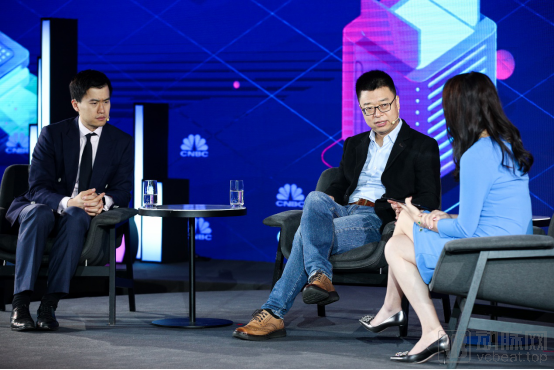
“If one sentence were to summarize the role of the internet in pandemic control, it would be that internet healthcare has shifted from a ‘nice-to-have’ to a ‘must-have.’” Zhang Xiaochun stated in an interview at the conference. The COVID-19 pandemic exposed certain weaknesses in the existing medical service system, such as the inability to efficiently stratify patient populations within a short timeframe, which further exacerbated the sudden strain on medical resources.
InAt the Critical Moment When the Epidemic Struck Suddenly,Digital health platform companies, including WeDoctor, have taken swift action to achieve stratified population management through innovative digital medical services. They rapidly triaged groups such as patients with fever, those with acute or chronic conditions, and the general public, thereby establishing corresponding diagnosis and treatment workflows and pathways for each group to provide differentiated services. For mild cases,Chronic disease patients are managed by the platform, while acute care patients are served through online channels.PrecisionReferral to the Appropriate Medical Institution。
At the onset of the outbreak, WeDoctor rapidly launched the “Real-Time Assistance Platform for COVID-19,” providing innovative services free of charge to users across China, including online consultations, online medication purchasing and delivery, and psychological counseling. At its peak, the platform delivered 280,000 online service encounters in a single day and handled 97% of Wuhan’s online follow-up visits for chronic diseases, significantly reducing the risk of cross-infection in offline settings during the pandemic and alleviating the patient load on medical institutions. As of November 17, the “Real-Time Assistance Platform for COVID-19” had cumulatively served 2.25 million individuals, with total page views exceeding 160 million.
“This indicates that healthcare and even the broader health service system should shift its focus more from ‘treating diseases’ to ‘managing health,’” said Zhang Xiaochun. He noted that the primary challenge at present is how to better connect and allocate medical resources. Home-based healthcare represents a new scenario embedded within the digital migration of medical resources. “In particular, testing, monitoring, intervention, treatment, and even preventive measures for patients with chronic diseases will increasingly take place in home and community settings, rather than necessarily requiring hospital visits.” Currently, Weiyi has enabled online medical insurance payments for follow-up consultations and medication purchases for chronic disease patients in cities such as Wuhan, Tianjin, Jinan, and Tai’an, allowing users to access one-stop healthcare services—including consultation, medication purchase, and insurance payment—from the comfort of their homes.
“The value demonstrated by digital healthcare services during the pandemic will become an indispensable, normalized necessity in the post-pandemic era,” stated Zhang Xiaochun. As a pioneer of internet hospitals in China, Weiyi will continue to drive innovation through digital technologies, exploring advancements in healthcare service delivery, patient experience, and health insurance payment models, thereby providing integrated digital health services that encompass medical consultation, disease management, and overall health management.