

Bomtec Medical Secures Hundreds of Millions in Series B Funding Led by Hillhouse Ventures with Strategic Investment from STIC

Insight Capital
Early-Stage Healthcare Venture Capital Firms
VCBeat (WeChat ID: vcbeat) has learned that in November 2020, Pulse Medical Imaging Technology (Shanghai) Co., Ltd. (hereinafter referred to as “Pulse Medical”) completed a strategic Series B financing round amounting to hundreds of millions of yuan. The Shanghai Municipal Government approved the initiation of a major project under the Strategic Emerging Industries program, to be undertaken by Pulse Medical, and its series of innovative technologies have been incorporated into Shanghai’s planning system for the industrialization of strategic technologies. In this round of financing, Shanghai Science and Technology Venture Capital (Group) Co., Ltd. (hereinafter referred to as “STVC Group”) made a strategic investment, GL Ventures led the round, and existing shareholder Boxing Capital participated in the follow-on investment.
This financing round attracted joint investment from leading industry funds and state-owned strategic venture capital firms, further solidifying Pulse Medical Imaging Technology’s position as the global leader in the niche field of computational coronary functional assessment. Committed to innovation-driven development, Pulse Medical Imaging Technology will continue to promote China’s original computational coronary functional assessment technologies as the international “new standard,” delivering more effective and cost-efficient innovative products for the diagnosis and treatment of patients with cardiovascular and cerebrovascular diseases.
Cardiovascular Industry Fusion: Precision PCI as the Future Trend
China currently has 11 million patients with coronary heart disease. In 2019, over 1 million procedures of percutaneous coronary intervention (PCI) were performed, with more than 1.5 million stents implanted. This autumn, the volume-based procurement program launched by the National Healthcare Security Administration has reduced the price of coronary stents, which previously cost over RMB 10,000, to an average of around RMB 700.
As the era of high-value consumables for coronary stents becomes history, percutaneous coronary intervention (PCI) is transitioning from a focus on "procedure volume" to "procedure quality." Coronary functional diagnostics, represented by FFR, QFR, and CT-QFR, play a crucial role in achieving "precision PCI." These technologies standardize and precisely optimize screening, diagnosis, and interventional treatment strategies for patients with coronary heart disease (CHD), thereby improving diagnostic and therapeutic accuracy, reducing medical costs, and enhancing patient prognosis. This aligns with the overall requirements and direction of China’s national "Healthy China 2030" strategic plan.
Pulse Medical is at the forefront of computational coronary functional assessment worldwide, serving as an originator and leader in the industry. It is poised to break through international barriers and become a key platform for Chinese indigenous technologies to reach the global market.
Driven by Clinical Needs, Pulse Medical Pioneers the Innovative Field of Computational Coronary Functional Assessment
In 2009, the publication of the landmark FAME study in the New England Journal of Medicine (NEJM) sparked significant excitement within the cardiovascular community. Consequently, guidelines for percutaneous coronary intervention (PCI) in Europe, the United States, China, and other regions successively updated the diagnostic criteria for coronary interventions to incorporate fractional flow reserve (FFR) assessment using pressure wires. This shift promoted a transition in the gold standard for diagnosing coronary artery disease from an "anatomical" to a "functional" paradigm. Currently, both European and Chinese interventional guidelines provide a Class IA recommendation for the use of FFR during PCI to assess functional coronary stenosis and guide revascularization strategies for coronary artery disease.
Traditional FFR is an invasive vascular intervention procedure that utilizes a pressure wire equipped with a pressure sensor. It measures the ratio of distal coronary pressure to aortic pressure under conditions of maximal hyperemia induced by the administration of adenosine agents to stimulate the microcirculation. The FFR value represents the proportion of blood flow limitation caused by coronary stenosis, indirectly reflecting the degree of myocardial ischemia resulting from the stenosis.
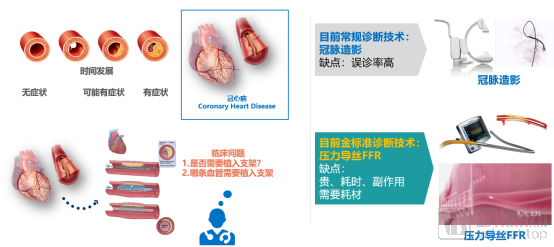
Figure: FFR is the gold standard for diagnosing coronary artery disease, yet its utilization rate remains extremely low due to numerous issues.
However, more than a decade has passed, and the global utilization rate of pressure wire-based fractional flow reserve (FFR) remains suboptimal. Based on the number of percutaneous coronary intervention (PCI) procedures, the global average utilization rate is less than 5%, approximately 20% in developed countries in Europe and the United States, and less than 1% in China. The primary factors limiting the clinical adoption of FFR include high cost, operational complexity, additional procedural risks, prolonged procedure time, and intolerance in some patients.
The founding team of Pulse Medical has been deeply engaged in the fields of coronary imaging and computational coronary functional assessment for many years. They invented the world’s first novel method for rapid calculation of fractional flow reserve (FFR) based on coronary angiography, known as Quantitative Flow Ratio (QFR), which has been successfully implemented in clinical practice at multiple hospitals in China and Europe. The QFR product, based on coronary angiography, was included in the National Medical Products Administration (NMPA)’s Special Examination Procedure for Innovative Medical Devices in 2017 and obtained the NMPA Class III medical device registration certificate in July 2018.
QFR is the world’s first angiography-based technology for rapid FFR calculation, filling an international gap. Currently, QFR technology has obtained CE certification in Europe and FDA clearance in the United States, making it the only image-based FFR technology globally to have received approvals from the FDA, CE, and NMPA.
Subsequently, through continuous intellectual exchange with clinicians, Pulse Medical’s R&D team identified clinical needs and pioneered the world’s first intravascular imaging-based computational FFR products: the ultrasound-derived fractional flow reserve (UFR) product based on intravascular ultrasound (IVUS) imaging, and the optical flow ratio (OFR) product based on optical coherence tomography (OCT) imaging. The team also developed the globally leading non-invasive FFR product based on coronary CT angiography (CT-QFR). To date,Pulse Medical has had three products enter the National Medical Products Administration’s Special Approval Channel for Innovative Medical Devices.
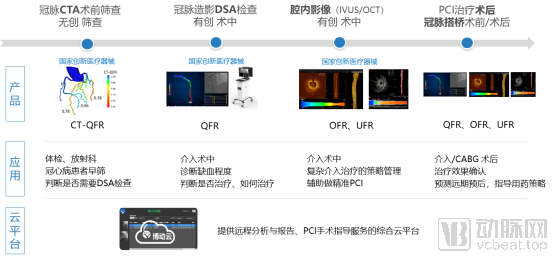
Figure: Pulse Medical's Product Portfolio in Computational Coronary Functional Assessment
Pulse Medical has developed a comprehensive full-imaging FFR product line, ranging from coronary CTA-based and coronary angiography-based solutions to intravascular imaging-based technologies, covering the entire spectrum from coronary artery disease (CAD) screening to intraoperative precision diagnosis. In the future CAD diagnosis and treatment pathway, patients will be able to obtain immediate coronary functional diagnostic results following any coronary imaging examination, thereby enabling precise patient triage and the formulation of targeted treatment strategies. Computational coronary functional assessment will become a routine diagnostic method for CAD patients, rather than a technique requiring additional complex procedures.
It is reported that Pulse Medical will continue to drive technological and product innovation in the fields of cerebrovascular and peripheral vascular diseases, delivering more effective and cost-efficient solutions to a broader patient population.
Driving Innovation: Exploring Long-Term Collaborative Mechanisms Among Industry, Academia, Research, and Healthcare
Since its establishment, Pulse Medical has undertaken or participated in six major national and Shanghai-level scientific research and industrialization projects, actively integrating into the national strategic technological innovation system. These projects include the first batch of key R&D special projects for digital diagnosis and treatment equipment under the National 13th Five-Year Plan, the Ministry of Science and Technology’s “Science and Technology Boosting Economy 2020” key special project, major projects of Shanghai’s Strategic Emerging Industries, Shanghai’s “Scientific and Technological Innovation Action Plan,” and Shanghai’s Key International Cooperation Projects.
In 2017, Pulse Medical Imaging Technology (Shanghai) Co., Ltd. (“Pulse Medical”) established the “SJTU-Pulse Medical Joint Laboratory” with Shanghai Jiao Tong University. Academician Chen Yazhu from the School of Biomedical Engineering at Shanghai Jiao Tong University serves as the Honorary Director of the joint laboratory, while Professor Tu Shengxian, the inventor of computational functional technologies such as QFR, UFR, and OFR, serves as the Laboratory Director. The laboratory is dedicated to the joint research and development of core technologies in medical imaging and artificial intelligence, leveraging the interdisciplinary innovation advantages of industry, academia, research, and clinical practice.In terms of clinical trials for its original core technologies in computational coronary functional assessment, particularly the QFR series, as well as large-scale randomized controlled trials (RCTs), Pulse Medical has established strategic or in-depth scientific research collaborations with nearly 100 leading domestic and international research institutes and medical institutions. These partners include Shanghai Jiao Tong University, Fuwai Hospital of the Chinese Academy of Medical Sciences, the Chinese PLA General Hospital, Zhongshan Hospital affiliated with Fudan University, Ruijin Hospital affiliated with Shanghai Jiao Tong University School of Medicine, Tongji Hospital affiliated with Tongji University, Guangdong Provincial People’s Hospital, the Oxford Heart Centre at the University of Oxford, Aarhus University Faculty of Health in Denmark, and the Johns Hopkins University School of Medicine in the United States. Recently, Pulse Medical was awarded the Shanghai Outstanding Industry-Academia-Research Collaboration Project Award.
Driven by a long-term collaborative mechanism integrating industry, academia, research, and clinical practice, Pulse Medical has had five innovative products enter the medical device registration and approval processes in multiple countries. Among these, two products (QFR and CT-QFR) have been included in the National Medical Products Administration’s (NMPA) Special Approval Channel for Innovative Medical Devices. The QFR product has obtained the NMPA Class III Medical Device Registration Certificate in China, making it the first and only approved consumable-free FFR product for intraoperative interventional use in the country.
Explore Robust Clinical Evidence, Build a Moat of Clinical Evidence
Pulse Medical Imaging Technology prioritizes the strategic layout and protection of original intellectual property rights. To date, it has filed over 60 domestic and PCT patents. In 2019, the company was recognized as a High-Tech Enterprise in Shanghai, and in 2020, it was designated as a Pilot Enterprise for Patent Work in Shanghai. Meanwhile, Pulse Medical Imaging Technology continues to invest in clinical research, striving to build a robust barrier of high-quality clinical evidence. This effort aims to propel Chinese original technologies onto the global stage and establish a “new standard” for precise diagnosis in international coronary functional assessment.
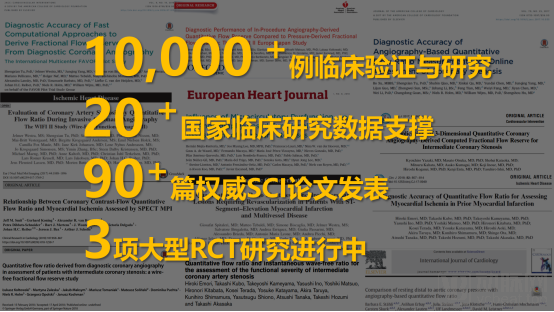
For an innovative technology to evolve from invention to industry standard, commercial drivers are important, but sufficient and robust clinical evidence is even more critical. Pulse Medical Imaging Technology has set multiple industry records in terms of investment and outcomes in clinical trials.Pulse Medical’s original QFR series has become the internationally recognized wire-free FFR product with the most robust clinical evidence for intra-procedural use.Since its establishment in 2015, Pulse Medical has engaged in scientific research collaborations with over 100 centers both domestically and internationally, completed more than 60 clinical trials, and published over 90 high-impact SCI papers, including more than 20 articles in top-tier international cardiovascular journals such as the European Heart Journal (IF=22.673) and JACC (IF=20.589).
Randomized controlled trials (RCTs) are an essential pathway for integrating new technologies into clinical guidelines. To facilitate the inclusion of Pulse Medical’s quantitative flow ratio (QFR) technologies in international guidelines for percutaneous coronary intervention (PCI) and to establish quality control standards for coronary interventions, Pulse Medical is currently conducting three major global RCTs involving its suite of computational coronary functional assessment products: 1) The FAVOR III China study, led by Fuwai Hospital, Chinese Academy of Medical Sciences, with Professor Qiao Shubin and Professor Xu Bo serving as principal investigators (PIs); 2) The FAVOR III Europe/Japan study, led by Aarhus University School of Medicine in Denmark, with Professor Niels R. Holm serving as PI; and 3) The FAVOR IV-QVAS study, led by Ruijin Hospital, Shanghai Jiao Tong University School of Medicine, with Professor Zhao Qiang, Deputy Director of the hospital, serving as PI. As robust clinical evidence and health economic data continue to emerge, these efforts are expected to support the incorporation of Pulse Medical’s proprietary computational coronary functional assessment technologies into PCI and cardiac surgery guidelines in China, the United States, and Europe, thereby enabling more patients to benefit from this technological innovation.
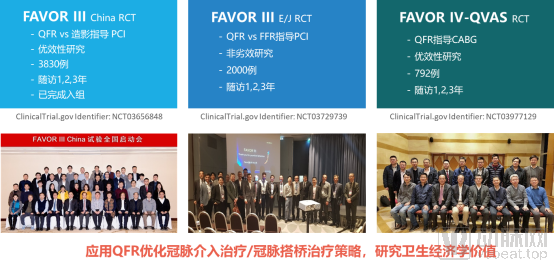
Figure: The three most important large-scale RCT studies of the Pulse QFR product worldwide
Pulse Medical Imaging Technology Stands Out in the Commercialization of Medical AI
“Innovation is easy, but entrepreneurship is difficult.” This statement profoundly reflects the commercialization challenges facing the medical AI sector. Since its emergence in China in 2015, medical AI has undergone several iterations in product forms and clinical applications, evolving from early-stage tools focused on improving clinical efficiency to current intelligent diagnostic solutions. Nevertheless, only a very small number of medical AI products have achieved genuine commercial deployment. Alignment with national policy directives, significant health economic value, combined with the team’s exceptional capabilities and diverse resources, are crucial guarantees for successful commercial implementation.
The core team of Pulse Medical Imaging Technology (PulseMed) largely comprises professionals with R&D, sales, or management experience at multinational medical device corporations (such as Medtronic, GE, Siemens, Philips, and Abbott) and renowned universities. Through years of dedicated industry engagement, the team has gained in-depth knowledge of every stage required for successful product commercialization. PulseMed not only leads the industry in product innovation and the accumulation of clinical evidence but has also achieved a closed-loop commercial model for its QFR product series, driven by policy dividends from healthcare reforms in the new era. Since 2018, the QFR series has been progressively commercialized across various provinces and cities in China as well as internationally. While benefiting patients with coronary artery disease (CAD), these products have further conserved medical resources, optimized CAD diagnosis and treatment workflows, and aligned with the innovative development trends of healthcare institutions and clinical departments. Currently, the QFR series is in clinical use at nearly 200 hospitals in China and over 300 hospitals in more than 20 countries worldwide.
Ms. Liu Bing, Co-founder and CEO of Pulse Medical Imaging Technology (Shanghai) Co., Ltd, stated: “The establishment of Pulse Medical brought together a group of outstanding young professionals from academia, industry, research, and clinical practice, united by a shared vision. We are committed to addressing critical clinical challenges in cardiovascular and cerebrovascular diseases through technological innovation and efficient R&D. By leveraging our innovative products, we aim to accelerate the realization of precision medicine in China and globally. In the new era of China’s transition from a large healthcare nation to a leading healthcare power, we strive to contribute to patients’ health and well-being by providing physicians with more reliable diagnostic and therapeutic tools through technological innovation.”
Zhu Min, Deputy General Manager of Shanghai Science and Technology Innovation Investment Group, stated: “Pulse Medical has been deeply engaged in the fields of coronary imaging and computational coronary functional assessment for many years, demonstrating significant advantages in both technology and operations. Shanghai Science and Technology Innovation Investment Group will actively implement the national and Shanghai municipal strategic layouts for the biopharmaceutical industry, focusing on key areas and core technologies, while strengthening forward-looking investment initiatives.”
Yi Nuoqing, Co-Chief Investment Officer at Hillhouse Capital and Head of Biopharma and Medical Devices at GL Ventures, stated, “Cardiovascular intervention is evolving toward greater precision and intelligence. Pulse Medical Imaging Technology boasts globally innovative technologies and products, an efficient R&D system, and extensive commercialization experience. Since 2018, Pulse Medical’s QFR product series has been progressively commercialized across various provinces and cities in China as well as in multiple countries abroad, optimizing the diagnosis and treatment workflow for cardiovascular diseases. This has not only benefited numerous patients but also conserved significant medical resources. Hillhouse will partner with Pulse Medical to advance the development and market launch of more innovative products, bringing to the field of cardiovascular intervention more solutions that deliver both clinical value and health economic benefits.”
Li Zhenming, Partner at Boxing Capital, stated, “We are highly optimistic about the growth prospects of Pulse Medical Imaging Technology. Its proprietary technologies are at the forefront globally, and its clinical efficacy has been thoroughly validated through multiple international multicenter clinical trials, earning consistent recommendations from experts both in China and abroad. The management team at Pulse Medical Imaging Technology boasts extensive international perspective and local expertise, having secured regulatory approvals for its products in multiple countries within a short timeframe. By collaborating with partners to explore international markets, the company has established its products and diagnostic and therapeutic technologies as routine offerings in numerous hospitals domestically and overseas. We firmly believe that the management team of Pulse Medical Imaging Technology possesses exceptional execution capabilities and leadership, enabling it to deliver high-quality solutions to cardiovascular patients worldwide.”
About GL Ventures
GL Ventures is the venture capital fund under Hillhouse Capital that focuses on early-stage innovative companies. It primarily invests in four key sectors: biopharmaceuticals and medical devices, software and hard technology, consumer internet and technology, and emerging consumer brands and services. Biopharmaceuticals and medical devices have long been a core investment focus for Hillhouse. Over the past decade, Hillhouse has invested in more than 200 outstanding enterprises in the fields of biopharmaceuticals, medical devices, and healthcare services. We aim to partner with companies as “friends of time,” jointly driving innovation and development in the broader healthcare sector to benefit more patients.
About Boxing Capital
Boxing Capital is a venture capital firm dedicated to early-stage healthcare investments, founded by partners with extensive experience in healthcare industry investing. The firm currently manages funds totaling nearly RMB 1 billion, with a strategic focus on more than 30 innovative medical device and healthcare service companies possessing significant market potential. Many of these portfolio companies have grown into leaders in their respective niche sectors, and the firm has successfully realized profitable exits from multiple projects. Boxing Capital’s limited partners include top-tier domestic fund-of-funds, healthcare entrepreneurs, and seasoned investors. Leveraging in-depth industry research, clear investment logic, and comprehensive post-investment management capabilities, Boxing Capital has secured ongoing support from its investors and earned the long-term respect of entrepreneurs, firmly establishing itself as a trusted long-term partner for leading domestic investors and entrepreneurs.