

Peripheral Vascular Intervention: The Next Growth Engine Post-Volume-Based Procurement?
The first round of national centralized volume-based procurement for high-value medical consumables has just concluded, with the price of coronary stents dropping from the ten-thousand-yuan range to an unprecedented hundred-yuan level.
For the entire high-value medical consumables industry, volume-based procurement acts like a railway switchman, single-handedly altering the sector’s original trajectory.
With the profit margins of coronary stents, a cornerstone interventional product, significantly compressed, industry giants will inevitably be forced to pivot. This will accelerate the focus of domestic high-value consumables companies on other niche segments, leading to a value reconstruction in innovative high-value consumables tracks that have previously received insufficient attention.
It is foreseeable that increasing investment in innovative medical device sectors—such as neurointervention, cardiac electrophysiology, cardiac rhythm management, and surgical robots—will become a prevailing trend. Positioning in these innovative segments represents the optimal strategy amid the ongoing trends of price reductions and cost containment.
Among the various tracks for innovative medical devices, peripheral vascular intervention is garnering significant attention. This year, several major domestically produced products in the field of peripheral vascular intervention have received regulatory approval. The segment of drug-coated balloons (DCBs) for lower extremity arteries, once a gap in domestic offerings, saw the market launch of two products from MicroPort Endovascular and JetMed Medical, respectively, thereby reshaping the competitive landscape. These developments unequivocally demonstrate the growing strength and commitment of local enterprises in the peripheral intervention sector.
Peripheral vascular intervention has also become a key growth engine and innovation hotspot for multinational corporations. At the China International Import Expo (CIIE), where foreign companies showcased their strengths, VCBeat (WeChat ID: vcbeat) observed that this year, firms including Boston Scientific, BD, and Philips all highlighted innovative peripheral intervention products as centerpieces of their exhibits, demonstrating their respective capabilities in the peripheral vascular field. Boston Scientific unveiled Eluvia, the world’s first polymer-coated drug-eluting stent for peripheral arteries; Philips presented its excimer laser system, which utilizes laser fiber-optic catheters; and BD made its China debut of LifeStream, a peripheral balloon-expandable covered stent. This underscores the significant emphasis multinational companies place on the peripheral intervention sector.
The peripheral intervention field boasts a large patient population. In China, the total number of patients with peripheral arterial disease and venous disease exceeds 100 million. The market is experiencing rapid growth, and peripheral vascular intervention products are in a period of R&D breakthroughs, leaving ample room for corporate innovation. It is a vast arena with significant opportunities for achievement.
In the peripheral intervention market, what are the major products and competitive landscape? Where do opportunities for device innovation lie? VCBeat interviewed Dr. Zhang Qiang, founder of China’s first physician group, Zhang Qiang Physician Group, and a leading vascular surgery expert in China, as well as other industry insiders, on this topic.
Dr. Zhang Qiang is a leading vascular surgery expert in China. He was instrumental in founding the Department of Vascular Surgery at Sir Run Run Shaw Hospital, Zhejiang University School of Medicine; the Hangzhou Vascular Surgery Center; and the Department of Vascular Surgery at Shanghai East Hospital, Tongji University. As early as the 1990s, he was already performing peripheral endovascular interventions. Recalling this history in an interview with VCBeat, he stated, “As early as the 1960s, pioneers attempted peripheral endovascular therapies, but those efforts were relatively rudimentary and remained at the stage of animal experiments. It was not until after 2002 that endovascular devices began to be gradually adopted in vascular surgery. By around 2005, endovascular therapy had started to largely replace traditional open surgery in the field of vascular surgery.”"Nowadays, the penetration rate of coronary intervention in vascular surgery is already very high, and some young doctors no longer perform traditional surgeries. Peripheral vascular interventional treatment has even seen instances of overuse."
An industry insider also noted that peripheral vascular intervention is not an emerging market as commonly perceived; rather, it is already a highly mature therapeutic approach within vascular surgery. The total annual volume of procedures has reached several hundred thousand cases. For comparison, the volume of percutaneous coronary intervention (PCI) procedures in China exceeds 900,000 cases, while the total volume of neurointerventional procedures stands at approximately 400,000 to 500,000. Although peripheral intervention developed later, it is experiencing rapid growth, and its procedural volume is expected to soon rival that of PCI.
Therefore, peripheral interventions have the opportunity to capture half of the interventional medicine market.
The primary reason for the optimistic outlook on the potential of the peripheral intervention sector is the large patient population. According to data from "Report on Cardiovascular Health and Diseases in China 2019," the number of patients with lower extremity arterial disease in China exceeds 45 million. The prevalence of lower extremity venous diseases in China is 8.89%, corresponding to nearly 100 million patients, among whom the incidence of venous thromboembolism is rising.
Based solely on the prevalence base, China has 11 million patients with coronary heart disease, 13 million with stroke, and 8.9 million with heart failure; the number of individuals affected by peripheral vascular disease is several times higher than that of these other conditions.
Peripheral vascular disease affects a large patient population, primarily due to the extensive anatomical distribution of the peripheral vasculature.
The primary scope of cardiovascular intervention encompasses the coronary arteries and veins closely associated with the heart; neurointervention mainly involves intracranial vessels related to cranial and brain functions; peripheral vascular intervention primarily pertains to the arteries and veins in the peripheral circulation, including the vasculature of the trunk and limbs, excluding the aorta, within the human circulatory system.
Despite the large patient population, the current market size for peripheral interventions is not substantial.
According to relevant research reports by Frost & Sullivan, the market size of peripheral vascular interventional medical devices in China was RMB 3.01 billion in 2017, and is projected to reach RMB 7.12 billion by 2022. Within the overall peripheral vascular intervention market, peripheral arterial interventions account for the largest share. The annual number of peripheral arterial intervention procedures is approximately 100,000–150,000, with drug-coated balloon (DCB) procedures totaling around 20,000 cases per year. In terms of clinical pricing, a peripheral interventional stent costs approximately RMB 15,000, while a peripheral drug-coated balloon is priced between RMB 20,000 and RMB 30,000.
Backed by a large patient population and with relatively high unit prices, why is the peripheral intervention market not particularly large? The answer lies in penetration rate.
On the patient side, the relatively low mortality rate of peripheral vascular disease results in a weak willingness to undergo surgical intervention; by the time patients seek medical attention, the condition has often progressed due to delayed treatment.This differs significantly from the disease characteristics of coronary heart disease and stroke, which have high case fatality rates and often leave patients with no choice at the time of onset.
However, it is worth emphasizing that the low early mortality rate of peripheral vascular diseases does not imply that they are unimportant. Peripheral vascular diseases mainly include peripheral arterial disease and venous diseases. Peripheral arterial disease refers to conditions causing local ischemia due to stenosis or occlusion of peripheral arteries. Stenosis or occlusion of the lower extremity arteries can lead to symptoms such as intermittent claudication, cold skin on the legs or feet, chronic pain, and gangrene. In severe cases, it can result in death and amputation. Venous diseases primarily encompass a series of conditions caused by impaired blood flow, such as limb swelling, resulting from varicose veins, deep vein thrombosis, and venous compression. Common diseases include varicose veins, venous thrombosis, and iliac vein compression syndrome. Among these, deep vein thrombosis can cause pulmonary embolism, which has an extremely high mortality rate.
On the physician side, vascular surgery is continuously evolving and improving.. Dr. Zhang Qiang noted that peripheral vascular interventional therapy has a relatively short history of development. Although the penetration rate of interventional procedures is already high in developed regions, tier-3 cities in China still lack vascular surgery departments, and physicians’ understanding of peripheral vascular diseases remains inadequate.
The rapid clinical growth in the number of peripheral interventional procedures reveals that patients have increasingly higher demands for improved quality of life and greater awareness of peripheral vascular diseases. Meanwhile, the field of vascular surgery is advancing rapidly from the physicians’ perspective. These two factors will not hinder the future growth of the peripheral vascular intervention market.
The growing momentum in the peripheral intervention field has made this niche segment increasingly strategic for high-value medical device manufacturers both domestically and internationally. For companies seeking to enter this market, peripheral intervention is not a readily accessible prize but rather cheese hidden within a maze.
The First Hurdle to Finding Cheese: Overcoming R&D Barriers. Unlike coronary interventions, which benefit from mature products that can be emulated, peripheral interventions lack such established benchmarks. Even among importers, stent and balloon products in the peripheral intervention field are undergoing continuous updates and iterations, indicating that existing solutions are still far from perfect.
Compared with cardiovascular and neurointerventional procedures, peripheral vascular intervention involves a greater number of blood vessels, longer vessel lengths, more complex anatomical structures, and more complex disease pathologies. Consequently, the development of medical devices in the field of peripheral intervention presents greater challenges.
“The coronary arteries consist of only three major vessels, whereas the peripheral vascular system, even in the lower extremities alone, encompasses a complex network of large and small vessels, with distinctions between above-knee and below-knee segments, as well as variations in vessel length. Therefore, although peripheral interventional products also include stents, balloons, and similar devices, the complexity of research and development increases exponentially,” stated Li Kai, Product Manager at Zenflow Medical.
Taking stents and balloons, which are commonly used in the treatment of stenotic lesions of the lower extremity peripheral arteries, as examples, bare balloons and bare-metal stents are two relatively traditional minimally invasive interventional devices; however, both have certain limitations, and the problem of restenosis has not been adequately addressed.
In the field of peripheral veins, the primary clinical challenges currently include impaired venous return due to lower extremity venous occlusion, stenosis, or valvular insufficiency, as well as the risk of pulmonary embolism resulting from thrombus detachment.
For the prevention of pulmonary embolism, inferior vena cava (IVC) filters represent a relatively mature technology. However, in recent years, there have been no significant technological breakthroughs in the filters themselves, leading to persistent clinical issues such as inaccurate positioning, filter tilt, and difficulty in retrieval.
In addition, venous outflow obstruction is a category of venous disease that has garnered increasing attention in recent years. Current treatment approaches generally include venous thrombectomy, iliac vein stenting, and venous valve repair; these are all novel techniques introduced in recent years, and there are currently no domestically manufactured products available on the market.
Of course, the higher the barriers, the greater the space beyond them.
The second biggest prize also requires breaking through the heavy encirclement of imported products. Currently, imports dominate the peripheral vascular intervention market, with a lack of strong domestic competitors.
Currently, the domestic peripheral vascular intervention market is predominantly dominated by international medical device giants such as Medtronic and Boston Scientific, who also place significant emphasis on this sector.
Annual report data reveal that peripheral vascular intervention is a key business pillar for foreign giants that cannot be overlooked, and it also serves as a new engine with strong growth momentum in the increasingly competitive cardiovascular market.
Medtronic’s cardiovascular portfolio is divided into three major segments: Cardiac Rhythm and Heart Failure, Coronary and Structural Heart, and Aortic, Peripheral, and Venous. In 2019, the Cardiac Rhythm and Heart Failure segment generated revenue of $5,141 million, with a growth rate of 3.2%; the Coronary and Structural Heart segment recorded revenue of $3,541 million, with a growth rate of 4.8%; and the Aortic, Peripheral, and Venous segment achieved revenue of $1,786 million, with a growth rate of 16.6%. Data from Medtronic’s 2019 annual report reveals that the Aortic, Peripheral, and Venous segment was the fastest-growing subsector, significantly outpacing other cardiovascular subsectors.
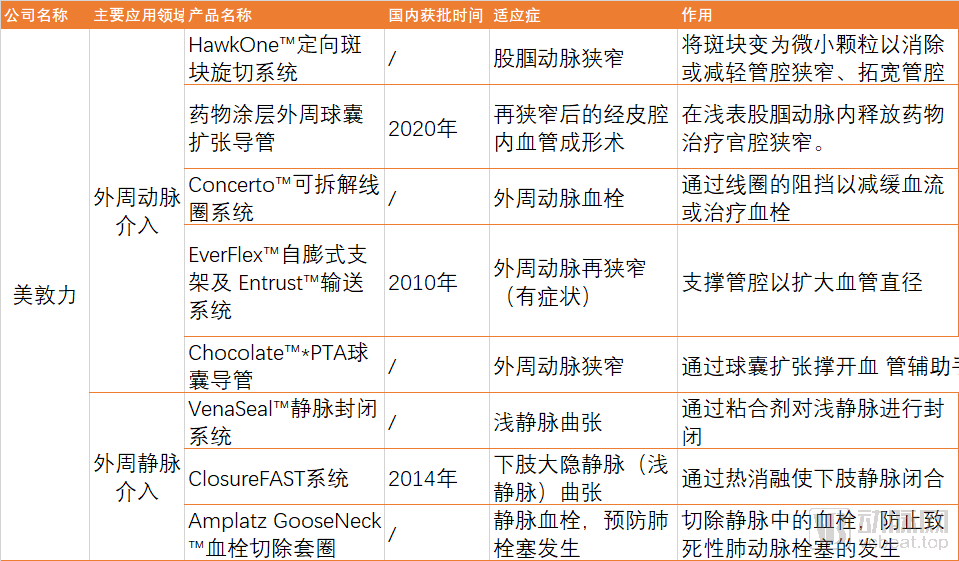
Medtronic's Key Products in Peripheral Interventions
Boston Scientific’s cardiovascular device business comprises two major segments: Cardiac Intervention and Peripheral Intervention & Vascular Surgery. In fiscal year 2019, revenue from Cardiac Intervention reached $2,851 million, representing a growth rate of 6.5%; revenue from Peripheral Intervention & Vascular Surgery amounted to $1,393 million, with a growth rate of 10.4%.
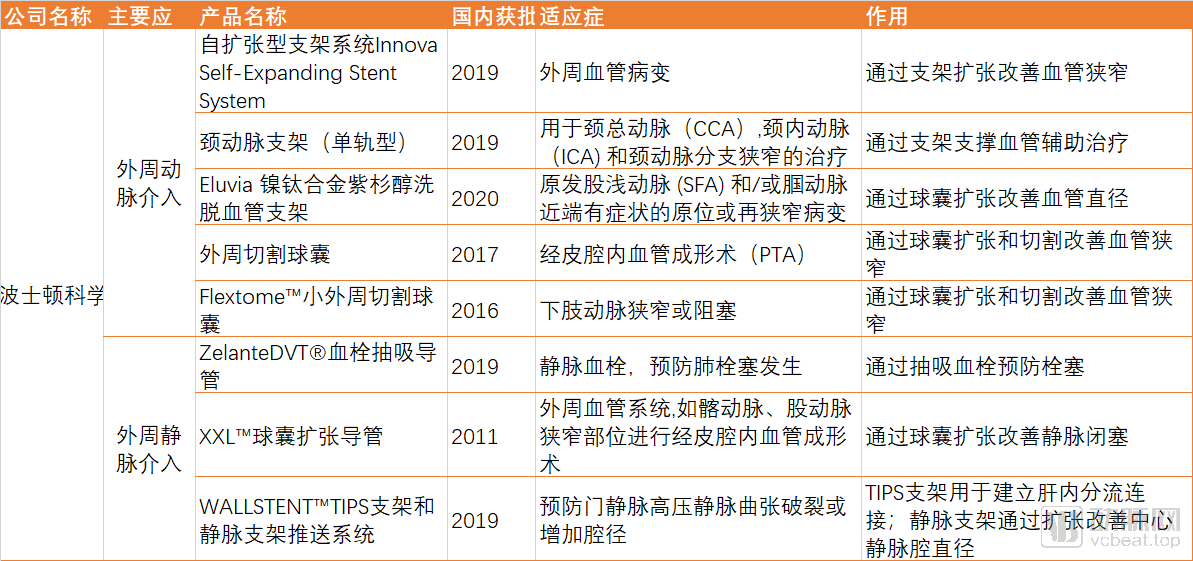
Boston Scientific Peripheral Key Product Lines
Domestic manufacturers are still in the phase of ramping up efforts. Based on registration certificates, there are few certified domestic products, which tend to be relatively single and homogeneous, mainly concentrated in the fields of stents and drug-coated balloons.
According to VCBeat, multiple manufacturers have already established arterial and venous product lines, with several products currently undergoing clinical trials. These products are expected to be launched sequentially in the coming years.
Taking Guichuang Medical as an example, its drug-coated balloons have received regulatory approval. The company has also established a product portfolio in areas such as high-pressure balloons for renal dialysis, peripheral arterial and venous interventions, and interventional consumables. Products including arterial and venous stents are currently in clinical trials.
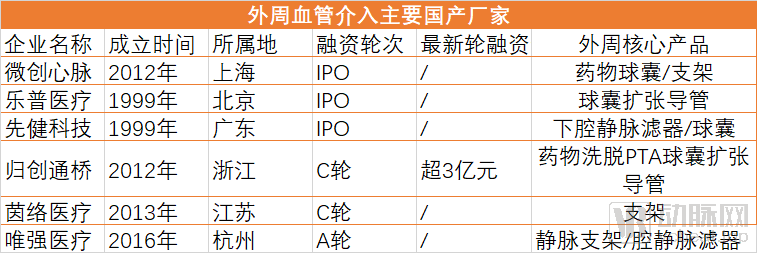
VCBeat has also compiled a list of manufacturers currently engaged in the research and development of peripheral vascular interventional products in China; it is evident that there are few domestic enterprises.
Next, this article will analyze the overview of peripheral arterial intervention and peripheral venous intervention from three dimensions: major products, major manufacturers, and innovation directions.
"Peripheral Artery Disease" encompasses all arterial diseases excluding those of the coronary arteries and the aorta. However, the term is commonly used to refer specifically to Lower Extremity Artery Disease (LEAD). The scope of peripheral arterial interventions discussed in this article primarily focuses on the lower extremities, excluding other peripheral sites such as the carotid, vertebral, upper extremity, mesenteric, and renal arteries.
Generally, the coronary arteries that supply the heart are focal points prone to atherosclerosis (arterial blockage due to lipid deposition). However, arteries outside the heart (known as peripheral arteries) are also vulnerable sites; notably, the lower extremity arteries are similarly susceptible to atherosclerotic disease.
The role of stents in peripheral vessels is similar to their role in coronary artery disease, primarily involving the use of stents to treat arterial occlusion by propping open the blood vessels.
Due to the significant deformation that stents must withstand in the superficial femoral artery and popliteal artery, the primary challenge for self-expanding stents in lower extremity arteries is their susceptibility to fatigue fracture. Therefore, for the superficial femoral artery, implantation of nitinol stents with high fatigue resistance is recommended, whereas stent implantation is not recommended for the popliteal artery.
Currently, the market structure for peripheral artery stents remains relatively stable, with major competitors being traditional multinational medical device companies such as Cordis and Abbott.
Besides stents, balloons are the second-largest product category in peripheral arterial interventions. Balloons are typically used for predilation of blood vessels.
# What Are the Differences Between Stents and Balloons?From a comparative perspective, in the field of peripheral vascular intervention, balloons and stents are not mutually substitutable; drug-coated balloons cannot replace traditional stents. Across the entire peripheral vascular intervention market, data from Europe indicate that stents remain the dominant product.
“The superficial femoral artery in the lower extremities, the longest blood vessel, can reach 30 centimeters in length. It is impossible to achieve complete recanalization of the entire vascular lumen using a balloon alone. Therefore, in the peripheral vascular field, drug-coated balloons are suitable for relatively simple lesions where the vessel diameter becomes sufficiently large after dilation.”
From a clinical perspective, drug-coated balloons are often the preferred initial option for physicians, but they are not the definitive solution; stents remain a key component of definitive treatment.
In coronary intervention, stents are the preferred choice for physicians due to their high recanalization rates, representing a well-established solution. However, no such definitive solution exists in peripheral interventions. Furthermore, since peripheral vascular diseases often have lower mortality rates, physicians tend to prioritize treatment options that offer greater future therapeutic flexibility and higher repeatability. Consequently, when given a choice, clinicians will first opt for drug-coated balloons to improve patients’ quality of life in the short term, and then determine whether stent implantation is necessary based on long-term outcomes.
In the domestic balloon catheter market, products from five companies have received approval, including Acotec, Medtronic, MicroPort Endovastec, JetMed, and Lepu Medical.
Among them, three products are domestically produced, including MicroPort Endovascular’s Reewarm® PTX Drug-Coated Balloon Dilatation Catheter, approved in April 2020, and Zendo Medical’s Drug-Eluting PTA Balloon Dilatation Catheter, approved in November 2020.Lepu Medical’s Below-the-Knee Peripheral Balloon Dilatation Catheter was approved in 2019.
In fact, while balloon prices are lower than stent prices in Europe, they are higher in China. This is because, previously, only Acotec’s drug-coated balloon had received regulatory approval in the country, leading to higher product pricing. As the world’s first approved peripheral drug-coated balloon, Acotec’s product commands a premium price in the market. The number of procedures using this device has grown rapidly. According to data from an Industrial Securities report, Acotec achieved sales revenue of RMB 350 million in 2018, and when combined with its conventional balloon business, its market share reached 44.9%.
From the perspective of market landscape, Acotec, Medtronic, Bard, Cordis, and Boston Scientific are the dominant players in the balloon market. Domestic products were just approved this year; after addressing their shortcomings, they are expected to see significant volume growth in the future.
From a trend perspective, Li Kai told VCBeat that there are two major trends in the R&D direction of the peripheral artery intervention field:First, stents remain an irreplaceable product in peripheral interventions, and more derivative products centered on stents, such as covered stents, will emerge in the future.
The second major trend is the use of atherectomy devices. So-called atherectomy devices do not involve implanting products into blood vessels but rather remove plaque from within the vessels. Currently, the most widely used atherectomy devices in China primarily include directional coronary atherectomy, laser atherectomy, mechanical thrombectomy, and orbital atherectomy.
Among them, directional atherectomy is primarily performed using Medtronic’s second-generation TurboHawk device, which enables directional cutting of tissue for short-segment, moderate-to-severe calcified lesions.
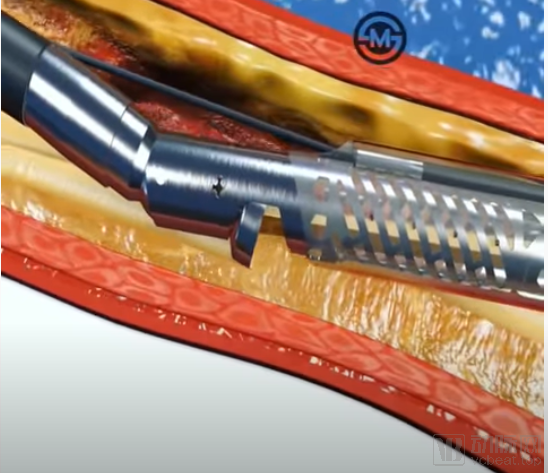
Medtronic TurboHawk Plaque Excision Procedure
Laser plaque ablation utilizes laser energy to fragment plaque into small particles, thereby achieving debulking. Representative products include those from AngioDynamics and Eximo Medical’s B-Laser.
At this year’s China International Import Expo (CIIE), Philips also showcased its excimer laser system, which utilizes a laser fiber-optic catheter to instantly vaporize intravascular thrombi through laser ablation.
Mechanical thrombectomy primarily achieves rapid clot removal through mechanical aspiration. Currently, two systems are available in China: the Rotarex device and Boston Scientific’s AngioJet ZelanteDVT catheter. Although both are thrombus aspiration devices, they operate on different principles. The AngioJet utilizes high-velocity saline jets to macerate and aspirate thrombi; it may also incorporate thrombolytic agents such as urokinase into the jet stream. This process combines pharmacological thrombolysis with mechanical aspiration, without involving mechanical cutting, thereby reducing the risk of vascular wall injury and making it more suitable for fresh thrombi. In contrast, the Rotarex employs a high-speed rotor (40,000–80,000 rpm) to mechanically macerate and aspirate thrombi. It is effective for both acute and chronic thrombi and can also remove intimal hyperplasia.
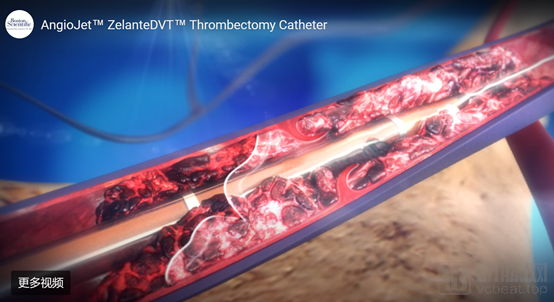
Boston Scientific AngioJet ZelanteDVT Thrombolysis and Thrombectomy Procedure
However, it is worth noting that the emergence of various atherectomy devices has significantly improved the success rate of treating complex peripheral vascular lesions. Nevertheless, long-term follow-up data on their therapeutic outcomes remain lacking. Currently, the clinical application of atherectomy devices is relatively limited, their costs are considerable, and further product optimization is warranted.
In the overall peripheral vascular intervention market, the current market size for peripheral veins is significantly smaller than that for peripheral arteries. However, looking toward future development, peripheral venous intervention holds even greater market potential than the peripheral arterial market, driven by a patient base nearing 100 million and a high growth rate.
At present, the peripheral venous intervention market in China remains limited in scale. In 2013, the market size of venous interventional devices in China was only RMB 370 million. However, the growth rate is noteworthy. By 2017, the market size had reached approximately RMB 890 million. This rapid growth trend is expected to continue alongside the increasing clinical application of venous intervention procedures, with the market size projected to reach RMB 3.1 billion by 2022, representing a compound annual growth rate (CAGR) of 28.4%.
The key driver behind the high growth of the venous intervention market is the extremely high incidence rates. According to Frost & Sullivan, the prevalence of varicose veins in China ranges from 10% to 40%, that of lower extremity deep vein thrombosis (DVT) from 10% to 20%, and that of iliac vein compression syndrome from 20% to 34%, resulting in a substantial patient population.
An industry insider pointed out, “At this stage, the peripheral venous intervention market remains relatively small, primarily because the field started late. Active clinical intervention and treatment for peripheral venous diseases have only been developed for five to ten years, making peripheral venous intervention a relatively new area. Despite being in its early stages, the peripheral venous intervention market is growing very rapidly.”
Peripheral venous interventions are in an early stage of development, which has resulted in less product diversity and maturity compared to the peripheral arterial sector, particularly among domestically produced products.
Compared to peripheral arterial interventions, the market for peripheral venous interventions is limited. There are fewer domestic manufacturers in the field of peripheral venous interventions, and the market is primarily dominated by imported brands.
High-value consumables for peripheral venous interventions mainly include thrombolysis catheters, mechanical thrombectomy stents, dilation balloons, and inferior vena cava (IVC) filters. Currently, the only domestically approved product is the IVC filter for preventing pulmonary embolism from LifeTech Scientific.
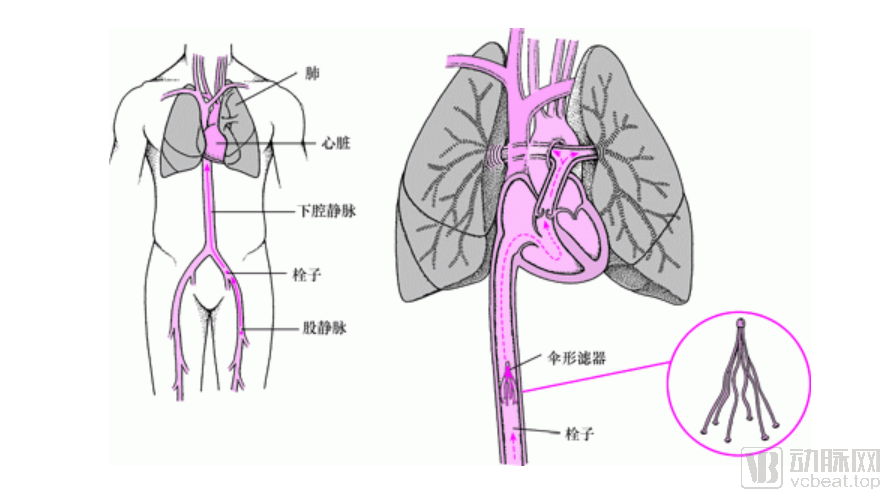
Mechanism of Inferior Vena Cava Filters in Preventing Pulmonary Embolism. Image source: Merck Manual
Why the Peripheral Vein Market Is Currently UndervaluedThis is related to the characteristics of venous diseases. Venous diseases have a more insidious onset, with subtle symptoms that tend to recur easily. This often leads to delays in seeking medical attention. Although the patient population is large, many individuals are unaware that venous diseases require treatment, thereby missing the optimal window for intervention. Additionally, physicians sometimes lack sufficient awareness regarding timely treatment. These combined factors have resulted in venous diseases receiving less attention than arterial diseases.
Over the past two years, as understanding of venous diseases has deepened, demands for interventional products have become increasingly stringent. Dedicated stent products for the venous field have emerged, whereas arterial stents were previously used as a makeshift alternative.
From the perspective of R&D trends, venous stents are a highly anticipated product category. In China, three to four companies, including JetMed, are developing venous stent products, most of which are currently in the clinical stage.
In peripheral venous interventions, besides inferior vena cava filters, there are also ablation products, catheter-directed thrombolysis devices, and venous closure systems. However, these product categories belong to active medical devices, whose research and development (R&D) and manufacturing face different challenges compared to high-value consumables, making it difficult to rapidly establish a product portfolio in the short term. Few domestic enterprises engage in R&D in this field.
The cornerstone of the rapid development of peripheral vascular interventional products lies in the clinical application of the minimally invasive concept of interventional therapy. However, as clinical treatment concepts evolve and advance rapidly, this foundation may not remain permanently stable.
Taking the treatment of varicose veins as an example, in addition to endovenous therapies, a new trend involves treatment guided by hemodynamic analysis. The CHIVA procedure departs from the traditional principles of destructive and ablative surgery; instead, it performs hemodynamic correction based on a comprehensive preoperative analysis of venous hemodynamics.
Treating diseases based on hemodynamics represents a significant shift from existing therapies.
Dr. Zhang Qiang stated, “In the past, interventional therapy was based on morphology, relying on DSA imaging equipment. In essence, physicians were treating the images rather than addressing the underlying etiology. Taking the colloquial term ‘chronic non-healing leg ulcers’ as an example, varicose veins were previously considered a causative factor. However, from a hemodynamic perspective, they are merely a clinical manifestation resulting from hemodynamic alterations; there is no causal relationship between varicose veins and ‘chronic non-healing leg ulcers.’ Therefore, in the future, the decision to treat peripheral vascular diseases will undoubtedly be based on hemodynamics and clinical outcomes.”The foundation of treatment should be hemodynamics, rather than relying solely on morphology.“
In the interview, Dr. Zhang Qiang pointed out that the future of peripheral vascular disease management should be “treat the patient, not the film.”
“Currently, many clinicians’ approaches to treatment are effectively ‘held hostage’ by device manufacturers, with clinical reasoning dominated by these companies. If physicians were to cultivate independent thinking and adopt a patient-centered perspective—rather than merely contenting themselves with being procedural technicians—they would be well positioned to collaborate with device manufacturers and guide the development of superior medical devices.”
Of course, the current situation is also related to the fact that China has not yet established a systematic and standardized training system for vascular surgery. In the United States, there is a specialized physician training program; after completing residency, physicians must undergo an additional 1–3 years of fellowship training before becoming qualified vascular surgeons. In contrast, the entry threshold for vascular surgeons in China is relatively low. Taking varicose veins, a common condition, as an example, few physicians have received systematic training, resulting in a limited understanding of the disease’s full spectrum. Many physicians focus more on how to perform procedures rather than why they should be performed.
On the physician side, transitioning from following to surpassing requires a deeper understanding of diseases. For enterprises, there are two major shortcomings that need to be addressed.
There are few domestic companies involved in the field of peripheral intervention, mainly for two reasons:First, the comprehensive strength of domestic high-value consumables enterprises is relatively weak.
Most domestic high-value medical consumables companies can follow trends to develop one or two hot products. From the perspective of a single product, it may be difficult to discern differences in corporate strength. However, in terms of comprehensive capabilities, some companies lack strong technical expertise in simultaneously developing multiple products across different fields. After two to three years of development, these companies are likely to fall significantly behind their competitors.
In an interview, a domestic peripheral intervention manufacturer also stated, “We must acknowledge that our development in the field of peripheral vascular intervention is still at a very early stage, with many limitations. Moreover, this gap cannot be closed rapidly in the short term. In the complex field of peripheral intervention, there are still many areas where we need to focus and make breakthroughs. For instance, regarding basic consumables such as guidewires and catheters for peripheral interventions, Chinese manufacturers have virtually no technological reserves.”
Second, the lack of forward-thinking and strategic vision is also a major shortcoming.Only by anticipating and identifying market potential before a niche sector heats up, and by building robust R&D reserves, can companies gain a first-mover advantage. Currently, thanks to increasingly specialized industrial collaboration, the components and supply chains for major medical devices are well-covered in China, making it relatively easy to develop interventional medical products themselves. However, high-value consumables companies lacking foresight tend to follow trends into hot sectors, engaging in mutual imitation and becoming trapped in homogeneous competition.
In the future, how medical device manufacturers can closely integrate with clinical practice, center on patients, and provide products from the perspective of long-term clinical benefits will test not only their industrialization and engineering capabilities, but more importantly, their in-depth understanding of diseases and clinical practices.
Volume-based procurement of coronary stents has demonstrated that even in the high-barrier medical device industry, the era of effortless profitability is over. Medical device companies now face challenges from all fronts and across multiple dimensions. Only through continuous innovation and persistent exploration into uncharted territories can they maintain an invincible position.