

ByteDance's Integrated Healthcare Strategy: Can an Online-to-Offline Model Succeed?
ByteDance Continues to Extend Its Reach into the Healthcare Sector.
Recently, VCBeat learned thatByteDance Establishes “Songguo Clinic” in Beijing, with the English name "PINECONE CLINIC".This move signals ByteDance’s push into offline medical institutions.

In less than a year, ByteDance has undertaken several major initiatives in the healthcare sector.In May, ByteDance completed the full acquisition of Baike Mingyi for a consideration of hundreds of millions of yuan; in September, it finalized the initial branding of its healthcare business, launching the independent brand “Xiaohe Medical” and releasing the “Xiaohe” app (for patients) and the “Xiaohe Doctor” app (for physicians). From online health education content to internet-based medical services, and further to the establishment of offline clinical institutions, ByteDance’s healthcare strategy has become increasingly clear.
As is well known, in recent years, internet giants such as Alibaba, Tencent, and JD.com have been making significant strides in the healthcare sector.Major developments in just the past six months include: Alibaba Health’s app was rebranded as “Yilu,” aiming to further strengthen its core competitiveness in physician quality and operational capabilities; Tencent Healthcare partnered with WeBank to establish a joint laboratory, exploring intelligent applications in the medical field; JD Health launched the first internet-based respiratory care center, intending to create a new online-plus-offline model for chronic disease management, and pursued an initial public offering (IPO) in Hong Kong...
Fierce Competition Amidst a Crowded FieldFor ByteDance, a latecomer to the field, the key to securing its share of the “pie” among industry giants lies in how effectively it can leverage its ecosystem synergy advantages. Moreover,The healthcare industry differs from other sectors, as it not only demands strong commercialization capabilities from participating enterprises but also tests their dedication to and understanding of the medical field.
“Poised for Action”: Can ByteDance Successfully Break into the Healthcare Sector This Time?
ByteDance’s Offline Medical Services Business Comes to Light.
According to Qichacha, the entity behind “Songguo Clinic,” established by ByteDance, is Beijing Songguo Outpatient Department Co., Ltd., which was incorporated in June this year, with Zheng Qingyin serving as its legal representative.Through equity penetration analysis, it was found that the enterprise is affiliated with 1024 Technology (Hainan) Co., Ltd., with Wu Haifeng as the actual controller and ultimate beneficiary.
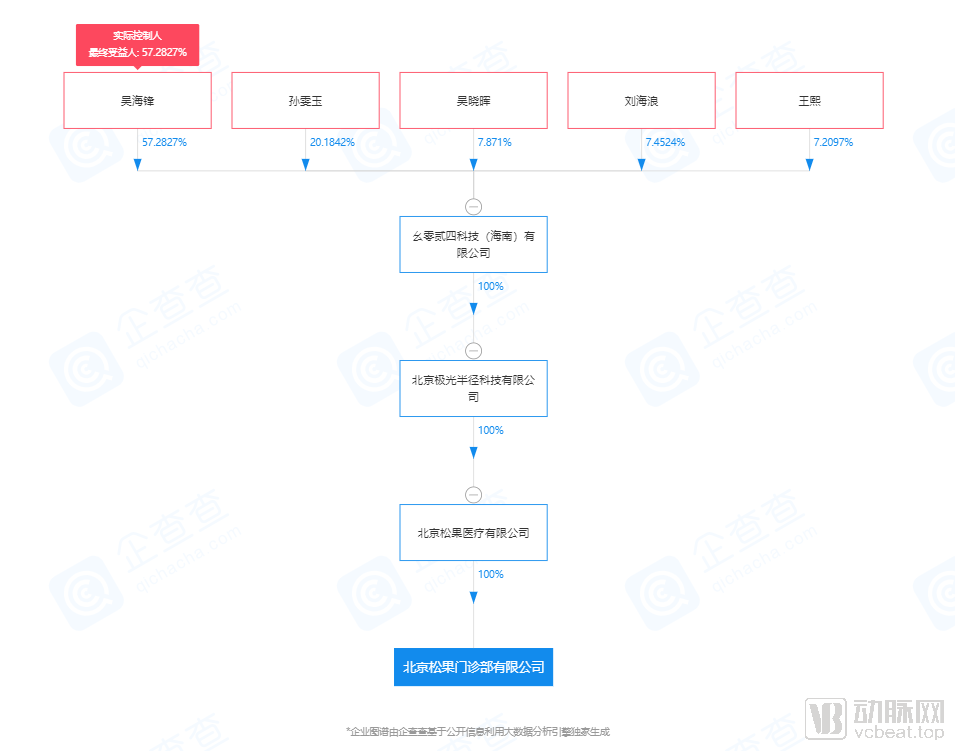
According to Tencent’s “Yixian” report, Wu Haifeng, a former Baidu executive (Vice President, in charge of the search business at Baidu Search Company), co-founded Yaolingersi Technology (Hainan) Co., Ltd. last May with Sun Wenyu, also a former Baidu executive (Executive Director, in charge of the search business at Baidu Search Company), after they both left the company.
On the introduction page of the Xiaohe APP, 1024 Internet Hospital claims to be the first internet hospital to join the Chinese Hospital Association, as well as a comprehensive internet hospital certified by the National Health Commission. The hospital comprises seven primary disciplines and one remote diagnosis and treatment center, establishing a robust medical service model that leverages the convenience and efficiency of internet-based platforms. Additionally, the hospital holds a filing certificate for Classified Protection of Information System Security.This August, 1024 was fully integrated into ByteDance.
Notably, Wu Haifeng spent 17 years at Baidu, where he was a key technical figure in natural language processing (NLP) research and formerly headed Baidu’s healthcare-related businesses. Sun Wenyu also worked at Baidu for over a decade, serving as Director of the Multimodal Search Department. Moreover, several directors who reported to Wu Haifeng—including Wu Xiaohui, Wang Xi, Li Meng, Tan Dai, and Liu Hailang—joined ByteDance after leaving Baidu.
It is not difficult to see that,The 1024 team, led by Wu Haifeng, has extensive experience in artificial intelligence, cloud computing, and big data, which will give ByteDance an advantage in providing online medical health information and services.
With online capabilities, by establishing Songguo Clinic to enter offline medical institutions, ByteDance seems to"Online + Offline" Combination in the Healthcare Sector, which can be glimpsed from Songguo Clinic's recruitment needs.
According to the recruitment announcement for Songguo Clinic on China Health Talent Network, Songguo Clinic is characterized by its “specialized-focused, comprehensive-supported” model.A high-end modern comprehensive medical institution integrating online and offline services such as medical care, disease prevention, and health management., with service functions primarily centered on internal medicine, surgery, gynecology, general practice, dentistry, dermatology, traditional Chinese medicine, and health management.Leveraging online internet service capabilities to meet users' personalized medical service needs.
Why Adopt a Hybrid Online-Offline Model? Experience from the development of internet healthcare indicates that online consultations between physicians and patients are not sustainable, and face-to-face consultations cannot be replaced by digital platforms.Applying internet thinking to the operation of offline physical medical institutions will help build a complete closed-loop ecosystem for internet healthcare, thereby increasing commercial leverage.To date, leading internet healthcare companies such as WeDoctor, DXY, and Penguin Almond have all established offline clinics.
Following the development path of internet healthcare companies, can ByteDance, which is continuously expanding its frontiers in the medical and health industry, successfully validate its business model?
Earlier this month, ByteDance launched its standalone brand “Xiaohe Medical” and quietly rolled out the “Xiaohe” app. This marks another clear move by ByteDance in the healthcare sector following its major acquisition of Baike Mingyi Network in May this year.
According to the introduction on the “Xiaohe” app, the partners of “Xiaohe Medical”“1024 Internet Hospital” provides services such as online consultations, telemedicine, and online medication guidance.。Regarding its physician team, “Xiaohe Medical” adopts an onboarding system, requiring participating physicians to hold all four mandatory credentials., namely, the Physician Qualification Certificate, Physician Professional Technical Qualification Certificate, Physician Practice License, and Identity Card.
With its qualifications and physician resources, what services has “Xiaohe Medical” launched to date? Judging from the product interface, the Xiaohe app offers comprehensive features, including online consultations, access to a medical encyclopedia, physician search, and health-tracking tools. Notably, the prescription medication purchasing feature is prominently displayed but currently shows as unavailable. It is evident that the Xiaohe app bears strong functional similarities to apps such as Yilu (formerly “AliHealth”), Ping An Good Doctor, and Chunyu Doctor.


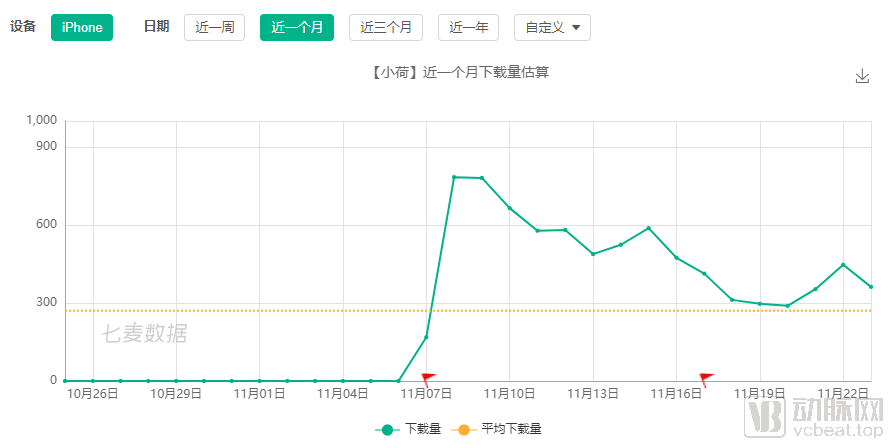
In terms of specific operations,Due to its short time since launch, the “Xiaohe” app has relatively limited data.For instance, in terms of download volume, monitoring data from Qimai indicates that the “Xiaohe” app averaged 270 daily downloads on the iPhone platform over the past month, whereas the Ping An Good Doctor app averaged 5,385 daily downloads on the same platform during the same period. Regarding physician availability, after scrolling through more than fifty doctors in the “Top-Tier Hospital Specialists” section, the system continuously displayed a “Loading” message, with most medical specialties showing fewer than ten patients served.
Although it is still in its early stages,“Xiaohe Medical” has already established the foundational framework of its internet healthcare platform; what remains is time to refine the functionalities of each module and solidify its business model.
How Should We Understand the Potential Evolutionary Logic of “Xiaohe Medical”? First, it is necessary to categorize the various functions mentioned above to clarify what types of services “Xiaohe Medical” actually offers.Upon review, it was found that the services of "Xiaohe Medical" are mainly concentrated in four sectors.: first, content services focusing on medical knowledge and health information; second, third-party services centered on health management; third, medical services primarily offering consultation and appointment registration; and fourth, health e-commerce services mainly selling pharmaceuticals.
Specifically,Content services primarily focused on medical knowledge and health information can significantly enrich ByteDance’s content ecosystem.As a key focus area for ByteDance in 2020, search engines have a strong inherent demand for high-quality content. Given the unique nature of the healthcare sector, inaccurate information can easily mislead users into making poor decisions, making the provision of authoritative content critically important. Consequently, by acquiring Baike Mingyi Network, ByteDance secured access to premium, authoritative healthcare and medical content, which it integrated into its “Xiaohe” app.
Third-party services focused on health management can lay the groundwork for ByteDance to enter the health management market in the future.As seen on the “Xiaohe” app, the current suite of recording tools includes utilities such as a menstrual cycle tracker and key health indicators (allowing users to log metrics like blood glucose, blood pressure, and heart rate). Although user engagement with these tools is currently limited due to the lack of wearable devices for real-time vital signs monitoring, ByteDance’s early launch of these applications undoubtedly lays the groundwork for more in-depth health management in the future.
Medical services centered on consultation and registration, along with health e-commerce services focused on pharmaceutical sales, are key to whether ByteDance can establish a viable profit model in the healthcare sector.: In the realm of internet healthcare, online consultations and pharmaceutical e-commerce have always been the core business segments for internet healthcare companies. The synergy between these two businesses is currently the most prevalent model. ThisThe underlying reason is that online consultations facilitate resource connectivity between doctors and patients while enabling a better understanding of patient needs. On this basis, platforms can achieve commercial monetization by selling products and services.Among these, pharmaceuticals are currently the products with the highest value-added in medical service scenarios.
Financial reports from leading companies reveal that pharmaceutical e-commerce generates substantial revenue.For instance, Ping An Good Doctor generated RMB 2.746 billion in revenue in the first half of the year, with its Health Mall business contributing RMB 1.5 billion, accounting for 54.62% of total revenue. Meanwhile, Yilu (formerly Alibaba Health Pharmacy) reported RMB 8.1339 billion in revenue from its self-operated pharmaceutical business and RMB 1.1703 billion from its pharmaceutical e-commerce platform business in fiscal year 2020, bringing the combined revenue of these two segments to RMB 9.3042 billion, which accounted for as high as 96.95% of Alibaba Health’s total revenue. It is conceivable that once “Xiaohe Medical” successfully validates its business model, a pharmaceutical e-commerce service will inevitably be launched. After all,“Xiaohe Medical” has obtained the qualification for online drug sales.
In summary, ByteDance has deployed content services and health management services with high-frequency attributes in the healthcare sector. After generating user stickiness through high-frequency interactions, it monetizes through relatively low-frequency services such as online consultations, offline medical services, and pharmaceutical sales.
Of course, this logic is not necessarily linear; there is also a high probability that users discover content services after a consultation and then develop stickiness through continuous use of related services. ButThe core logic remains unchanged: deeply engage users through high-frequency content services, and then close the business model loop with low-frequency, high-value-added products or services.
As a hot new internet player in recent years, ByteDance has been under intense scrutiny from all sides. ThisNot only because it can continuously produce blockbuster apps such as Toutiao, Douyin, and Dongchedi, but also due to its powerful commercial monetization capabilities.
According to relevant reports, ByteDance’s total revenue for 2020 is projected to approach RMB 240 billion. Of this, advertising revenue is expected to reach RMB 175 billion, e-commerce revenue around RMB 6 billion, live-streaming gross merchandise value (GMV) between RMB 45 billion and RMB 50 billion, the gaming segment generating RMB 4–5 billion, and the education sector contributing RMB 2–3 billion in revenue. It can be seen thatIn the niche sectors where ByteDance has established a presence, many of its business units have achieved substantial revenue.
Can ByteDance continue to achieve such impressive results in the healthcare sector? Some insights may be gleaned by examining the current status of fellow internet giants Alibaba, Tencent, and Baidu in the healthcare industry.
First,In the business models of tech giants venturing into healthcare, Alibaba Health represents the pharmaceutical e-commerce model.As previously mentioned, the pharmaceutical e-commerce segment has become Alibaba Health’s cash cow. In the second half of this year, Alibaba Health began to focus on medical services and upgraded its long-operated app into the “Yilu” app. In addition to offering online consultations and intelligent search functions, the app provides innovative internet healthcare services such as appointment booking for health check-ups and vaccinations, as well as rapid medication delivery. Furthermore, the “Yilu” app has been integrated with multiple business units including Taobao, Alipay, UC Browser, and Quark, fully leveraging Alibaba’s strong ecosystem resources.
andTencent’s medical services are centered on cloud-based and content-driven solutions., including Tencent Cloud Healthcare Solutions, Tencent Security, and Tencent Yidian. Additionally, Tencent has taken equity stakes in leading vertical healthcare service platforms such as “Haodaifu” and “Dingxiang Yuan” through investments, thereby strengthening its ecosystem synergy. According to Tang Daosheng, Senior Executive Vice President of Tencent Group and President of the Cloud and Smart Industries Group, in his remarks at an industry event, Tencent will leverage C2B as a key driver and adopt a “dual-wheel drive” strategy to facilitate the intelligent transformation of healthcare.
Since the beginning of this year,BaiduActions in the healthcare sector have returned to the public eye, with itsThrough a dual-ecosystem strategy of “content + services,” it has covered healthcare-related service functions, including online consultations, medication delivery with appointment-based scheduling, hospital registration appointments, psychological counseling, and insurance.In early July, Baidu Health officially launched the “Diabetes Center,” marking its first introduction in the industry of a new model for specialized internet hospitals that integrates medical professionals and patients. As of August this year, Baidu Health has partnered with more than 1,000 public hospitals and 250,000 physicians.
From the perspective of the business directions chosen by the three tech giants—Baidu, Alibaba, and Tencent (BAT)—in the healthcare sector, although their approaches are largely similar to those currently pursued by internet healthcare companies, their strategic focus areas still bear the distinct imprint of their respective corporate DNA.Therefore, it remains to be seen whether ByteDance’s recommendation algorithm, which holds a significant advantage in the consumer market, will deliver surprising results in the healthcare sector.
Certainly, it is worth considering that,Behind the Boom in Internet Healthcare: Challenges Remain Prominent, Especially as Existing Players Are Still in the Early Stages of Closing the Loop on Their Business Models。
Looking at the development of internet healthcare over the past decade, purely online models—such as free online appointment registration and low-ticket-price online consultations—struggle to cover costs and offer limited long-term growth potential. Conversely, building proprietary offline hospitals as a foundation for internet-based services turns the venture into a capital-intensive business. Finally, relying exclusively on public hospitals to operate internet hospitals leaves platforms vulnerable to the eventual scenario where these public hospitals establish their own independent digital channels.
Therefore, even tech giants like BATJ still have a long way to go in tackling the vast field of healthcare.
But regardless,From building online content and establishing internet hospitals to opening offline clinics, ByteDance has strategically expanded its potential for further growth.And this may position ByteDance as one of the key game-changers in the healthcare sector.
It is important to note that, unlike other industries, the healthcare sector demands greater patience, dedication, and sincerity. Only under the nurturing care of these “three hearts” can a company’s sapling blossom and bear abundant fruit in the healthcare field.