

Huiyigu: Seamlessly Integrating Traditional Chinese Medicine with Digital Innovation to Build a Modern Intelligent Medical, Educational, and Research Ecosystem
In recent years, the term “digitalization” has increasingly come into public view. Digital education, digital factories, digital media—it seems that every industry is eager to board this fast-moving cruise ship. Even Traditional Chinese Medicine (TCM), hailed as the “Art of Qi and Huang,” is longing to ride this surging tide and achieve a “perfect transformation.”
When traditional Chinese medicine (TCM) is mentioned, many people immediately think of terms like “traditional culture” or “antiquated relics,” as if it were difficult to associate it with anything novel.
What is even more regrettable is that, with the “forceful entry” of Western medicine and the “repeated obstacles” hindering the development of Traditional Chinese Medicine (TCM), this ancient wisdom, accumulated over more than 2,000 years, is gradually receding from people’s daily lives.
The surrounding environment is constantly changing; “resting on one’s laurels” will only widen the gap, making it urgent to prioritize the transformation of traditional Chinese medicine (TCM). The state has already set an example, with the official promulgation in December 2016 of“Law of the People's Republic of China on Traditional Chinese Medicine”The first article states, “This Law is enacted to inherit and promote traditional Chinese medicine, safeguard and foster the development of the traditional Chinese medicine sector, and protect people’s health.”
Policy support and the guidance of the times are providing the field of Traditional Chinese Medicine (TCM) with unprecedented development opportunities, and Medvalley is committed toSeamlessly Integrating the “Time-Honored Tradition” of Traditional Chinese Medicine with the “Cutting-Edge Innovation” of Digitalization, to provide services for the TCM concept of “treating disease before it arises” and national health management, thereby further leveraging the substantive role of Traditional Chinese Medicine in the healthcare sector.
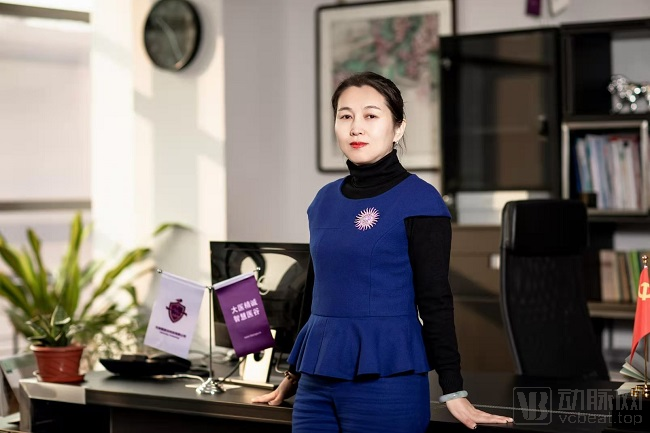
Founder of Medvalley, Dong Yushu
Having worked in the field of Traditional Chinese Medicine (TCM) for nearly 25 years, Dong Yushu has witnessed every facet of the industry’s development. By comparing these historical trajectories with current trends, Dong Yushu couldn’t help but lament, “We have too few TCM medical devices, our educational resources are severely insufficient, and our operational models are far too chaotic.”
Thus, guided by the principle of “doing what we can to alleviate industry challenges,” Dong Yushu founded Medvalley in 2015, giving rise to a technology-driven company dedicated to providing integrated solutions for medical practice, education, and research in the field of Traditional Chinese Medicine.
Driven by demand, centered on technology, and supported by talent, Medvalley aims to forge a distinctive path toward the standardization, visualization, and datafication of Traditional Chinese Medicine (TCM) by deeply integrating intelligent technologies with TCM scenarios.
When asked about the company’s core strengths, founder Dong Yushu immediately replied with two words: “Team.” To drive better business growth, Dong has meticulously built a team of top-tier talent with extensive experience in technology, software R&D, and marketing.
Talent system development serves as the foundation, but market demand and scale will test whether this foundation is unshakable. In Dong Yushu’s view, the current landscape of the traditional Chinese medicine (TCM) market is not optimistic. “Although digital TCM has been a hot topic in recent years, I personally believe it has been more hype than substance—in other words, it receives acclaim but lacks commercial traction, facing significant resistance in practical application.”
Despite numerous challenges, Dong Yushu never felt discouraged; instead, she found even greater motivation. She candidly stated, “My primary objective has always been to solve problems. I never gave much thought to scaling the enterprise to a specific size in the future; my sole focus was simply on perfecting this one endeavor.”
VCBeat Chart
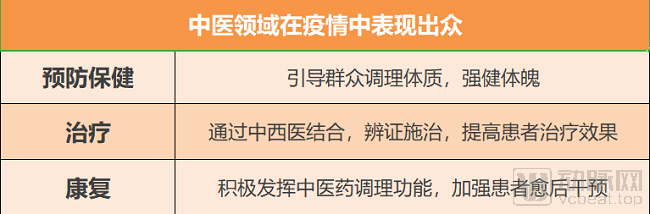
During this year’s pandemic, Traditional Chinese Medicine (TCM) has emerged as a distinctive highlight, guiding high-risk healthcare workers and patients on the front lines, as well as the general public, in the application of TCM for treatment and prevention. With a focus on health preservation, it has guided the public in regulating their body constitution and strengthening their physical fitness; with an emphasis on treatment, it has significantly improved therapeutic outcomes through the integration of TCM and Western medicine, based on syndrome differentiation and individualized treatment; and with a commitment to rehabilitation, it has actively leveraged the regulatory functions of TCM to strengthen post-recovery interventions for patients.
The “standout performance” of Traditional Chinese Medicine (TCM) during the pandemic has given society a new perspective on the field, while also providing strong impetus for its transformation. For Medvalley Technology Inc., this serves as a “springboard” for forward development, bringing valuable advantages to the company in product research and development as well as market promotion.
To standardize Traditional Chinese Medicine (TCM), the “Four Diagnostic Methods” (inspection, auscultation and olfaction, inquiry, and palpation) serve as the starting point, while diagnostic equipment acts as the primary driving force propelling this process forward.
“As someone trained in traditional Chinese medicine (TCM), I observed in hospital settings that a renowned TCM practitioner typically sees around 70 patients during a single afternoon clinic session. This presents several challenges: first, the patient load per physician is excessively high; second, when these patients return for follow-up visits, physicians often cannot recall their previous tongue and pulse conditions, necessitating a re-evaluation from scratch and resulting in significant time inefficiencies. Consequently, physicians are unable to promptly and clearly assess and determine patients’ improvement after medication,” said Dong Yushu.
To address these industry pain points, Medvalley Technology Inc. initiated research, data collection, and analysis based on the standardization of the four TCM diagnostic methods—inspection, auscultation and olfaction, inquiry, and palpation—and successfully developed a series of products, including the “TCM Tongue Diagnosis Information Collection and Management System,” the “TCM Pulse Diagnosis Information Collection and Management System,” the “TCM Meridian and Acupoint Detector,” and the “TCM Constitution Identification and Management System.”
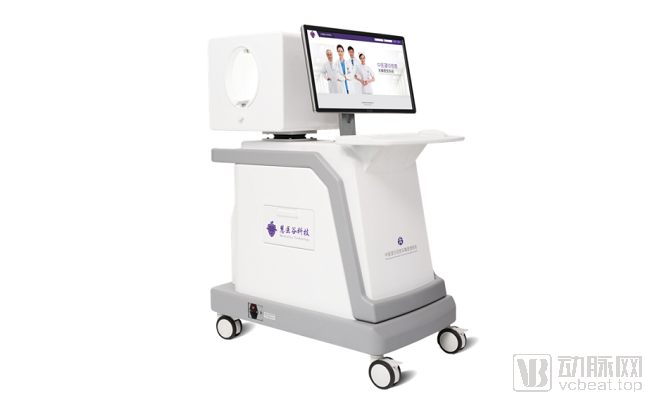
Image source: Medvalley official website
TCM Tongue Image Information Collection and Management System:Under international standard lighting conditions, high-resolution images of the tongue, sublingual veins, and face are captured to assist physicians in generating structured, data-driven inspection reports.
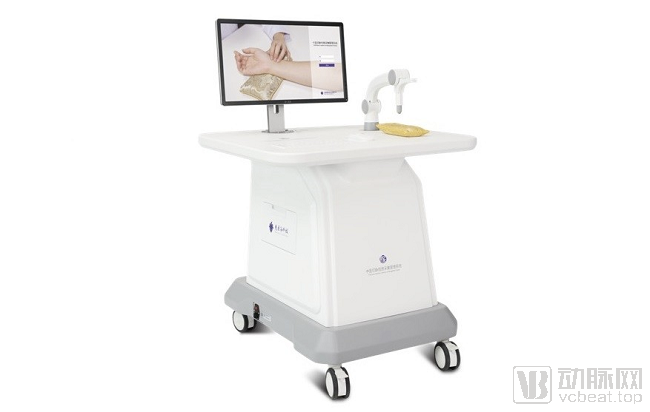
Source: Official website of Medvalley
TCM Pulse Diagnosis Information Collection and Management System:By integrating traditional pulse diagnosis with modern technology, high-precision pressure-sensitive sensors are employed to assess the "Three Regions and Nine Indicators" by detecting different pulse positions individually. This generates digital pulse waveforms, enabling intelligent analysis of pulse patterns to achieve diagnostic objectives, while also allowing for the comparison of pulse condition variations over time.
TCM Meridian and Acupoint Detector:Developed based on the specific electrical characteristics of acupoints, when patients are in a pathological state, the acupoints associated with high and low conductivity in the human body exhibit specificity in reflecting lesions. Therefore, electrical characteristic measurements can provide relatively accurate and reliable quantitative observational indicators.
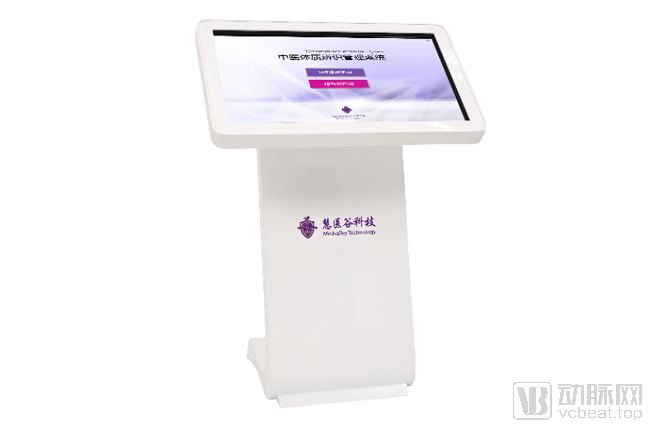
Image source: Medvalley official website
TCM Constitution Identification and Management System:Taking the individual as the starting point for research, this approach aims to investigate the characteristics of different constitutional compositions, their evolutionary patterns, influencing factors, and classification criteria. It emphasizes the modifiability of constitution, guiding disease prevention, diagnosis, treatment, rehabilitation, and health preservation by improving constitutional status.
Leveraging cutting-edge medical equipment for intelligent diagnosis is an inevitable trend in the future of healthcare, and it is also the key to Traditional Chinese Medicine (TCM) achieving a breakthrough in marketization and establishing its industry advantage.
In addition, digital medical devices possess significant clinical application value, substantially improving diagnostic accuracy and minimizing human interference, thereby enabling the provision of optimal treatment plans for patients.
In addition to developing medical devices, Medvalley is also committed toThe development of intelligent teaching equipment also marks the “origin story” of their exploration into digital healthcare.
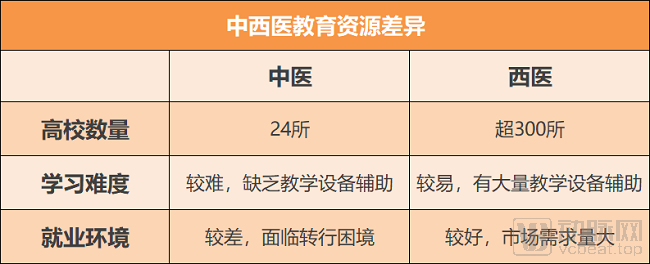
VCBeat Chart
Currently, due to differences in mainstream perceptions and market size, there is a severe shortage of teaching resources for Traditional Chinese Medicine (TCM). This explicit disparity is more intuitively reflected in the number of educational institutions. According to statistical data, TCM universities across ChinaOnly 24 institutions, this number is less than one-tenth of that of Western medicine universities.
Furthermore, compared with Western medicine, Traditional Chinese Medicine (TCM) is more difficult to learn and master, often requiring students to engage in self-directed learning through personal insight. What is even harder to accept is the extremely grim employment landscape for TCM practitioners; many are forced into the awkward position of changing careers after entering the workforce.
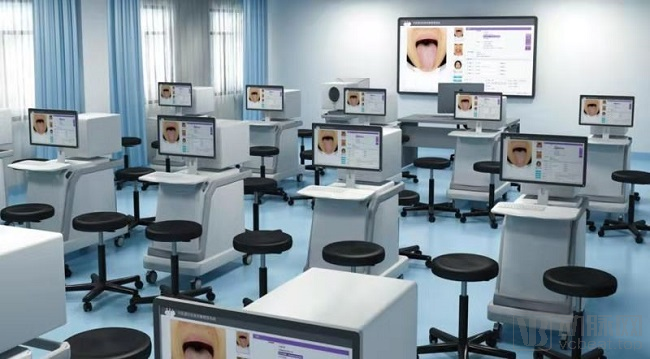
Intelligent Teaching Equipment
Driven by market needs, Medvalley is committed to channeling more corporate resources into the field of Traditional Chinese Medicine, leading to the launch of a series of products.The TCM Meridian and Acupoint Anatomy Teaching Platform is designed to meet the needs of Traditional Chinese Medicine (TCM) education. By leveraging 3D image processing and infrared touch technology, it enables seamless interaction between TCM theory and 3D human anatomy, thereby delivering an optimal teaching experience.
TCM AR Learning Platform: Transforming Flat Textbook Content into Interactive 3D Models for Enhanced EducationThis platform presents traditional two-dimensional textbook content as interactive three-dimensional models. Adaptable to various scenarios, it supports classroom demonstrations, in-class student learning, pre-class preparation, and post-class review. By fostering autonomous exploration, the platform stimulates students’ curiosity and enhances overall learning outcomes.
Advanced concepts and market-aligned applied products have established a strong competitive advantage for Medvalley in the educational resources sector. For instance, universities including Tianjin University of Traditional Chinese Medicine, Shanghai University of Traditional Chinese Medicine, and Yunnan University of Traditional Chinese Medicine have all integrated Medvalley’s teaching products into their instructional and practical training systems.
"Technology-empowered education has, to some extent, reduced the difficulty of learning, enhanced the convenience and flexibility of the learning process, and made traditional Chinese medicine (TCM) education no longer 'dry and dull'."
Looking ahead, Medvalley will focus more on the data development sector.
Medvalley leverages research into Traditional Chinese Medicine (TCM) theory and employs novel intelligent clinical auxiliary diagnostic devices aligned with clinical practice needs. By integrating health data collection devices into residents’ daily lives, it comprehensively gathers health data to establish diagnostic models and a knowledge base for typical TCM diseases.
Leveraging its existing technological advantages, Medvalley will strive to buildTCM Cloud Data CenterOn the one hand, it provides the most precise treatment plans for the healthcare industry based on data, thereby enabling patients to achieve better therapeutic outcomes; on the other hand, it offers robust data support for scientific research, promoting the continuous advancement of traditional Chinese medicine (TCM) research.
Experience itself constitutes big data. The work undertaken by the Traditional Chinese Medicine (TCM) Data Center is to transform empirical knowledge into clinical diagnostic and therapeutic practices with practical application value. By continuously accumulating clinical data, establishing databases, and enhancing the precision of intelligent diagnosis and treatment, it provides robust support for TCM clinical practice.
The value of data lies in guiding the future. The Traditional Chinese Medicine (TCM) Data Center will increasingly serve as a “think tank,” providing robust data support for scientific research and thereby driving the advancement of the entire TCM industry.
In addition, Medvalley Technology Inc. will build a home-based resident health data management system based on mobile health and wearable data collection devices, integrating health data management with residents' daily lives. The collected health data will be transmitted to a telemedicine platform for management and the establishment of health records. Subsequently, AI-powered intelligent medical diagnostics will be employed to make clinical judgments and provide health assessment recommendations.thereby improving the health status of residents.
Everything undergoes a development process from 0 to 1, which is an inevitable path for the digitalization of Traditional Chinese Medicine (TCM) and has always been the driving force behind Medvalley’s continuous progress.