

XiRou Health Pioneers Cross-border Pharma E-commerce with 13 Global Supply Hubs and 3,800+ SKUs Amid Policy Breakthrough
Every patient deserves fair treatment and should not be excluded from access to new drug therapies due to geographic location. However, for a long time, pharmaceuticals have been a restricted category on China’s cross-border e-commerce platforms, making it extremely difficult for domestic patients to purchase overseas medications.
Data show that there are nearly 3 million patients with rare diseases in China, and approximately 4 million new cancer cases are diagnosed each year. Around 65% of the new drugs approved annually by the U.S. Food and Drug Administration (FDA) are not available in the Chinese market, thereby driving patient demand for cross-border drug purchases.
Previously, most patients could only purchase medications through informal channels such as personal cross-border e-commerce purchases and proxy buying services. These unofficial channels offer low traceability of products, lack qualified certification for transportation and storage, fail to provide professional medication guidance to patients, and suffer from inadequate after-sales support. In the absence of effective oversight and organized platforms for monitoring pre-sale, in-sale, and post-sale processes, patient medication safety is severely compromised.
Fortunately, over the past two years, numerous favorable policies have opened a door for patients to purchase medicines across borders in compliance with regulations. In December 2019, the Beijing Municipal Medical Products Administration announced new “cross-border” policies: drugs and medical devices that have already obtained import registration approval within China, as well as those included in the List of Retail Import Commodities for Cross-Border E-Commerce (2019 Edition) jointly issued by thirteen ministries and commissions including the Ministry of Finance, are permitted to be sold online. In addition, pilot programs for the cross-border e-commerce sale of pharmaceuticals are being advanced in Zhengzhou (Henan), Hainan, Shanghai Lingang, Shenzhen Qianhai, and other regions.
China’s cross-border e-commerce policies have seen a breakthrough in the pharmaceutical sector, creating new business opportunities and attracting a surge of enterprises into the market. However, given the unique nature of the pharmaceutical industry, many companies are still exploring how to effectively build and operate cross-border pharmaceutical e-commerce platforms, ensure medication safety for patients, and maintain legal and regulatory compliance. To address these issues, VCBeat interviewed Rao Nengwen, CEO of Xirou Technology, a pioneer among domestic cross-border pharmaceutical e-commerce platforms.
Rao Nengwen, CEO of Xirou Technology, has many years of experience in international trade and e-commerce platform operations. Co-founder Wang Chaoyang brings over two decades of expertise in the pharmaceutical industry, having previously established a chain of independently operated pharmacies and clinics in Canada. Prior to this, the company had been operating in Canada for many years, providing a comprehensive range of the latest global medications for critical illnesses to a large number of Chinese patients.
As China’s cross-border pharmaceutical distribution policies gradually open up, new opportunities have emerged. Xirou Technology has established its presence in Hainan, becoming an invested enterprise recruited by the Boao Lecheng International Medical Tourism Pilot Zone in Hainan Province.
According to Rao Nengwen, pharmaceutical products are subject to stringent regulation in China, and the barriers to entry for cross-border e-commerce in this sector are exceptionally high. Companies must possess operational licenses, a professional international medical team, an international pharmacist team, and qualifications for pharmaceutical distribution. Furthermore, under Chinese regulations, corporate entities must be established within policy-regulated industrial parks and obtain qualification as pilot enterprise platforms before they can conduct cross-border pharmaceutical e-commerce business.
Xirou Technology has obtained its business license in China and established an international service platform that connects pharmaceutical supply chains with patients, doctors, and hospitals. The company has assembled professional teams for operations, medical affairs, and pharmacy, enabling it to provide patients with a fast, convenient, and affordable cross-border medication shopping experience.
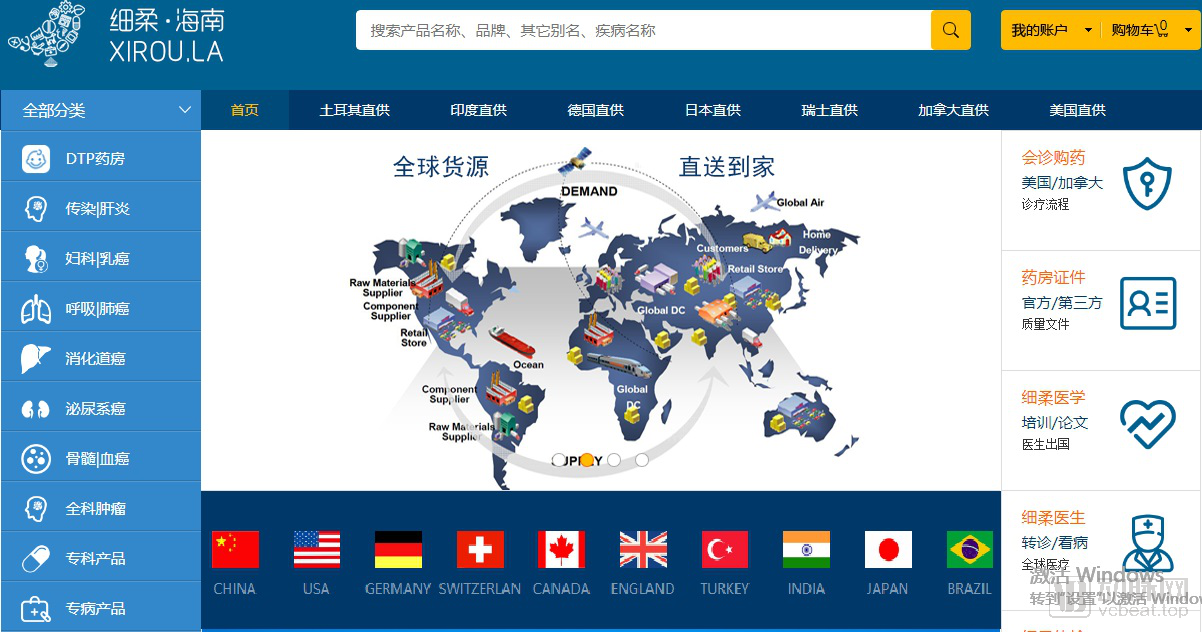
In the past two years, favorable policies for cross-border pharmaceutical e-commerce have been introduced frequently, attracting significant attention from numerous enterprises, including major pharmaceutical e-commerce platforms. Rao Nengwen stated that Xirou Technology is confident in securing a advantageous position within the industry by leveraging its several distinct competitive advantages.
First, in terms of supply chain advantages, Xirou Technology has established 13 supply chain centers across eight countries on five continents, including the United States, Germany, Switzerland, Canada, and the United Kingdom. Meanwhile, it has partnered with multiple pharmaceutical companies such as Johnson & Johnson and Pfizer. With a portfolio of over 3,000 SKUs, it can provide patients with the latest and most comprehensive global new drugs for oncology, critical illnesses, and chronic diseases, as well as prescription medications including originator drugs, rare disease treatments, and orphan drugs.
Secondly, in terms of quality supervision, Xirou Technology adopts the European and American regulatory frameworks. Patients are required to register under their real names, place orders, and provide prescription details, verified identity information, and their personal delivery addresses. Prescription pharmaceutical products are sold exclusively to patients and are not distributed to any enterprises, other entities, or non-patients within China.
In terms of traceability management, the company has established a cross-border pharmaceutical product traceability system based on the fundamental principle of “one item, one code; synchronized tracking of item and code.” It employs information technology to track, monitor, and record details such as the distribution trajectory and delivery timelines of cross-border pharmaceutical products.
In product descriptions, the Company reviews information such as product name, model, specifications, indications or scope of application, manufacturer, and contraindications. It records and retains cross-border pharmaceutical product information and transaction data published by onboarded enterprises, ensuring the integrity, confidentiality, and availability of such information.
In addition to its pharmaceutical business, Xirou Technology has also expanded into horizontal services such as cross-border remote consultations. The company’s medical department comprises physicians from U.S. MD-rated hospitals, as well as licensed doctors from Canada, Japan, the European Union, and other countries. This team not only conducts manual reviews of patients’ medication requests and prescriptions but also meets their needs for remote consultations and subsequent medical treatment abroad.
Due to the impact of the pandemic this year, regions such as Europe and the United States have moderately relaxed restrictions on online consultations and medication purchases. Meanwhile, pilot policies for bonded areas, including China’s Free Trade Zones and Free Trade Ports, have further expanded the development space for the cross-border pharmaceutical e-commerce industry.
Rao Nengwen stated, “Current challenges facing the industry include whether domestic and international regulations are comprehensive, as well as import and export restrictions. However, we believe that policy restrictions on cross-border e-commerce platforms for pharmaceuticals will be gradually relaxed, and regulatory oversight will become more firmly grounded in legal frameworks. The next two years will witness a period of rapid growth for the industry.”
Moving forward, Xirou Technology will focus on the Chinese market by continuously strengthening its local team to better adapt to China’s pharmaceutical landscape and comply with regulatory requirements. Meanwhile, the company will expand its product portfolio to further meet Chinese patients’ demand for overseas medications.
In terms of the company’s overall strategic planning, Xirou Technology will focus on building a healthcare ecosystem service platform in the fields of critical and chronic diseases. Building upon its existing cross-border e-commerce platform for overseas pharmaceuticals and international remote medical consultation services, the company plans to introduce genetic testing and health care services within the next few years, while expanding the scope of its charitable foundation to provide fee waivers and medication donation programs to more critically ill patients facing special circumstances and financial hardships.
In the long term, the company will continue to expand its charitable fund and consultation services, connecting patients, doctors, hospitals, insurers, and pharmaceutical companies. By streamlining the supply chain to meet the needs of all stakeholders, it aims to help patients access high-quality overseas medications quickly and at lower costs, alleviate doctors’ challenges in finding corresponding drugs for treatment plans, enable hospitals to retain high-end patients through remote consultation platforms, assist foreign pharmaceutical companies in serving Chinese patients via cross-border e-commerce and other channels, and accelerate drug R&D and market circulation. Furthermore, it will support domestic pharmaceutical companies in launching their products in the Chinese market simultaneously after obtaining FDA approval.