White Paper on Medical Internet of Things (2020) Released: A Comprehensive Review of China's MIoT Development Status
Recently, the White Paper on Internet of Things in Healthcare (2020) (hereinafter referred to as the “White Paper”), jointly compiled by the Wuxi Medical IoT Research Institute and VCBeat, was officially released.
The Medical Internet of Things (MIoT) is a key application area of Internet of Things (IoT) technology in the healthcare sector. With the full integration and application of cutting-edge technologies such as big data, Internet Plus, and blockchain, MIoT is increasingly demonstrating significant influence and vitality, playing a crucial supporting role in advancing the deepening of healthcare system reforms, accelerating the development of the “Healthy China” initiative, and promoting the growth of the healthcare industry.
Amid the sudden onset of the COVID-19 pandemic at the beginning of the year, the Internet of Medical Things (IoMT) was widely deployed in epidemic prevention and control efforts across various regions, playing a significant role. This underscores the immense potential of the IoMT.
The 2020 edition of the White Paper, jointly released by the Wuxi Medical Internet of Things Research Institute and VCBeat’s VBInsight, introduces innovative enhancements built upon the previous editions published in 2016 and 2018. The content covers an overview of the Healthcare Internet of Things (HIoT), the policy environment, infrastructure and industry ecosystem, future development trends, and strategic recommendations. It also features outstanding case studies of innovative HIoT applications, spanning smart clinical care, smart patient services, smart management, and remote health, thereby comprehensively showcasing the diverse application achievements of the Healthcare Internet of Things across multiple domains.
The following is an excerpt from the white paper.
As time progresses and technology advances, the healthcare industry has increasingly recognized the critical role of the Internet of Medical Things (IoMT), leading to a diverse array of applications. Ultimately, these developments aim to achieve intelligent management in the following key areas: personnel management, equipment management, medical processes, supply chain management, medical waste management, and health management.
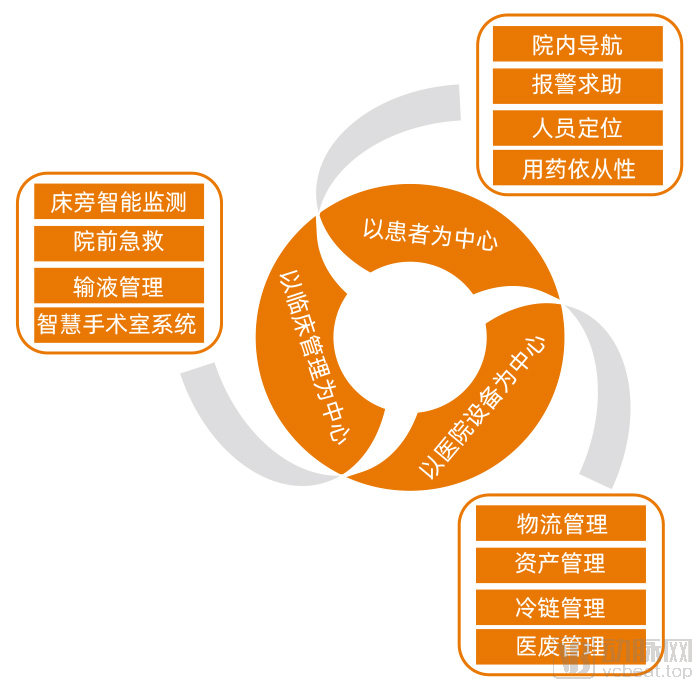
China initiated corresponding research and development as early as 1999, when the concept of the Internet of Things (IoT) was first proposed, and took the lead in establishing top-level standards. By the end of 2019, China had become the world’s largest IoT market.
During the recent COVID-19 pandemic, the Internet of Medical Things (IoMT) demonstrated its significant role in public health. Meanwhile, since March 2020, China has successively introduced policies related to “New Infrastructure,” with nearly all of the seven key sectors involved being closely tied to IoT technologies.
The development of any industry is inevitably influenced by multiple factors. Experience shows that rapid industry growth requires the combined drive of five key elements—standards, technology, policy, market, and capital—each of which is indispensable. The healthcare Internet of Things (IoT) industry is no exception. This white paper examines each of these “five drivers” as they relate to the healthcare IoT sector.
As a branch of the Internet of Things (IoT), the Healthcare IoT adheres to the fundamental architectural framework of the IoT. In ITU-T Recommendation Y.4000/Y.2060, "Overview of the Internet of Things," the ITU Telecommunication Standardization Sector (ITU-T), a permanent organ of the International Telecommunication Union (ITU), defines a four-layer IoT architecture: the device layer (perception layer), the network layer, the service and application support layer (platform layer), and the application layer.
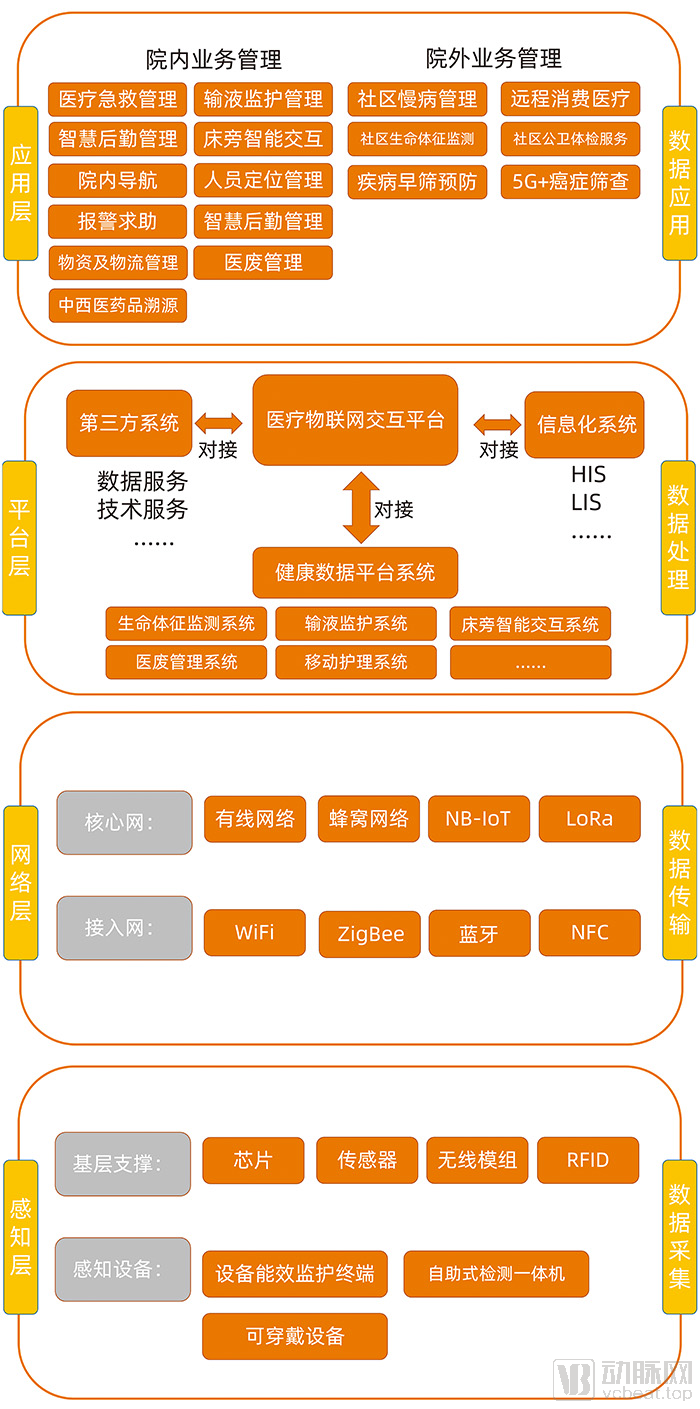
The Perception Layer (also known as the Sensing Layer) is a fundamental characteristic of the Medical Internet of Things (MIoT), significantly enhancing its capability to perceive and identify objects and environments. It consists of sensor hardware, including RFID and various smart sensors, along with corresponding data perception and acquisition protocols. This layer facilitates remote communication and control, and leverages multiple physiological signal acquisition methods—such as RFID, 1D barcodes, 2D barcodes, sensors, and GPS—to collaboratively complete the collection of medical information.
The function of the network layer is to enable connectivity among all objects and allow devices to transmit and share information with other devices within the network. The network layer of the Internet of Medical Things (IoMT) is essentially a heterogeneous network, comprising an access network and a transport network, which respectively facilitate device access and inter-device information transmission.
The platform layer plays a pivotal role in the Internet of Things (IoT) architecture, serving as a critical link between the underlying infrastructure and upper-layer applications. At its core, the platform layer relies on middleware technology, which must adhere to unified service specifications. The hardware and software platforms of the middleware can be reused, thereby providing a low-cost foundation for IoT and enabling seamless integration of IoT services and applications.
The application layer is the topmost tier of the IoT architecture, representing its defining characteristics and core essence. Future development trends at this layer include wearables, artificial intelligence, big data, cloud computing, and home-centric applications.
Major international standards organizations include the International Organization for Standardization (ISO), the International Telecommunication Union (ITU), the Institute of Electrical and Electronics Engineers (IEEE), and HL7. In recent years, these relevant standards bodies have been actively developing technical standards for the Internet of Medical Things (IoMT) and have made significant progress.
In August 2018, led by China and approved by a vote of 33 member countries, ISO/IEC 30141 IoT Reference Architecture became the world’s first international standard project for the top-level architecture of the Internet of Things (IoT). This international standard specifies IoT system characteristics, conceptual models, reference models, reference architecture views (including functional view, system view, network view, and usage view), as well as IoT trustworthiness.
Currently, China has established several group standards, industry standards, and local standards for the Internet of Medical Things (IoMT). Relevant organizations are working diligently to refine these standards and advance their formulation, with the goal of promulgating corresponding national standards in the near future. Additionally, certain standards within the health sector have already defined requirements related to the IoMT.
Information Standards Professional Committee of the National Health Standards Committee (hereinafter referred to as the Health Information Standards Committee) is a specialized committee under the Health Standards Committee of the National Health Commission. It is responsible for the formulation and revision, technical review, promotion and training, application supervision and management, academic exchanges, and international cooperation of national health information standards. To date, the Health Information Standards Committee has issued several industry standards related to the Internet of Things in healthcare.
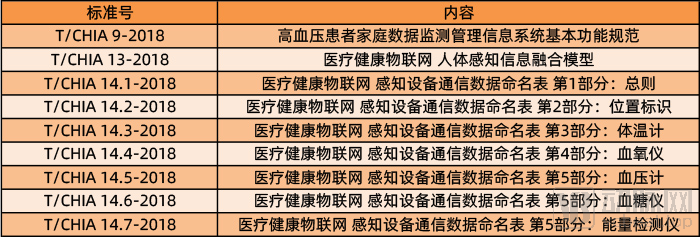
The Chinese Medical Information and Big Data Association (CHMIA) is a national first-tier academic society under the administration of the National Health Commission. The T/CHIA group standards are formulated and issued by the Chinese Medical Information and Big Data Association. In 2019, the Chinese Medical Information and Big Data Association released eight medical and health Internet of Things (IoT) standards, including T/CHIA 13 through T/CHIA 14.7, on the National Group Standard Information Platform.
The Wuxi Medical Internet of Things Research Institute was jointly established in March 2013 by the Statistical Information Center of the former National Health and Family Planning Commission and the Wuxi Municipal People’s Government, with the aim of promoting the deep integration and development of the national healthcare industry and the local IoT industry. The institute plays a coordinating role in the formulation of certain national standards in China. Currently, it is undertaking the research and development of the “Information Standard Framework for Healthcare IoT” for the National Health Commission.
Policy is a key driver in the development of the Internet of Things (IoT) for healthcare. On April 8, 2005, the World Summit on the Information Society (WSIS) was held in Geneva, where the International Telecommunication Union (ITU) established the International Expert Group on Ubiquitous Network Society as a permanent international advisory body for IoT. The United States also began deploying RFID systems that year to track information on medical patients, staff, and equipment.
Currently, the United States, the European Union, Japan, and South Korea are the leading countries and regions in international research, development, and application of the Internet of Things (IoT). Following the outbreak of the 2008 financial crisis, these nations and regions collectively prioritized emerging industries as a key strategy to address the crisis, accelerating their IoT-based development plans and initiatives.
China also attaches great importance to the Internet of Things (IoT). Since Premier Wen Jiabao proposed the “Sensing China” initiative in August 2009, IoT has been officially listed as one of the five national emerging strategic industries and was included for the first time in the “Government Work Report” in 2010. In the following years, China successively issued policies such as the White Paper on China’s Internet of Things (2011), the 12th Five-Year Plan for IoT Development, and the Special Action Plan for IoT Development.
In addition to the impetus provided by policies on new infrastructure development, health administrative authorities have also sought to standardize IoT implementation in healthcare institutions through standards and policy frameworks. In October 2016, the Central Committee of the Communist Party of China and the State Council issued the Outline of the “Healthy China 2030” Plan, deploying comprehensive efforts to advance the Healthy China strategy and explicitly calling for the regulation and promotion of “Internet + Healthcare” services and innovation in internet-based healthcare service models.
To conduct an in-depth analysis of the impact of policies on the Internet of Things (IoT) in healthcare, VCBeat has compiled and analyzed national and local IoT-related policies issued in China from 2010 to the present.
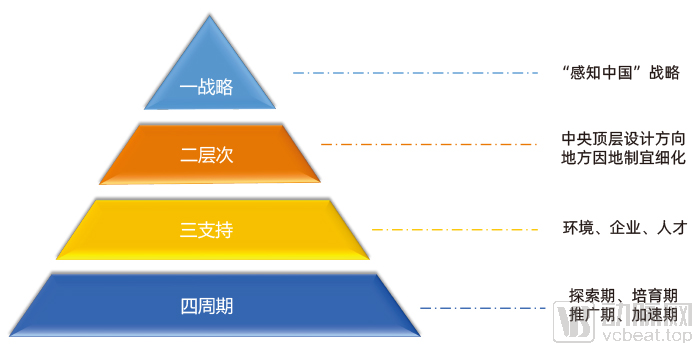
Based on these policies, VCBeat has proposed a Policy Analysis Pyramid Model, analyzing policy objectives, spatial and temporal dimensions, and policy content. This approach aims to clarify the policy goals at each stage and the coordination between national and local policies, thereby providing industry participants with a comprehensive guide for policy reference.
Currently, China has achieved remarkable progress in building the policy environment for the Internet of Medical Things (IoMT). Through active efforts in technological research and development, industry demonstration applications, and the formulation of relevant national standards, China has become one of the most dynamic regions globally for IoT development.
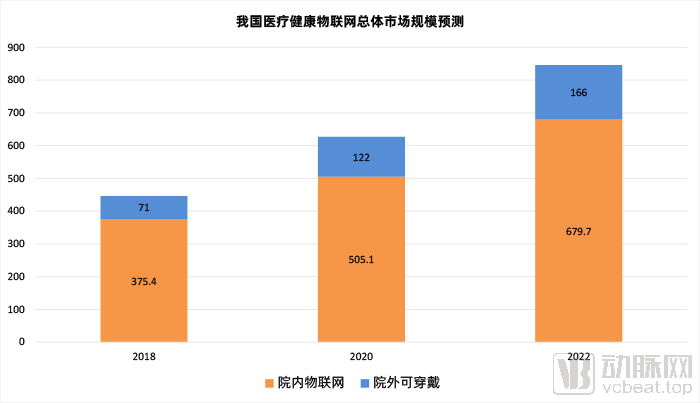
With the rapid development of the Internet of Things (IoT) market, the global healthcare IoT market size has been continuously rising. In 2017, the global healthcare IoT market reached $41.2 billion, with a compound annual growth rate (CAGR) of 30.8%. Following this growth trend, the global healthcare IoT market is projected to reach $158.1 billion by 2022.
According to estimates, China's healthcare institutions invested RMB 37.54 billion in the Internet of Medical Things (IoMT) in 2018. The IoMT market size for these institutions is projected to reach RMB 50.55 billion in 2020 and RMB 67.97 billion in 2022, representing a compound annual growth rate (CAGR) of 16.1% from 2018 to 2022.
In addition to in-hospital applications, out-of-hospital applications centered on wearable medical health devices are equally important in the Internet of Medical Things (IoMT). Data shows that the market size of China’s wearable medical devices was only RMB 1.2 billion in 2015, and is expected to exceed RMB 12.2 billion by 2020, with a five-year compound annual growth rate (CAGR) of 18%. Based on this growth rate, the market size is estimated to reach RMB 16.59 billion by 2022.
As healthcare wearable devices primarily represent out-of-hospital applications and the vast majority fall within the scope of the Internet of Medical Things (IoMT), the overall market size of the IoMT can be roughly estimated by summing the market sizes of in-hospital IoMT and healthcare wearables.
To explore the practical application of the Internet of Medical Things (IoMT) in hospitals, VCBeat Research Institute collected samples of IoMT tender and procurement announcements from 2019 and 2020 (up to the end of July 2020) published on the China Government Procurement Network and the government procurement websites of 31 provincial-level governments (excluding Hong Kong, Macao, and Taiwan), via Artery Orange.
Investment and financing activities in the healthcare sector have consistently been a key focus for industry stakeholders. Using the period from January 2018 to July 2020 as our analysis window, we mined and cleaned investment and financing data from VCBeat’s Orange Database to identify valid domestic and international deals related to the Healthcare Internet of Things (HIoT). Through basic and cross-dimensional analyses across metrics such as deal amount, funding round, timing, and location of the financed companies, we uncovered the evolving development trends of the HIoT industry.
Based on the four-layer foundational architecture of the Medical Health Internet of Things (IoT), its industrial ecosystem can be divided into six key segments: chips, sensors, wireless modules, network operations, platform services, and software/hardware development and system integration applications.
Throughout the standard-setting process, industry associations (alliances) have historically played a significant role. Currently, China has established several influential Internet of Things (IoT) alliances that serve as core drivers in both standard development and technology promotion.
Jiangsu Province is one of the earliest and most concentrated regions in China for the Internet of Things (IoT) industry. Wuxi, a city within the province, is known as the “City Where China’s IoT Industry Set Sail,” boasting advantages in talent, market, and technology. Wuxi has also placed significant emphasis on the development of industrial investment funds, starting its efforts at an early stage.
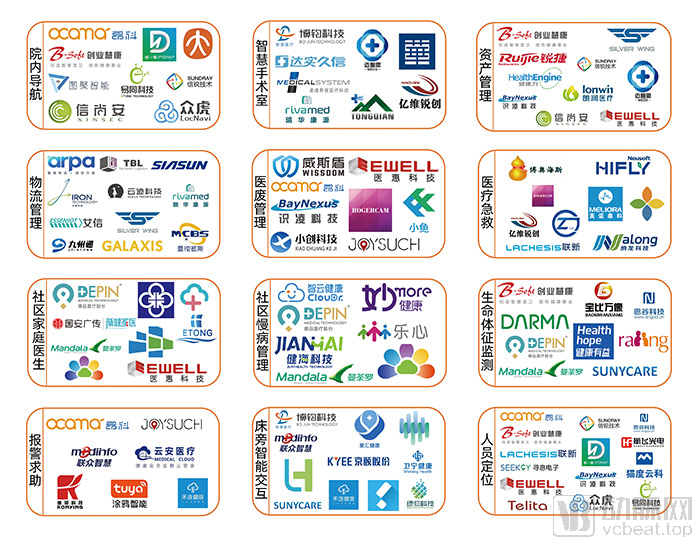
Based on data from VCBeat, we have compiled a list of hundreds of healthcare IoT companies and mapped them out by application scenario. These healthcare IoT companies were established to address various medical pain points, including real-time patient monitoring and disease prevention.
Past breakthroughs across multiple industries in China have demonstrated that the country’s vast market size is sufficient to ensure the survival and development of domestic enterprises, while gradually enhancing their technological capabilities. Therefore, with appropriate support, Chinese companies will have ample opportunity to catch up with international advanced standards in sensors for the Internet of Medical Things (IoMT) over time.
Based on the different application targets of the Internet of Medical Things (IoMT), its application scenarios can be categorized into four major types: Smart Clinical Care, Smart Patient Services, Smart Management, and Remote Health.
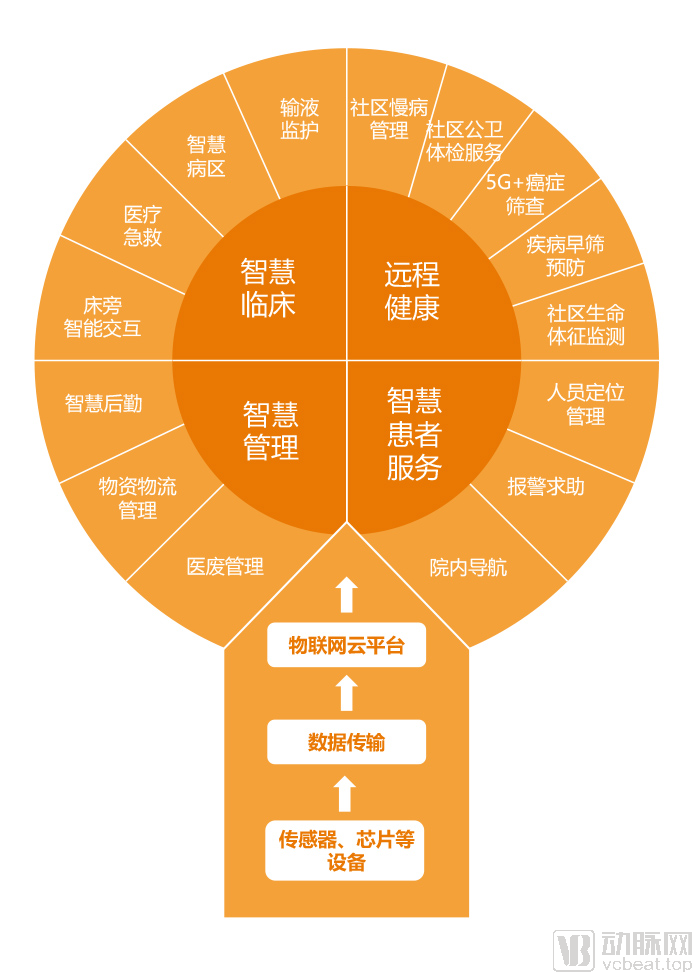
Smart clinical services are primarily designed for nurses. Building upon hospital information systems, mobile terminal devices are utilized to implement Internet of Things (IoT) applications in ward-based clinical nursing management. Starting from nurses’ clinical workflows, the system covers various aspects, including nursing management, intelligent collection of vital signs, and seamless information interoperability. This enables nursing staff to access patients’ latest information in real time, thereby enhancing service quality while freeing nurses from non-nursing tasks, truly realizing the goal of “devoting time to nurses and returning nurses to patients.”
Smart clinical application scenarios include emergency medical management, mobile nursing management, infusion monitoring management, smart wards, and bedside intelligent interaction.
In medical service activities, smart patient service application scenarios include indoor navigation, personnel positioning, and emergency alert assistance. By leveraging positioning technology, the real-time location and distribution areas of patients can be accurately determined, enabling real-time roll calls, correct identification, and queries of patients’ activities and movement trajectories over a specified period, thereby facilitating patient management.
Specifically, indoor hospital navigation systems, personnel positioning systems, and personnel alarm and assistance systems all fall within this category.
Given the large scale and diverse nature of assets in modern hospitals, traditional asset management approaches struggle to meet current operational demands. To enhance asset management and utilization efficiency while ensuring asset security, IoT-based smart management systems have emerged.
Smart management application scenarios include smart logistics management, in-hospital materials and logistics management, and in-hospital medical waste management.
Driven by policy initiatives and economic development, health services have undergone significant changes: First, medical services have expanded from disease treatment to include rehabilitation medicine. Second, healthcare settings have broadened; for instance, in-hospital treatment has extended to telemedicine, community-based care, and home health. In home and community environments, real-time tracking and collection of patients’ vital signs are achieved through the deployment of vital sign monitoring devices in households and the establishment of “Health Kiosks” in communities. Health data is automatically uploaded to an IoT cloud platform and relayed to community hospitals, family doctors, or designated caregivers. Through systematic analysis, healthcare professionals can gain a clear understanding of patients’ health status and formulate appropriate medical and health management plans.
Telehealth application scenarios primarily include community-based chronic disease management, community public health examination services, community vital signs monitoring, remote consumer healthcare, early disease screening and prevention, and 5G-enabled health services.
China has established a relatively complete Internet of Things (IoT) industrial chain, encompassing chips, components, equipment, software, system integration, operations, and application services, with significant progress made in each key segment. Nevertheless, there remains substantial room for growth in China’s healthcare IoT sector. Through the summary and analysis presented in this white paper series, it is evident that China’s healthcare IoT can be strengthened in the following areas.
First,Strengthen industrial clustering and further support the development of a global hub for healthcare IoT.
Second,Increase R&D investment to ensure the industry’s autonomous, controllable, and sustainable development.
Third,Strengthen security infrastructure to build a fully autonomous and controllable security system for the medical and health Internet of Things (IoT).
Fourth,Promote application demonstrations to foster the integration of the Internet of Things (IoT) with healthcare, leveraging technology to empower the healthcare sector.
Scan the QR code below to get this white paper for free.