

Dr. Liu Ningning of Anzhen Hospital: A Cardiac Surgeon as Sherlock Holmes, Thriving on Uncovering Hidden Connections in Complex Cases
When this young man, barely in his early twenties, was brought to the hospital, all the medical staff involved in his diagnosis silently sighed in their hearts, as if spotting a withering branch amidst the vibrant growth of spring. For Professor Liu Ningning, the attending physician from the Department of Cardiovascular Surgery at Beijing Anzhen Hospital, the mood was equally heavy.
The young patient’s medical records indicated that he had previously undergone interventional procedures and carotid artery bypass surgery, and was discharged postoperatively. However, no one anticipated his rapid readmission to the hospital. This time, his condition presented with greater severity. He was diagnosed with a severe aortic dissection involving the aortic root and ascending aorta, complicated by severe left heart failure and significant bilateral pulmonary edema. This condition often causes dyspnea, placing patients at imminent risk of asphyxiation.
Despite his many years of experience “wielding the scalpel,” Liu Ningning still felt the pressure and dared not be the slightest bit negligent. On one hand, the patient’s physical condition did not permit another surgery; on the other, the patient was in a critically dangerous situation. If surgery was not performed rapidly, he would face certain death. Yet even with surgical intervention, the prospects for success remained slim.
Yet Liu Ningning could not forget the earnest hope and pleading in the young patient’s parents’ eyes. To abandon efforts to save the young man’s life, forcing elderly parents to bury their child, would be somewhat cruel. Liu carefully analyzed the patient’s medical history, physical examination findings, and results of auxiliary tests, and engaged in repeated discussions with Professor Sun Lizhong, a leading authority on aortic surgery in China. Together, they formulated a meticulous surgical plan, along with contingency strategies for managing potential postoperative complications. After multidisciplinary consultations and optimization of the patient’s preoperative condition, he ultimately decided to proceed to the operating room. Under the watchful, concerned gaze of the family, he methodically carried out this challenging procedure.
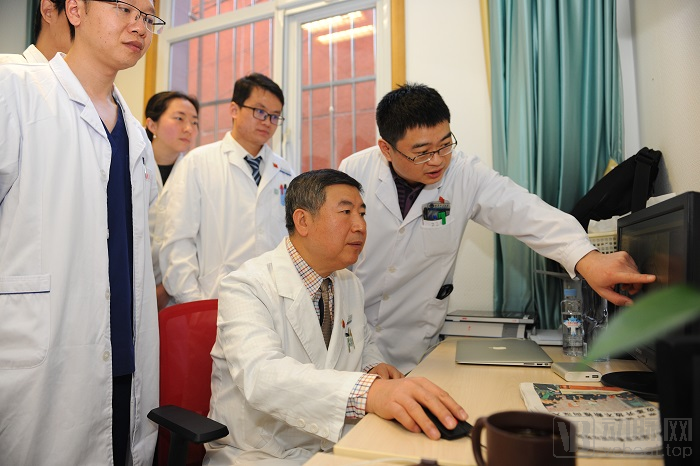
Professors Liu Ningning and Sun Lizhong Discussing the Patient’s Condition. Right: Professor Liu Ningning; Center: Professor Sun Lizhong
Thanks to thorough preoperative preparation and a truly effective surgical plan, the procedure went smoothly despite its considerable length. With the dedicated efforts of the entire medical team, the young patient regained his vitality and was discharged fully recovered within just one month. For the healthcare providers, the greatest reward was nothing more than the smiles on the faces of the young man and his parents.
Such scenarios, in fact, recur time and again. Over the years, alongside moments of joy at witnessing patients’ recovery, he has also endured the frustration of feeling helpless when confronted with complex and challenging cases. “Being a physician is like this: whenever you see a glimmer of hope, you are met with further setbacks, constantly oscillating between elation and dismay,” said Liu Ningning.
“At that time, I had few opportunities to be exposed to professions other than medicine, which narrowed my perspective. So, like my parents, I chose to pursue a career in medicine.” As he spoke these words, he showed little regret; his tone was merely a straightforward statement of fact. Liu Ningning’s father is an internist, and his mother is a faculty member at Peking Union Medical College. Having been immersed in this medical environment from a young age, he applied to Capital Medical University when taking the national college entrance examination in 1994 and was successfully admitted.
Throughout his academic and professional journey, he continuously selected, adjusted, and refined his direction based solely on his interests. “During my university years, I was relatively naive and aspired to join major departments such as internal medicine or surgery after graduation.” In 1999, upon graduating from university, he was assigned to the Department of Cardiology at Fuwai Hospital, fulfilling his wish. A year later, he went on a rotational training program in the Department of General Internal Medicine at Peking Union Medical College Hospital. It was then that he unexpectedly found the field of cardiovascular surgery to be more intriguing.
Driven by his passion, Liu Ningning chose to start from scratch and began studying under Professor Sun Lizhong, a leading authority in cardiovascular surgery who invented the “Sun’s Procedure,” in 2001. For him, selecting Professor Sun as his mentor was more a matter of serendipity. In the year he applied for graduate studies, Professor Sun was the only faculty member accepting master’s students. Professor Sun’s approachable demeanor and his selfless dedication to teaching and mentoring left a profound impression on him. Consequently, he opted for a combined master’s-doctoral program, ultimately earning his Ph.D. in 2006.
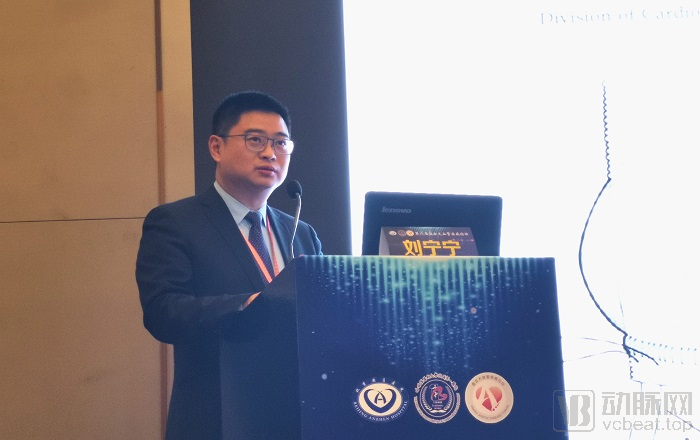
Professor Liu Ningning, Beijing Anzhen Hospital, Capital Medical University, Recipient of the 2020 Pangu Annual Person Award
After graduation, he had originally planned to stay in the Department of Cardiovascular Surgery at Fuwai Hospital. However, since Fuwai Hospital was not accepting new hires that year, he compromised and remained in the Cardiac Surgery ICU at Fuwai Hospital. Reflecting on that period, Liu Ningning stated, “Those years in the surgical ICU drove my growth and continually broadened my horizons. In particular, I learned a great deal about postoperative patient monitoring, enabling me to comprehensively understand patients’ hemodynamic changes.” This experience also led him to develop a unique methodology for patient care.
In 2009, Liu Ningning faced a new choice. At that time, Professor Sun Lizhong planned to move to Beijing Anzhen Hospital and asked him whether he would like to join him. Although most people would have chosen to remain at the prestigious Fuwai Hospital, he resolutely decided to follow Professor Sun to Beijing Anzhen Hospital.
Looking back on this experience, he remarked, “Life constantly presents us with choices. One should not be overly constrained by the immediate circumstances but rather make decisions based on personal interests and passions.” Recalling his past, he also joked, “In college, I aspired to join a major department after graduation, considering smaller specialties such as stomatology, ultrasound, and medical imaging uninteresting. In hindsight, it would have been better to work in those smaller departments.” Jokes aside, in the real world, Liu Ningning has earned the respect of patients and their families through his dedication to his work and exceptional surgical skills.
Saving the life of a young man in his early twenties was merely a footnote in his career. Each year, he performs more than 100 surgeries. In fact, although he had earned his doctoral degree years earlier, when he first joined the Department of Cardiovascular Surgery at Beijing Anzhen Hospital in 2009, he started as a resident physician, beginning with fundamental tasks such as medical record documentation and dressing changes. By 2015, he had formally begun performing surgical interventions for numerous patients with cardiovascular diseases. Over the following five years, he treated more than 500 patients surgically, including over 100 cases involving the Sun’s procedure. Although the total number of surgeries he led as primary surgeon was not exceptionally high, the majority were complex and challenging cases. Due to the favorable surgical outcomes, he has received widespread recognition from both patients’ families and hospital leadership.
For Liu Ningning, surgical correction of adult congenital heart disease, valvular surgery, coronary artery bypass grafting (CABG), and aortic root replacement have long become routine procedures, while acute Type A aortic dissection repair is also well within his expertise. Reoperative aortic surgery has even become a standard part of his practice. Furthermore, he is tackling more challenging and complex aortic procedures, such as total thoracoabdominal aortic replacement.
From initially choosing a career in medicine due to limited horizons to growing into an expert professor in the field of cardiac surgery, it naturally raises curiosity about what has driven him forward step by step, rather than opting for a mid-career change to become someone entirely different from a physician. Liu Ningning introduced the topic with a rhetorical question: “Every industry faces various difficulties and challenges. Shouldn’t one remain grounded and committed to their professional duties when undertaking any task?”
What has enabled him to persevere is largely driven by his genuine interest. Throughout this journey, he has discovered the key to sustaining his passion: embracing challenges. “From formulating the surgical plan in the preoperative phase, to performing the surgery and managing postoperative rehabilitation, every decision and every action directly impacts the patient’s survival and the risk of complications. With proper care, patients can recover smoothly; however, improper management, even with minor flaws, can lead to life-threatening risks. Sometimes you can rectify the situation, but at other times, there is nothing you can do.” This process is evidently highly challenging.
He likens it to Sherlock Holmes’s process of uncovering the truth—requiring one to meticulously peel back layers and identify the connections underlying subtle clinical manifestations. “Take, for instance, a young patient presenting with left heart failure. He had previously undergone interventional therapy, and his left heart failure was secondary to aortic dissection. However, other patients exhibiting similar symptoms may have entirely different etiologies. This heavily tests a physician’s ability to detect every minute detail before surgery, much like Sherlock Holmes, and then, through logical reasoning and dialectical observation, deliver targeted treatment based on the specific condition.”
Cardiac surgeons are required to conduct thorough clinical evaluations for each patient and establish appropriate preoperative diagnoses. Numerous intraoperative considerations must be addressed, such as neuroprotection and the establishment of cardiopulmonary bypass. Postoperatively, physicians must implement rigorous monitoring and actively manage any complications that arise. For these surgeons, comprehensive management throughout the perioperative period is crucial. Only through meticulous preoperative planning, timely intraoperative decision-making, and strict postoperative observation can patients achieve optimal recovery and discharge.
“As a surgeon performs more and more operations, you gradually come to realize that no surgery is ever perfect. When you first begin operating on patients, you feel immense joy and excitement from saving lives; but over time, you find yourself becoming increasingly cautious, even apprehensive, with each successive procedure.” This mindset stems not from fear of surgery itself, but from a profound reverence for life. During surgical practice, a physician can achieve further professional growth only by continually recognizing their own shortcomings.
“In a recent surgery,” Liu Ningning explained, “the procedure initially went very smoothly. However, excessive postoperative drainage was observed, raising suspicion of active bleeding.” Although exhausted, he still felt a surge of excitement upon entering the operating room. As the pivotal figure in the OR, the surgeon must maintain control of the situation, conceal any signs of fatigue, and perform the procedure with utmost caution. After the surgery, Liu Ningning reflected on whether there had been any flaws in the initial operation, constantly questioning himself. For him, while many doctors may prefer to highlight successful cases, unexpected complications can arise at any moment during surgery. A physician must learn to confront and accept these realities; a lead surgeon, in particular, must bear this responsibility and continually refine their surgical skills.
Certainly, there were also touching moments in this process. Whether it was the smiles of patients during follow-up visits, their heartfelt gratitude, or even casual conversations about everyday life, all of these brought him joy and motivated him to continue learning, radiating the light and warmth of a cardiac surgeon.
Every detail in surgery must be executed flawlessly, as each one is a matter of life and death. Even for accomplished surgeons like Liu Ningning, there is a continuous effort to explore better ways to perform operations. While these approaches may ultimately boil down to a few concise phrases—“standing on the shoulders of giants” and “hands-on practice”—they hold far greater significance for him.
Regardless of the severity of a patient’s condition, physicians must be personally involved throughout the entire treatment process. Meticulous observation and analysis are required during the preoperative, intraoperative, and postoperative phases, as these factors critically determine whether a patient will recover sufficiently for discharge. It is essential to learn from domestic colleagues and senior experts without becoming complacent, as every surgeon’s practice offers valuable insights worth emulating. Standing on the shoulders of giants enables continuous advancement. Furthermore, learning from international peers—by reviewing literature and watching surgical videos—broadens physicians’ horizons and facilitates the acquisition of advanced expertise. For instance, foreign hospitals often demonstrate greater meticulousness in preoperative assessments, intraoperative monitoring, and postoperative care, areas from which domestic practitioners can draw significant lessons.
In addition to continuously exploring and assisting patients with surgical treatments, he has also been summarizing his own experiences and lessons learned throughout this process, presenting them through papers, books, and other forms. As the responsible editor for the "Cardiothoracic and Vascular Surgery Channel" of the Medical Reference News directly under the National Health and Family Planning Commission, he is in charge of compiling articles for the 7th edition of the newspaper; as a key contributor to the research project titled "Application Research on Innovative Techniques in Surgical Treatment of Stanford Type A Aortic Dissection," he received the First Prize of the Ministry of Education's Science and Technology Progress Award in 2009; he has also participated in numerous domestic and international professional conferences, delivering keynote speeches, and authored more than ten papers published in core journals.
In 2017, Liu Ningning and her mentor, Professor Sun Lizhong, co-authored the paper “Research Progress on Issues Related to Aortic Arch Reconstruction,” which analyzed the impact of highly challenging aortic arch anatomical variations—such as bovine aortic arch, aberrant right subclavian artery, and single vertebral artery—on reconstructive surgery. The study also explored intraoperative arterial cannulation and cerebral protection strategies to facilitate aortic arch reconstruction, holding significant clinical importance for surgical practice.
Always attentive to cutting-edge trends, he also maintains continuous tracking of interventional therapy. He holds a relatively cautious stance toward this minimally invasive procedure. He notes that both patients undergoing interventional therapy and the physicians performing it tend to be relatively young, and long-term postoperative follow-up is often lacking. Consequently, some younger patients may develop complications later on, necessitating surgical intervention. Currently, the indications for interventional therapy still warrant further discussion; when open-chest surgery is indicated, patients should opt for thoracotomy rather than blindly choosing interventional therapy.
Having been deeply immersed in the field of cardiovascular surgery for many years, Liu Ningning has a clear understanding of its development. “Due to advances in internal medicine, cardiovascular surgery has been impacted by the progress in this discipline. For conditions such as coronary artery disease, some patients can now undergo minimally invasive procedures via interventional therapy, which carries lower surgical risks; consequently, many patients have been diverted to internal medicine departments.” He has also observed that large-vessel surgery, particularly aortic surgery, has shown a steady upward trend in recent years: last year, the volume of large-vessel surgical procedures grew at a rate exceeding 10%, far outpacing other specialties.
Cardiac Surgery Is Poised for Qualitative Leaps in the FutureLiu Ningning stated, “For instance, there remains substantial room for growth in areas such as material selection and postoperative care. With the establishment of a tiered diagnosis and treatment system, physician training is also undergoing changes.” The current model of single-specialty training may shift, potentially allowing more young doctors to gain exposure to a variety of surgical procedures. However, further exploration is still needed to determine how to conduct training effectively and how to ensure surgical quality.
Having navigated the medical field for decades, Dr. Liu Ningning attributes his journey to this point largely to his passion. With a touch of self-deprecation, he remarks, “I embarked on the path of a cardiac surgeon, lacking the wherewithal to change careers, so I had no choice but to press on.” Along the way, he encountered various setbacks and frustrating situations. For him, the gentle guidance of Professor Sun Lizhong provided comfort, support, and encouragement. He always remembers Professor Sun’s words: “Everyone must go through periods of frustration; surgical practice is never smooth sailing.”
In 2016, Liu Ningning co-authored the article “A Brief Discussion on the Training of Cardiovascular Surgery Graduate Students under the Attending Physician Responsibility System” in the journal Graduate Education, discussing how to advance graduate education under the attending physician responsibility system. Today, as someone who has walked this path, he offers valuable insights to students also dedicated to the field of cardiovascular surgery.
For him, an excellent cardiac surgeon must face reality: the field involves long working hours, physical and mental exhaustion, a prolonged training period, and modest financial compensation, all while demanding much from its practitioners. To truly pursue a career in this specialty, one must have a genuine passion for it, devote oneself wholeheartedly, and maintain an exceptionally strong sense of responsibility. “Because even a single overlooked detail could cost a patient their life.”
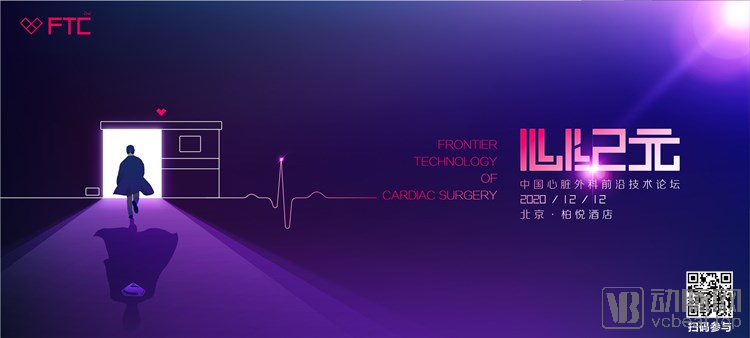
To further advance the field of cardiac surgery, deep collaboration among academia, industry, research institutions, and clinical practice, along with continuous innovation, is essential. The “China Cardiac Surgery Frontier Technology Forum (2020 FTC),” initiated by Professor Sun Lizhong, will be held in Beijing on December 12. Themed “Cardiac Era,” the forum features four major segments: discipline development, talent cultivation, updates on frontier technologies, and integration of academia, industry, research, and clinical practice. Distinguished academic and industry experts will convene to comprehensively analyze the current status and challenges of cardiac surgery in China, fostering a strong nationwide momentum for collaborative advancement among cardiac surgery departments across the country.Click here to register.