

First Profitability Milestone Achieved: How Alibaba Health Charts Its Internet Healthcare Growth Path Behind Nearly RMB 3 Billion in Profit

AliHealth
Medical and Health Services Network Service Provider
On the evening of November 25, 2020, AliHealth (00241) released its interim results for fiscal year 2021. As expected by the industry, AliHealth delivered impressive performance. At the next day’s market open, AliHealth’s shares surged by more than 8%.
Looking directly at the data, AliHealth recorded RMB 7.162 billion in revenue in the first half of fiscal year 2021, a year-on-year increase of 74%. Gross profit also saw substantial growth, totaling RMB 1.86 billion for the half-year period, up 80.3% year on year. More importantly, the company achieved a profit of RMB 279 million, marking its first turnaround from loss to profitability.
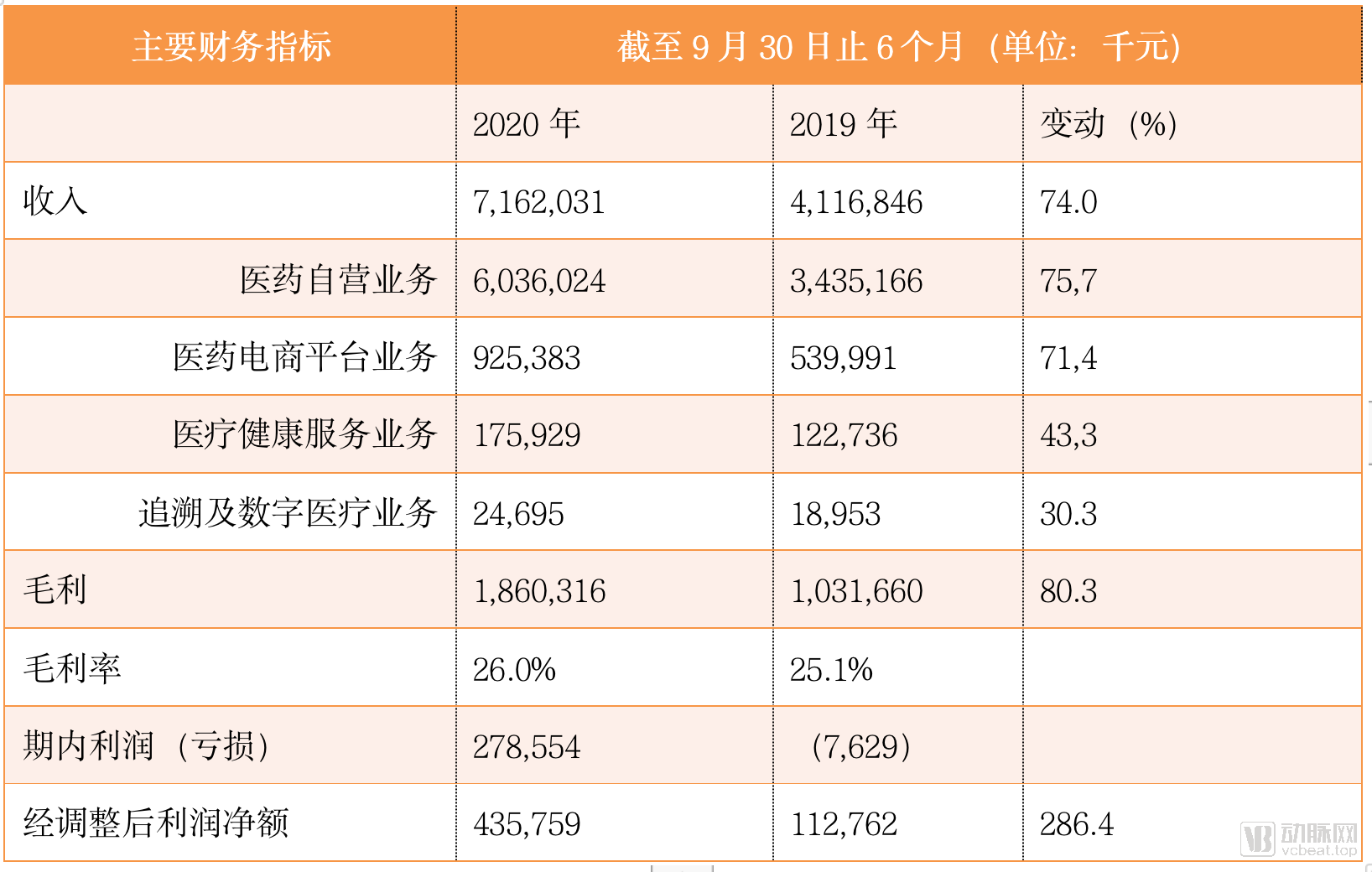
Judging from the above figures, AliHealth has played its cards well despite the pandemic. What has provided support for this internet healthcare giant behind the scenes?
Amid the Pandemic, How Hot Is the Internet Healthcare Industry This Year? First, Demand for Online Medicine Purchases Has Skyrocketed. A practitioner engaged in e-commerce support services for pharmaceuticals once told VCBeat during the pandemic: “In February this year, the overall sales volume of online pharmaceutical sales exceeded twice that of last November. Keep in mind that November benefits from the strong boost of the ‘Double 11’ shopping festival.”
The shift toward the digitalization of pharmaceutical sales has not been halted by pandemic control measures. As residents’ understanding of medications deepens and they grow accustomed to the convenience and safety of e-pharmacies, online drug purchasing is gradually becoming a habit among the younger generation.
This is one of the key reasons behind the rapid improvement in AliHealth’s profitability. Data from the interim results announcement for the 2021 fiscal year showed that revenue from AliHealth’s direct pharmaceutical sales business reached RMB 6.04 billion, a year-on-year increase of 75.7%, while revenue from its pharmaceutical e-commerce platform services amounted to RMB 930 million, up 71.4% year on year.
Surging revenue stems from AliHealth’s accumulated strengths in recent years and the opportunities brought by the pandemic. Over the past year, merchants and active users on AliHealth’s pharmaceutical e-commerce platform have maintained rapid growth. The Gross Merchandise Volume (GMV) of the Tmall Pharmaceutical Platform exceeded RMB 55.4 billion, with annual active users surpassing 250 million—an increase of 60 million from six months earlier. The number of merchants exceeded 18,000, representing an increase of nearly 4,000 compared to six months prior.
The rapid growth of AliHealth’s pharmaceutical self-operated business is also attributable to the platform’s large existing user base. Data shows that the annual active consumers of AliHealth’s pharmaceutical self-operated business exceeded 65 million, an increase of 17 million from six months ago. Online retail revenue from self-operated over-the-counter (OTC) and prescription drugs accounted for 61.7% of the total revenue from its pharmaceutical self-operated business.
Another driver of revenue growth was the profit increase resulting from AliHealth’s acquisition of Ali JK Nutritional Products Holding Limited (an indirect, wholly owned offshore holding company incorporated under the laws of the British Virgin Islands by Alibaba Group to hold the target business) earlier this year. Following this acquisition, AliHealth’s pharmaceutical sales business expanded to include new categories such as medical devices, adult products, and health supplements. These product lines, characterized by higher usage frequency and stronger user stickiness compared to pharmaceuticals, have contributed significantly to AliHealth’s pharmaceutical sales revenue.
Cost optimization is another key driver behind the turnaround to profitability in the interim results. After years of accumulation, AliHealth has established a robust supply chain channel and an agile logistics network. Expanding on its already scaled platform incurs relatively low marginal costs, with economies of scale driving efficiency gains and cost optimization.
A review of AliHealth’s actions over the past six months reveals that the giant has performed well in at least two areas during this year’s competitive battles: supply chain and market.
From this epidemic, we can significantly appreciate the benefits that the Two-Invoice System has brought to the entire pharmaceutical e-commerce supply chain. In the past, the numerous distribution links and complex supplier networks meant that pharmaceutical products flowing from distributors to platforms and hospitals were highly fragmented. Viewed across the entire chain, the markups and logistics costs accumulated at each stage—from production to sales—impose a substantial financial burden on the industry as a whole.
The “Two-Invoice System” eliminated certain intermediaries, while the pandemic further weeded out distributors with insufficient scale and capabilities. As a result, the entire distribution process has become significantly streamlined, with pharmaceutical products concentrated among large-scale distributors such as Jointown Pharmaceutical Group and China Resources Pharmaceutical. This consolidation has substantially reduced related costs and facilitated smoother circulation.
In this context, the common and most significant challenge faced by e-commerce enterprises across different business models is ensuring drug supply amidst soaring order volumes. As certain channels fail to maintain product inflows as usual, e-commerce platforms with robust supply chains have gained a first-mover advantage.
According to reports from the pandemic period, AliHealth experienced brief shortages of certain medications in the early stages of the outbreak. However, as logistics for pharmaceutical raw materials resumed, nearly 50 domestic and international pharmaceutical manufacturers partnering with AliHealth—including Sanofi, HEC Pharm, GlaxoSmithKline, AstraZeneca, CSPC Pharmaceutical Group, Pfizer Upjohn, Novartis, Bayer, Merck & Co., and Bristol Myers Squibb—quickly filled the supply gaps on AliHealth’s e-commerce platform and ensured the immediate availability of new medications.
Having tasted success, AliHealth has continued to deepen its collaborations with pharmaceutical companies. At this year’s China International Import Expo (CIIE), AliHealth successively signed strategic cooperation agreements with multinational pharmaceutical firms such as Novartis Oncology, Pfizer China, and Servier China. The scope of these partnerships covers areas including “Internet + Healthcare,” patient education and protection, and patient assistance programs.
Currently, the range of medications supplied by AliHealth covers major chronic disease areas, including cardiovascular and cerebrovascular diseases, respiratory conditions, hepatobiliary disorders, gout, and diabetes. Meanwhile, commonly used medicines in categories such as tonics and sedatives, gynecology, rheumatology and orthopedics, otolaryngology and ophthalmology, and dermatology are also available online. With the complementary role played by numerous distributors on the Tmall Medicine platform, AliHealth’s “self-operated + marketplace” model is capable of meeting the online follow-up consultation and medication purchase needs of the vast majority of patients with common and chronic diseases.
In terms of marketing, Alibaba, the largest player in the e-commerce sector and a master of various promotional strategies, has extended its outreach methods to AliHealth. In February this year, AliHealth launched the “Stay-at-Home Medication Purchase” service on Taobao and Alipay. By leveraging an internet-based healthcare model that combines online consultation and prescription with home delivery of medications, the service enables patients with chronic diseases to securely purchase the medicines they need from home. Within less than three days of its launch, the service page attracted nearly 3 million unique visitors.
Big data has enabled AliHealth to create precise user profiles. During this year’s Double 11 shopping festival, AliHealth and its partners jointly developed a series of ready-to-consume health products specifically “tailor-made” for young consumers, such as goji berry puree, sour jujube kernel paste, black sesame pills, and collagen gummies. Data released by AliHealth showed that during the Double 11 period, the year-on-year sales growth rates for these four products reached 401%, 178%, 215%, and 114%, respectively.
Market success has enabled AliHealth to capture significant market share from the online operations of established pharmacy chains, while the cultivation of a new generation of users has expanded the core base of its pharmaceutical e-commerce business.
Notably, in its revenue breakdown, AliHealth has reclassified its business segments this year. In addition to proprietary pharmaceutical sales and the pharmaceutical e-commerce platform, it now includes healthcare services, as well as traceability and digital healthcare businesses.
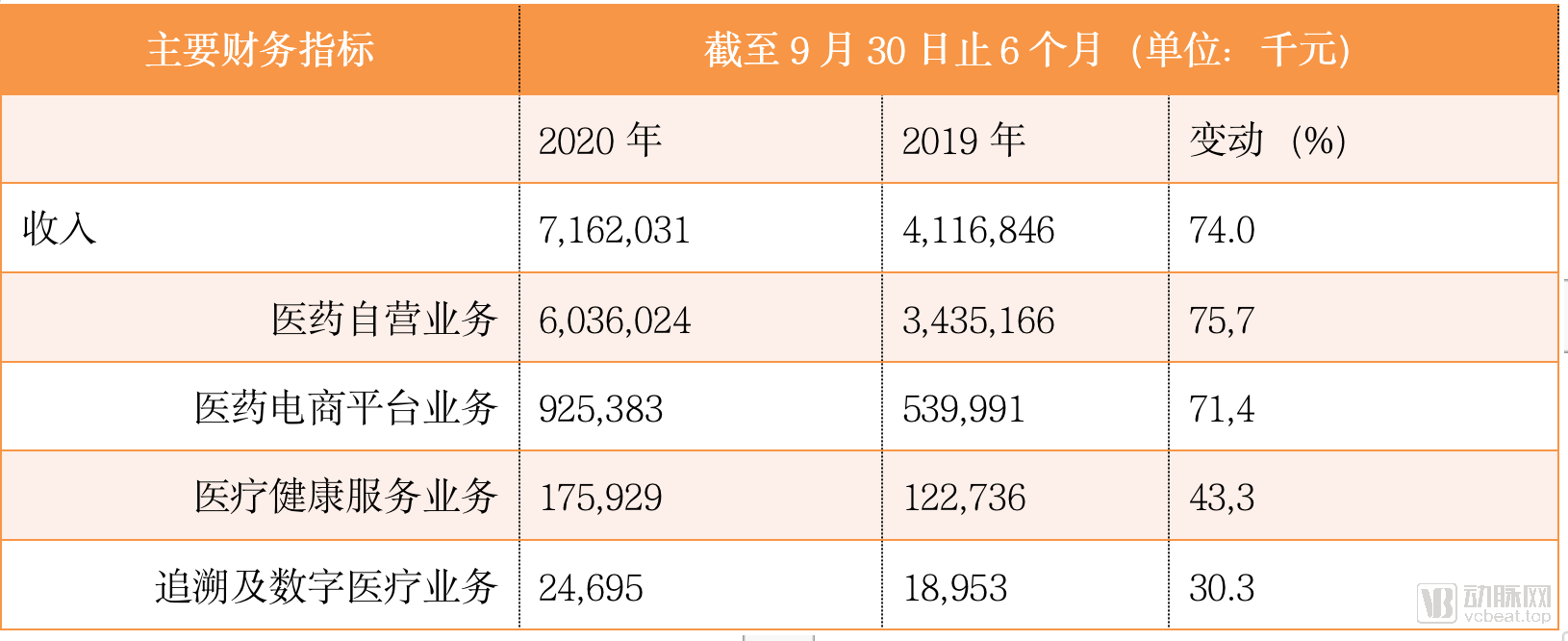
Although the absolute revenue figure is not yet high, we cannot overlook the strategic importance of internet healthcare services within Alibaba’s health ecosystem.
In September 2020, the AliHealth app was rebranded as “Yilu,” aiming to provide users with personalized health services. Compared with the previous version, the new Yilu app features a cleaner and more focused interface, integrating medical services onto the homepage.
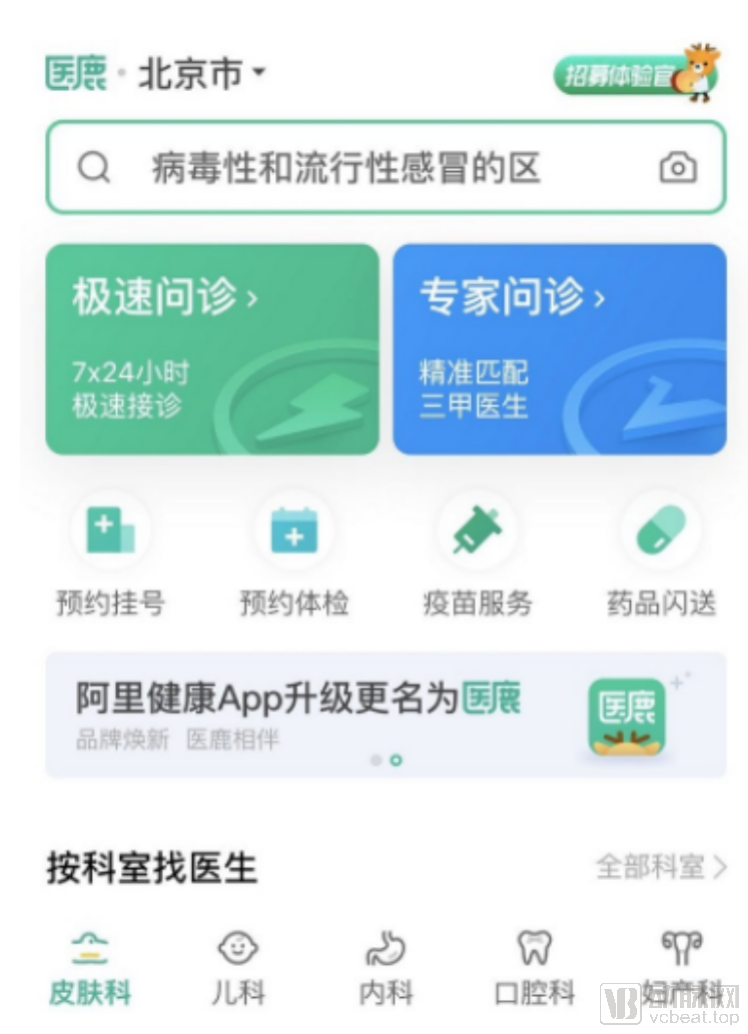
“Yilu App” Mobile Interface (Partial)
Recently, a representative from AliHealth informed VCBeat that the Yilu app is set to release a new version featuring a significant update. The platform will comprehensively advance toward the goal of “instant results upon search, immediate understanding upon viewing, and effective solutions upon consultation.” The aim is to make Yilu the go-to choice for users whenever health concerns arise, ensuring that searches yield prompt results. The content provided will balance medical rigor with accessibility, making it both authoritative and easy to understand. Furthermore, by delivering “effective solutions upon consultation,” the app seeks to provide users with truly valuable services.
In AliHealth’s strategic plan, the ultimate goal is to establish a dual closed-loop online and offline medical health service system. By leveraging YiLu and Alipay to provide internet-based tiered diagnosis and treatment services, it aims to achieve the objective of “minor illnesses treated by primary care providers, major illnesses treated by specialists.” Perhaps in the coming year, more related services and models will emerge on this foundation.
Beyond pharmaceuticals, the focus lies on digital infrastructure. A longitudinal analysis of AliHealth’s financial reports over the years reveals that the company is evolving from its origins as a pharmaceutical e-commerce platform into a comprehensive healthcare technology and services enterprise with across-the-board strategic deployment.
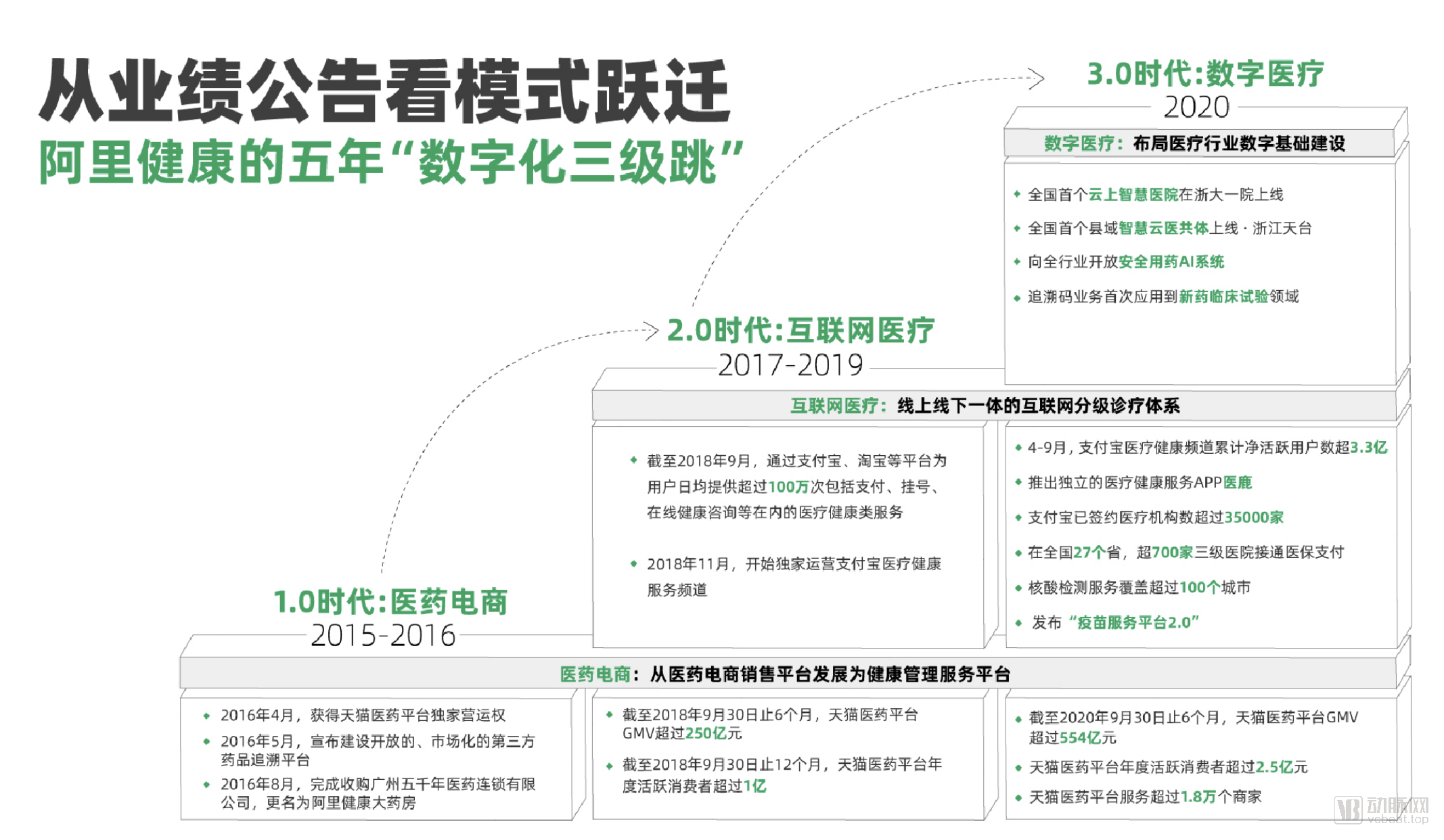
On November 1 this year, the “Future Hospital” information system, jointly developed by Alibaba and the First Affiliated Hospital of Zhejiang University School of Medicine (hereinafter referred to as “the First Affiliated Hospital of Zhejiang University”), went live, becoming China’s first cloud architecture-based smart hospital information system. The development team behind this system originates from Xiniu Medical, a key initiative by AliHealth in the digital healthcare sector.
A relevant official from Xinium Medical told VCBeat that due to the explosive growth in data volume at the newly built Yuhang and Zhijiang campuses, The First Affiliated Hospital of Zhejiang University School of Medicine’s legacy system could no longer support the required computational power. The proliferation of disparate systems across multiple campuses, coupled with a lack of interoperability, forced medical staff to frequently switch between different platforms during their work. Clinical data accumulated over many years remained siloed in various systems, necessitating integration and analysis on a new platform to support clinical decision-making, teaching, and scientific research.
Furthermore, amid the pandemic, the integration of new technologies such as 5G and the Internet of Things (IoT) has rendered legacy integrated Hospital Information Systems (HIS) difficult to compatibilize, while the growing volume of data and the increasing demand for its utilization have posed significant challenges to traditional systems and their storage capabilities. These issues epitomize the current state of HIS development in the vast majority of hospitals across China.
For AliHealth, successfully entering the HIS market of Grade A tertiary hospitals means that it has reached the production environment of hospitals through new digital healthcare infrastructure, achieving integration from pharmaceuticals to medical services, from online to offline, and from within hospitals to outside, thereby closing the loop across the entire value chain.
Recently, Xinniu Medical launched its Smart Cloud Medical Community in Tiantai County, Zhejiang Province, enabling a digital upgrade of the regional healthcare system. These digital infrastructure achievements are poised to be seamlessly replicated in other regions in the future.
AI is another core focus for AliHealth’s entry into smart healthcare. Here, AliHealth’s competitors have shifted from JD Health and Ping An Good Doctor to Tencent and Baidu.
During this year’s Double 11 shopping festival, AliHealth launched an AI-powered safe medication system covering millions of medication rules to enhance medication safety. On the Tmall Health platform, when patients submit their medication requests, the AI system responds within 0.001 seconds, assisting professional pharmacists in evaluating the rationality of medication use based on established guidelines, thereby providing a dual layer of assurance.
In the pharmaceutical distribution sector, leveraging traceability code technology, AliHealth launched the first online authenticity guarantee mechanism for medication purchases during this year’s Double 11 shopping festival. Consumers can trace the origin of their medications by scanning QR codes via Taobao or Alipay, while also receiving insurance coverage with a “tenfold compensation for counterfeit products” guarantee.
As of the interim results announcement, AliHealth’s traceability and digital healthcare business generated RMB 24.7 million in revenue. While this figure is modest, it represents a substantial market share. The performance announcement disclosed that AliHealth’s traceability code technology has achieved over 98% coverage among enterprises handling product categories subject to national mandatory traceability requirements (including volume-based procurement winning bids, blood products, narcotic drugs, and psychotropic substances), with 100% coverage among vaccine manufacturers.
Furthermore, as the company’s earliest foundational industry infrastructure, the application of traceability code technology has expanded beyond pharmaceutical distribution to include clinical trials for new drug development and non-pharmaceutical product traceability. Previously, Professor Yao Chen, Director of the Medical Statistics Office at Peking University First Hospital and Deputy Director of the Peking University Clinical Research Institute, revealed that the “Ma Shang Fang Xin” (Code Assured) traceability technology was piloted for the first time in clinical trials for COVID-19 therapeutics. During drug blinding, standardized blinding methods and numbering rules were adopted, leveraging scanning-based blinding encryption devices and related technologies to simplify blinding operations while ensuring the security of the blind codes.
Amid fierce industry competition and mounting pressure from trailing rivals, why is AliHealth devoting such painstaking efforts to building foundational industry infrastructure? The future battlefield of the internet healthcare sector may well hold the key to understanding AliHealth’s strategic rationale.