

China's Huimin Insurance Faces First Regulatory Framework, with Consortium Model Emerging as Dominant Approach
On November 20, media reports indicated that the China Banking and Insurance Regulatory Commission (CBIRC) issued a letter to local CBIRC bureaus, insurance companies, and the Insurance Association of China, soliciting comments on the “Notice on Regulating Urban Customized Commercial Medical Insurance Business of Insurance Companies (Draft for Comment).”(hereinafter referred to as the "Draft for Comments"), thereby charting the course for the development of the “Huiminbao” business.
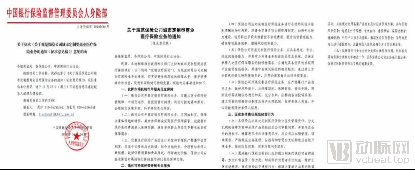
Image sourced from the internet. Please contact us for any copyright infringement.
The “Draft for Comments” quickly sparked heated discussion online, with industry practitioners immediately speculating on the future of city-specific inclusive supplementary medical insurance (Huiminbao). Some voices interpreted this letter as the regulatory authorities’ first explicit statement setting red lines for Huiminbao. However, from VCBeat’s perspective, this policy provides clear direction for the standardized development of Huiminbao, aiming to ensure that the “people-centric” principle is effectively implemented and sustainable operations are maintained, leverage market mechanisms to serve public health security, and contribute to the construction of a multi-tiered healthcare security system.
Huiminbao (City-Specific Supplementary Medical Insurance) is a supplementary medical insurance scheme for catastrophic and critical illnesses, established on the basis of social basic medical insurance. It operates under a model characterized by government leadership, commercial insurance underwriting, voluntary enrollment, and multi-channel funding. Statistics show that from 2015 to 2019, the surplus ratio of China’s basic medical insurance fund declined rapidly from 15.6% to 4.5%, resulting in significant payment pressure. In response, Huiminbao emerged as a supplementary medical insurance solution. In March this year, the General Office of the Communist Party of China Central Committee and the General Office of the State Council proposed the establishment of a healthcare security system with basic medical insurance as the mainstay, medical assistance as the safety net, and the coordinated development of supplementary medical insurance, commercial health insurance, charitable donations, and mutual medical aid. This policy initiative has significantly accelerated the adoption and expansion of urban Huiminbao programs.
VCBeat’s analysis of publicly available data reveals that, by the end of October, more than 70 cities across China had launched city-specific supplemental health insurance plans. Enrollment surged from hundreds of thousands to over 26 million within just a few months, with total premium income exceeding RMB 1 billion.
After reviewing the specific provisions of the “Draft for Comments,” we found that this rule focuses on addressing three major contradictions currently existing in Huiminbao products: lack of public credibility, absence of a scientific pricing mechanism, and lack of top-level design. The aim is to leverage regulatory power to promote healthier and more sustainable development of urban Huimin insurance.
First, enhancing credibility and establishing top-level design are essential foundations.For Huiminbao (city-specific supplementary medical insurance), issues such as unclear government roles, difficulties in achieving profitability for insurers, severe product homogenization, price wars, and inadequate risk disclosures have led to skepticism even as these plans expand their market reach. Local banking and insurance regulatory authorities should strengthen the overall coordination of customized medical insurance projects, intensify daily supervisory efforts, effectively safeguard consumers’ legitimate rights and interests, and maintain orderly market conditions.
The Draft for Comments states that local banking and insurance regulatory authorities should strengthen the overall coordination of customized medical insurance programs, intensify daily supervisory efforts, effectively safeguard consumers’ legitimate rights and interests, and maintain normal market order. It also proposes to prioritize the investigation and punishment of violations such as “insurance coverage plans lacking necessary data foundations; making false promises or misleading consumers; and delaying or reluctant claims settlement.” Once implemented, these measures could, to some extent, improve public perception of city-specific inclusive supplementary medical insurance (Huimin Bao).
Second, implementing scientific pricing is the fundamental basis for ensuring that the "benefit to the people" for insured individuals is effectively realized.Hui Min Bao features broad coverage, low pricing, and high protection. Among these, low pricing is a significant advantage but may also become a hidden concern. An industry practitioner told VCBeat that the price war for urban Hui Min Bao has currently entered a heated stage. On one hand, products with lower premiums tend to be more competitive in capturing city markets; on the other hand, multiple versions of urban Hui Min Bao are being launched simultaneously in many regions. To seize the limited market share in cities, different insurance companies are also driving down premium prices.
The provisions in the “Draft for Comments” on prioritizing investigations into “insurance plans lacking necessary data foundations” and “engagement in malicious price-undercutting competition” may help standardize the pricing of urban inclusive health insurance.
Third, stable, professional, and standardized service capabilities are the key to sustained operations.Huimin Bao (city-specific supplemental medical insurance) possesses both commercial and policy-oriented characteristics. On one hand, its multi-stakeholder operational model requires sponsors to have strong capabilities in resource integration and process control. On the other hand, by covering both healthy individuals and those with pre-existing conditions, Huimin Bao entails more complex actuarial requirements and necessitates support from a more efficient health service system. These factors undoubtedly impose extremely high demands on the platform’s comprehensive service capabilities.
In this regard, the Draft for Comments explicitly stipulates that insurance companies engaging in customized medical insurance business shall possess stable, professional, and standardized service capabilities, maintain information systems commensurate with their business operations, and accept online insurance applications through qualified internet platforms. Furthermore, where services such as specialty drug provision are delivered through third-party cooperating institutions, such arrangements shall comply with relevant national laws and regulations.
“This (Huimin Bao) is an innovative business initiative, with all stakeholders sharing the common goal of implementing it effectively for public benefit. For regulatory authorities, their responsibility lies in both encouraging innovation and safeguarding consumer rights. Therefore, by releasing the Draft for Comment, regulators aim to clarify their stance, identify primary contradictions and key issues, strengthen supervisory efforts, and provide standardized guidance for financial innovation, thereby promoting the healthier development of Huimin Bao insurance services,” a representative from relevant departments told VCBeat.
In fact, Huimin Bao (city-specific supplementary medical insurance) underwent several iterations even before the release of the Draft for Public Comment. Local governments, insurance companies, and insurance platforms alike are motivated to develop Huimin Bao into a practical, effective, and sustainable innovative healthcare payment solution. Specifically, as a product designed to fill the coverage gaps between basic medical insurance and commercial health insurance, the design and operation of inclusive insurance should also address the shortcomings inherent in these two forms of coverage. In other words, while enhancing and expanding the level of protection and upgrading health management services, Huimin Bao should lower enrollment thresholds to increase participation rates and broaden population coverage.
VCBeat has observed that an increasing number of cities have adopted the co-insurance model in selecting underwriters for their city-specific supplemental medical insurance plans, such as Jinghuibao (Beijing), Jinhui Bao (Tianjin), Yuhuibao (Chongqing), and Qihuibao (Zibo). Notably, “Zibo Qihuibao” is the first program in China to receive top-level guidance from the Healthcare Security Administration. From the outset of its product design, it established a “co-insurance consortium” model characterized by guidance from the Healthcare Security Administration, supervision by the Banking and Insurance Regulatory Bureau, unified operation via an internet platform, and joint underwriting by multiple insurance companies. The number of participating insurers in such co-insurance arrangements ranges from as few as two or three to more than ten. Nevertheless, to date, only a minority of these city-specific supplemental medical insurance plans have adopted the co-insurance model.
Co-insurance is akin to collaborative or contractual joint ventures, representing a loosely structured operational model in which parties define their respective responsibilities, rights, and obligations through co-insurance agreements to jointly underwrite risks. This arrangement is relatively common among domestic insurance companies. Typically, a lead insurer is designated to issue the insurance policy, collect premiums on a unified basis, allocate premium shares, and make initial indemnity payments for insured losses. Participating co-insurers then reimburse their respective portions of the claim payments according to their agreed-upon co-insurance ratios.
An industry practitioner told VCBeat that co-insurance is a relatively ideal underwriting model for city-specific inclusive health insurance. “On one hand, it pools resources from multiple parties, including integrating online and offline pharmaceutical, medical, and channel resources both within and outside hospitals, to provide policyholders with adequate coverage; on the other hand, it helps spread risk and boost enrollment rates.”
Actuaries in the industry have stated that the enrollment rate will directly impact the overall claims experience of the product. If the enrollment rate is too low, insurers cannot avoid losses and will be unable to sustain such business operations in the long term, posing challenges to the product’s continuity. Conversely, if the enrollment rate is high but the claims ratio is too low, the product’s “public-benefit” nature may come under scrutiny.
However, the practitioner also noted that coinsurance imposes high requirements on initiators and coinsurance agreements. As it is still in its early stages of development, detailed provisions regarding rights and obligations need to be validated and refined through practice.
“Zibo Qihui Bao,” exclusively launched on the Tencent WeSure platform, has concluded its enrollment period, attracting 1.2136 million participants. Notably, 60.4% of enrollees signed up through family-based policies, achieving a first-year participation rate of 28.32%—a new high for resident out-of-pocket enrollment in city-specific inclusive health insurance schemes in 2020. “Zibo Qihui Bao” pioneered an innovative “co-insurance consortium” model featuring guidance from the Healthcare Security Administration, oversight by the Banking and Insurance Regulatory Bureau, unified operations via an internet platform, and joint underwriting by multiple insurance companies. Its success may provide a valuable reference model for the operation of inclusive health insurance programs.
Since August this year, WeSure has proposed a three-year initiative to build the “100-City Affordable Health Protection Plan,” making Tencent the earliest internet giant to enter the field of city-specific affordable health insurance. In the nearly four months that followed, Tencent’s WeSure has launched city-customized affordable health insurance products in more than 30 cities.
From “Dongguan Citizen Insurance” surpassing one million enrollees, to “Zibo Qihui Bao” establishing the “co-insurance consortium” model and the launch of “Henan Yujianbao,” the first provincial-level inclusive insurance product under this model, and further to “Zibo Qihui Bao” setting a new high for urban inclusive insurance enrollment rates in 2020, Tencent Weibao has accumulated experience through these milestones and is now shaping and exploring a new approach to inclusive supplementary medical insurance. In the following section, we will analyze the operational model of “Zibo Qihui Bao” to highlight the key features of this strategy.
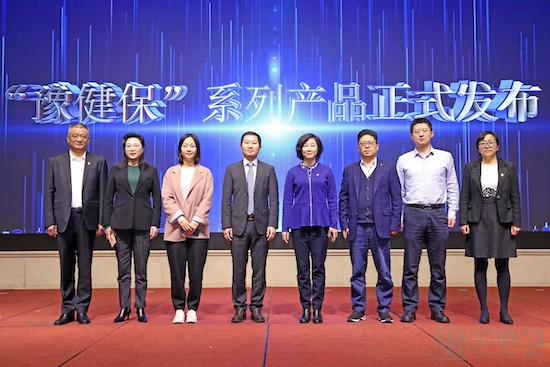
"Henan Yujianbao" Releases Launch Graphic
Initiative: Local Healthcare Security Administration conducts top-level design
Designing a supplemental medical insurance product for the residents of Zibo was the original intent behind QiHuiBao. After recognizing the difficulties in addressing “poverty caused by illness” through fiscal means alone, the Zibo Municipal Healthcare Security Administration, through proactive preliminary research and discussions, applied market-oriented thinking to establish a social mutual aid system based on the principle of “collective support for individuals in need.”
“Zibo Qihui Bao” emphasizes scientific rigor, rationality, and rapid implementation. A relevant official from WeSure told VCBeat that the Zibo Municipal Healthcare Security Administration was deeply involved from the initial planning stages of “Zibo Qihui Bao.” Prior to the project’s launch, the administration conducted thorough market research, gaining in-depth insights into the disease burden among Zibo residents and the major health insurance products available on the market, thereby clearly identifying the needs characterized by local specificity.
Local authorities in Zibo recognized that Huimin Bao represents an innovative integration of commercial insurance and policy-based insurance mechanisms. Seeking to introduce more new technologies and models through a “one city, one policy” customized approach, they ultimately selected WeSure as the platform partner to advance the Huimin Bao project. During the project design phase, the Healthcare Security Administration provided top-level guidance on the pricing and coverage scope of the introduced commercial insurance products, based on local residents’ health status, medical expenditures, medical insurance claims data, and basic medical insurance enrollment rates.
Specifically, the “One City, One Policy” customized features of “Zibo Qihui Bao” are mainly reflected in the scope of reimbursement and the range of covered specialty drugs. In terms of reimbursement scope, it seamlessly integrates with the basic social medical insurance, covering medical expenses both within and outside the scope of the basic social medical insurance, thereby achieving uniform reimbursement ratios for items both inside and outside the medical insurance reimbursement catalog. Regarding the range of specialty drugs, the Zibo Medical Security Bureau precisely customizes the list based on actual medication needs.
Joining Forces: Partnering with 12 Insurance Companies to Create a “Co-Insurance Consortium”
During the product design phase of “Zibo Qihui Bao,” guidance was provided by the Zibo Municipal Healthcare Security Administration, and a “coinsurance consortium” model involving multiple insurance companies as joint underwriters was established. “This is also a highlight of the Huiminbao solutions we have been exploring,” pointed out the head of WeSure. Before expanding into the Huiminbao business, WeSure leveraged the strength of its Tencent-backed platform to gradually build an internet insurance ecosystem with broad coverage of both insurance companies and insured populations.
“With regard to design principles, there are significant differences between commercial insurance and social insurance,” said a representative from WeSure. “As a professional third-party platform, we are able to translate the National Healthcare Security Administration’s needs for supplementary medical coverage into innovative demands for commercial insurance.” After matching these innovative requirements with the qualifications and resources of insurance providers, WeSure partnered with 12 insurance companies, including Pacific Life Insurance, China Life Insurance, China Life Property & Casualty Insurance, and Ping An Pension Insurance, establishing unified service standards and rules for its partner insurers and maintaining ongoing operations.
As the service platform for the “co-insurance consortium,” WeSure also leverages Tencent’s advantages to provide insurers with comprehensive underwriting solutions across its entire platform while precisely reaching users. Through unified collaboration and joint underwriting, the “co-insurance consortium” model significantly enhances underwriting capacity, effectively integrating medical insurance agencies, insured individuals, and insurance companies, thereby avoiding potential issues and risks associated with sole underwriting by a single insurer.
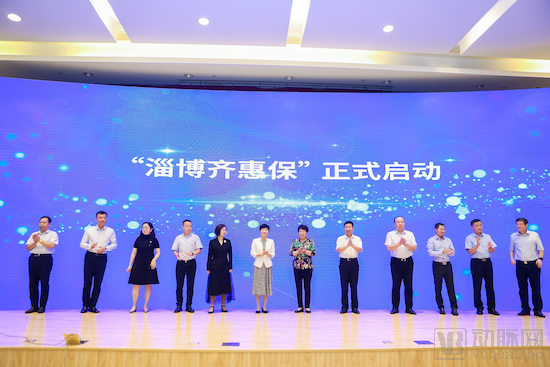
“Zibo Qihuibao” Launch Event
Implementation: Driven by Local Governments, with the Poverty Alleviation Network as a Safety Net
The head of WeSure’s Huiminbao frankly stated that the impressive performance of “Zibo Qihuibao” since its launch was inseparable from the deep involvement and support of the local government. “Starting from the extensive data support provided by the Healthcare Security Administration in the early stages, the support we received from the Zibo municipal government throughout the ‘Zibo Qihuibao’ project has been consistent and unwavering.”
On September 25, at the launch event for “Zibo Qihuibao,” Bi Hongwei, Deputy Mayor of Zibo City, purchased the first policy on-site, marking the first time a city official has done so in the promotion of urban inclusive health insurance projects.
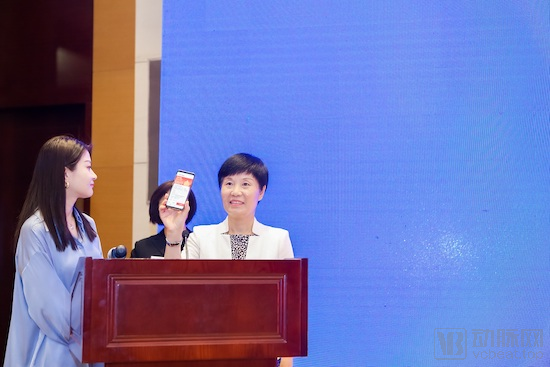
Zibo Vice Mayor Bi Hongwei Purchases the First Policy of “Zibo Qihui Bao” On-Site
The Zibo Municipal Healthcare Security Administration has also leveraged “Zibo Qihui Bao” as a key instrument for poverty alleviation. According to Sun Yingtao, registered impoverished households in Zibo City that are eligible for poverty-alleviation policies can purchase “Zibo Qihui Bao” by paying an annual premium of only RMB 10 per person. “Although the RMB 10 premium is modest, it reflects the government’s commitment and compassion in supporting registered impoverished households.”
During the two-month promotional campaign for “Zibo Qihuibao,” all districts and counties in Zibo City formulated implementation measures, responded proactively, and accelerated enrollment processing. In addition, WeSure’s integrated online-offline-air marketing strategy ensured close coordination, fully leveraged local media and advertising resources, and precisely reached local residents, enabling certain districts and counties to achieve full coverage of “Zibo Qihuibao” among policy-eligible impoverished households.
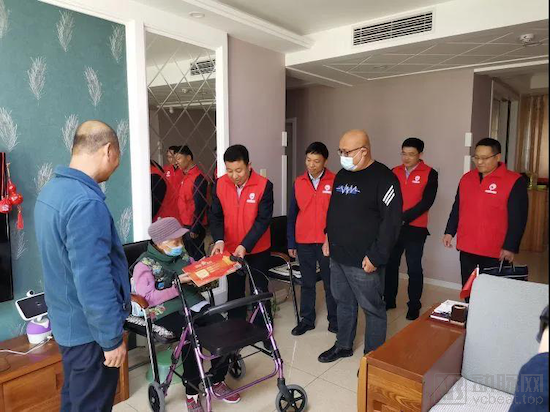
Zibo Municipal Healthcare Security Administration Purchases “Zibo Qihui Bao” Insurance for 24 Residents Aged 80 and Above in Longtaiyuan Community
In Sun Yingtao’s view, “Zibo Qihui Bao” represents an exploration by the Zibo Medical Security Bureau into a normalized mechanism for addressing poverty caused by illness, and serves as a beneficial supplement to the basic medical insurance system.
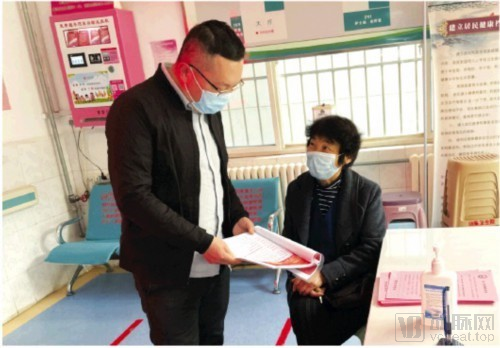
Li Dong (left), Deputy Director of the Boshan District Medical Insurance Service Center under the Zibo Municipal Healthcare Security Administration, introduces “Qihui Bao” to impoverished inpatients at Shantou Town Health Center.
A representative from Tencent WeSure stated that Huiminbao (city-specific supplementary medical insurance) has taken a critical step toward the genuine integration of basic medical insurance and commercial health insurance, though a long road still lies ahead. The introduction of new regulatory guidelines has charted a course for the standardized development of Huiminbao; however, truly implementing its “public-benefit” philosophy and ensuring sustainable operations will require leveraging market mechanisms to serve public welfare and social security, thereby imposing higher demands on participating entities. Relying on Tencent’s user base of hundreds of millions and its technological capabilities, along with practical experience in more than 30 cities and the comprehensive “WeSure Model” solution, WeSure will continue to make sustained efforts across operational models, coverage responsibilities, and health services. These initiatives aim to support the construction of a multi-tiered medical security system.
Industry analysts believe that, based on the latest regulatory requirements and the current landscape of over 80 launched products, the healthy development of Huimin Insurance should encompass the following key elements:
First, supervision, guidance, and credit enhancement by local governments and relevant departments.Previous practices have demonstrated that government credit enhancement directly affects users’ trust in the product and even their willingness to enroll, ultimately impacting the product’s enrollment rate. The original design intent of Huiminbao (city-specific supplementary medical insurance) should be aligned with local specific needs, while top-level design should clearly define and regulate the rights and obligations of all participating parties.
Second, prioritize the sustainability of project operations.The development of Huiminbao products should strictly adhere to the principles of “government leadership, market-based operation, and voluntary participation,” providing customized and sustainable affordable health coverage for local residents without increasing local fiscal expenditures. The core objective is to balance the interests of multiple stakeholders, including the government, insurance companies, and policyholders, while ensuring effective service delivery across all stages.
Third, robust internet ecosystem support.Product design is merely the first step in the operation of Huiminbao (inclusive commercial health insurance); it is equally critical to deliver coverage to users efficiently. Therefore, it is essential for participating entities to possess a systematic marketing ecosystem and the capability to optimize enrollment efficiency. For instance, during the enrollment process for “Zibo Qihui Bao,” users must verify their identity using the electronic medical insurance certificate before proceeding to payment. This approach not only creates high-frequency usage scenarios for the electronic medical insurance certificate but also enhances operational efficiency.
Fourth, robust middle-platform support centered on technology."Hui Min Bao" insurance plans are typically implemented on a city-by-city basis across China. To efficiently manage the product design and operations at such a large scale, a robust business middle-platform system is essential.
Fifth, build the connectivity capability of the health ecosystem.The deep integration of inclusive health insurance with healthcare is a significant trend for future development. If participating entities can collaborate with industry partners to jointly build a health ecosystem, it will undoubtedly unlock greater potential for the growth of inclusive health insurance.
We believe that policy alone cannot build an industry; its role is more about guidance and oversight. The prosperity of an industry relies on the reverence and scientific attitude of those who practice within it. This is especially true for Huiminbao (city-specific supplementary medical insurance).
Article Reference:
Small Cities, Big Impact: The Long and Arduous Road for “Huimin Bao”
Shanghai Securities News: “Huiminbao” Races Ahead, Raising Concerns as Regulators Draw Red Lines for Innovation
Fudan University China Insurance and Social Security Research Center: The Application of Inclusive Insurance in Health Management—An In-Depth Analysis Based on Huimin Bao