

Longevity Society Meets Data Society: Smart Integrated Care Emerges as the Key Breakthrough in Elderly Services for the Next Decade

Taikang Community
Chain养老机构
China's population aging trend is becoming increasingly pronounced.
According to population statistics released by the National Bureau of Statistics, by the end of 2019, China’s population aged 60 and above was approximately 254 million, accounting for 18.1% of the total population. At the regular press conference in the fourth quarter of 2020, the Ministry of Civil Affairs disclosed that, according to relevant projections, the number of elderly people in China will exceed 300 million during the “14th Five-Year Plan” period, marking the country’s transition from a mildly aging society to a moderately aging one.
Correspondingly, the large elderly population has also brought about new economic opportunities. The "2019 China Elderly Care Industry Development White Paper" released by CCID Think Tank shows that the scale of China's elderly care market was 4.6 trillion yuan in 2018, and is expected to reach 9.8 trillion yuan by 2021. The "China Elderly Care Industry Development White Paper" from the Chinese Academy of Social Sciences indicates that the market for China's elderly care industry is projected to reach 13 trillion yuan by 2030.
Liu Tingjun, President and Chief Operating Officer of Taikang Insurance Group, believes that as the baby boom generation of New China enters old age, China will face two overlapping trends in the next decade: first, the convergence of a longevity society and a data-driven society; second, the confluence of elderly care needs among the older generation and the pursuit of high-quality life and healthcare services by the newly retired generation.China’s elderly care industry is poised to enter a golden period of growth, with the longevity economy ready to take off.Taikang has pioneered initiatives and practices in high-quality elderly care services.
However, the current development of elderly care services mainly faces three issues,1. High labor costs, which prevents the widespread adoption of high-quality elderly care services; second, elderly care services are insufficiently comprehensive and lack personalized options; third, reliance on "constant human surveillance" yields poor results in risk prevention and control.
Rapid advancements in artificial intelligence, big data, the Internet of Things (IoT), and the internet have made the development of smart elderly care possible. Leveraging advanced technologies such as intelligent sensing, high-precision indoor and outdoor positioning, and health monitoring, smart elderly care provides residents with real-time, rapid, efficient, and cost-effective elderly care services that are interconnected, networked, and intelligent.
Smart elderly care addresses the high costs and subpar service quality associated with traditional models, emerging as a new paradigm that has garnered widespread industry attention. How, then, can relevant companies seize this opportunity and ride the wave of growth in smart elderly care?
In 2017, the Ministry of Industry and Information Technology, the Ministry of Civil Affairs, and the National Health and Family Planning Commission jointly issued the Action Plan for the Development of the Smart Health and Elderly Care Industry (2017–2020), which proposed that by 2020, a smart health and elderly care industrial system covering the entire life cycle would be basically established, more than 100 demonstration bases for smart health and elderly care applications would be set up, over 100 industry-leading enterprises with demonstrative and guiding roles would be cultivated, and a number of smart health and elderly care service brands would be created. In 2019, the State Council released the Opinions of the General Office of the State Council on Promoting the Development of Elderly Care Services, clearly defining the core guidelines of “Internet + Elderly Care” and “Smart Nursing Homes.”
The frequent issuance of policies indicates that smart elderly care has been elevated to the level of national strategy. Driven by these policy incentives, an increasing number of intelligent technologies have been applied to the medical and elderly care industry in recent years, giving rise to a wide array of smart elderly care products, including health management devices and monitoring equipment.
Although there are numerous smart healthcare and elderly care products, their adoption rate remains low. Moreover, there is a lack of universally applicable solutions that can be effectively implemented in practice, failing to fully realize their potential to improve service quality and reduce service costs.
Li Bin, Assistant President and Chief Technology and Information Officer of Taikang Health Investment, attributes this phenomenon to several factors. First, the research and development of smart elderly care products require high investment but yield slow returns. Second, older adults have limited acceptance of innovative technologies, necessitating prolonged periods for adaptation and learning. Third, these products lack support from an integrated elderly care service operation system; since family members cannot provide round-the-clock supervision, it is difficult to respond promptly even when devices issue alert notifications.
Regarding how to address the aforementioned challenges and unlock the maximum potential of smart elderly care products, Taikang Community, with a decade of experience, has provided a clear answer.
Taikang Community is a professional brand under Taikang Health Investment, dedicated to the physical construction, operation, and innovative services in elderly care, nursing, and rehabilitation. By introducing the U.S.-based CCRC (Continuing Care Retirement Community) model and integrating it with China’s characteristic medical-nursing combination approach, Taikang Community aims to establish high-quality chain institutions for integrated medical and elderly care. Its core positioning lies in deeply cultivating the senior life chain industry, providing premium elderly care, rehabilitation, nursing, and healthcare services, thereby genuinely transforming Chinese people’s concepts of healthy aging and their lifestyles.
Ten years ago, Taikang Insurance Group seized the emerging opportunities in the medical and elderly care sector, strategically positioning itself ahead of the curve. It has since developed a nationwide chain of large-scale, high-quality, and high-standard senior living communities, exemplified by Yan Garden, Shen Garden, and Yue Garden.
On November 29, 2020, at the event for the 10th Anniversary Conference of Taikang Community, Liu Tingjun, President and Chief Operating Officer of Taikang Insurance Group, stated that over the past decade, Taikang has evolved from its initial concept of a single senior living community into a diversified"Vitality Elderly Care, Premium Healthcare, End-of-Life Care, and Excellence in Wealth Management" Four-in-One Strategy, subsequently entering the healthcare sector to build a comprehensive health ecosystem, and has createdThe Three Major Closed Loops of Longevity, Health, and Wealth,Contributed the Taikang Solution for the Longevity Era.
It is understood that, as of October 2020,Taikang has established Taikang Community senior living communities in 22 cities across China, with a total above-ground floor area of 3.31 million square meters. The communities offer 39,000 residential units and nearly 1,600 medical beds, providing one-stop retirement lifestyle services for 55,000 seniors.
In 2017, Taikang Community invested substantial capital and talent to initiate its strategic layout for smart elderly care and medical services. During the research and development phase, the company’s technical team integrated deeply into the entire operational system, gaining a thorough understanding of business processes and residents’ actual needs, thereby achieving a profound integration between products and the business operation system. To address the issue of slow adoption of smart elderly care and medical products among the elderly, staff members conducted publicity campaigns and provided guidance to help residents quickly adapt to these products. Meanwhile, Taikang Community assembled a multidisciplinary team comprising professional butlers, social workers, physicians, and nurses, enabling timely detection and response to residents’ needs and any abnormal situations.Institutional elderly care settings with professional operational systems, such as Taikang Community, are more suitable footholds for smart medical and elderly care at the current stage.
Leveraging Taikang Community’s professional operations team, ample capital, and robust R&D capabilities, the Smart Elderly Care project has rapidly taken root within Taikang Community, achieving deep integration of innovative technologies with its business operations system, significantly enhancing user experience while reducing service costs.
Taikang’s self-developed smart elderly care cloud platform comprises multiple subsystems, including smart nursing, smart security, smart concierge services, and smart health management, enabling comprehensive, scenario-based management of residents’ safety, health, social interactions, and other behaviors.
Ensuring resident safety is the bottom line.Taikang Community leverages artificial intelligence and blockchain technologies to provide comprehensive 24/7 protection. Radar and infrared technologies are deployed in resident rooms to monitor abnormal behaviors in real time. Moreover, compared with conventional video surveillance, radar and infrared solutions better safeguard residents’ privacy.
During outdoor activities, the emergency alarm and location card can track residents' movements in real time. When a resident presses the alarm button, the smart safety platform can instantly pinpoint their location and automatically activate nearby cameras to capture the scene, providing immediate security assistance. In daily life, the smart community also regularly analyzes residents' behavioral patterns and issues timely alerts when anomalies are detected.
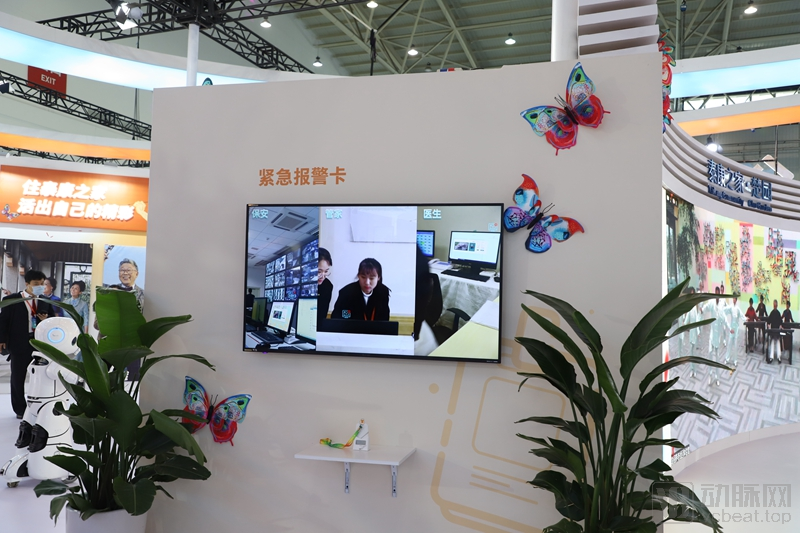
Emergency Alert Cards Widely Worn by Taikang Community Residents
In safeguarding residents' health.Taikang Community collects and organizes residents’ electronic health and lifestyle records, including medical history, exercise logs, and nutritional data. Leveraging this data, Taikang Community gains a comprehensive and holistic understanding of residents’ health status, establishes risk prediction models tailored to individual characteristics, and formulates personalized care and health management plans. These planned tasks are then assigned to service teams, family members, and the residents themselves. Powered by the Smart Elderly Care Cloud Platform, Taikang Community’s health management services have become a new hallmark of Taikang’s integrated medical and elderly care model.
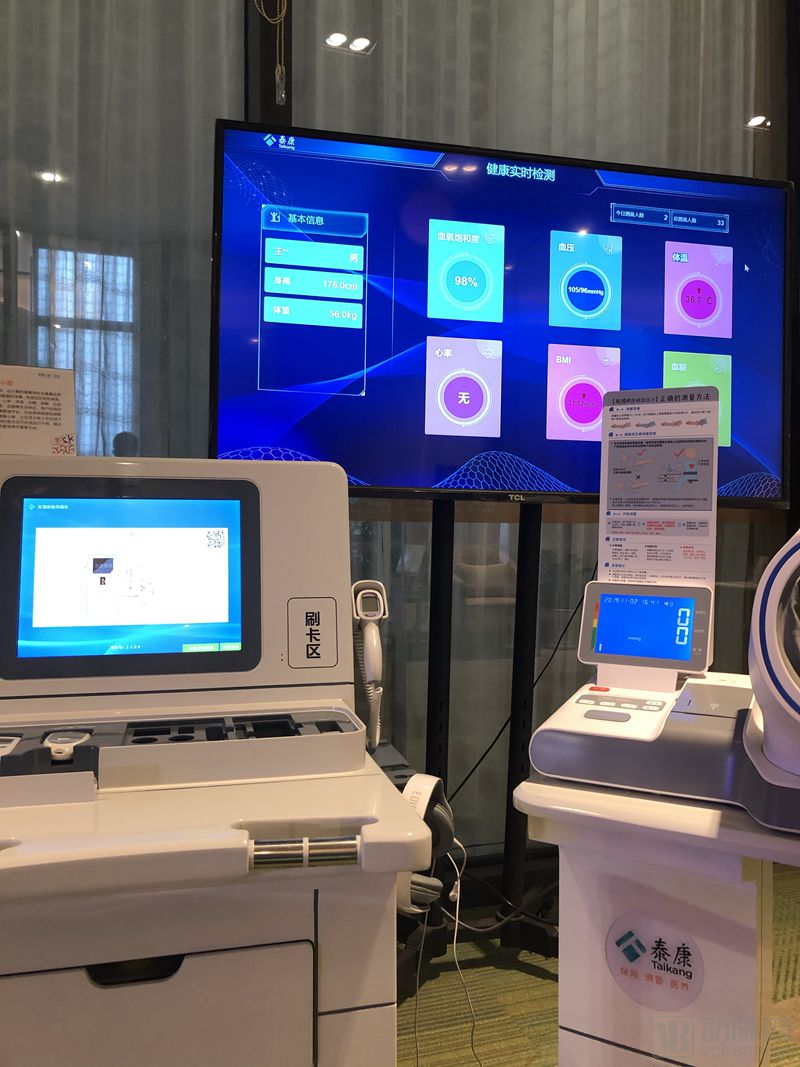
Smart Dashboard: Displays community resident safety, spatial utilization, health, activity indices, and IoT sensing data, enabling residents to gain a comprehensive understanding of their community.
Social Activities, television serves as the information portal for residents of Taikang Community. Through smart screens or in-room closed-circuit television, residents can access information, browse course schedules, and view various community activities at any time, including shuttle bus timetables and expert outpatient hours at the rehabilitation hospital. Television also functions as a social platform, enabling residents to engage in interactive communication within their own community or even across different communities.
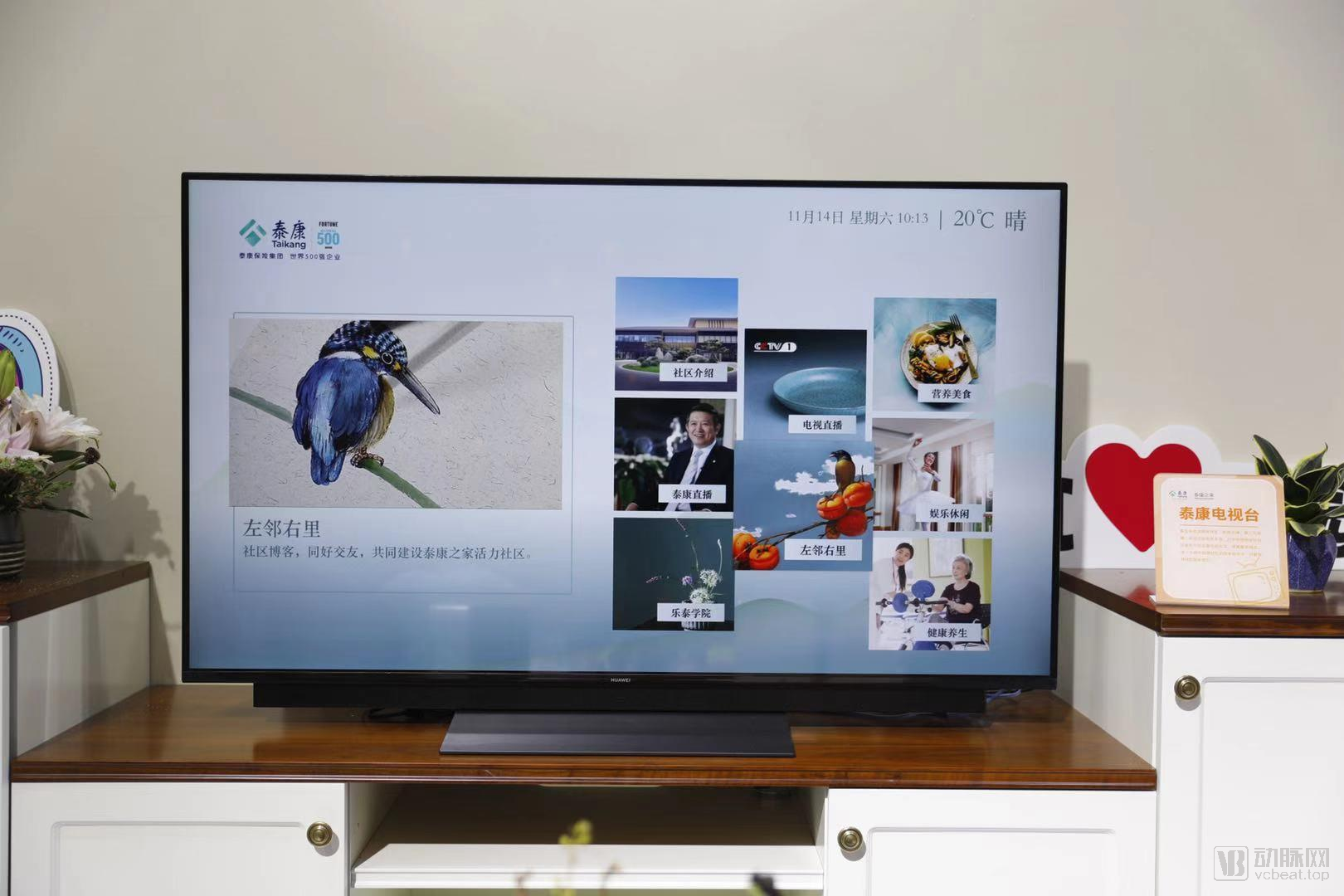
Taikang Community TV: Meeting Residents’ Needs for Socializing, Entertainment, and Information Access
It is predicted that as China’s population ages and its demographic structure shifts, third-party elderly care institutions will gradually become the primary providers of eldercare services. In the future, the application of high-tech solutions in elderly care settings will become increasingly widespread and in-depth. Smart healthcare and elderly care will no longer be a novel concept but a necessity, prompting more companies to deploy smart healthcare and elderly care solutions.China’s Smart Healthcare and Elderly Care Market Is Poised to Lead the World。
Smart Elderly Care Strategy Is a Key Initiative for Taikang Community Over the Next DecadeLi Bin, Assistant President and Chief Technology and Information Officer of Taikang Jiankang Investment, stated that the company will leverage 5G technology to collect resident data more efficiently and conveniently, utilize artificial intelligence and big data to enable intelligent decision-making, support the continuous optimization of service solutions, and make the service system more standardized. Meanwhile, in response to demographic shifts and a significant reduction in labor supply, the company will prioritize the deployment of intelligent robots to reduce reliance on human labor.
At the 10th-anniversary event, Taikang Community officially launched its next “New Decade” plan, committing to advanceNetworked, Platform-based, and Industrial Internet-Integrated, actively embrace the era of longevity.
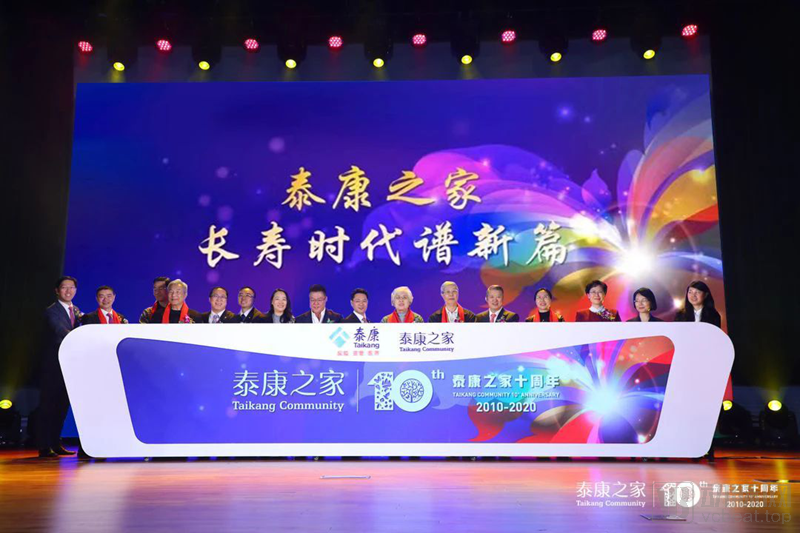
Taikang Community 10th Anniversary Event Site
Of particular note, Taikang Community will continue to advance product iteration and optimization, promote refined and systematic management, and consistently reduce land, construction, and operational costs. By leveraging chain operations to harness economies of scale, it aims to drive a revolution in elderly care, enabling more people to access the high-quality services offered by Taikang Community. The continuous deployment and integration of smart technologies will serve as a crucial component of this revolution.