

Luodao Nanotech Successfully Develops Next-Generation Solid-State Nanopore Sequencer with Prototype Validated in Suzhou
DNA is the foundation of life, and DNA sequencing is the cornerstone of life sciences and healthcare.
First-generation sequencing offers high accuracy but incurs prohibitive costs, preventing large-scale commercialization. Compared to first-generation sequencing, next-generation sequencing (NGS) has significantly reduced sequencing costs, thereby capturing 80% of the DNA sequencing market. However, NGS is limited by short read lengths, making it difficult to identify structural variants associated with numerous diseases, thus forfeiting its most critical application scenarios. Third-generation sequencing, represented by PacBio and also known as single-molecule sequencing, is characterized by long read lengths; however, its costs are substantially higher than those of NGS, leaving it with limited market potential.
Nanopore sequencing is also a form of single-molecule sequencing. To distinguish it from PacBio’s Sequencing by Synthesis (SBS) technology, it is commonly referred to as fourth-generation sequencing. The inherent advantages of nanopore DNA sequencing include ultra-long read lengths (up to 4 Mbp) and short sequencing turnaround times (less than 12 hours).
Depending on the type of nanopore material, nanopore DNA sequencing is divided into two technical approaches: protein nanopores and solid-state nanopores. The protein nanopore approach is inherently affected by molecular thermal motion, which prevents its accuracy from meeting high-accuracy requirements. Meanwhile, the high costs associated with the production and storage of protein nanopore arrays keep sequencing costs elevated.
In contrast, solid-state nanopore DNA sequencing, another technological approach, offers superior mechanical and physical properties. It significantly improves sequencing accuracy (up to 99.999%) while substantially reducing sequencing costs by leveraging silicon substrates and silicon nitride thin films fabricated through low-cost semiconductor processes. Furthermore, solid-state nanopores are reusable, and mass production can further lower the cost per sequencing run, making this approach widely recognized within the industry as the future direction of sequencing technology.
Suzhou Luodao Nano Technology Co., Ltd. (Luodao Nano) is a high-tech enterprise that has pioneered this technological pathway in China. Luodao Nano’s technology, built upon 18 years of research and development by its founder, Professor Ling Xinsheng, features a comprehensive and viable theoretical framework. It represents a domestic first and achieves internationally leading progress in R&D. One month ago, Luodao Nano successfully developed a proof-of-concept device for DNA sequencing based on solid-state nanopores.
As a pioneer in the theory of solid-state nanopore sequencing, Professor Xinsheng Ling is a tenured professor at Brown University, the founding dean of the Institute for Advanced Studies at Soochow University, a Life Fellow of the American Physical Society, and a recipient of the 2002 Sloan Research Fellowship.

Professor Ling Xinsheng, Founder and Chief Scientist of Luodao Nano
Professor Ling is a renowned condensed matter physicist. Following his 2002 discovery that transmission electron microscopy (TEM) could be used to fabricate nanopores, he gradually established a theoretical framework for solid-state nanopore sequencing and pioneered a series of technical pathways for its practical application. These include automated pore fabrication processes (HIM + Stepper), sequencing based on probe hybridization, dynamic kinetic correction to overcome mismatch errors, double-layer nanopore technology integrated with kinetic correction, and magnetic tweezers technology for the precise manipulation of single DNA molecules.
In brief, its solid-state nanopore sequencing system can be summarized in the following aspects:
1. With DNA tethered, the solid-state nanopore moves relative to the DNA, thereby overcoming thermal motion of the molecule;
2. Use probe hybridization sequencing to distinguish between single-stranded and double-stranded signals;
3. Dual-layer hole error calibration method to overcome errors caused by probe mismatch;
4. The probe hybridization method, combined with dual-layer wells, introduces a sixfold increase in information redundancy, further enhancing accuracy;
5. Assemble signals from different probes into a complete DNA sequence.
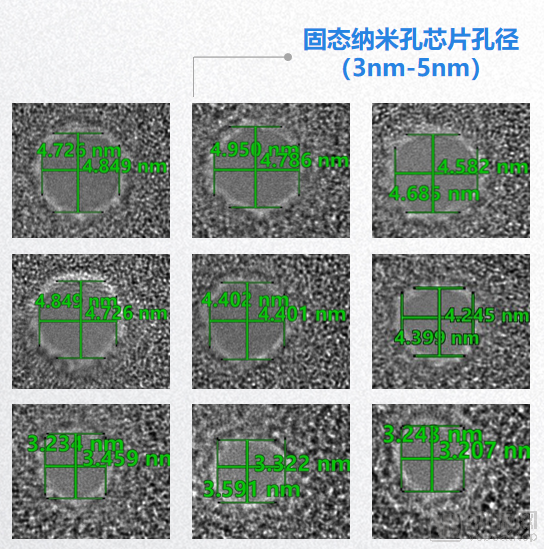
Luodao Nano’s Solid-State Nanopore Fabrication Process
The primary barrier to solid-state nanopore sequencing technology lies in the ability to fabricate nanoscale pores on solid-state materials that are sufficiently small yet precisely sized to allow DNA strands to pass through. Leveraging Professor Ling Xinsheng’s extensive expertise and optimized pore-fabrication parameters, the Luodao Nano research team successfully produced high-quality, stable 3–5 nm nanopores on silicon substrates within just six months, thereby making solid-state nanopore sequencing a viable reality.
Meanwhile, the creative use of multiple probe hybridization and dynamic kinetic correction methods, along with nanoscale precision manipulation of molecular-level DNA translocation through nanopores and measurement of probe signals during translocation, presents considerable challenges. The Luodao Nano research team has overcome one technical hurdle after another, not only achieving full localization of the solid-state nanopore fabrication process in Suzhou but also accumulating extensive and robust experimental data that validate the feasibility of solid-state nanopore sequencing.
Although the successful development of the solid-state nanopore sequencer prototype is still some distance away from the mass production of commercial units, it represents an extremely important milestone. Its success not only validates the scientific feasibility of solid-state nanopore sequencing technology but also, through cost analysis of the prototype’s core components and reagents/consumables, confirms that future commercial models will significantly reduce sequencing costs while ensuring a sequencing accuracy rate of 99.99%. A representative from Nanjing Luodao Nano Technology Co., Ltd. revealed that the cost per whole-human-genome sequencing run is expected to be around RMB 500 in the future.
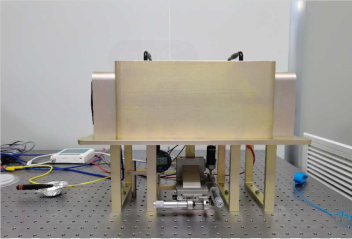
Appearance of the Solid-State Nanopore Sequencing Principle Prototype
The most compelling aspect of the application prospects for solid-state nanopore sequencing lies in its ability to perform low-cost whole-human genome sequencing while maintaining both high accuracy and long read lengths. This capability will reshape the current landscape of the sequencing industry, driving growth among hundreds or even thousands of downstream companies providing sequencing technical services, biopharmaceutical firms, clinical diagnostics, and genetic testing providers, thereby unlocking a trillion-yuan application market. For future applications such as cancer companion diagnostics, whole-genome studies of the gut microbiome, and routine health checkups for the general public, low-cost and highly efficient fourth-generation solid-state nanopore sequencing will transform the entire gene sequencing industry chain, making gene sequencing-related applications widely accessible. Furthermore, as one of the most critical tools for fundamental life science research, solid-state nanopore sequencing will significantly advance human self-understanding and lead to a series of scientific achievements that benefit humanity.
Throughout the history of gene sequencing technology development, China has lagged behind international counterparts in first-, second-, and third-generation sequencing, as well as in nanopore sequencing. The strategic importance of gene sequencing technology is comparable to that of chips in the telecommunications industry and operating systems in the computer industry. The high-priced monopoly on sequencers and their consumables has severely constrained the development of mid- and downstream sectors. With the growth of the gene sequencing industry, numerous companies providing various gene sequencing products and services have emerged in the mid- and downstream segments. The global gene sequencing market is expanding at an unprecedented pace, and leading technological innovation is key to escaping the fiercely competitive “red ocean” of the downstream gene sequencing industry.
Luodao Nano’s products are entirely based on domestically developed technology, positioning China to achieve a leapfrog advancement in fourth-generation sequencing and break the monopoly held by foreign companies. This will bring subtle yet significant changes for Chinese sequencing enterprises, particularly in ensuring business security and sustainability, as well as enhancing their bargaining power for better pricing. It is reasonable to believe that this impact will continue to grow and amplify with the ongoing development of China’s nanopore sequencing industry, creating a positive synergistic effect on sector-wide growth.